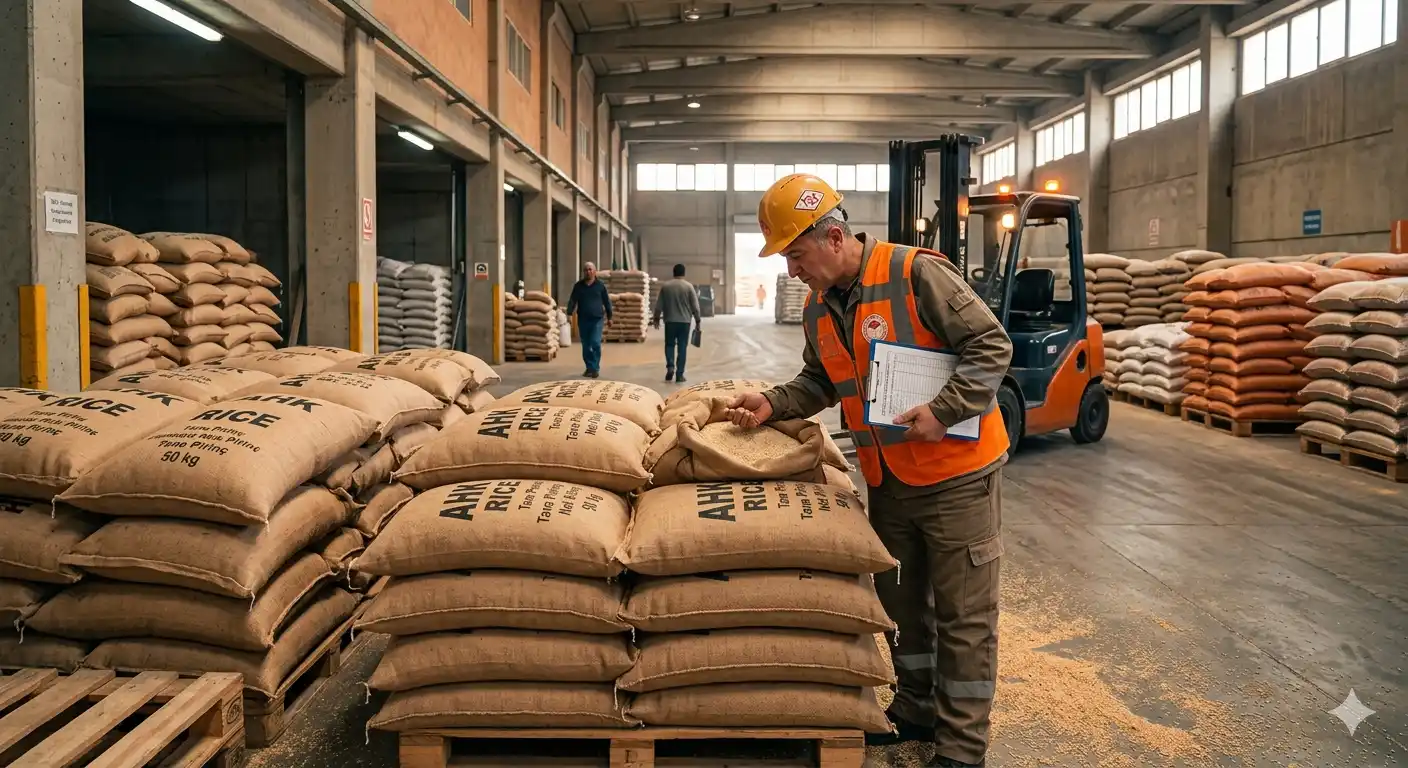
Rice Import Regulations and TSE Quality Standards in Turkey for 2026
Rice import regulations in Turkey for 2026 define the legal, quality, and safety requirements for importing rice, including customs duties, phytosanitary certification, TSE compliance, and import permits issued by Ankara authorities to ensure food safety and market control.
Rice import regulations in Turkey operate under a structured legal framework governed by the Ministry of Trade and agricultural authorities. These regulations define how rice enters the country, how it is tested, and how it is distributed. Every shipment must follow predefined documentation, inspection, and tariff procedures.
The primary goal is to protect domestic agriculture while ensuring safe food imports. Imported rice must meet quality benchmarks, comply with labeling rules, and pass inspection checks at ports such as Mersin and Istanbul. Regulations also ensure traceability from origin to final distribution.
In 2026, Turkey continues to enforce stricter compliance for food imports, especially for staple commodities such as rice, wheat, and pulses.
How do rice import regulations work in Turkey?
Rice import regulations in Turkey work through a step-by-step system involving import permits, customs declaration, phytosanitary certification, laboratory testing, tariff application, and final clearance by regulatory authorities before market entry.
Step-by-step import process
1. Import permit approval
Importers must apply for an import permit through government authorities in Ankara. This permit confirms eligibility and defines the import quota.
2. Documentation submission
Required documents include:
- Commercial invoice
- Packing list
- Bill of lading
- Certificate of origin
- Phytosanitary certificate
Each document ensures traceability and compliance with Turkish import laws.
3. Phytosanitary inspection
The phytosanitary certificate verifies that rice is free from pests, diseases, and contaminants. This certificate is issued by the exporting country’s agricultural authority.
4. Customs declaration and duty payment
Importers must declare goods at customs and pay applicable duties. Turkey applies tariffs based on rice type, origin, and trade agreements.
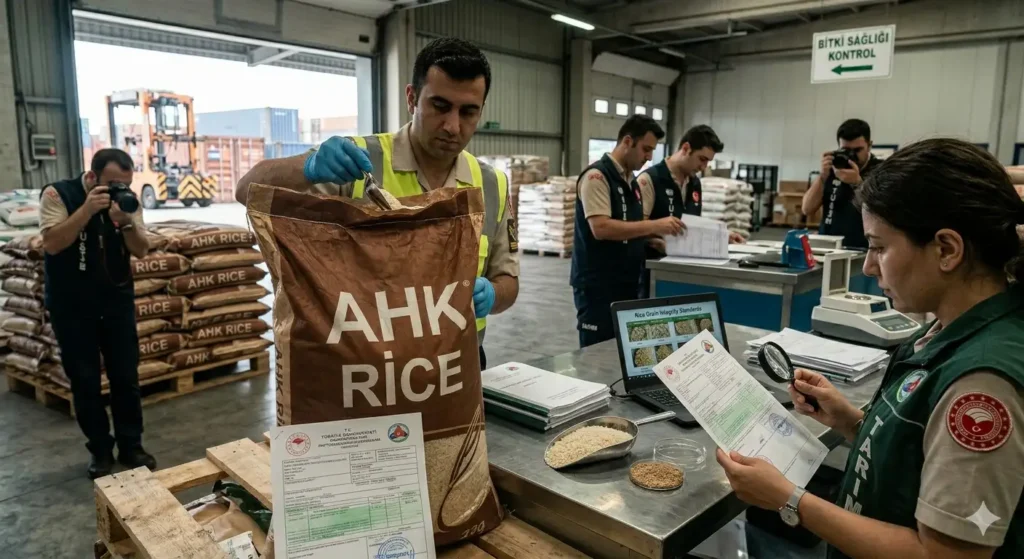
5. Laboratory testing
Rice samples undergo laboratory analysis for:
- Moisture content
- Broken grain percentage
- Contaminants (pesticides, heavy metals)
6. TSE compliance verification
The Turkish Standards Institution ensures the rice meets national quality standards.
7. Final clearance
After passing all checks, rice is released into the Turkish market for wholesale or retail distribution.
What are the key components of Turkey rice import regulations?
Key components include import permits, customs duties, phytosanitary certification, TSE quality standards, labeling compliance, and inspection procedures that collectively ensure food safety, quality consistency, and regulatory compliance for imported rice.
Import permit system
The permit system controls the volume and timing of rice imports. It protects domestic farmers and stabilizes local prices.
Turkey rice customs duty
Turkey imposes variable import duties. These depend on:
- Rice type (basmati, non-basmati)
- Trade agreements
- Seasonal quotas
For example, basmati rice often benefits from lower tariffs due to demand and limited domestic production.
Phytosanitary certification
A phytosanitary certificate confirms the rice is safe for consumption. It includes details about origin, treatment methods, and pest-free status.
TSE rice quality standards
The TSE defines measurable quality parameters such as:
- Grain length (long, medium, short)
- Broken percentage (5%, 10%, 25%)
- Moisture level (typically below 14%)
These standards ensure consistency across imported rice batches.
Labeling and packaging rules
Imported rice must include:
- Product name
- Country of origin
- Net weight
- Production and expiry dates
Labels must be in Turkish for consumer clarity.
What are TSE rice quality standards and why are they important?
TSE rice quality standards define measurable criteria such as grain size, purity, moisture content, and defect tolerance to ensure imported rice meets Turkey’s national food safety and quality benchmarks.
The Turkish Standards Institution develops and enforces these standards. These standards create uniformity across all rice sold in Turkey.
Key quality parameters
Grain classification
Rice is categorized based on length:
- Long grain (e.g., basmati)
- Medium grain
- Short grain
Broken grain ratio
The percentage of broken rice affects quality grading. Examples include:
- Premium grade: 5% broken
- Standard grade: 10% broken
- Economy grade: 25% broken
Moisture content
Moisture levels must remain below specific thresholds to prevent spoilage and fungal growth.
Purity and foreign matter
Rice must be free from:
- Stones
- Husk residues
- Dust particles
Importance of TSE standards
TSE standards ensure:
- Consumer safety
- Market consistency
- Fair trade practices
They also reduce disputes between importers and exporters by providing clear benchmarks.
What are the benefits of Turkey’s rice import regulations?
Turkey’s rice import regulations ensure food safety, protect domestic agriculture, maintain quality consistency, enable traceability, and support fair trade by enforcing standardized procedures and strict compliance requirements.
Food safety assurance
Strict inspection processes reduce the risk of contaminated rice entering the market.
Protection of local farmers
Import controls prevent excessive foreign competition, stabilizing domestic production.
Quality consistency
Standardized grading ensures consumers receive uniform products.
Trade transparency
Clear rules reduce misunderstandings between exporters and importers.
Traceability
Each shipment can be traced back to its origin, improving accountability.
What are the main use cases of rice import regulations in Turkey?
Rice import regulations are used to control food imports, ensure compliance with safety standards, manage trade volumes, and regulate market supply for different rice varieties such as basmati, non-basmati, and specialty rice.
Bulk commercial imports
Large importers bring rice in bulk quantities for distribution across supermarkets and wholesalers.
Retail packaging operations
Imported rice is repackaged into smaller units such as 1 kg, 5 kg, and 10 kg bags for retail sale.
Food industry usage
Rice is imported for use in:
- Restaurants
- Hotels
- Catering services
Specialty rice imports
Premium varieties such as basmati are imported to meet consumer demand for high-quality rice.
What are common problems and misconceptions about Turkey rice import regulations?
Common problems include misunderstanding documentation requirements, underestimating TSE compliance, incorrect tariff calculations, and assuming all rice types follow identical rules, which leads to shipment delays, penalties, or rejection at customs.
Misconception 1: All rice types follow the same rules
Different rice varieties have different tariff rates and quality requirements. Basmati and non-basmati are treated differently.
Misconception 2: Phytosanitary certificates are optional
This certificate is mandatory. Missing it results in immediate rejection at customs.
Misconception 3: TSE compliance is only for local products
Imported rice must also meet TSE standards. Non-compliant shipments are rejected.
Misconception 4: Customs duty is fixed
Tariffs change based on trade agreements and quotas. Importers must verify current rates before shipment.
Common operational problems
Documentation errors
Incorrect or incomplete documents delay clearance.
Quality mismatches
Rice that does not match declared specifications fails inspection.
Packaging issues
Improper labeling leads to regulatory violations.
Delayed permits
Late permit approvals disrupt supply chains.
How does Turkey regulate rice imports through Ankara authorities?
Rice import permits in Ankara are issued by government bodies that evaluate importer eligibility, quota limits, and compliance history before granting approval, ensuring controlled and regulated entry of rice into Turkey.
The central authority in Ankara manages import quotas and licensing. Importers must submit applications with complete documentation and business credentials.
Approval depends on:
- Import history
- Compliance record
- Market demand
Authorities monitor import volumes to maintain balance between domestic production and foreign supply.
How do phytosanitary requirements impact rice imports into Turkey?
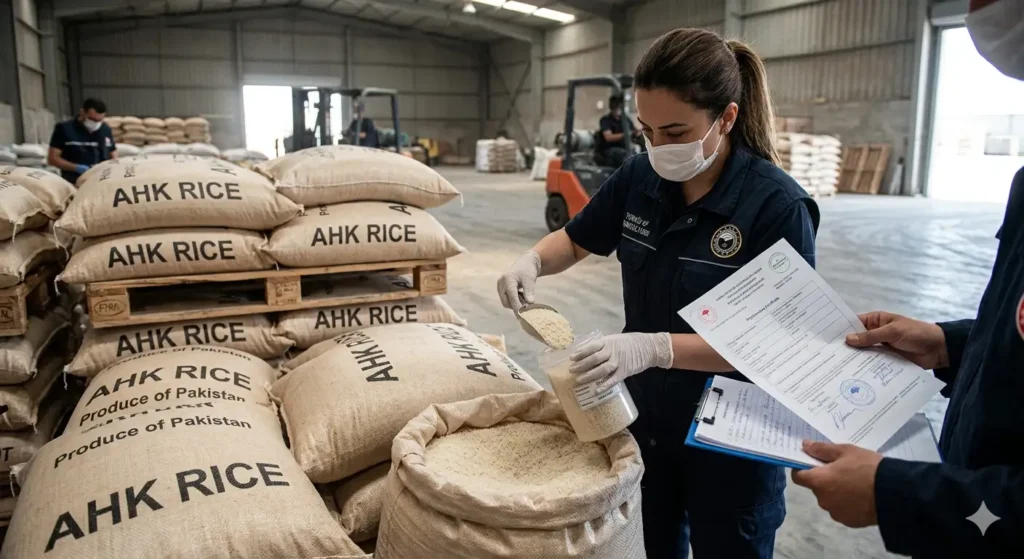
Phytosanitary requirements ensure imported rice is free from pests, diseases, and harmful contaminants by requiring certified inspection and treatment documentation from the exporting country before shipment approval.
These requirements protect Turkey’s agricultural ecosystem. Imported rice undergoes strict inspection to prevent biological contamination.
Key phytosanitary checks
- Pest detection
- Disease control
- Chemical residue analysis
Example
Rice shipments from exporting countries such as Pakistan must include certified phytosanitary documentation issued by national plant protection organizations.
Failure to meet these requirements results in shipment rejection or destruction.
Why understanding Turkey rice import regulations matters in 2026
Understanding rice import regulations in Turkey ensures compliance, prevents shipment delays, reduces financial risks, and enables smooth market entry by aligning with TSE standards, customs duties, and phytosanitary requirements.
Rice import regulations in Turkey form a structured system combining legal, quality, and safety frameworks. Each component plays a defined role in ensuring safe and consistent food supply.
Importers who understand these regulations operate efficiently. Exporters who align with these standards gain better market access. The system benefits consumers through safe and high-quality rice availability.