Shipping Rice from Pakistan to Vietnam Ho Chi Minh Port in 2026
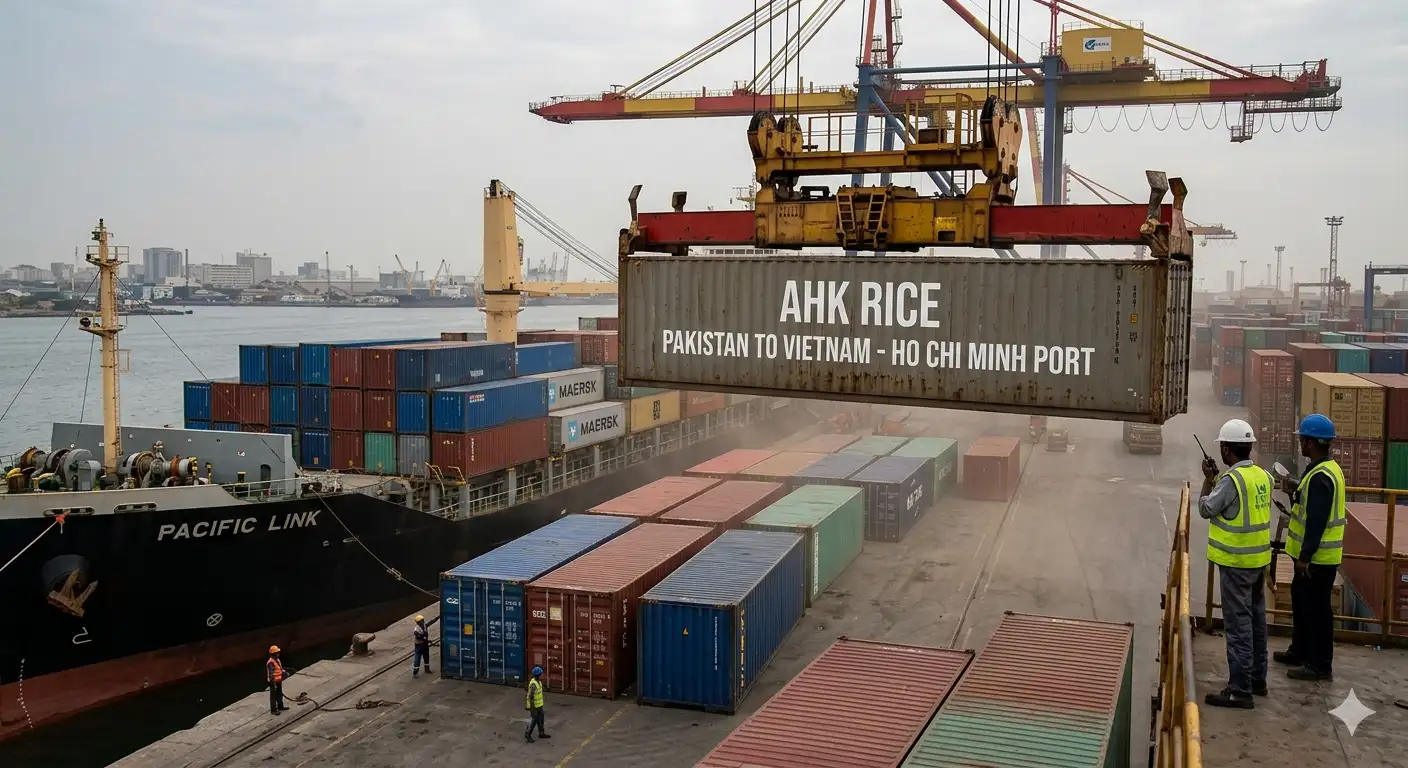
Rice shipping Pakistan Vietnam 2026 refers to the structured sea freight movement of processed rice from Pakistani export hubs like Karachi to Vietnam’s Ho Chi Minh Port, covering documentation, containerization, transit timelines, and port clearance within a defined 18–30 day cycle.
Rice shipping is a multi-stage export process. It starts at rice mills in Punjab, where varieties such as 1121 Basmati, Super Kernel, and 1509 are processed. It ends at Ho Chi Minh Port, Vietnam’s largest container gateway.
The shipment route is maritime. Cargo moves from Karachi Port or Port Qasim to Ho Chi Minh Port, also called Saigon Port. This route is widely used for agricultural commodities due to cost efficiency and container availability.
Transit time depends on vessel schedules, port congestion, and customs clearance. Standard shipping duration ranges between 18 and 30 days. This includes inland transport, port handling, sea transit, and destination clearance.
How does the rice shipping process from Karachi to Ho Chi Minh Port work?
The shipping process follows a linear chain: milling, grading, packing, container stuffing, customs clearance, sea freight movement, and final delivery at Ho Chi Minh Port, with each stage contributing specific time segments to the total 18–30 day transit duration.
Pre-shipment processing and preparation
Rice is cultivated in Punjab’s fertile plains. After harvesting, it undergoes drying, husking, polishing, and grading. Each step ensures uniform grain size and moisture control.
Export-grade rice is packed into standard sizes. Examples include 5 kg, 10 kg, 25 kg, and 50 kg bags. Packaging materials include PP woven bags and BOPP laminated bags.
Inland transportation to port
Packed rice moves from mills to Karachi via trucks. This journey takes 1–3 days depending on distance and logistics coordination.
At the port, containers are booked with shipping lines. Common container types include 20-foot containers with 25–26 metric tons capacity.
Customs clearance and documentation
Exporters submit documents such as:
- Commercial invoice
- Packing list
- Phytosanitary certificate
- Certificate of origin
- Bill of lading
Customs clearance takes 2–4 days when documentation is accurate.
Sea freight and transit
Containers are loaded onto vessels. The shipping route passes through the Arabian Sea, Indian Ocean, and South China Sea.
Sea transit time from Karachi to Ho Chi Minh Port is 14–22 days depending on the shipping line and route.
Arrival and delivery in Vietnam
At Ho Chi Minh Port, containers undergo customs inspection. Importers handle duties, taxes, and clearance.
Final delivery to warehouses takes 2–5 days.
What are the key components of rice shipping from Pakistan to Vietnam?
Key components include rice quality grading, export packaging, containerization, shipping line selection, documentation compliance, and port handling efficiency, each directly influencing transit time, cost, and product integrity during the Karachi to Saigon shipping route.
Rice grading and quality standards
Rice is classified based on grain length, purity, and broken percentage. Examples include:
- 1121 Basmati Steam
- Super Kernel Basmati White
- 1509 Sella
Higher grades demand stricter handling and packaging standards.
Packaging and containerization
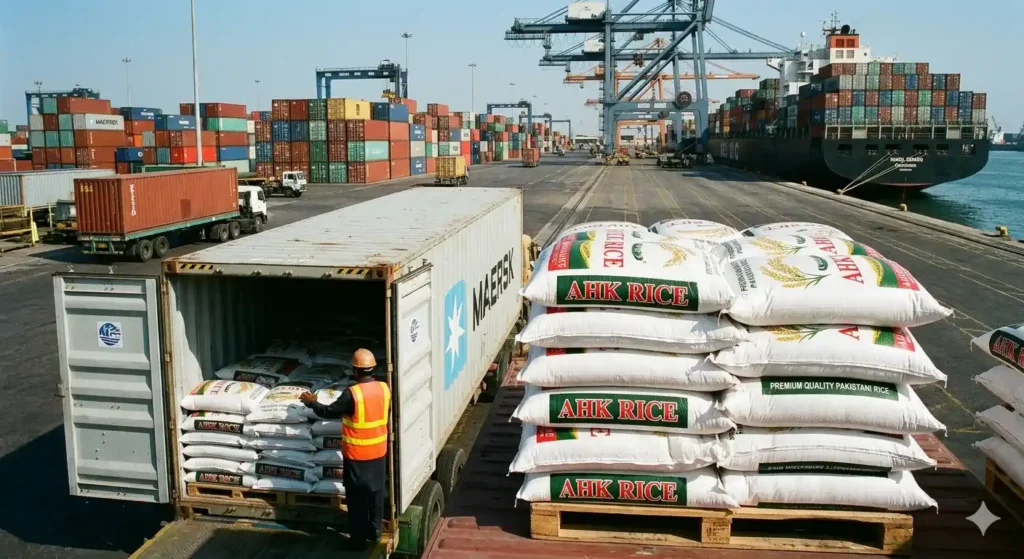
Packaging protects rice from moisture and contamination. Containers must be clean, dry, and fumigated.
Each 20-foot container holds approximately 25 metric tons. Proper stacking ensures airflow and prevents damage.
Shipping line and route selection
Shipping lines determine transit duration. Direct routes reduce time, while transshipment routes add 3–7 days.
Examples of route variations include:
- Direct Karachi to Ho Chi Minh
- Karachi to Singapore to Ho Chi Minh
Documentation and compliance
Compliance ensures smooth customs clearance. Missing documents cause delays of 5–10 days.
Port operations
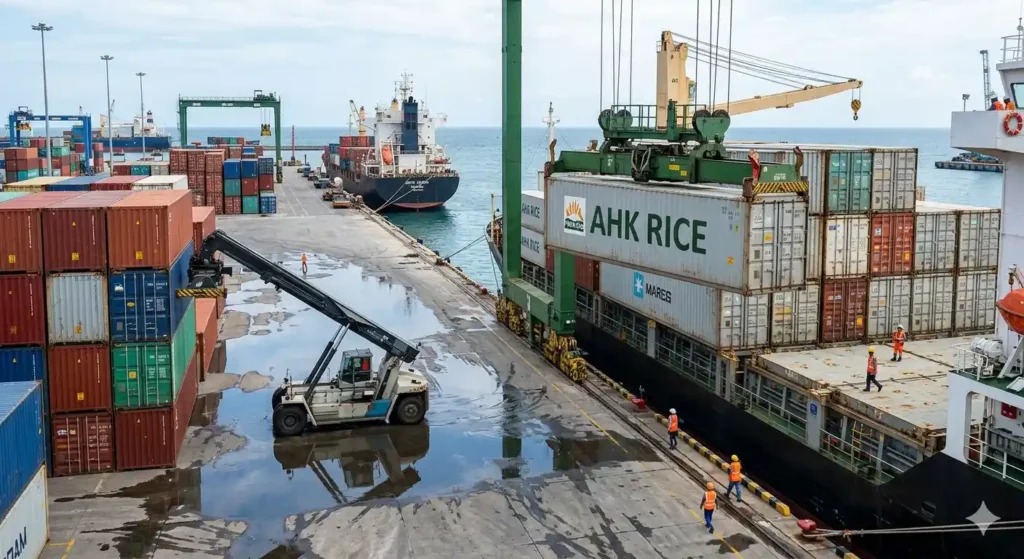
Efficient port handling reduces waiting time. Congestion at Karachi or Ho Chi Minh Port increases delays.
What are the benefits of shipping rice from Pakistan to Vietnam?
Shipping rice from Pakistan to Vietnam provides cost-effective bulk transportation, consistent supply chain access, standardized quality control, and predictable delivery timelines between 18 and 30 days, enabling importers to maintain stable inventory cycles and pricing structures.
Sea freight is the most economical method for bulk rice transport. Air freight is not used due to high costs.
Pakistan produces long-grain aromatic rice varieties. Vietnam imports these for blending, re-export, and domestic consumption.
Shipping in containers ensures product safety. It minimizes exposure to external conditions.
Predictable transit times help importers plan inventory. For example, a Vietnamese distributor can schedule monthly shipments based on a 25-day cycle.
Bulk shipping reduces per-unit cost. A full container load lowers freight cost per ton compared to smaller shipments.
What are the main use cases for rice shipping to Vietnam?
Rice shipping to Vietnam serves multiple use cases including wholesale distribution, food processing industries, re-export markets, and retail packaging operations, each relying on consistent Karachi to Saigon shipping schedules and controlled delivery timelines.
Wholesale distribution
Importers purchase rice in bulk. They distribute it to local markets and retailers.
Food processing industry
Rice is used in processed foods. Examples include rice noodles, rice flour, and packaged meals.
Re-export operations
Vietnam re-exports rice to other countries. Imported Pakistani rice is blended or repackaged.
Retail packaging
Rice is repacked into smaller consumer sizes. Examples include 1 kg and 5 kg retail packs.
What are common problems and misconceptions in rice shipping?
Common problems include delays from incomplete documentation, container moisture damage, port congestion, and incorrect assumptions about fixed transit times, while misconceptions often ignore variables such as transshipment routes and seasonal shipping fluctuations affecting delivery duration.
Documentation errors
Incomplete paperwork delays customs clearance. This adds 5–10 days to the shipping timeline.
Moisture and contamination risks
Improper container conditions cause rice spoilage. Moisture leads to mold and quality degradation.
Port congestion
High traffic at ports increases waiting time. This affects both loading and unloading stages.
Misconception about fixed timelines
Shipping duration is not fixed. It varies based on route, weather, and port conditions.
For example, a direct shipment takes 18–22 days, while a transshipment route extends to 25–30 days.
Seasonal disruptions
Monsoon seasons impact port operations. This causes delays in inland transport and vessel schedules.
How does shipping duration impact rice quality and supply chain efficiency?
Shipping duration directly affects rice freshness, inventory turnover, and supply chain planning, with shorter transit times preserving grain aroma and texture while longer durations require advanced storage planning and moisture control to maintain export-grade quality.
Rice quality depends on moisture levels and storage conditions. Extended transit increases exposure to humidity.
Proper packaging reduces risk. Vacuum packaging and desiccants maintain dryness.
Shorter transit times preserve aroma in Basmati rice. This is critical for premium markets.
Supply chain efficiency depends on predictable delivery. Importers align procurement cycles with shipping schedules.
For example, a 20-day transit allows three shipments per quarter. A 30-day transit reduces shipment frequency.