Rice Packaging Sizes and MARD Labelling Requirements for Vietnam in 2026
Rice packaging sizes in Vietnam define how rice is packed for retail and bulk markets, while MARD labelling requirements specify mandatory product information regulated by the Ministry of Agriculture and Rural Development to ensure traceability, safety, and compliance.
Rice packaging sizes refer to the standardized weight categories used for distributing rice across retail, wholesale, and export channels. These sizes are measured in kilograms and designed to match consumption patterns, logistics efficiency, and regulatory compliance.
MARD labelling requirements define what information must appear on rice packaging before it enters the Vietnamese market. These rules ensure that imported rice meets food safety, origin traceability, and consumer transparency standards.
In 2026, both packaging and labelling are tightly connected. Packaging determines how rice is sold, while labelling determines whether it can legally enter and remain in the Vietnamese market.
How do rice packaging systems work for Vietnam imports?
Rice packaging systems for Vietnam imports operate by aligning product weight categories, material standards, and label compliance with import regulations, ensuring smooth customs clearance, retail readiness, and supply chain efficiency across bulk shipments and consumer markets.
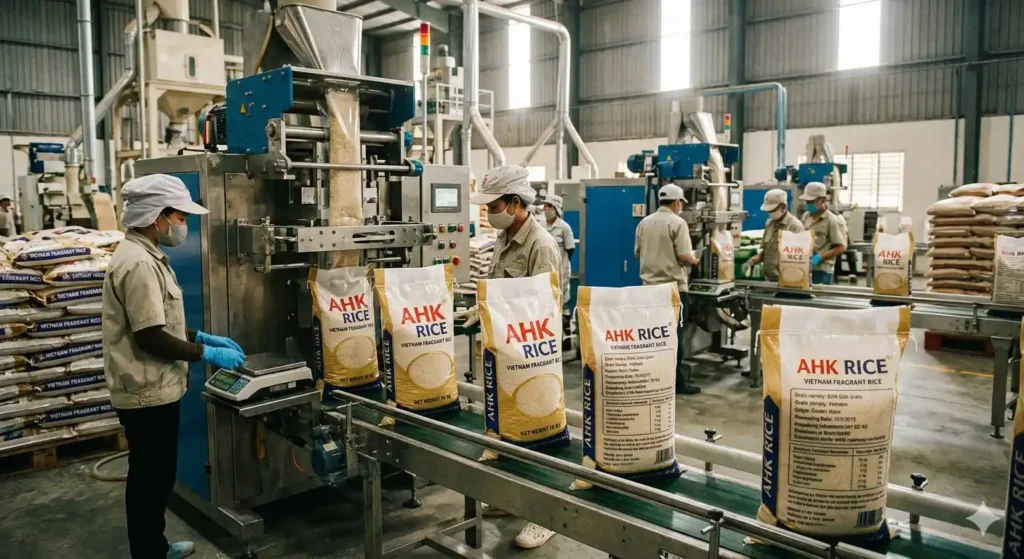
The system starts at the processing stage. Rice is milled, graded, sorted, and then packed into specific sizes based on the target market.
Exporters select packaging sizes based on three main channels:
- Retail distribution
- Food service sector
- Bulk wholesale trade
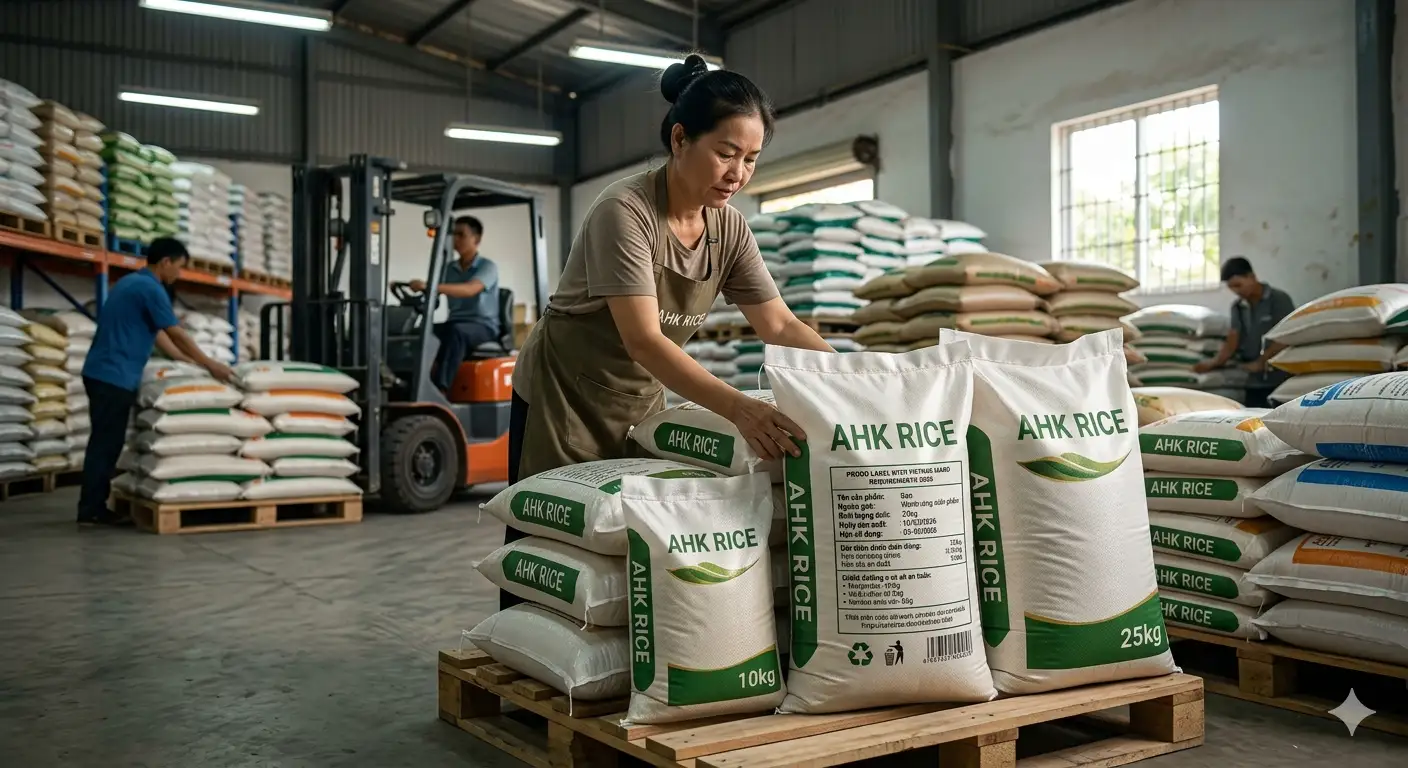
Each channel requires different packaging weights. For example, retail uses smaller bags like 1 kg, 5 kg, and 10 kg. Bulk buyers use 25 kg and 50 kg bags.
After packaging, labels are applied according to MARD standards. These labels must be printed or affixed before shipment. Customs authorities in Vietnam inspect both packaging size declarations and label accuracy during import clearance.
This system ensures that rice arrives ready for sale without repackaging, which reduces contamination risk and preserves grain quality.
What are the standard rice packaging sizes used in Vietnam?
Vietnam uses standardized rice packaging sizes including 1 kg, 2 kg, 5 kg, 10 kg, 25 kg, and 50 kg, with smaller sizes targeting retail consumers and larger sizes designed for wholesale buyers, food service providers, and industrial distribution networks.
Packaging sizes are selected based on consumption behavior and logistics efficiency.
Retail packaging sizes
Retail rice packaging focuses on convenience and brand visibility. Common sizes include:
- 1 kg (single household use)
- 2 kg (short-term consumption)
- 5 kg (monthly household supply)
- 10 kg (family storage)
These sizes are used in supermarkets, grocery stores, and e-commerce platforms.
Bulk packaging sizes
Bulk packaging supports large-scale distribution. Common sizes include:
- 25 kg (restaurants, catering businesses)
- 50 kg (wholesalers, distributors)
Bulk packaging reduces per-unit transportation costs and simplifies handling during international shipping.
Export-specific packaging
Exporters often customize packaging based on buyer requirements. Examples include:
- 20 kg woven polypropylene bags
- Vacuum-sealed premium rice packs
- Private label retail-ready bags
These variations still follow the same regulatory framework defined by Vietnam.
What labelling requirements does MARD enforce in 2026?
MARD requires rice packaging labels in Vietnam to include product name, origin, net weight, production date, expiry date, importer details, and Vietnamese language compliance, ensuring traceability, food safety, and regulatory transparency across all imported rice products.
Labelling is not optional. It is a legal requirement for all imported rice.
Mandatory label elements
Each rice package must include:
- Product name (example: Basmati Rice, Jasmine Rice)
- Country of origin (example: Pakistan, India)
- Net weight (example: 5 kg, 25 kg)
- Production date and expiry date
- Importer or distributor name and address
- Storage instructions
Language requirements
Labels must be written in Vietnamese. If original packaging is in another language, a supplementary Vietnamese label must be added before distribution.
Traceability codes
Modern requirements include batch numbers and traceability identifiers. These allow authorities to track the rice back to its production source.
Food safety compliance
Labels must reflect compliance with food safety standards. This includes hygiene certifications and processing declarations.
What are the key components of compliant rice packaging?
Compliant rice packaging for Vietnam consists of durable materials, accurate weight measurement, sealed integrity, and properly positioned labels that meet MARD standards, ensuring product protection, regulatory approval, and efficient logistics handling.
Packaging is not just about size. It includes multiple technical components.
Packaging materials
Common materials include:
- Woven polypropylene bags (bulk use)
- Laminated plastic bags (retail use)
- Vacuum packaging (premium rice)
Each material protects rice from moisture, pests, and contamination.
Weight accuracy
Every package must match its declared weight. Inaccurate weights lead to rejection during inspection.
Sealing methods
Proper sealing prevents leakage and contamination. Examples include:
- Heat sealing for plastic bags
- Stitching for woven sacks
Label placement
Labels must be clearly visible and permanently attached. Hidden or removable labels fail compliance checks.
What are the benefits of standardized packaging and labelling?
Standardized rice packaging and MARD labelling improve supply chain efficiency, reduce customs delays, enhance consumer trust, and ensure consistent product quality across retail and wholesale markets in Vietnam’s regulated food import system.
Standardization creates predictability. This benefits both exporters and importers.
Clear packaging sizes simplify inventory management. Retailers can plan shelf space based on consistent dimensions.
Accurate labelling speeds up customs clearance. Authorities can quickly verify compliance without additional inspections.
Consumers benefit from transparency. They can identify origin, quality, and freshness before purchase.
Standardization also reduces repackaging costs. Products arrive ready for sale, saving time and labor.
Where are different rice packaging sizes used in Vietnam?
Different rice packaging sizes are used across supermarkets, traditional markets, restaurants, and wholesale distribution centers in Vietnam, with each size aligned to specific consumption patterns, storage capacity, and purchasing behavior.
Usage depends on buyer type.
Supermarkets and retail chains
Retail stores prefer smaller packaging sizes. Examples include:
- 1 kg packs for individual buyers
- 5 kg packs for families
These sizes offer convenience and easy handling.
Traditional markets
Local markets often sell rice in loose form or medium-sized bags like 10 kg. Vendors sometimes repackage bulk rice into smaller quantities.
Food service sector
Restaurants and hotels use 25 kg bags. These sizes balance storage efficiency and usage volume.
Wholesale distribution
Distributors rely on 50 kg bags for large-scale operations. These are transported directly from ports to warehouses.
What are common problems in rice packaging and labelling compliance?
Common problems include incorrect label translation, missing mandatory information, inaccurate weight declaration, and improper packaging materials, all of which lead to shipment delays, regulatory penalties, and rejection at Vietnamese import checkpoints.
Errors in labelling are the most frequent issue.
Incorrect translation into Vietnamese creates compliance failures. Labels must be accurate and professionally translated.
Missing information, such as expiry dates or importer details, results in immediate rejection.
Weight discrepancies between declared and actual weight trigger inspections and penalties.
Poor packaging materials cause damage during transit. Torn bags or moisture exposure reduce product quality and market acceptance.
What misconceptions exist about rice packaging for Vietnam?
A common misconception is that packaging size alone ensures compliance, while in reality, correct labelling, material quality, and regulatory alignment with MARD standards are equally critical for successful rice importation into Vietnam.
Many exporters assume that using standard sizes like 25 kg or 50 kg guarantees acceptance. This is incorrect.
Compliance depends on the full system. Packaging, labelling, and documentation must all align.
Another misconception is that English labels are sufficient. Vietnam requires Vietnamese language labels for all retail distribution.
Some believe repackaging in Vietnam solves compliance issues. This increases costs and risks contamination.
Understanding these misconceptions helps avoid costly errors.
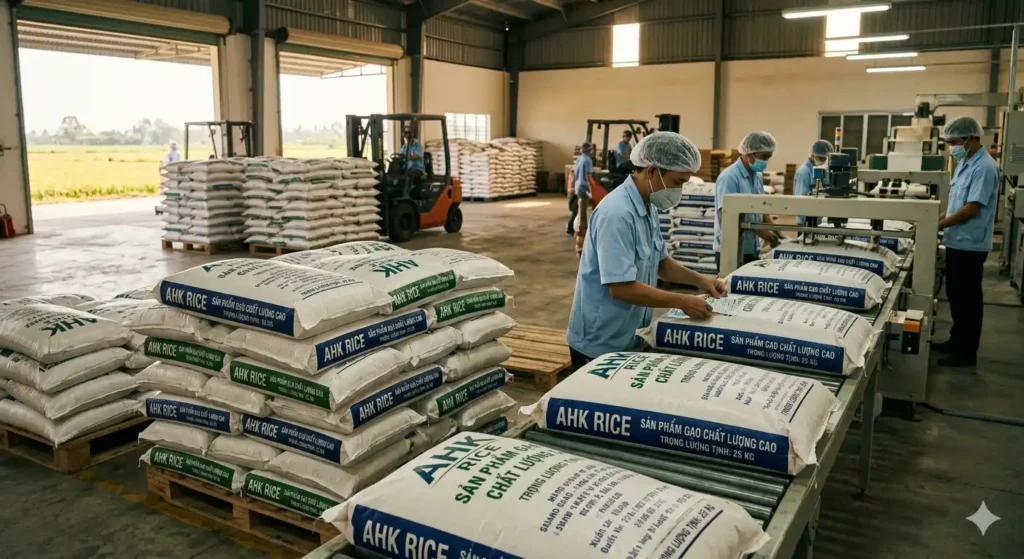
How does the rice packaging and labelling process work step by step?
The rice packaging and labelling process for Vietnam follows a structured sequence including milling, grading, packing into standard sizes, label application, inspection, and export documentation, ensuring full compliance with MARD regulations before shipment.
The process begins with milling. Paddy rice is converted into polished rice.
Next comes grading. Rice is sorted based on grain length, broken percentage, and quality.
Packaging follows. Rice is packed into predefined sizes such as 5 kg or 50 kg depending on the target market.
Labels are then applied. These must include all required MARD information in Vietnamese.
Quality inspection ensures that both packaging and labelling meet standards.
Finally, export documentation is prepared. This includes certificates, invoices, and compliance declarations.
Each step is controlled to ensure that the product enters Vietnam without regulatory issues.