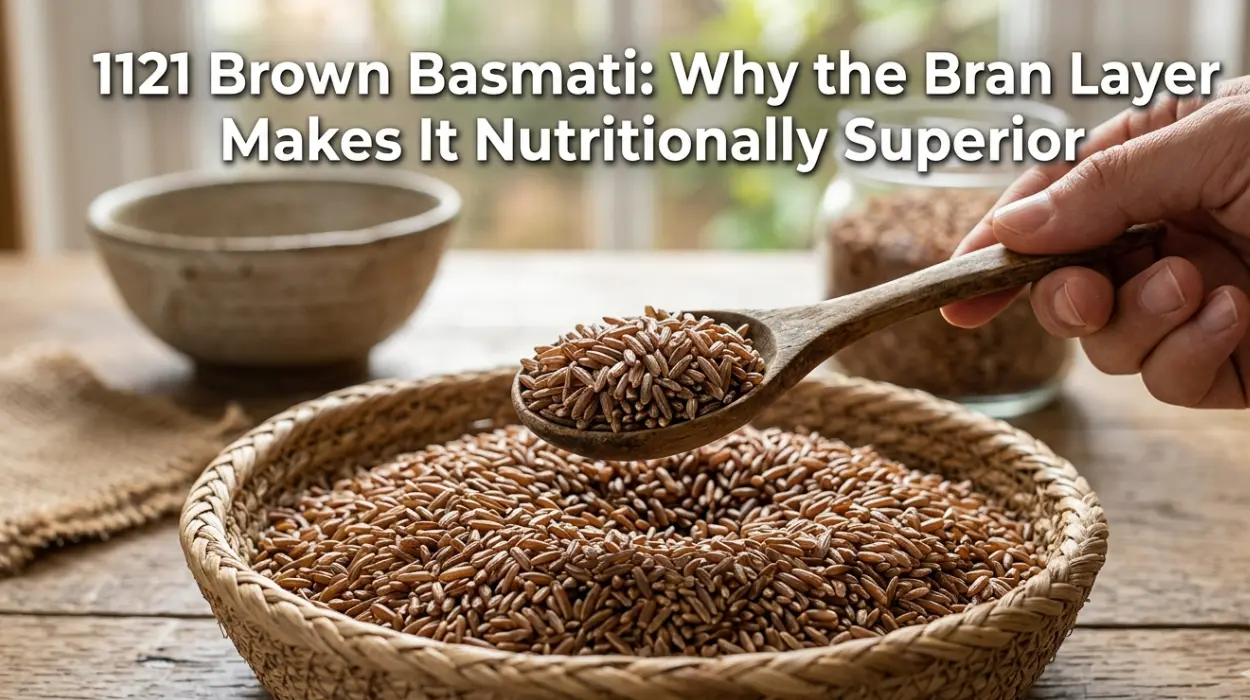
1121 Brown Basmati: Why the Bran Layer Makes It Nutritionally Superior
1121 brown basmati is wholegrain basmati where the bran layer remains intact, which preserves fibre, minerals, and micronutrients lost during polishing of white rice. The retained bran changes the grain’s nutrient profile, glycaemic response, cooking behaviour, and storage handling compared with polished 1121 white basmati.
Reputation management is not relevant here; online reputation definitions are outside this topic. This article defines 1121 brown basmati precisely, explains how the bran layer functions, describes processing steps that produce brown basmati, lists available grades, and analyses nutritional, culinary, and market implications. The post remains informational and technical for buyers, nutrition professionals, and cooks.
What is 1121 brown basmati?
1121 brown basmati is the unpolished form of the 1121 basmati variety where only the outer husk is removed and the bran layer remains intact. 1121 refers to the cultivar known for extra‑long grains and strong aroma. Brown 1121 is not a different cultivar. It is the same genetic variety processed to retain the bran.
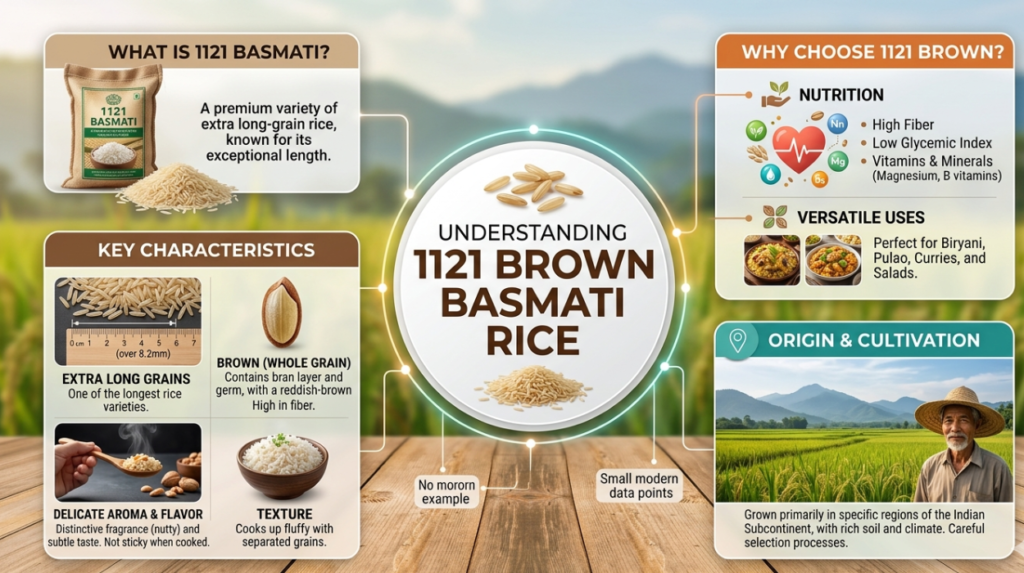
The bran layer is the thin outer covering that sits beneath the inedible husk and above the white endosperm. In brown rice the bran layer includes the aleurone, pericarp, and germ tissues. These layers contain fibre, B‑group vitamins, vitamin E, minerals such as magnesium and zinc, and plant phytochemicals including ferulic acid and other phenolics. Retaining the bran produces a wholegrain product with a different nutritional profile and different cooking characteristics than polished 1121 white basmati.
In trade terms, brown basmati is often labelled “unpolished” or “wholegrain” basmati. It goes to markets that value wholegrain nutrition, niche premium positioning, or specific culinary textures. The 1121 brown product targets health‑conscious retail channels, wholefood distributors, and institutional buyers with dietary‑fibre requirements.
How is 1121 brown basmati produced? Step‑by‑step processing
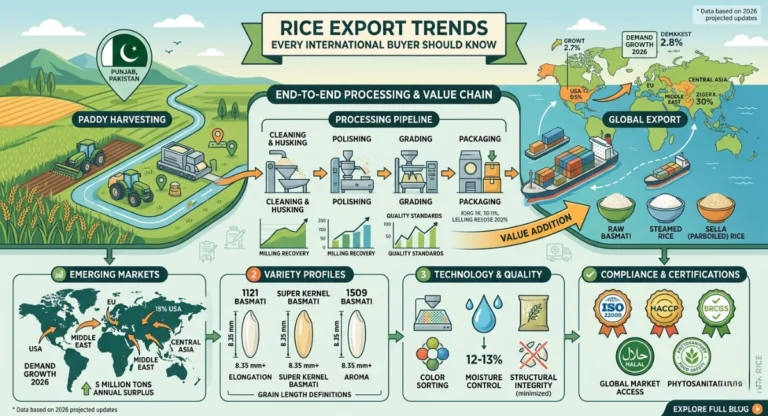
1121 brown basmati operates by removing the inedible husk while preserving the bran; processing is shorter than white rice milling and focuses on cleaning, hulling, and moisture control. The sequence emphasises gentle handling to avoid bran abrasion and nutrient loss.
- Harvest and field drying. Farmers harvest paddy and reduce kernel moisture to an interim level for transport. Field drying and mechanical drying steps lower moisture to a level safe for hulling.
- Cleaning and pre‑conditioning. Remove stones, straw, and foreign material with aspiration and sieving. Pre‑conditioning prepares kernels for hulling with minimal friction.
- Hulling (dehusking). Remove the outer husk (the inedible hull) with rubber‑roll or abrasive hullers. At this stage the kernel becomes brown rice because the bran layer is left intact.
- Grading and destoning. Use length graders and gravity separators to remove broken paddy and under‑sized kernels, sorting for uniformity.
- Polishing skipped. Unlike white rice, brown basmati does not go through polishing stages that remove the bran. Minimal misting or light conditioning may be applied if needed to equalise moisture.
- Colour sorting and quality check. Optical sorters remove discoloured or immature kernels that impair appearance and cooking uniformity.
- Moisture stabilisation and packing. Final moisture targets are set (commonly below 12–13% for export stability) and the rice is packed in food‑grade bags or sacks with desiccant or oxygen‑barrier linings as required.
The critical difference vs white 1121 lies in step 5 where brown rice skips bran removal. All other stages emphasise gentle handling to preserve the bran’s integrity and minimise breakage during grading and packing.
What are the key components and nutritional differences?
The key components that give 1121 brown basmati its nutritional superiority are the dietary fibre in the bran, the germ’s B‑vitamins, and the bran layer’s minerals and phytochemicals. These components change macronutrient absorption and metabolic response for nutrition cooking export market.
- Fibre: Brown rice contains both insoluble and soluble fibre that slows gastric emptying and reduces post‑prandial glucose spikes. For wholegrain basmati, fibre levels typically increase by multiple grams per 100 g versus polished rice.
- Vitamins: The bran/germ complex contains B1 (thiamine), B3 (niacin), B6, and folate that support energy metabolism. Retaining the bran preserves these water‑soluble vitamins.
- Minerals: Magnesium, manganese, phosphorus, and zinc concentrations remain higher in brown rice because they localise in the bran and germ.
- Phytochemicals: Ferulic acid, tocopherols (vitamin E), and other antioxidants concentrate in the bran, which contributes to antioxidant capacity and potential metabolic benefits.
- Lipid content: The germ contains small amounts of unsaturated lipids. These lipids raise shelf‑oxidation risk compared with polished rice, which influences storage and packaging decisions.
These differences translate into measurable physiological effects such as lower glycaemic index, higher satiety after meals, and greater micronutrient density per serving.
What are the benefits of the bran layer for consumers?
The bran layer provides higher fibre, improved micronutrient density, slower carbohydrate absorption, and increased satiety compared with polished white basmati. These benefits support dietary recommendations for wholegrains in cardiovascular and metabolic health strategies.
Higher fibre intake improves bowel regularity and contributes to reduced energy intake in subsequent meals through satiety signalling. The preserved B‑vitamins and minerals reduce the reliance on fortification when wholegrain rice forms a regular part of the diet. The lower glycaemic response is measurable in standard glycaemic index testing where wholegrain basmati frequently scores lower than polished counterparts.
For consumers focused on nutrient density rather than purely on grain whiteness or rapid cooking times, 1121 brown basmati provides a nutritional upgrade with the recognisable long‑grain aroma of the 1121 cultivar. The retained aroma and the different cooking profile make it suitable for wholegrain recipes where extended chewing and texture are desirable.
What are typical use cases for 1121 brown basmati?
1121 brown basmati is used in health‑oriented retail, institutional catering, wholefood product lines, and ethnic markets that accept wholegrain textures while valuing basmati aroma. Use cases vary by channel and by preparation method.
- Retail health lines: Packaged 1 kg or 5 kg wholegrain basmati for consumers seeking wholegrain swaps. Examples include families and health consumers.
- Institutional catering: Hospital kitchens and school dining programs that must meet wholegrain targets in menus use brown basmati to meet regulatory or nutritional criteria.
- Ethnic and specialty restaurants: Dishes where long grain and aromatic character are important but a denser mouthfeel is acceptable.
- Functional food manufacturers: Pre‑blended wholegrain mixes and ready meals that require a stable, fibre‑rich grain.
Cooking protocols and portion sizes differ across these use cases. Catering units often increase cooking time and adjust water ratios to achieve the desired texture for bulk serving.
What are common problems and misconceptions?
Common misconceptions include believing that brown basmati is identical in cooking behavior to white basmati, and that nutrient losses are trivial; both are incorrect and require adjusted handling and clear nutrient understanding. Brown rice requires changes in cooking ratios, storage, and shelf‑life considerations due to the bran.
Cooking differences: Brown basmati requires longer cook time and higher water ratios than polished rice because the bran layer slows water penetration. A standard home conversion is to increase water by roughly 10–20% and extend simmering time by 10–15 minutes, dependent on appliance and batch size.
Shelf life and rancidity: The germ’s lipid fraction increases the rate at which oxidisation can occur. For commercial supply this requires moisture control and appropriate packaging such as laminated sacks with barrier liners and oxygen absorbers for longer storage. Improper storage leads to off‑notes and reduced consumer acceptance.
Misconception on taste and aroma: Some buyers assume brown rice lacks basmati aroma. In 1121 this is false; the genetic aromatic compounds remain present. The aroma release profile changes because bran moderates volatile release, resulting in a more gradual aroma than sharp fragrance from freshly milled white basmati.
Perceived digestibility: Some consumers perceive brown rice as harder to digest. While the bran increases fibre, standard cooking methods improve digestibility, and for most consumers the wholegrain is well tolerated if prepared correctly.
How do grading, market demand, and certifications interact?
Grading for brown basmati focuses on head‑rice percentage, grain length, and impurity levels. Market demand is strongest in health‑conscious retail and institutional channels; certifications often required include food safety and phytosanitary documentation. Export channels require documented quality parameters.

Key grades evaluate: head‑rice percentage after hulling, average grain length (AGL), broken percentage, moisture at packing, and foreign matter. Buyers compare these parameters to ensure consistent cooking and presentation across shipments.
Market demand: EU and UK retail for wholegrains, Middle Eastern health‑food segments, and institutional buyers in developed markets form primary demand pockets. Export logistics must accommodate the shorter storage window versus white rice, so buyers prefer containers with faster turnaround or cold‑chain packing when long storage is anticipated.
Certifications and documents: Typical export documentation includes phytosanitary certificates, quality inspection reports specifying moisture and head‑rice percentage, and food safety certifications such as HACCP or ISO22000 depending on buyer requirements. Organic certification is relevant only if produced under certified organic agronomy. These certifications do not change the inherent nutrition but are necessary for market access and buyer confidence.
What cooking and handling recommendations should buyers and cooks apply?
Buyers and cooks should increase water ratios, extend cook times, and ensure moisture‑stabilising packaging; commercial kitchens should standardise SOPs to maintain texture and minimise waste. Adjustments produce consistently good results and maximise nutrient availability.
Practical steps: rinse the rice to remove loose bran dust; soak 20–30 minutes for domestic cooks to reduce cooking time and improve texture; use 1:1.6 to 1:2.0 rice:water ratio in stovetop cooking depending on personal texture preference; adopt pressure or absorption methods for efficient bulk cooking; for catering use standardised ratios and timed batches to deliver consistent plates.
Storage recommendations: maintain relative humidity below 65% and temperatures below 25°C for retail stability; use barrier liners or vacuum packing for extended storage beyond six months; rotate stock by FIFO and monitor for rancidity or off‑odour.