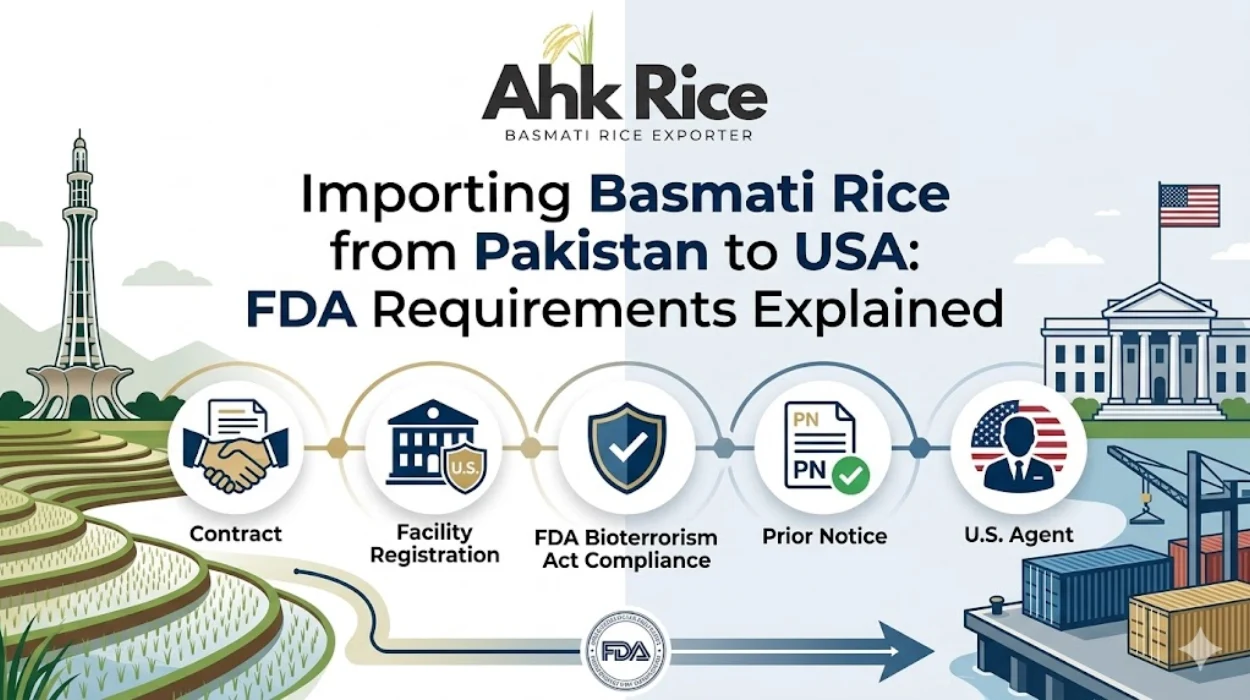
Importing Basmati Rice from Pakistan to USA: FDA Requirements Explained
Importing Basmati rice from Pakistan to the USA requires FDA facility registration, prior notice filing, FSMA compliance, phytosanitary certification, and verified labeling standards. Here is why: the United States treats rice as a regulated food product under federal food safety law, and every shipment passes through documented inspection and traceability procedures before clearance.
Pakistan supplies premium long-grain aromatic rice to global markets because Punjab’s irrigated plains support consistent Basmati cultivation. Pakistan exported over 5 million metric tons of rice during FY2024–25, with Basmati contributing a major share to premium export revenue (source: Pakistan Bureau of Statistics, FY2024–25). The United States imports Pakistani Basmati for retail stores, foodservice distributors, halal markets, and restaurant chains because the grain maintains aroma, elongation, and cooking consistency.
Understanding FDA requirements starts with understanding the rice product itself, the export chain, and the inspection process that connects Pakistani mills with American import systems.
What Is Importing Basmati Rice from Pakistan to the USA?
Importing Basmati rice into the United States means clearing a regulated food product through FDA, CBP, and agricultural inspection systems before commercial distribution.
Basmati rice is an aromatic long-grain rice cultivated in Punjab regions of Pakistan and India. Pakistani Basmati varieties include 1121, Super Kernel, 1509, PK386, and D-98. American importers purchase these grades for ethnic retail shelves, restaurant supply chains, and private-label packaging operations.
The United States classifies rice as a human food product. FDA regulations apply from the moment a shipment leaves the Pakistani processing facility. Every exporting mill must maintain traceable production records, verified sanitation controls, and shipment documentation.
Pakistan rice exporters dispatch rice in several packaging formats for the American market. Common examples include:
- 1 kg retail bags
- 5 kg consumer packs
- 20 kg woven bags
- 40 kg polypropylene sacks
- Private-label vacuum packaging
American buyers often compare grain characteristics before selecting a supplier. Readers evaluating grain performance and elongation standards often review detailed comparisons between premium export grades through contextual resources like 1121 and Super Kernel Basmati specifications for the US premium segment.
Pakistani Basmati enters the USA through ports including New York, Houston, Los Angeles, and Savannah. U.S. Customs and Border Protection coordinates inspection with FDA systems because imported food products require compliance verification before market entry.
With the definition of rice importing established, the next question is how the FDA import process actually works.
How Does the FDA Rice Import Process Work?
FDA rice import procedures require registered facilities, prior notice submission, shipment traceability, laboratory compliance, and documented food safety controls.
FDA regulates imported rice under the Federal Food, Drug, and Cosmetic Act and the Food Safety Modernization Act. The importer and exporter both participate in compliance procedures because the shipment requires documented accountability.
How Does FDA Facility Registration Work?
Every rice processing facility exporting to the USA requires active FDA registration before shipment loading.
FDA registration identifies the processing location handling the rice. The registration process records the milling facility, warehouse address, and operational category. FDA systems reject unregistered exporters automatically.
Pakistani exporters register facilities through the FDA Food Facility Registration Module. Registration renewal occurs every two years because FDA maintains active importer traceability databases.
Rice mills exporting to the USA maintain documented controls including:
- Moisture testing
- Metal detection
- Pest control
- Batch coding
- Sanitation schedules
- Cleaning verification
- Storage inspection
American importers often request facility audit reports before procurement approval because U.S. retailers require supplier verification records.
How Does Prior Notice Filing Work?
FDA requires electronic prior notice before every rice shipment arrives at a U.S. port.
Prior notice informs FDA about the incoming cargo. The filing contains shipment quantity, product category, packaging type, exporter details, importer details, and vessel information.
FDA systems flag missing prior notice submissions immediately. Shipments without prior notice face detention at port terminals because the cargo lacks approved entry records.
Rice importers typically file prior notice several hours before vessel arrival. Ocean freight shipments receive filing earlier because customs brokers coordinate vessel schedules with FDA databases.
How Does FSMA Compliance Affect Rice Imports?
FSMA requires preventive food safety systems, supplier verification, and contamination control throughout the rice supply chain.
The Food Safety Modernization Act shifted FDA enforcement toward prevention instead of reaction. Pakistani rice exporters serving the USA now maintain documented preventive controls.
Rice processing facilities implement systems including:
- Hazard analysis
- Critical control monitoring
- Microbial testing
- Traceability coding
- Employee hygiene controls
- Storage temperature monitoring
FSMA compliance matters especially for aromatic rice because long international transit periods increase storage risk. In humid shipping environments, improperly dried rice develops moisture instability within containerized cargo. Mills maintaining moisture between 12% and 14% achieve safer transport stability during ocean freight.
With FDA procedures explained, the next question concerns the actual rice processing system inside Pakistan.
How Is Pakistani Basmati Rice Processed for the USA Market?
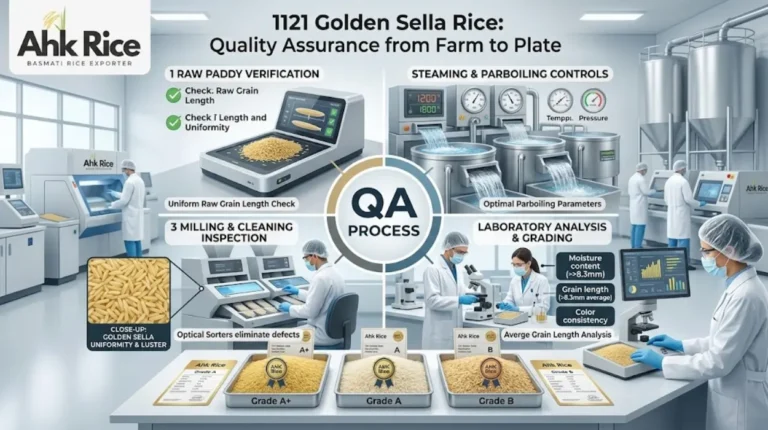
Pakistani Basmati rice for the USA undergoes cleaning, dehusking, polishing, grading, sorting, testing, packaging, and export inspection before shipment dispatch.
Punjab produces Pakistan’s largest concentration of export-grade Basmati rice because canal irrigation supports controlled cultivation. Farmers harvest paddy rice between September and November depending on variety.
How Does the Rice Processing Chain Work?
Rice mills process export-grade Basmati through controlled mechanical and quality inspection stages.
Processing plants prepare rice using structured operations:
- Clean the harvested paddy
- Dry the grain to export moisture levels
- Remove husk layers mechanically
- Polish the rice surface
- Sort grains by length
- Separate broken kernels
- Remove discolored grains
- Inspect foreign material
- Package export-grade rice
Export mills serving the USA apply additional testing because American import standards focus heavily on contamination prevention.
Quality laboratories test:
- Moisture percentage
- Grain length
- Broken percentage
- Chalkiness
- Heavy metals
- Pesticide residue
- Insect contamination
Pakistani Basmati maintains premium market positioning because elongation ratios remain significantly higher than ordinary long-grain rice. 1121 Basmati often reaches cooked grain lengths above 20 mm after boiling. Super Kernel varieties maintain stronger aroma concentration during long storage periods.
What Grades of Basmati Rice Reach the USA?
The U.S. market imports multiple Pakistani Basmati grades based on restaurant demand, retail pricing, and cooking preference.
Common export grades include:
1121 Basmati Rice
1121 Basmati delivers extra-long grain structure and high elongation performance.
1121 suits American restaurant chains because cooked grains remain separated after steaming. Catering businesses prefer this specification for biryani and buffet operations.
Typical specifications include:
- Grain length: 8.20–8.40 mm
- Broken ratio: 1–5%
- Moisture: 12–14%
- Purity: 95–100%
Super Kernel Basmati Rice
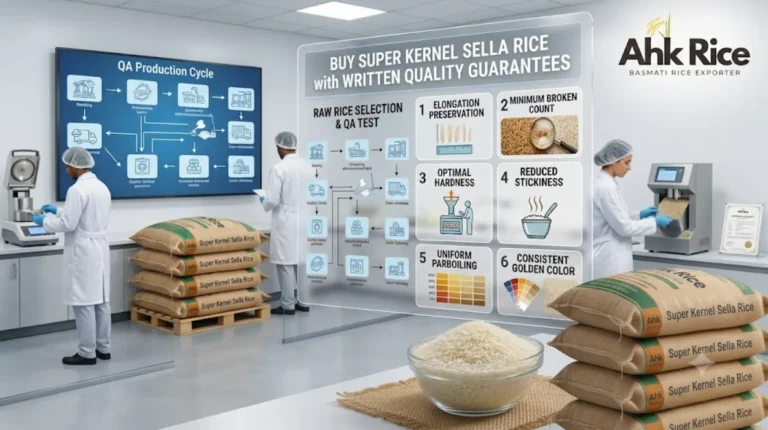
Super Kernel Basmati provides stronger traditional aroma and softer texture after cooking.
Super Kernel performs well in retail ethnic markets because consumers associate it with traditional Pakistani flavor profiles. U.S. halal supermarkets often prioritize this variety.
Typical specifications include:
- Grain length: 7.00–7.40 mm
- Broken ratio: 2–5%
- Aging period: 12–24 months
- Aroma intensity: High
1509 Basmati Rice
1509 Basmati offers faster cooking and lower procurement cost compared to aged premium grades.
1509 supports budget-sensitive import programs because production cycles are shorter. American private-label distributors often use this grade for mid-range retail products.
With rice grades clarified, the next question concerns the certifications American buyers require before import approval.
What Certifications Apply to Pakistan Rice Exports to the USA?
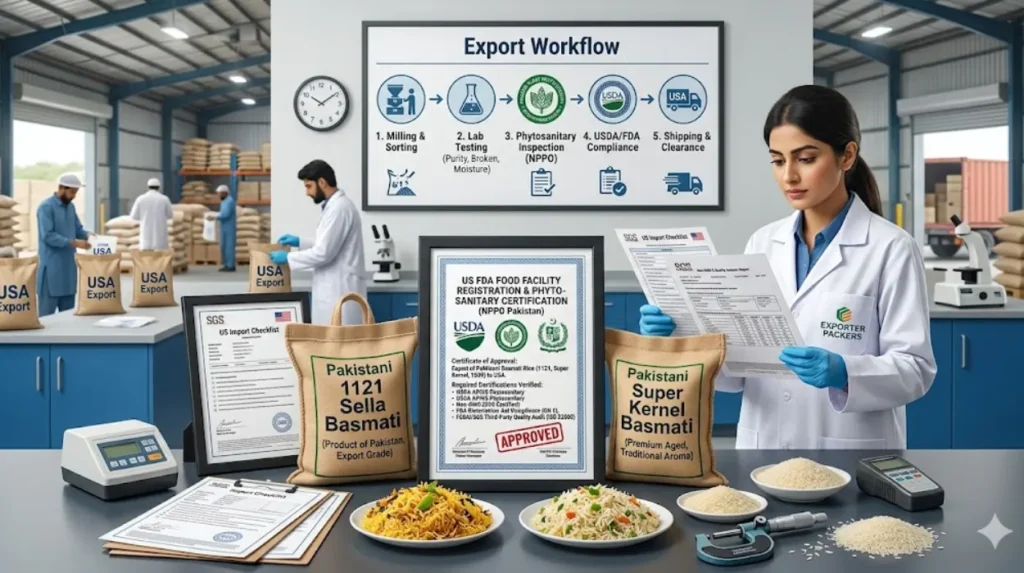
Pakistani rice exports to the USA require phytosanitary certification, quality inspection records, origin documentation, and FDA-linked compliance verification.
Export documentation proves shipment legality and food safety compliance. U.S. customs authorities inspect paperwork before approving cargo release.
Which Export Documents Matter Most?
Rice import documentation establishes origin, safety status, inspection compliance, and customs valuation.
Required export documents include:
- Commercial invoice
- Packing list
- Bill of lading
- Phytosanitary certificate
- Certificate of origin
- Fumigation certificate
- FDA prior notice confirmation
- Laboratory analysis report
Phytosanitary certification confirms the rice passed agricultural inspection before export. Pakistani authorities issue this document after pest verification because importing countries restrict contaminated agricultural cargo.
Fumigation records matter strongly in American ports because grain cargo attracts warehouse pests during long transit periods. Proper fumigation prevents shipment detention.
Which Quality Certifications Improve Market Access?
Third-party certifications improve importer confidence and retail acceptance in regulated food markets.
Common certifications include:
- ISO 22000
- HACCP
- BRCGS
- Halal certification
- Organic certification
- SMETA audit compliance
American supermarket buyers often request BRCGS or HACCP certification because large retail systems require preventive food safety verification.
Organic rice imports follow stricter standards. USDA Organic recognition applies only when farms and processing units maintain approved certification systems throughout cultivation and milling operations.
With certifications explained, the next question concerns the actual benefits driving Pakistani rice imports into the USA.
Why Does the USA Import Basmati Rice from Pakistan?
Pakistani Basmati offers aroma, elongation, price efficiency, and supply consistency for American retail and foodservice markets.
The U.S. consumer market for South Asian and Middle Eastern foods continues expanding because population growth increases demand for traditional rice varieties. Pakistani Basmati supports this demand with multiple grain grades and packaging formats.
Why Do Restaurants Prefer Pakistani Basmati?
Pakistani Basmati performs well in large-scale cooking because grains remain separate after steaming.
Restaurant operators prioritize grain performance during bulk cooking. 1121 Basmati maintains structure during buffet holding periods. Super Kernel maintains aroma during biryani preparation.
In high-volume restaurant kitchens operating above 35°C, aged Golden Sella rice maintains texture stability for extended serving periods. Steam rice loses surface firmness faster under the same holding conditions. Gulf catering buyers often select Golden Sella because non-climate-controlled kitchens require longer service durability.
Why Do Retail Buyers Import Pakistani Rice?
Retail importers value packaging flexibility and multiple pricing categories.
Pakistani exporters supply:
- Premium aged rice
- Mid-range steam rice
- Golden Sella rice
- White rice
- Organic rice
American ethnic grocery chains often diversify rice shelves using multiple Pakistani grades because consumers purchase according to aroma preference and cooking style.
Pakistani exporters also support custom private-label programs because U.S. distributors require localized branding for supermarket chains.
With benefits established, the next question concerns the misconceptions surrounding FDA rice imports.
What Problems and Misconceptions Affect FDA Rice Imports?
Most import delays result from documentation errors, labeling problems, moisture instability, or unverified suppliers.
Importing rice into the USA does not require direct FDA product approval before shipment. FDA regulates the facility and shipment process instead. Many new importers misunderstand this distinction.
Does FDA Approve Individual Rice Brands?
FDA does not pre-approve individual rice brands before sale.
FDA verifies compliance through inspections, documentation review, and shipment examination. The importer remains responsible for lawful product entry.
Rice labels still require compliance with American food labeling rules including:
- Product identity
- Net weight
- Country of origin
- Ingredient declaration
- Allergen statements
- Importer information
Incorrect labeling creates customs delays because retail food packaging falls under regulated disclosure standards.
Do All Rice Shipments Receive Laboratory Testing?
FDA performs risk-based inspections instead of universal laboratory testing.
FDA targets higher-risk shipments based on supplier history, documentation accuracy, and inspection records. Facilities maintaining stable compliance histories experience fewer intensive examinations.
Consistent moisture control reduces shipment rejection rates significantly. Rice stored above 14% moisture develops higher spoilage risk during ocean transit. Export mills maintaining controlled drying systems achieve safer arrival conditions in humid American port environments.
Is Basmati Rice Automatically Duty-Free?
Rice import duties depend on tariff classification, trade status, and customs regulations.
Importers verify tariff schedules through customs brokers before procurement because duty structures change according to trade policy updates.
Understanding these misconceptions completes the broader picture of how Pakistani Basmati reaches regulated American markets through documented compliance systems.
Frequently Asked Questions
Does FDA approve Pakistani Basmati rice before export?
FDA does not pre-approve individual rice brands before shipment. FDA verifies compliance through facility registration, prior notice filing, inspection systems, and food safety documentation during the import process.
Which Pakistani Basmati rice variety sells most in the USA?
1121 Basmati rice leads premium U.S. foodservice demand because it delivers extra-long grain length and strong elongation after cooking. Super Kernel Basmati performs strongly in ethnic retail markets because of its traditional aroma.
What documents are required to import rice into the USA?
Rice importers need a commercial invoice, packing list, bill of lading, phytosanitary certificate, fumigation certificate, FDA prior notice confirmation, and certificate of origin before customs clearance.
Why do U.S. importers prefer Pakistani Basmati rice?
Pakistani Basmati offers strong aroma, long grain structure, multiple processing grades, and competitive export pricing. Punjab cultivation regions also support consistent supply volumes for retail and restaurant markets.
What causes FDA delays for rice shipments?
Most FDA delays result from incorrect labeling, incomplete documentation, moisture instability, or missing prior notice filings. Exporters reduce inspection risk by maintaining traceability records and verified quality testing systems.
Frequently Asked Questions
Does FDA approve Pakistani Basmati rice before export?
FDA does not pre-approve individual rice brands before shipment. FDA verifies compliance through facility registration, prior notice filing, inspection systems, and food safety documentation during the import process.
Which Pakistani Basmati rice variety sells most in the USA?
1121 Basmati rice leads premium U.S. foodservice demand because it delivers extra-long grain length and strong elongation after cooking. Super Kernel Basmati performs strongly in ethnic retail markets because of its traditional aroma.
What documents are required to import rice into the USA?
Rice importers need a commercial invoice, packing list, bill of lading, phytosanitary certificate, fumigation certificate, FDA prior notice confirmation, and certificate of origin before customs clearance.
Why do U.S. importers prefer Pakistani Basmati rice?
Pakistani Basmati offers strong aroma, long grain structure, multiple processing grades, and competitive export pricing. Punjab cultivation regions also support consistent supply volumes for retail and restaurant markets.
What causes FDA delays for rice shipments?
Most FDA delays result from incorrect labeling, incomplete documentation, moisture instability, or missing prior notice filings. Exporters reduce inspection risk by maintaining traceability records and verified quality testing systems.