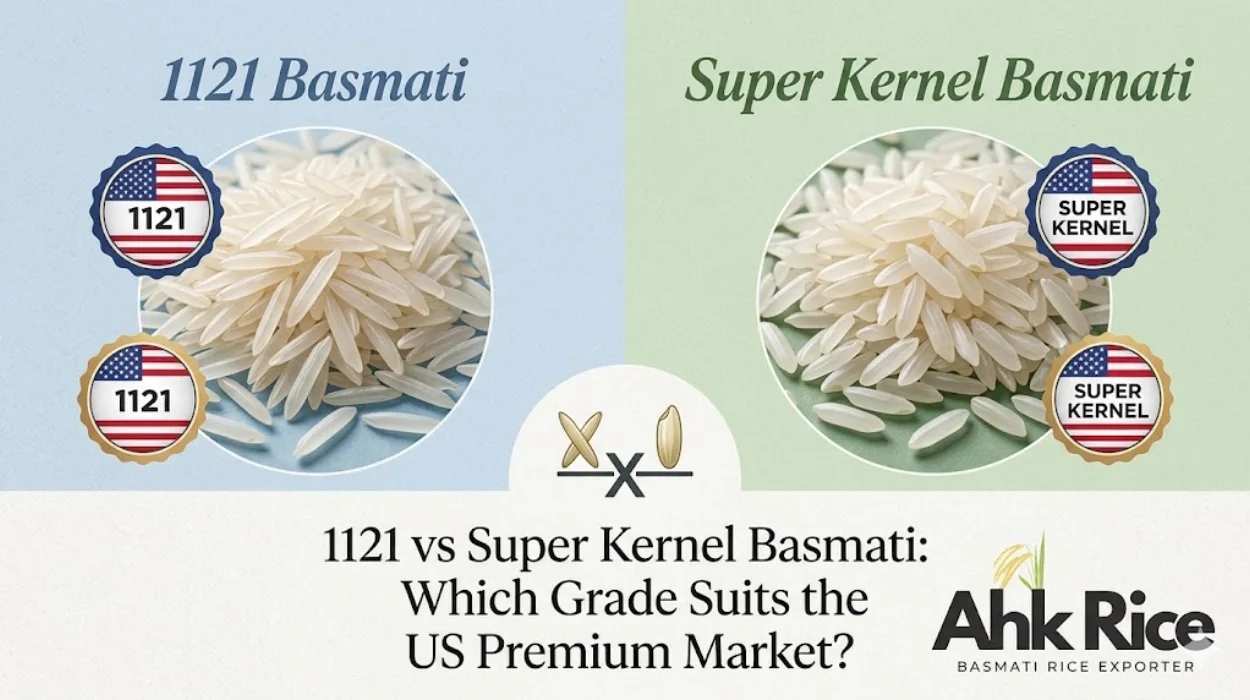
1121 vs Super Kernel Basmati: Which Grade Suits the US Premium Market?
1121 Basmati suits the US premium market better for long-grain retail shelves, private-label supermarket packs, and foodservice buyers demanding extra grain elongation. Super Kernel Basmati performs better in ethnic retail and traditional South Asian distribution because it delivers stronger aroma, lower FOB pricing, and established consumer familiarity. Here is why: US buyers prioritize grain appearance, shelf differentiation, cooking expansion, and packaging presentation in premium rice USA channels.
AHK Rice supplies Pakistani Basmati grades to importers, distributors, and private-label buyers across multiple export markets. The company mills, grades, sorts, tests, and ships 1121, Super Kernel, and 1509 Basmati varieties with custom packaging and export documentation from Punjab, Pakistan. Buyers comparing these grades should first understand how the US market classifies premium rice categories before selecting a sourcing strategy. Importers researching Pakistani Basmati classifications can first review this educational guide on aromatic export rice categories before comparing commercial specifications in detail.
What makes 1121 and Super Kernel different in the US premium rice market?
1121 Basmati delivers longer grain length, higher elongation, and stronger visual shelf appeal. Super Kernel delivers deeper aroma, lower sourcing cost, and wider acceptance in traditional South Asian retail channels. US importers choose between visual premium positioning and heritage flavor positioning depending on customer demographics.
What is 1121 Basmati Rice?
1121 Basmati is an extra-long grain aromatic rice cultivated in Punjab. The variety became commercially dominant because it combines high cooked grain elongation with consistent milling recovery. Most US private-label importers select 1121 for premium packaging because consumers visually compare grain length before purchase.
1121 grain length typically measures 8.30–8.50 mm before cooking. Cooked elongation often reaches 18–22 mm after boiling. This expansion creates a luxury visual appearance in restaurant plating and retail photography.
1121 performs strongly in these US channels:
- Premium supermarket retail
- Private-label grocery brands
- Restaurant foodservice
- Online gourmet rice stores
- Health-conscious ethnic fusion markets
AHK Rice mills several 1121 processing grades:
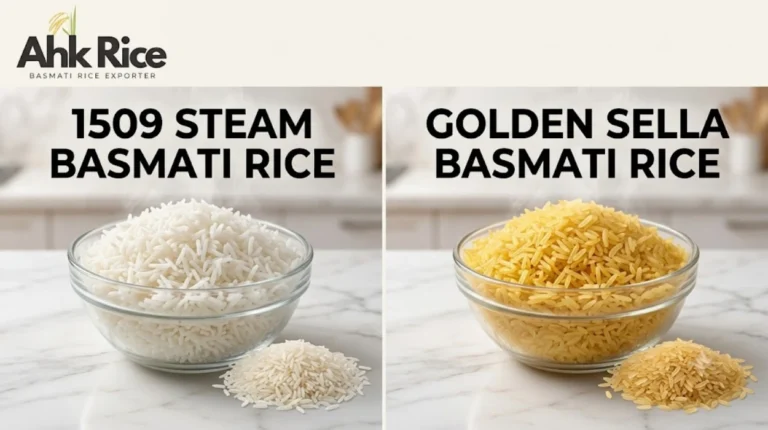
- 1121 Steam Basmati
- 1121 Golden Sella Basmati
- 1121 White Basmati
- 1121 Creamy Sella Basmati
- 1121 Brown Basmati
- 1121 Broken Basmati
- 1121 Sortex Clean Basmati
What is Super Kernel Basmati Rice?
Super Kernel Basmati is a traditional aromatic Pakistani rice variety cultivated mainly in Punjab. The grade became established in Gulf, UK, and North American ethnic retail because it maintains a stronger classic Basmati fragrance than modern high-yield varieties.
Super Kernel grain length usually measures 7.00–7.40 mm before cooking. The cooked texture remains fluffy and aromatic with lower breakage during household cooking.
US ethnic distributors prefer Super Kernel because South Asian consumers already recognize the variety by name. Pakistani and Indian diaspora buyers often associate Super Kernel with traditional home cooking and biryani preparation.
Super Kernel performs strongly in these US channels:
- South Asian grocery chains
- Halal supermarkets
- Ethnic cash-and-carry distributors
- Traditional restaurant supply
- Value-premium wholesale programs
With both varieties defined, the next comparison is their measurable commercial specifications for US importers.
How do 1121 and Super Kernel specifications compare?
1121 outperforms Super Kernel in grain length, cooked elongation, and premium presentation. Super Kernel outperforms 1121 in aroma intensity, traditional recognition, and cost efficiency. US importers compare specifications because retail positioning depends on measurable physical attributes.
Specification Comparison Table
| Attribute | 1121 Basmati | Super Kernel Basmati |
|---|---|---|
| Raw Grain Length | 8.30–8.50 mm | 7.00–7.40 mm |
| Cooked Grain Length | 18–22 mm | 14–16 mm |
| Aroma Profile | Medium-high aroma | Strong traditional aroma |
| Average FOB Karachi Price | $1,050–1,350/MT | $850–1,100/MT |
| Milling Recovery | Higher recovery rates | Moderate recovery |
| Shelf Presentation | Luxury long-grain appearance | Traditional premium appearance |
| Typical US Buyer Segment | Premium retail and foodservice | Ethnic retail and value-premium trade |
How does grain appearance affect US retail sales?
US consumers often evaluate premium rice visually before reading origin details. Long grains create stronger shelf differentiation in transparent retail packaging. 1121 performs better because the grain appears slimmer and longer in retail bags.
Premium supermarket chains in California, Texas, and New York increasingly stock extra-long Basmati products because consumers associate grain length with quality. Imported aromatic rice demand continues expanding in North America due to multicultural population growth (source: USDA Rice Outlook 2025).
How does aroma affect repeat purchases?
Super Kernel creates stronger sensory recognition during cooking. Traditional South Asian households often prioritize aroma over visual elongation because flavor memory influences repeat purchasing decisions.
Pakistani and Indian consumers in the US frequently choose Super Kernel for biryani, pulao, and festive cooking. The variety maintains a recognizable heritage aroma profile that modern hybrid grades sometimes reduce.
How does pricing affect importer strategy?
1121 commands higher FOB Karachi pricing because processing yields, export demand, and global premium positioning remain strong. Super Kernel offers lower landed costs for wholesalers targeting price-sensitive retail.
A $150–250/MT pricing difference significantly impacts import margins on full container shipments. A 20-foot container usually carries around 24–26 MT of rice. Small FOB differences therefore create major wholesale cost changes.
With technical specifications compared, importers next need to evaluate which US regions prefer each grade.
Which US market regions prefer 1121 or Super Kernel?
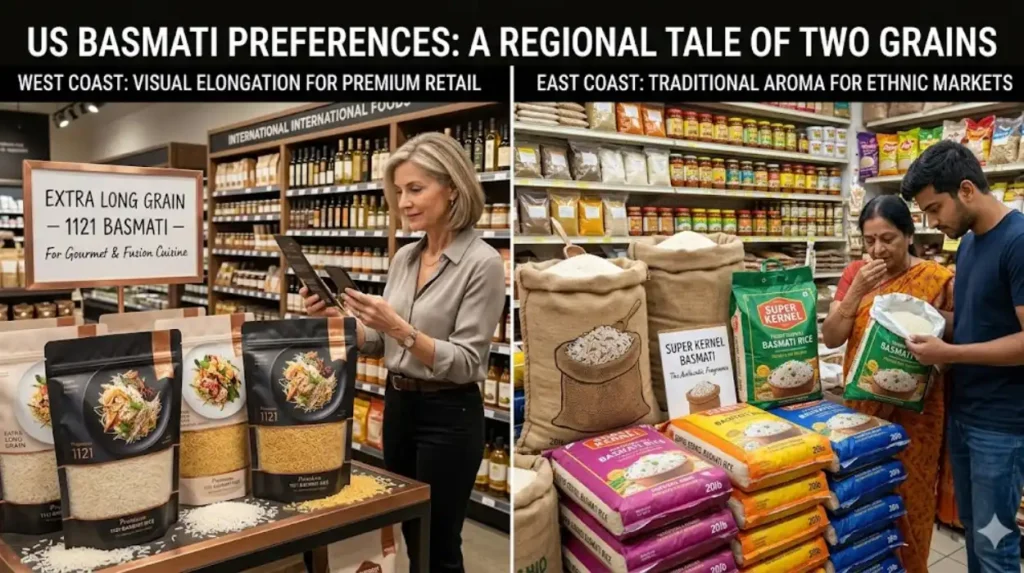
West Coast premium retail markets prefer 1121 because packaging presentation influences upscale grocery sales. East Coast ethnic distribution markets prefer Super Kernel because diaspora consumers prioritize traditional aroma and familiar variety names during repeat purchases.
Why does the West Coast prefer 1121?
California, Washington, and Oregon retailers increasingly position Basmati within premium international food aisles. Upscale supermarkets target consumers seeking gourmet ingredients for fusion cuisine and restaurant-style home cooking.
1121 performs strongly in these conditions because:
- Long grains improve retail presentation
- Cooked elongation supports restaurant plating
- Premium packaging highlights grain uniformity
- White and Golden Sella grades photograph well
- Online retail visuals favor extra-long grains
US foodservice buyers also select 1121 because buffet and catering operations value plate appearance. Extra grain elongation creates better portion visibility after cooking.
Why does the East Coast prefer Super Kernel?
New York, New Jersey, and parts of Illinois maintain dense South Asian populations. Ethnic grocery buyers prioritize traditional cooking performance over visual elongation.
Super Kernel succeeds because:
- Heritage consumers recognize the variety
- Aroma aligns with traditional recipes
- Wholesale pricing supports competitive retail margins
- Cooking texture fits biryani applications
- Established distributors already stock the grade
Importers supplying ethnic supermarkets often prioritize consistent fragrance over extra grain length. Super Kernel maintains strong repeat demand in these channels.
How do restaurant buyers compare the two grades?
Fine-dining restaurants usually prefer 1121 Golden Sella because grains remain separate after cooking. Ethnic family restaurants frequently prefer Super Kernel White because aroma enhances traditional dishes.
US restaurant operators increasingly compare:
- Water absorption rates
- Cooked volume expansion
- Holding stability
- Steam-table performance
- Reheating consistency
With regional demand patterns established, the next question becomes shelf life and inventory management.
Which grade offers better shelf life and storage performance?
1121 Golden Sella offers longer warehouse stability because parboiling strengthens grain structure. Super Kernel White provides shorter storage performance but maintains stronger aroma during normal retail turnover cycles. Storage conditions directly affect importer profitability in the US basmati market.
Shelf Life Comparison Table
| Storage Factor | 1121 Golden Sella | Super Kernel White |
|---|---|---|
| Recommended Shelf Life | 18–24 months | 12–18 months |
| Moisture Stability | Higher stability | Moderate stability |
| Breakage Resistance | Higher resistance | Moderate resistance |
| Aroma Retention | Moderate | Higher aroma retention |
| Climate Tolerance | Better for humid warehouses | Better in controlled storage |
Why does Golden Sella last longer?
Golden Sella processing parboils the rice before milling. This process hardens grain structure and improves storage resistance. Importers shipping across long US distribution routes often select Sella grades because inventory remains stable during warehousing.
Golden Sella performs better in humid conditions. In non-climate-controlled warehouses, properly processed Sella rice maintains grain integrity for extended periods. White rice grades generally require faster inventory turnover.
Why does Super Kernel retain stronger aroma?
Super Kernel naturally contains stronger aromatic compounds. White processing preserves much of this fragrance because the grain avoids aggressive thermal treatment.
Ethnic grocery retailers with fast turnover cycles benefit from this characteristic. Customers immediately detect fragrance during cooking, which strengthens repeat purchases.
With storage performance covered, importers next need a practical framework for selecting the correct grade.
Which grade works best for different importing strategies?
1121 works best for premium retail expansion, private labeling, and upscale foodservice programs. Super Kernel works best for ethnic distribution, value-premium wholesale, and traditional culinary markets. The correct choice depends on customer demographics, packaging strategy, and inventory turnover speed.
Decision Framework Table
| Business Situation | Recommended Grade | Reason |
|---|---|---|
| Premium supermarket launch | 1121 Steam or Golden Sella | Longer grain improves shelf appeal |
| Ethnic grocery distribution | Super Kernel White | Traditional aroma drives repeat sales |
| Restaurant catering supply | 1121 Golden Sella | Better holding stability after cooking |
| Price-sensitive wholesale | Super Kernel Sella | Lower FOB cost improves margins |
| Private-label ecommerce brand | 1121 White or Steam | Visual differentiation supports branding |
When should importers choose 1121?
1121 fits growth-focused premium retail strategies. Importers entering gourmet grocery chains need a visually distinctive product that supports higher shelf pricing.
1121 also performs better when buyers require:
- Luxury packaging presentation
- Ecommerce product photography
- High cooked elongation
- Consistent grain uniformity
- Premium restaurant positioning
Private-label importers increasingly select 1121 because US consumers associate longer grains with premium quality.
When should importers choose Super Kernel?
Super Kernel fits established ethnic distribution models. Importers targeting Pakistani, Indian, Bangladeshi, and Middle Eastern consumers benefit from strong variety recognition.
Super Kernel also works better when buyers prioritize:
- Traditional aroma
- Lower landed cost
- Faster wholesale turnover
- Heritage consumer familiarity
- Competitive retail pricing
Many US ethnic wholesalers stock both grades simultaneously. This dual-grade strategy expands market coverage across premium and traditional customer segments.
With buyer selection strategies explained, the final question becomes how importers evaluate export-ready suppliers.
How should US importers evaluate Basmati exporters?
US importers should compare milling capability, processing consistency, export documentation, packaging flexibility, and container loading systems before selecting a supplier. Product quality alone does not guarantee successful import performance because logistics execution affects final landed value.
Which processing capabilities matter most?
Exporters should clearly define processing systems because milling consistency directly affects retail acceptance. Reliable suppliers inspect, test, grade, and sort rice before container loading.
AHK Rice manages these processing stages:
- Clean the harvested paddy
- De-husk the grain
- Dry the rice to export moisture levels
- Polish the kernels
- Grade by size
- Sort broken grains
- Remove discoloration through sortex systems
- Test moisture and purity
- Load export containers
Importers should request specification sheets covering:
- Grain length
- Broken percentage
- Moisture level
- Purity percentage
- Chalky grain ratio
- Crop year
- Packaging type
Which export documents are required?
US importers should verify complete export documentation before shipment dispatch. Missing paperwork delays customs clearance and increases demurrage charges.
Required export documents include:
- Commercial invoice
- Packing list
- Certificate of origin
- Phytosanitary certificate
- Fumigation certificate
- Bill of lading
- Quality inspection report
Why does packaging flexibility matter?
Different US channels require different packaging formats. Retail supermarkets often demand branded laminated bags, while wholesalers frequently procure PP woven sacks.
Common export packaging includes:
- 1 kg retail bags
- 5 kg consumer packs
- 10 kg family packs
- 20 kg PP bags
- 40 kg wholesale sacks
Importers comparing Pakistani suppliers should also review detailed FOB specifications, loading procedures, and wholesale shipment structures for export-ready Basmati sourcing programs through this commercial guide on Pakistani wholesale aromatic rice exports.
The comparison between 1121 and Super Kernel ultimately depends on target customer behavior, not generic product rankings. Premium retail growth favors 1121 because visual differentiation drives shelf value. Traditional ethnic distribution favors Super Kernel because aroma and heritage recognition strengthen repeat purchasing across established consumer communities.
Frequently Asked Questions
Which Basmati grade sells better in the US premium retail market?
1121 Basmati sells better in the US premium retail market because the grain appears longer and more uniform in packaged retail bags. Supermarkets and private-label brands prefer 1121 for upscale shelf presentation. Super Kernel performs better in ethnic grocery chains targeting traditional South Asian consumers.
Why do US importers choose 1121 Golden Sella Basmati?
US importers choose 1121 Golden Sella because the grains remain separate after cooking and maintain stability during long storage periods. The parboiling process strengthens the grain structure and reduces breakage during shipping and warehouse handling.
Is Super Kernel Basmati more aromatic than 1121 Basmati?
Super Kernel Basmati produces a stronger traditional aroma during cooking. Many Pakistani and Indian households prefer Super Kernel for biryani and pulao because the fragrance matches heritage cooking preferences. 1121 provides moderate aroma with stronger visual elongation.
Which Basmati grade offers better wholesale pricing for US distributors?
Super Kernel usually offers lower FOB Karachi pricing than 1121. Distributors targeting price-sensitive retail markets often select Super Kernel because the lower sourcing cost improves wholesale margins. 1121 commands higher pricing due to premium global demand and extra-long grain length.
What packaging formats do US Basmati rice importers usually request?
US importers commonly request 1 kg, 5 kg, 10 kg, and 20 kg packaging formats depending on their sales channel. Supermarkets prefer branded laminated retail packs, while wholesalers often procure PP woven sacks for bulk distribution and restaurant supply.