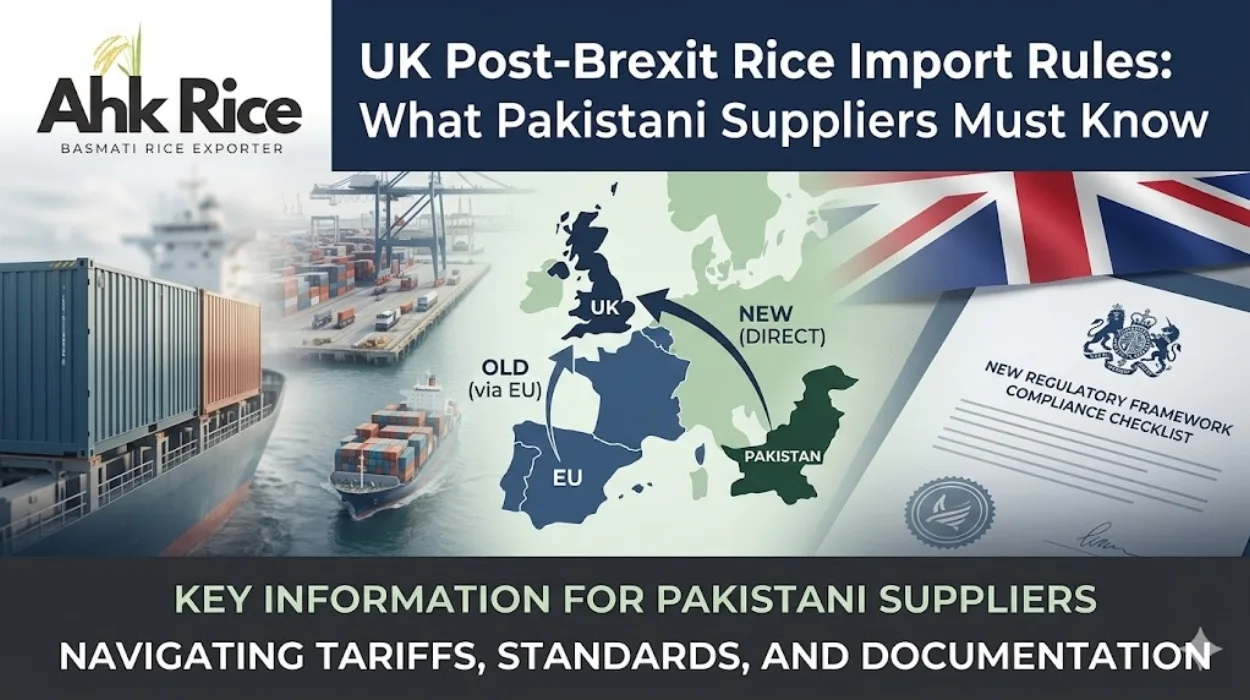
UK Post-Brexit Rice Import Rules: What Pakistani Suppliers Must Know
UK post-Brexit rice import rules define mandatory customs, food safety, and documentation systems that govern rice entry into the UK from non-EU countries. These rules require Pakistani suppliers to comply with UK border controls, IPAFFS notifications, phytosanitary certification, and tariff classification before rice clearance and distribution.
UK post-Brexit rice import rules Pakistani suppliers operate under a fully independent UK trade regime after EU exit. The UK replaced EU single market access with national border systems. Rice imports now require UK-specific customs declarations and risk-based inspection.
UK Brexit rice regulations separate food imports into controlled and non-controlled categories. Rice falls under plant-based food commodities requiring documentation verification and occasional inspection.
Post-Brexit food import governance relies on digital pre-notification systems. IPAFFS system records consignments before arrival. Customs declaration service (CDS) processes tariff and VAT assessment at entry points.
UK rice supplier rules apply equally to basmati and non-basmati rice origins. Pakistan exports must meet identity preservation and traceability standards during shipment from Punjab milling units to UK ports.
UK import framework enforces compliance before physical unloading. With the regulatory definition established, the next step is understanding how the system functions in real trade flow.
How does UK post-Brexit rice import system work?
UK post-Brexit rice import system works through a three-stage flow involving pre-notification in IPAFFS, customs clearance via CDS, and physical inspection at UK border control posts when risk flags activate.
IPAFFS registration captures shipment identity before dispatch. Exporters submit product type, origin, weight, and certification details before vessel departure. This step prevents unregistered consignments from entering UK ports.
Clean paddy documentation is verified at origin mills in Punjab. De-husked rice batches are graded, sorted, and packed before export filing. Certification data is uploaded for traceability.
Customs declaration service processes tariff codes under UK Global Tariff. Rice imports are classified based on milling type, grain length, and processing method such as parboiled or steamed.
Border control posts inspect shipments when risk thresholds trigger intervention. Inspectors verify phytosanitary certificates, pesticide residue compliance, and labeling accuracy.
Dispatch logistics from Pakistan include container sealing and port loading. Shipments move from Karachi ports to UK terminals such as Felixstowe or Southampton.
With system flow established, the next step is identifying the compliance components required for approval.
What are key compliance components for UK rice imports?
Key compliance components include phytosanitary certification, IPAFFS pre-notification, UK tariff classification, pesticide residue compliance, labeling standards, and traceability documentation for each shipment batch.
Phytosanitary certification confirms rice is free from pests and plant diseases. National plant protection organizations in Pakistan inspect and certify export lots before loading.
IPAFFS compliance ensures pre-border visibility. Importers submit entry summaries containing product identity, origin farm or mill, and consignee details.
Tariff classification assigns HS codes based on rice type. Basmati rice, broken rice, and parboiled rice carry distinct duty treatments under UK tariff schedules.
Residue testing verifies chemical safety thresholds. UK MRL limits apply to pesticides used during cultivation in Punjab agricultural zones.
Labeling compliance enforces origin disclosure and batch identification. Each sack includes mill name, weight, crop year, and export country.
Traceability systems connect cultivation, milling, and shipment stages. This ensures recall readiness and food safety control across supply chains.
UK import compliance depends on coordinated documentation accuracy. With compliance components defined, the next section explains benefits for exporters and importers.
What are benefits of compliance with UK import rules?
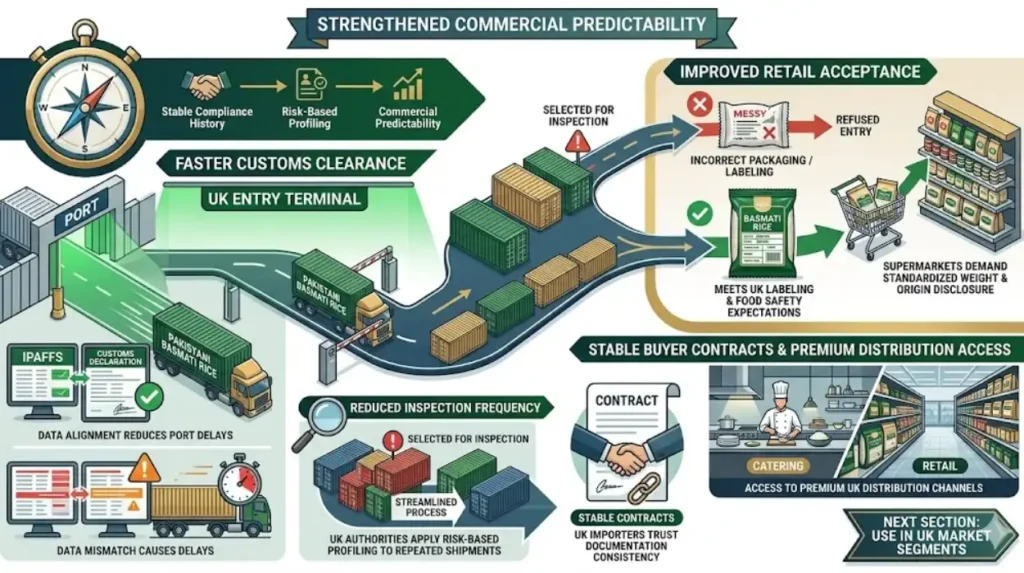
Benefits of compliance include faster customs clearance, reduced inspection frequency, stable buyer contracts, improved retail acceptance, and access to premium UK basmati rice distribution channels.
Faster clearance occurs when IPAFFS data matches customs declarations. Consistent data alignment reduces port delays at UK entry terminals.
Reduced inspection frequency applies to exporters with stable compliance history. UK authorities apply risk-based profiling to repeated shipments.
Stable buyer contracts develop when UK importers trust documentation consistency. Retailers require uninterrupted supply chains for basmati rice distribution.
Integrates here for buyers exploring private label basmati rice UK retail brand setup structures.
Improved retail acceptance occurs when packaging meets UK labeling and food safety expectations. Supermarkets demand standardized weight and origin disclosure.
Premium distribution access allows Pakistani basmati to enter catering and retail sectors. Consistent compliance supports long-term procurement agreements.
Compliance strengthens commercial predictability. With benefits established, the next section explains how Pakistani rice is used in UK market segments.
What are use cases for Pakistani basmati in UK market?
Pakistani basmati rice is used in UK retail supermarkets, ethnic grocery chains, food service catering, private label brands, and institutional supply contracts requiring long grain aromatic rice.
Retail supermarkets distribute 1121 basmati rice for household cooking applications. Consumers select long grain rice for daily meal preparation and curry-based diets.
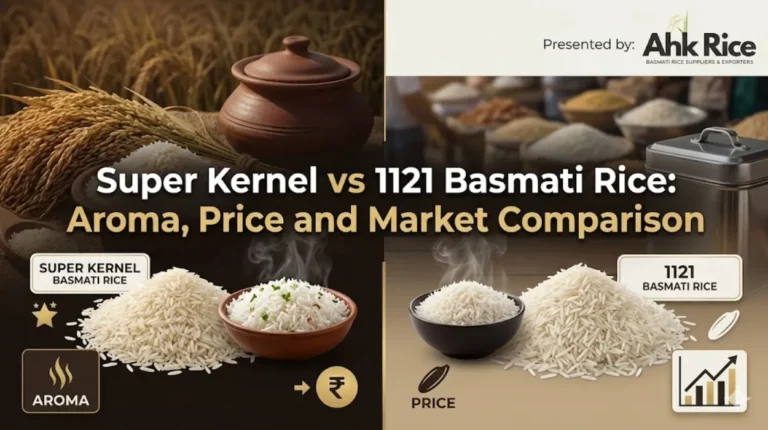
Ethnic grocery chains stock Super Kernel and 1509 varieties. These segments target South Asian diaspora communities requiring authentic grain texture.
Food service catering uses bulk shipments for restaurants. Catering kitchens prefer 40 kg packaging formats for efficiency and storage optimization.
Private label brands develop UK-specific packaging under supermarket branding. These require consistent grain grading and moisture control standards.
Institutional supply contracts include schools, hospitals, and corporate kitchens. These buyers require stable cooking yield and uniform grain expansion.
With use cases defined, the next section addresses common problems and misconceptions in import operations.
What are common problems and misconceptions in UK rice import rules?
Common problems include incorrect HS classification, incomplete IPAFFS submissions, inconsistent phytosanitary documentation, and misunderstanding of UK post-Brexit inspection risk models.
Incorrect HS classification creates tariff misalignment. Exporters mislabel parboiled rice as standard milled rice, causing customs delays.
Incomplete IPAFFS submissions result in border holds. Missing consignee or batch data blocks clearance until correction.
Inconsistent phytosanitary documentation delays shipment release. Certificates must match container seals and batch identifiers exactly.
Misunderstanding inspection risk leads to planning errors. UK authorities apply dynamic risk scoring based on origin, product type, and exporter history.
Packaging non-compliance reduces retail entry potential. UK buyers reject unlabeled or partially labeled consignments.
With operational issues clarified, exporters gain a stable framework for structured compliance execution across UK trade lanes.
UK post-Brexit rice import rules Pakistani suppliers depend on structured documentation, grading accuracy, and synchronized customs systems. UK rice supplier rules now operate through digital pre-notification and risk-based inspection rather than legacy EU systems.
This framework ensures predictable access for compliant exporters and stable supply for UK importers across retail and food service channels.
Frequently Asked Questions
What documents are required for UK post-Brexit rice imports?
UK rice imports require a phytosanitary certificate, IPAFFS pre-notification, commercial invoice, packing list, and bill of lading. Each document must match shipment details exactly to prevent customs delays and border inspection holds at UK ports.
How does IPAFFS affect Pakistani rice exporters?
IPAFFS requires exporters to submit shipment details before arrival in the UK. This system enables border authorities to assess risk, assign inspection levels, and approve clearance. Missing or incorrect IPAFFS data causes shipment delays at UK entry points.
Which rice types from Pakistan are most accepted in the UK market?
UK importers primarily accept 1121 Basmati, Super Kernel Basmati, and 1509 rice varieties. These types are preferred due to long grain structure, aroma retention, and consistent cooking performance across retail and catering applications.
Do UK import rules differ for basmati and non-basmati rice?
UK import procedures remain the same, but tariff classification and buyer demand differ. Basmati rice receives premium positioning in retail and food service markets, while non-basmati rice is mainly used in industrial and institutional supply chains.
What causes delays in UK rice customs clearance?
Delays occur due to incorrect HS codes, mismatched phytosanitary certificates, incomplete IPAFFS submissions, or labeling errors. Accurate documentation and consistent shipment data prevent inspection holds and reduce clearance time at UK ports.