AHK Rice Germany: Certified EU-Compliant Basmati — Request Free Sample
AHK Rice provides the most reliable solution for German importers seeking certified EU-compliant Basmati rice from Pakistan. Here is why: AHK Rice supplies tested, documented, and export-ready Basmati grades that meet German buyer requirements for pesticide compliance, traceability, quality consistency, and dependable delivery schedules.
German rice importers face increasing compliance pressure. Import controls have become stricter. Retail chains demand documented quality systems. Food distributors require verified pesticide testing before purchase orders are approved.
Buyers who want a deeper understanding of Germany’s import framework should first review our guide on current EU residue requirements for imported Basmati rice.
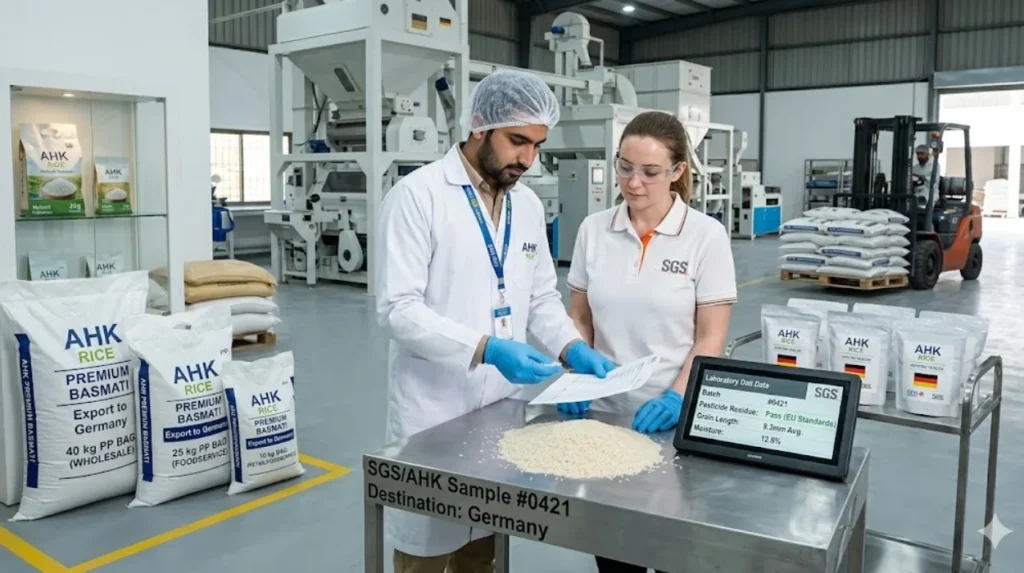
AHK Rice supports German wholesalers, private-label brands, foodservice distributors, ethnic retailers, and industrial food processors with certified Basmati rice exports from Pakistan. Every shipment undergoes inspection, testing, documentation verification, and export compliance checks before dispatch.
What is the best solution for importing EU-compliant Basmati rice into Germany?
Certified pesticide-tested Basmati, documented traceability, verified laboratory reports, and dependable shipment scheduling provide the safest import solution for German buyers seeking long-term suppliers.
German importers need more than attractive pricing. German buyers require consistency across every shipment. AHK Rice delivers this consistency through documented quality systems, independent laboratory testing, and export procedures designed for EU market requirements.
The most commonly requested grades include:
- 1121 Steam Basmati Rice
- 1121 Sella Basmati Rice
- 1509 Steam Basmati Rice
- Super Basmati Rice
- Brown Basmati Rice
- Organic Basmati Rice
AHK Rice follows a structured production process.
- Harvest mature paddy.
- Clean foreign matter.
- Dry harvested grain.
- De-husk rice carefully.
- Polish according to grade.
- Sort by grain length.
- Grade by specifications.
- Inspect quality parameters.
- Test export samples.
These nine processing steps help maintain consistency between approved samples and commercial shipments.
German buyers frequently compare suppliers before placing orders. Many also evaluate residue-compliant specifications through our comparison guide covering EU-compliant Basmati grade selection and pesticide-free sourcing options.
AHK Rice supports buyers with complete documentation packages before shipment approval. That verification process naturally leads to the next question about supplier selection.
Why choose Basmati Rice Export Pakistan to Germany?
Direct mill sourcing, EU-focused quality control, shipment documentation, laboratory verification, and responsive export management make AHK Rice a practical supplier for German importers.
German buyers typically evaluate suppliers across five areas:
- Product consistency
- Regulatory compliance
- Logistics reliability
- Documentation accuracy
- Commercial responsiveness
AHK Rice addresses each area through structured export procedures.
The Basmati Rice Export Pakistan to Germany service is specifically designed for German importers requiring compliant rice shipments. AHK Rice manages production coordination, quality verification, export documentation, container loading, and delivery scheduling.
1121 Steam Basmati Rice
1121 Steam Basmati remains one of the most requested grades for retail and foodservice markets. Long grain appearance, strong elongation, and clean aroma support premium positioning.
Specifications
| Attribute | Specification |
|---|---|
| Grain Length | 8.30 mm+ |
| Moisture | 13% Max |
| Broken Grains | 2–5% |
| Purity | 95–100% |
| Crop | Current Season |
| Packaging | 1 kg to 50 kg |
| Shelf Life | 12–18 Months |
1121 Golden Sella Basmati Rice
1121 Golden Sella performs well in catering and wholesale markets. The parboiling process improves grain strength during transportation and storage.
Specifications
| Attribute | Specification |
| Grain Length | 8.30 mm+ |
| Moisture | 13% Max |
| Broken Grains | 2–5% |
| Purity | 95–100% |
| Processing | Parboiled |
| Packaging | 10 kg to 50 kg |
| Shelf Life | 18–24 Months |
Golden Sella lasts longer than Steam. In warehouse environments exceeding 35°C, Golden Sella maintains grain stability longer. For foodservice buyers managing larger inventories, Golden Sella often becomes the preferred specification.
Super Basmati Rice
Super Basmati remains popular among ethnic retail distributors serving South Asian communities throughout Germany.
Specifications
| Attribute | Specification |
| Grain Length | 7.20–7.60 mm |
| Moisture | 13% Max |
| Broken Grains | 2–5% |
| Purity | 95–100% |
| Crop | Current Season |
| Packaging | 1 kg to 50 kg |
| Shelf Life | 12–18 Months |
AHK Rice helps buyers select the correct grade based on their retail, wholesale, or industrial requirements. Grade selection naturally connects to expected business outcomes.
What results can be expected from working with AHK Rice?
Stable quality, predictable supply planning, documented compliance, reduced procurement risk, and faster purchasing decisions are the primary outcomes for German importers.
German buyers often experience supplier changes because shipments fail consistency checks. Grain dimensions vary. Documentation arrives incomplete. Residue reports become unavailable.
AHK Rice reduces these risks through documented production controls.
Expected outcomes include:
- Consistent grain specifications
- Verified laboratory reports
- Reduced import clearance delays
- Improved customer satisfaction
- Better inventory planning
- Lower supplier management costs
AHK Rice also supports private-label programs for distributors building their own brands in Germany.
Retail buyers often request smaller branded packaging.
Foodservice distributors often request:
- 10 kg bags
- 20 kg bags
- 25 kg bags
- 40 kg bags
Wholesale importers commonly source:
- 40 kg PP bags
- 50 kg PP bags
Packaging customization helps German distributors align products with target markets.
German ports typically receive shipments from Pakistan within the following transit windows:
| Destination | Average Shipping Days |
| Hamburg | 28–35 Days |
| Bremerhaven | 30–38 Days |
| Rotterdam (for onward Germany delivery) | 26–34 Days |
| Antwerp (for onward Germany delivery) | 28–36 Days |
Transit schedules vary according to vessel routing and port congestion.
AHK Rice coordinates shipment planning before production begins. That planning helps buyers estimate inventory requirements more accurately.
Reliable outcomes matter, but purchasing decisions also depend on commercial costs and pricing factors.
What factors affect pricing for German Basmati rice imports?
Grade selection, packaging format, order volume, certification requirements, freight costs, and seasonal crop conditions influence final import pricing.
No professional supplier can offer one fixed price year-round. Rice prices change according to crop availability and international freight conditions.
Key pricing factors include:
- Grade specifications
- Broken percentage
- Packaging requirements
- Private labeling
- Organic certification
- Laboratory testing scope
- Container quantity
- Freight market conditions
1121 Steam generally costs differently from 1121 Golden Sella because processing methods differ.
Organic Basmati generally costs more than conventional Basmati because certification and cultivation requirements increase production expenses.
Smaller packaging formats usually increase unit costs because additional packaging materials and labor are required.
AHK Rice provides customized quotations after reviewing buyer specifications. This approach ensures pricing reflects actual requirements rather than estimated assumptions.
Commercial buyers often request samples before discussing larger contracts. Sample approval therefore becomes a critical stage in supplier selection.
How does the AHK Rice sample process work for German buyers?
Sample preparation, laboratory verification, courier dispatch, buyer evaluation, specification confirmation, and quotation approval create a transparent procurement process.
AHK Rice encourages buyers to evaluate quality before committing to commercial orders.
The sample process follows six steps:
- Submit product requirements.
- Confirm target specifications.
- Prepare representative samples.
- Verify requested parameters.
- Dispatch samples by courier.
- Review buyer feedback.
Typical sample options include:
| Sample Type | Approximate Weight |
| Product Sample | 500 g–1 kg |
| Multiple Grade Set | 2–5 kg |
| Laboratory Sample | Buyer Requirement |
Sample-related costs vary according to destination and courier provider.
Typical buyer expenses may include:
| Item | Estimated Cost |
| Courier Charges | USD 40–120 |
| Laboratory Testing | Depends on Scope |
| Special Packaging | Depends on Request |
AHK Rice frequently credits sample-related costs against larger confirmed orders. Exact commercial arrangements depend on order size and negotiated terms.
German importers use the sample stage to evaluate grain length, aroma, cooking performance, packaging requirements, and documentation standards.
Sample approval usually leads directly to quotation review and production scheduling. The final step is understanding how to begin the purchasing process.
How can German importers get started?
Submit specifications, approve samples, confirm packaging, review documentation, and schedule shipment production to begin importing EU-compliant Basmati rice confidently.
AHK Rice begins every project by identifying buyer requirements. Product specifications determine production planning. Packaging requirements determine final presentation. Documentation requirements determine compliance preparation.
Buyers should prepare the following information:
- Target grade
- Required quantity
- Packaging format
- Destination port
- Certification requirements
- Private-label needs
AHK Rice then prepares a commercial proposal based on actual specifications.
German importers benefit from a structured procurement process because every stage remains documented and measurable. AHK Rice supports buyers from initial inquiry through final shipment delivery. Contact AHK Rice today through the request-a-quote page to receive pricing and a free sample evaluation.
Frequently Asked Questions
How does AHK Rice ensure EU compliance for Basmati rice exports to Germany?
AHK Rice works with accredited laboratories to test rice before shipment. Quality teams inspect, verify, and document product specifications according to buyer requirements. Export documents and laboratory reports are prepared before dispatch to support German import compliance procedures.
What is the minimum order quantity for Basmati rice exports to Germany?
Minimum order quantities depend on the rice grade, packaging type, and shipping method. Most commercial buyers import full container loads because container shipments provide better freight efficiency and lower costs per metric ton. AHK Rice can discuss specific quantity requirements during the quotation process.
How long does it take to ship Basmati rice from Pakistan to Germany?
Shipping times typically range from 28 to 38 days depending on the destination port and vessel schedule. Hamburg, Bremerhaven, Rotterdam, and Antwerp are common delivery gateways for German importers. Transit times may vary due to port congestion and seasonal shipping conditions.
Can German buyers request private-label packaging?
Yes. AHK Rice provides private-label packaging solutions for distributors, wholesalers, and retail brands. Buyers can request customized bag sizes, artwork, branding, and packaging specifications to support their market requirements in Germany.
Does AHK Rice provide free samples for German importers?
AHK Rice provides product samples so buyers can evaluate grain quality, cooking performance, aroma, and specifications before placing commercial orders. Courier costs and special testing requirements may apply depending on the destination and sample scope. Sample-related costs are often discussed during commercial negotiations.