Pakistan’s Competitive Position in Germany’s Imported Rice Market in 2026
Pakistan holds one of the strongest positions in Germany’s imported rice market in 2026 because it offers competitive pricing, premium Basmati varieties, reliable export infrastructure, and consistent quality certifications. Here is why: German importers continue increasing purchases of Pakistani Basmati rice due to favorable value-to-quality ratios, established supply chains, and growing consumer demand for authentic aromatic rice products.
German rice buyers evaluating sourcing options often begin by understanding market preferences. Many importers first research educational resources explaining why Pakistani Super Kernel Basmati continues gaining traction among European buyers. This market trend is explained in detail in our guide about why German buyers increasingly prefer Pakistani Super Kernel Basmati rice in 2026.
Germany remains one of Europe’s largest rice-importing countries. Retail chains, ethnic wholesalers, foodservice distributors, and private-label brands require stable suppliers capable of delivering consistent specifications. Pakistani exporters compete directly with suppliers from India, Thailand, Vietnam, and Cambodia. Among these origins, Pakistan maintains a strong competitive advantage in the premium Basmati segment.
What Is The Best Solution For German Importers Sourcing Rice In 2026?
Pakistani Basmati rice provides strong quality, competitive pricing, reliable logistics, recognized certifications, and scalable supply volumes for German distributors seeking long-term sourcing stability.
German importers face several challenges. Rising freight costs, inconsistent quality, delayed shipments, and fluctuating supply availability can disrupt distribution networks. Buyers require suppliers capable of maintaining specifications throughout the procurement cycle.
Pakistani Basmati rice addresses these concerns through established cultivation regions in Punjab, modern milling facilities, internationally recognized food safety certifications, and strong export experience. Pakistan remains particularly competitive in premium aromatic rice categories.
Why Does Pakistan Remain Competitive?
Pakistan cultivates premium Basmati varieties in fertile agricultural zones. The climate supports grain elongation, aroma development, and cooking performance demanded by European consumers.
Pakistani exporters mill, sort, inspect, and certify rice according to destination market requirements. German buyers typically request detailed quality reports before confirming purchase contracts.
Germany’s Preferred Pakistani Rice Varieties
| Variety | Typical Buyer Segment | Market Demand |
|---|---|---|
| Super Kernel Basmati | Retail Brands | High |
| 1121 Basmati Steam | Premium Retail | Very High |
| 1121 Golden Sella | Food Service | High |
| PK-386 Long Grain | Budget Retail | Moderate |
| IRRI-6 | Industrial Use | Moderate |
Super Kernel Basmati remains particularly popular due to its aroma, cooking characteristics, and premium market positioning.
Germany Shipping Timeline
| Route | Average Transit Days |
|---|---|
| Karachi to Hamburg | 28–35 Days |
| Karachi to Bremerhaven | 30–38 Days |
| Karachi to Rotterdam (then Germany) | 25–33 Days |
Transit times vary according to vessel schedules, customs processing, and seasonal shipping demand.
Germany’s demand profile establishes Pakistan’s market opportunity. The next question is how importers choose the right supplier to capture that opportunity.
Why Choose AHK Rice For Germany Imports?
AHK Rice offers export experience, verified quality systems, multiple Basmati grades, shipment support, documentation assistance, and responsive communication for German rice buyers.
German importers rarely select suppliers based only on price. Successful procurement decisions depend on consistency, communication, documentation accuracy, and shipment reliability.
AHK Rice supports German buyers through its export-focused operations and international supply capabilities. Buyers seeking direct procurement options can evaluate specifications through , which supplies multiple Basmati varieties for international markets.
AHK Rice Processing System
AHK Rice follows a structured processing sequence:
- Harvest mature paddy.
- Clean incoming paddy.
- Dry moisture levels.
- De-husk grain.
- Polish rice.
- Grade by length.
- Sort through optical systems.
- Inspect quality parameters.
- Load export packaging.
Each stage supports consistency and export compliance.
Quality Features
- Moisture control
- Length grading
- Optical colour sorting
- Metal detection
- Laboratory testing
- Fumigation compliance
- Export documentation
German distributors frequently compare suppliers before making purchasing decisions. Buyers evaluating alternatives often review supplier assessment criteria through resources explaining how German distributors compare Pakistani Basmati suppliers before finalizing contracts.
Required Export Documents
- Commercial Invoice
- Packing List
- Certificate of Origin
- Phytosanitary Certificate
- Fumigation Certificate
- Bill of Lading
- Quality Inspection Report
These documents support customs clearance and regulatory compliance within Germany.
Supplier selection determines purchasing success. The next step is understanding the measurable results importers can expect from Pakistani sourcing programs.
What Results Can German Importers Expect?
Stable supply availability, competitive landed costs, premium grain quality, consistent specifications, and strong consumer acceptance create measurable commercial benefits for German importers.
German consumers increasingly recognize Basmati rice as a premium product category. Retailers position Pakistani Basmati within higher-margin segments due to its aroma, grain length, and cooking performance.
Competitive Pricing Comparison
| Origin | Typical FOB Range (USD/MT) |
|---|---|
| Pakistan Super Kernel | $850–$1,050 |
| Pakistan 1121 Steam | $950–$1,200 |
| India 1121 Basmati | $1,050–$1,350 |
| Thailand Jasmine | $900–$1,250 |
Pricing changes according to crop conditions, exchange rates, and international demand.
Pakistan frequently provides cost advantages over competing premium rice origins. Lower procurement costs improve distributor margins while maintaining product quality.
Shelf Life Comparison
| Rice Type | Typical Shelf Life |
|---|---|
| Super Kernel Basmati | 18–24 Months |
| 1121 Steam Basmati | 18–24 Months |
| Golden Sella Basmati | 24 Months |
Golden Sella lasts longer than Steam rice. In warmer storage conditions, Golden Sella maintains quality for extended periods. Foodservice distributors handling larger inventories often prefer Golden Sella specifications.
Germany Market Advantages
| Benefit | Commercial Outcome |
|---|---|
| Premium Positioning | Higher margins |
| Strong Aroma | Consumer preference |
| Long Grain Length | Better presentation |
| Consistent Supply | Inventory stability |
| Competitive Pricing | Improved profitability |
AHK Rice helps buyers achieve these outcomes through specification-driven sourcing and export support.
Expected results are important, but buyers must also understand the factors influencing total procurement costs.
What Factors Affect Pricing And Procurement Costs?
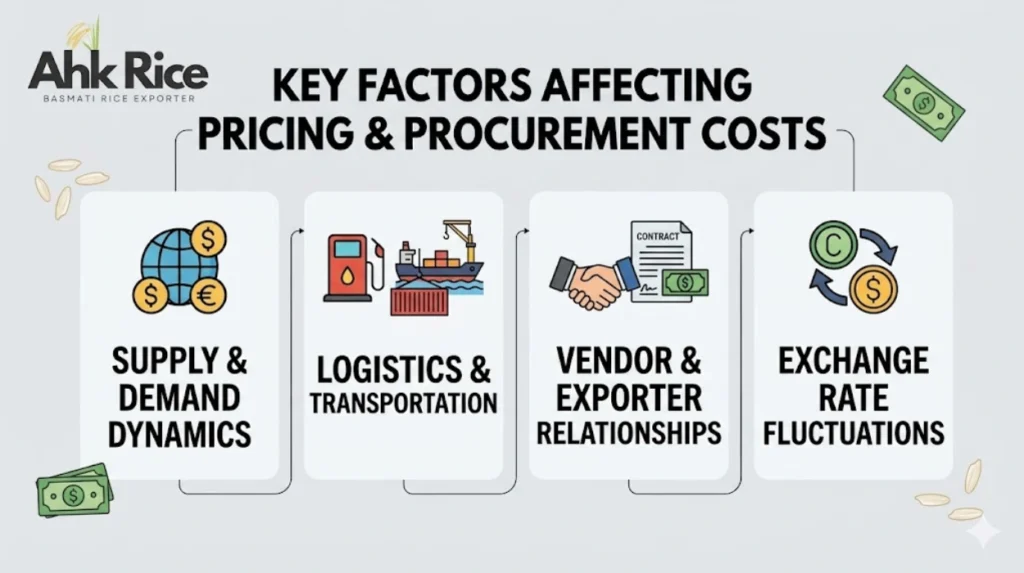
Rice variety, grain specification, packaging format, shipment volume, certification requirements, freight rates, and seasonal demand determine final import costs.
Rice pricing varies significantly according to product specifications.
Key Cost Drivers
Rice Variety
1121 Basmati generally commands higher prices than PK-386 due to longer grain length and stronger aroma.
Processing Grade
Steam, White, and Golden Sella grades differ in production requirements and market demand.
Packaging Requirements
Retail-ready packaging increases production costs compared to bulk export bags.
Order Volume
Container-scale purchases usually achieve better pricing than smaller shipments.
Freight Costs
Ocean freight remains a major component of landed cost calculations.
Sample Process For German Importers
AHK Rice typically follows a structured sample approval process.
- Submit product requirements.
- Receive specification sheet.
- Confirm target grade.
- Dispatch physical sample.
- Conduct laboratory testing.
- Approve quality parameters.
- Finalize commercial offer.
- Confirm contract.
- Schedule production.
Sample Cost Structure
| Item | Estimated Cost |
|---|---|
| Product Sample | Usually Free |
| Courier Charges Europe | $40–$120 |
| Independent Lab Testing | $100–$300 |
| Custom Packaging Sample | Additional Cost |
Many buyers conduct laboratory verification before placing container orders. Independent testing reduces procurement risk and supports supplier qualification procedures.
Cost understanding supports informed purchasing decisions. The final step is knowing how to begin the sourcing process efficiently.
How Can German Importers Get Started With Pakistani Rice Suppliers?
Define specifications, evaluate suppliers, review samples, verify certifications, compare offers, and secure production capacity before confirming shipments.
Successful procurement begins with clear specifications. Buyers should define variety, grain length, broken percentage, moisture level, packaging format, and shipment volume.
Recommended Procurement Framework
| Decision Area | Evaluation Criteria |
|---|---|
| Product | Variety and grade |
| Quality | Test reports |
| Compliance | Certifications |
| Logistics | Transit reliability |
| Pricing | Landed cost |
Supplier Verification Checklist
- Verify export history
- Verify certifications
- Review sample quality
- Confirm production capacity
- Confirm shipment schedules
Why German Buyers Continue Choosing Pakistan
Pakistan combines agricultural expertise, modern processing, competitive pricing, and export infrastructure. These strengths support long-term supplier relationships.
AHK Rice continues supporting international buyers through quality-focused production, responsive communication, and export documentation assistance. AHK Rice understands European market requirements. AHK Rice supports specification-based sourcing. AHK Rice helps buyers evaluate grades. AHK Rice assists with documentation. AHK Rice coordinates shipments. AHK Rice provides sample support. AHK Rice works with distributors. AHK Rice focuses on long-term partnerships.
German importers seeking a dependable sourcing partner should evaluate specifications, request samples, compare commercial offers, and submit an inquiry through request a quote.
Frequently Asked Questions
Is Pakistan competitive against India in Germany’s rice market?
Pakistan remains highly competitive due to pricing advantages and strong Super Kernel Basmati demand. German importers often compare both origins before sourcing decisions. Pakistan frequently offers attractive value propositions. Product specifications remain a key factor. Market demand continues supporting Pakistani exports.
What rice varieties are most imported from Pakistan to Germany?
Super Kernel Basmati and 1121 Basmati are among the most imported varieties. Retailers prefer premium aromatic rice categories. Foodservice distributors often select Golden Sella grades. Consumer demand influences variety selection. Import volumes vary annually.
How long does shipping from Pakistan to Germany take?
Most shipments require approximately 28 to 38 days depending on destination port. Vessel schedules influence transit duration. Customs processing may affect final delivery timing. Seasonal congestion can create delays. Buyers should plan inventory accordingly.
What certifications do German importers typically require?
German buyers commonly request food safety certifications and laboratory testing reports. Phytosanitary compliance is essential. Quality inspection documents support procurement decisions. Documentation requirements vary by buyer. Certification verification reduces import risks.
How does the rice sample process work?
Buyers first define product specifications. Suppliers then dispatch representative samples. Independent testing may follow. Commercial negotiations begin after approval. Production scheduling starts after contract confirmation.