How German Rice Distributors Select Reliable Pakistani Basmati Suppliers
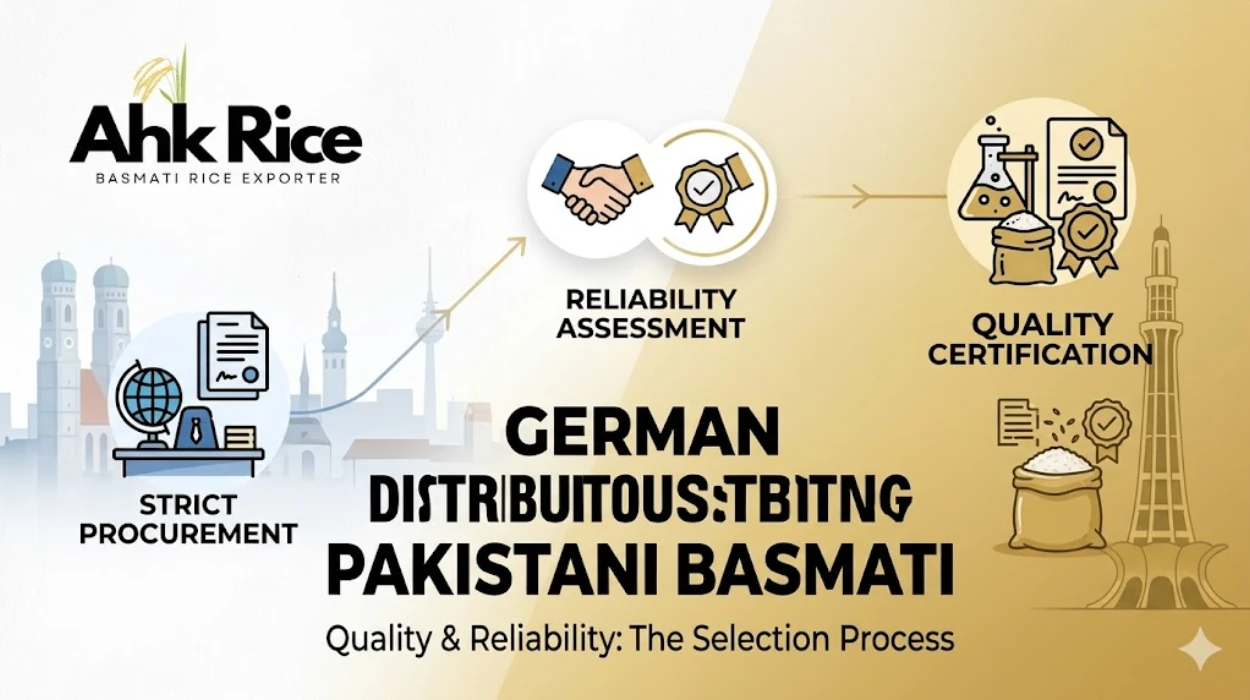
German rice distributors select suppliers that consistently deliver certified quality, stable specifications, compliant documentation, and dependable logistics. Here is why: German buyers operate under strict food safety regulations, competitive retail margins, and long-term supply commitments that leave little room for supplier inconsistency.
Germany remains one of Europe’s most quality-focused imported rice markets. Importers evaluate much more than price. They inspect milling standards, grain consistency, certification systems, export documentation, logistics performance, and supplier responsiveness before placing large-volume orders.
Buyers researching Pakistani rice sourcing often begin with broader market education before supplier evaluation. Understanding import trends, quality requirements, and rice categories helps distributors create a sourcing framework.
AHK Rice is a trusted Pakistani Basmati rice exporter based in Punjab, supplying 1121, Super Kernel, and 1509 varieties to more than 15 countries. The company’s operational structure reflects many of the supplier characteristics German distributors evaluate during sourcing assessments.
What solutions are available for German distributors sourcing Pakistani Basmati rice?
Direct manufacturer sourcing, export trading companies, procurement agents, private-label partnerships, and long-term supply agreements represent the primary sourcing solutions used by German rice distributors when importing Pakistani Basmati rice for retail, wholesale, foodservice, and ethnic distribution channels.
German buyers generally use five sourcing models.
Direct Mill Sourcing
Direct mill sourcing involves purchasing rice from the company that mills, grades, sorts, packages, and exports the product.
Benefits include:
- Lower procurement costs
- Better specification control
- Faster communication
- Greater transparency
Challenges include:
- Higher supplier verification requirements
- Greater responsibility for quality audits
- More direct logistics coordination
Export Trading Companies
Export trading companies source from multiple mills and consolidate shipments.
Benefits include:
- Multiple rice grades
- Flexible volumes
- Simplified procurement
Challenges include:
- Less visibility into production
- Variable quality consistency
- Additional intermediary margins
Procurement Agents
Procurement agents represent overseas buyers in Pakistan.
Benefits include:
- Local market expertise
- Supplier verification
- Factory inspections
Challenges include:
- Additional service fees
- Reduced direct supplier relationships
Private Label Partnerships
Private label sourcing allows German distributors to market rice under their own brands.
Benefits include:
- Brand ownership
- Retail positioning
- Customized packaging
Challenges include:
- Higher compliance requirements
- Packaging development costs
Long-Term Supply Contracts
Long-term agreements create structured purchasing relationships.
Benefits include:
- Stable pricing
- Forecast planning
- Consistent specifications
Challenges include:
- Volume commitments
- Reduced sourcing flexibility
These sourcing models differ significantly in quality control, cost structure, and operational complexity. The next question is how distributors compare these approaches during supplier selection.
How do German distributors compare different Pakistani Basmati suppliers?
Quality consistency, certification coverage, processing capability, export experience, logistics performance, and pricing structure form the six primary comparison categories used during supplier evaluation and supplier qualification programs.
German importers use structured evaluation frameworks instead of relying on quotations alone.
Supplier Comparison Specifications
| Attribute | Direct Mill Exporter | Trading Company |
|---|---|---|
| Quality Control | High | Medium |
| Traceability | High | Medium |
| Price Transparency | High | Medium |
| Production Visibility | High | Low |
| Packaging Flexibility | High | Medium |
| Response Speed | High | Medium |
| Long-Term Consistency | High | Variable |
Quality Evaluation
Quality evaluation begins with physical specifications.
German distributors commonly review:
- Grain length
- Moisture content
- Broken percentage
- Chalkiness level
- Purity percentage
- Foreign matter limits
- Crop year
For 1121 Basmati, buyers frequently request grain lengths exceeding 8.3 mm before cooking and significantly higher elongation after cooking.
Processing Evaluation
Processing capability directly affects consistency.
Reliable suppliers perform the following steps:
- Clean the paddy.
- Dehusk the grain.
- Dry the rice.
- Polish the kernels.
- Grade by size.
- Sort by color.
- Inspect the final lot.
- Package according to specifications.
- Load export containers.
Suppliers that control all processing stages generally provide greater consistency.
Documentation Evaluation
German importers verify:
- Phytosanitary Certificate
- Certificate of Origin
- Commercial Invoice
- Packing List
- Fumigation Certificate
- Laboratory Reports
- Bill of Lading
Documentation accuracy reduces customs delays and compliance risks.
Supplier comparison establishes a shortlist, but distributors still need to determine which sourcing method aligns with their business model and customer requirements.
Which sourcing method works best for different German market segments?
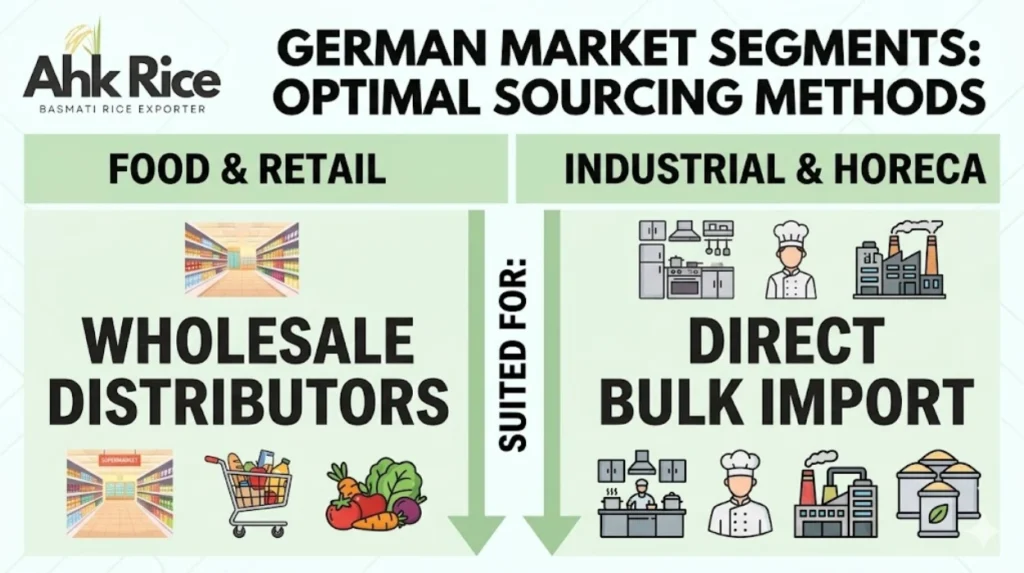
Retail distributors prefer certified long-term suppliers, ethnic wholesalers prioritize authentic varieties, foodservice buyers focus on consistency, and private-label importers require packaging flexibility alongside regulatory compliance and production transparency.
Different market segments prioritize different supplier capabilities.
Retail Chains
Retail chains focus on:
- Food safety compliance
- Stable packaging
- Traceability
- Consistent specifications
These buyers often favor direct mill exporters with established quality systems.
Ethnic Food Distributors
Ethnic food distributors prioritize:
- Authentic aroma
- Traditional varieties
- Competitive pricing
Super Kernel Basmati and 1121 Basmati remain popular among South Asian consumer segments.
Foodservice Importers
Foodservice buyers focus on:
- Bulk packaging
- Consistent cooking performance
- Reliable replenishment schedules
Restaurant supply networks require predictable quality across multiple shipments.
Private Label Importers
Private-label buyers prioritize:
- Packaging customization
- Branding options
- Label compliance
- Product differentiation
AHK Rice and similar export-focused suppliers often support customized packaging programs because they control end-to-end processing and export operations.
Market requirements influence supplier selection, but distributors must also evaluate regional demand patterns and product preferences.
Which Pakistani Basmati grades are preferred in different import regions?
Germany primarily imports premium aromatic Basmati grades, while Central and Eastern European buyers often balance premium quality with price competitiveness through multiple Basmati specifications and processing grades.
German Market Preferences
German distributors commonly source:
| Grade | Primary Use |
|---|---|
| 1121 Steam Basmati | Retail premium segment |
| 1121 Sella Basmati | Foodservice |
| Super Kernel Basmati | Ethnic retail |
| 1509 Basmati | Value segment |
German consumers increasingly prefer premium aromatic rice with strong cooking performance.
Central and Eastern Europe Preferences
Regional distributors often prioritize:
- Competitive pricing
- Stable availability
- Bulk volumes
1121 Sella and 1509 Basmati frequently achieve stronger demand in price-sensitive channels.
Price Per Metric Ton Comparison
| Rice Grade | Typical Export Value Position |
|---|---|
| Super Kernel Basmati | Premium |
| 1121 Steam Basmati | Premium-Mid |
| 1121 Sella Basmati | Mid |
| 1509 Basmati | Value |
Actual prices fluctuate according to crop conditions, global demand, freight costs, and currency movements (source: REAP export data, December 2025).
Shelf Life Comparison
| Grade | Typical Shelf Life |
|---|---|
| Steam Basmati | 12–18 months |
| Sella Basmati | 18–24 months |
| Golden Sella Basmati | 18–24 months |
| White Basmati | 12 months |
Golden Sella lasts longer than Steam. In hot warehouse conditions, Golden Sella maintains quality for extended storage periods. Foodservice distributors often prefer Golden Sella because inventory turnover varies throughout the year.
Grade selection helps distributors align products with market demand. The next step involves evaluating advantages and disadvantages of supplier selection approaches.
What are the pros and cons of different supplier selection approaches?
Direct verification offers maximum control, third-party verification reduces operational burden, and mixed verification strategies balance supplier transparency, risk management, and procurement efficiency across international sourcing programs.
Direct Supplier Audits
Pros
- Production visibility
- Quality transparency
- Strong relationships
Cons
- Travel costs
- Audit resources
- Time requirements
Example
Large importers often inspect milling facilities before annual contracts.
Third-Party Inspections
Pros
- Independent verification
- Lower travel costs
- Standardized reporting
Cons
- Additional inspection fees
- Limited relationship building
Example
SGS and other inspection providers frequently verify export shipments before loading.
Multi-Supplier Strategy
Pros
- Supply security
- Competitive pricing
- Reduced dependency
Cons
- Complex inventory management
- Variable quality profiles
Example
Large distributors may maintain two approved Pakistani suppliers to reduce supply disruption risk.
Each evaluation strategy offers different advantages. The final decision depends on measurable procurement factors.
What decision factors determine whether a Pakistani supplier is reliable?
Certification, consistency, export history, processing control, communication quality, logistics performance, and regulatory compliance collectively determine long-term supplier reliability and purchasing confidence for German rice distributors.
Decision Framework
| Decision Factor | Importance | Evaluation Method |
|---|---|---|
| Certification | Very High | Audit certificates |
| Quality Consistency | Very High | Sample testing |
| Export Experience | High | Shipment history |
| Processing Capability | High | Factory assessment |
| Logistics Reliability | High | Delivery performance |
Certification Requirements
German distributors frequently evaluate:
- ISO certification
- HACCP systems
- Food safety programs
- Quality management systems
Certification demonstrates process control and operational discipline.
Sample Evaluation
Sample assessment normally includes:
- Grain length testing
- Cooking tests
- Aroma evaluation
- Moisture verification
- Purity analysis
Sample testing provides objective evidence before commercial orders.
Export Experience
Experienced exporters typically demonstrate:
- Established shipping procedures
- Documentation accuracy
- Container management
- Customs compliance
AHK Rice operates across multiple export destinations, which reflects the international experience many German distributors consider during supplier qualification.
Communication Standards
Reliable suppliers provide:
- Fast responses
- Clear specifications
- Shipment updates
- Documentation support
Communication quality often predicts operational performance during long-term supply relationships.
Supplier reliability ultimately depends on measurable operational capability rather than marketing claims. German distributors consistently favor suppliers that demonstrate quality control, documentation accuracy, certification compliance, and stable export performance over multiple seasons.
Frequently Asked Questions
How do German rice distributors verify Pakistani suppliers?
German distributors verify suppliers through factory audits, sample testing, certification reviews, export history checks, and third-party inspection reports before approving commercial purchases.
Which Pakistani Basmati variety is most popular in Germany?
1121 Basmati remains one of the most demanded varieties because of its long grain length, strong cooking performance, and premium retail positioning.
What certifications do German importers look for?
German buyers commonly evaluate food safety systems, quality management certifications, traceability procedures, and export compliance documentation.
Is direct mill sourcing better than trading companies?
Direct mill sourcing offers greater transparency and specification control. Trading companies offer flexibility and broader sourcing options. The optimal choice depends on procurement goals.
How important is sample testing before ordering?
Sample testing is essential because it verifies grain quality, cooking characteristics, aroma, moisture content, and specification compliance before shipment approval.