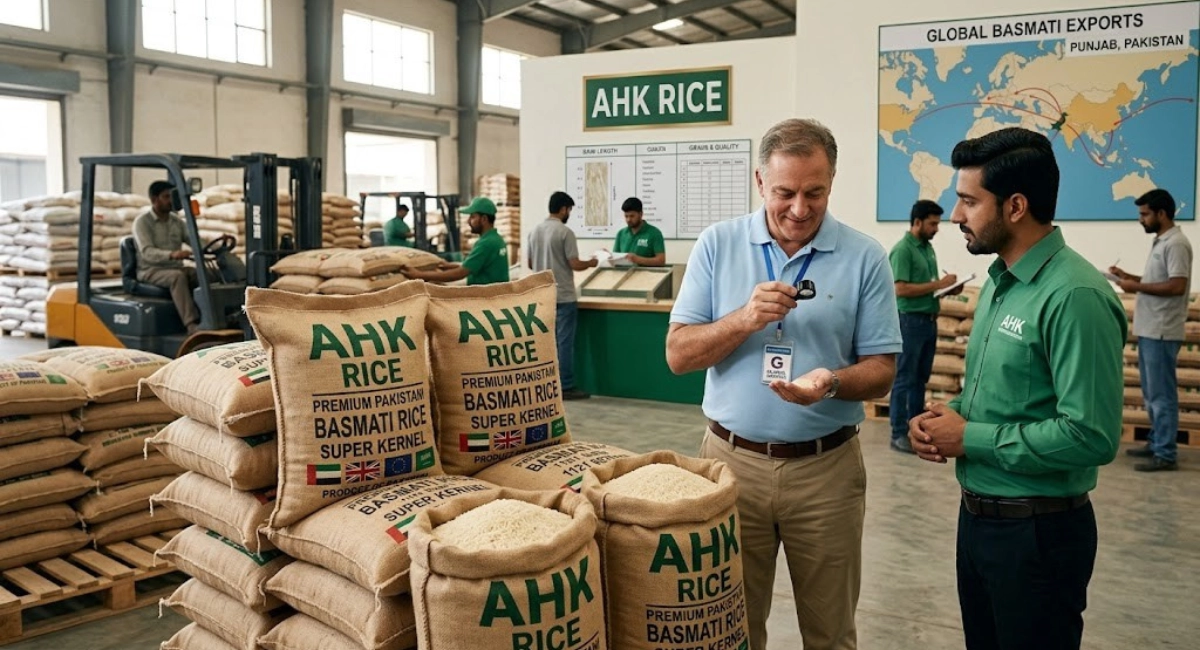
Why Are International Buyers Turning Toward Pakistani Basmati Rice?
What Is Pakistani Basmati Rice?
Pakistani Basmati rice is a premium long-grain aromatic rice variety cultivated exclusively in the fertile, glacier-fed plains of the Punjab region. It is defined by its distinct elongation ratio, slender profile, non-sticky cooking texture, and high natural concentration of 2-acetyl-1-pyrroline.
Botanical Classification and Characteristics
Basmati rice belongs to the species Oryza sativa. The grain exhibits a length-to-breadth ratio greater than 3.5:1. During the cooking process, the grain elongates to twice its raw size without increasing significantly in width. This unique elongation prevents the grains from clustering or clumping together.
The defining characteristic of true Basmati is its aroma. The chemical compound 2-acetyl-1-pyrroline provides a fragrance profile resembling popcorn or toasted nuts. This compound develops naturally due to the specific agro-climatic conditions of the Indus River basin.
Geographic Significance and Soil Profiles
The cultivation of this grain is geographically protected. True Basmati requires the specific environmental conditions found in the Kallar tract of Punjab. This region covers districts such as Gujranwala, Sialkot, Sheikhupura, and Nankana Sahib.
The soil in this basin consists of heavy, moisture-retentive clay loam mixed with minerals deposited by rivers emanating from the Himalayan mountains. The temperature variations in this specific region, featuring hot summer days followed by cooler nights, trigger the optimal retention of the aromatic compounds within the endosperm of the rice grain.
How Does the Processing of Pakistani Basmati Rice Work?
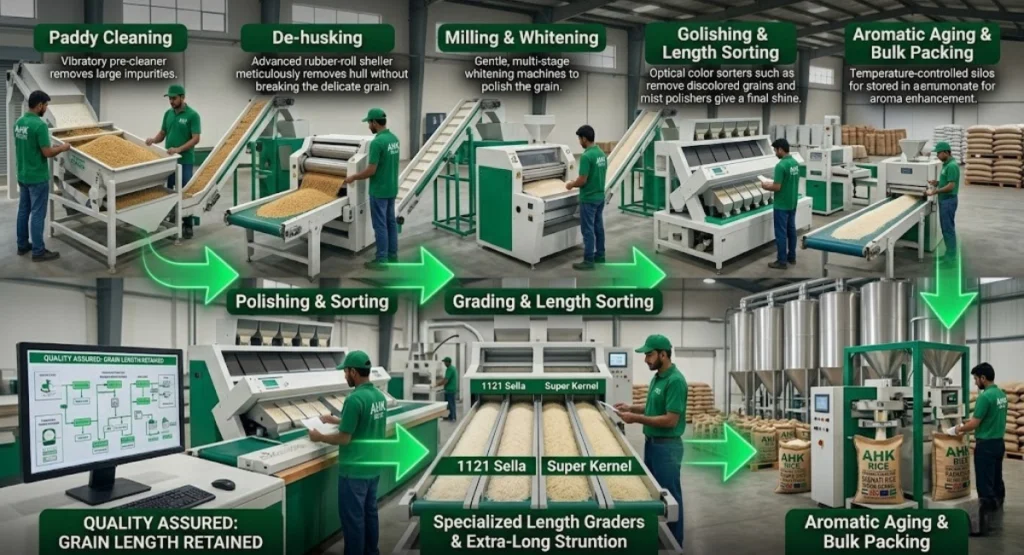
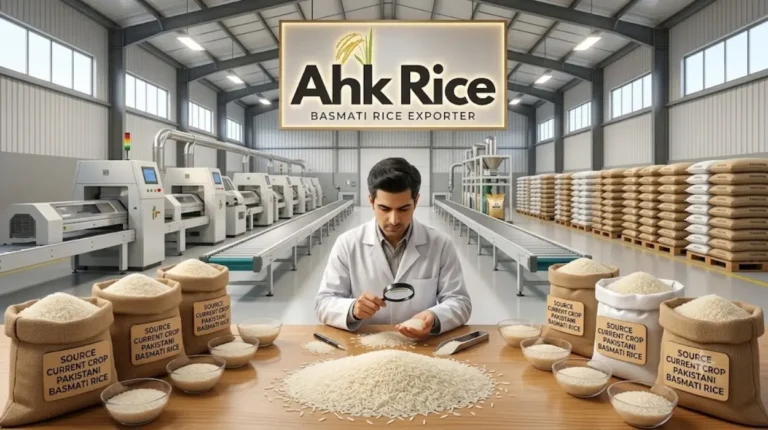
The processing of Pakistani Basmati rice transforms raw paddy into export-ready grains through a structured sequence of mechanical cleaning, husking, milling, polishing, and color sorting. This end-to-end industrial process preserves the structural integrity, length, and aroma of each individual grain.
Step 1: Pre-Cleaning and De-Stoning
Raw paddy arriving from the fields contains high volumes of foreign materials, such as straw, dust, mud, stones, and weed seeds. The paddy passes through a series of vibratory sieves and air aspirators that separate lighter impurities by weight. A specialized de-stoner removes heavier mineral impurities based on density differentials before the grain enters the husking phase.
Step 2: De-Husking or Shelling
The clean paddy is fed into rubber roll shellers. Two rubber rollers rotate in opposite directions at different speeds, applying shear force to strip the protective outer hull from the grain. This process yields brown rice, while the separated husks are moved to external storage silos via pneumatic suction to be used as fuel or industrial byproduct.
Step 3: Milling and Whitening
Brown rice retains its nutrient-rich bran layer. To produce white Basmati, the grain passes through a series of abrasive and friction whitening machines. These machines gently remove the outer bran layers and the germ through multi-stage friction processes. Processing the rice in multiple stages prevents thermal buildup, which minimizes the risk of breaking the delicate, long grains.
Step 4: Polishing and Humidification
The whitened rice enters mist polishers where controlled amounts of water vapor are injected during mechanical friction. This step removes remaining bran dust and gives the grains a shiny, translucent appearance. Clean, polished grains are highly resistant to fungal degradation and insect infestations during long maritime transit cycles
Step 5: Length Grading and Sifting
The polished rice passes through indented cylinder graders to separate broken grains from whole grains. Grains that do not meet the minimum length requirements for the specific grade are sieved out. The system categorizes the output into full grains, three-quarter grains, half-broken grains, and small brokens to ensure strict batch uniformity.
Step 6: Optical Color Sorting
The final processing step utilizes high-definition CCD camera color sorters. The whole grains flow down a chute in a thin stream while optical sensors scan every single grain. Compressed air valves eject discolored, yellow, immature, or chalky grains instantly. The resulting uniform, pristine white grains move directly to automated packaging systems.
What Are the Key Components and Varieties of This Export Commodity?
The key components of this export sector comprise specific genetic cultivars, distinct commercial processing styles, and standardized grain classifications. These components determine the final market value, cooking utility, and regional consumer preference for the rice across global supply chains.
Cultivar Classifications
Global trade prioritizes three primary varieties of Pakistani Basmati rice:
- 1121 Basmati: This variety is famous for its exceptional average grain length, measuring between 8.35 millimeters and 8.40 millimeters in its raw state. It provides the highest elongation ratio among all varieties.
- Super Kernel Basmati: This is the traditional premium variety, praised for its deep, intense aroma and sweet flavor profile. It features an average raw grain length of 7.20 millimeters to 7.45 millimeters.
- 1509 Basmati: An early-maturing, high-yielding variety that closely matches the grain length of 1121 but offers a shorter cultivation cycle, making it a cost-effective alternative for bulk buyers.
Commercial Processing Styles
The final product is sold in three distinct processing types based on the treatment applied to the paddy:
- White Basmati: Regular milled and polished rice that has had its hull and bran completely removed. It features a bright white appearance and cooks quickly.
- Sella (Parboiled) Basmati: The paddy undergoes a soaking, steaming, and vacuum-drying process before milling. This drives vitamins from the bran into the endosperm and gelatinizes the starch, rendering the grain tough and impossible to overcook.
- Steam Basmati: The paddy is exposed to direct steam pressure without long soaking cycles. This style preserves the white color of the grain while modifying the starch structure to ensure completely separate, fluffy grains upon cooking.
What Are the Benefits of Importing Pakistani Basmati Rice?
The benefits of importing Pakistani Basmati rice include superior culinary performance, excellent economic margins for bulk distributors, and strong consumer demand driven by premium grain attributes. These advantages allow international importers to secure high retail premiums compared to standard long-grain options.
Premium Culinary Attributes
Pakistani Basmati provides clear functional advantages in commercial kitchens. The high amylose content of approximately 22 percent to 24 percent ensures the rice remains firm and non-sticky after cooking. The grains separate naturally, making it the ideal base for large-scale preparation of regional dishes, such as Biryani, Pulao, and Mandi.
Economic Advantages and Yield Efficiencies
The exceptional elongation ratio means that a single metric ton of raw Pakistani Basmati yields a larger volume of cooked food than standard long-grain white rice varieties. Importers and food service distributors benefit from lower cost-per-serving metrics. The prolonged shelf-life of aged Basmati simplifies inventory management, as the product improves in cooking quality over time rather than spoiling.
What Are the Main Use Cases for This Premium Rice?
The main use cases for Pakistani Basmati rice span high-end retail distribution networks, commercial catering sectors, hospitality industries, and industrial food manufacturing plants. Its distinct appearance and texture make it irreplaceable for traditional ethnic cuisines and premium consumer brands globally.
High-End Retail Packaging and Private Labeling
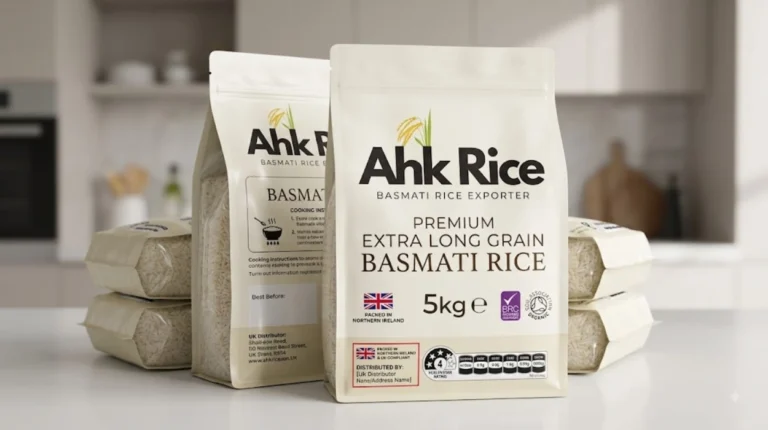
Supermarkets and gourmet food boutiques utilize Pakistani Basmati for private-label premium products. The uniformity of varieties like 1121 allows brands to market high-value packaging options, such as 1-kilogram, 5-kilogram, and 20-kilogram bags, targeted at consumers who seek high-quality ingredients.
Commercial Food Service and Hospitality
Large-scale catering companies, fine-dining restaurants, and hotel chains utilize parboiled Sella and Steam Basmati variants. These styles withstand long holding times in buffet warmers without breaking down, becoming mushy, or losing structural shape under intense heat.
Which International Markets Import This Rice, and What Certifications Apply?
The international markets importing this commodity cover the Middle East, the European Union, East Africa, and North America, with each region enforcing strict entry standards. Compliance requires a structured framework of phytosanitary certificates, food safety seals, and quality assurance documentations.
Global Import Destinations
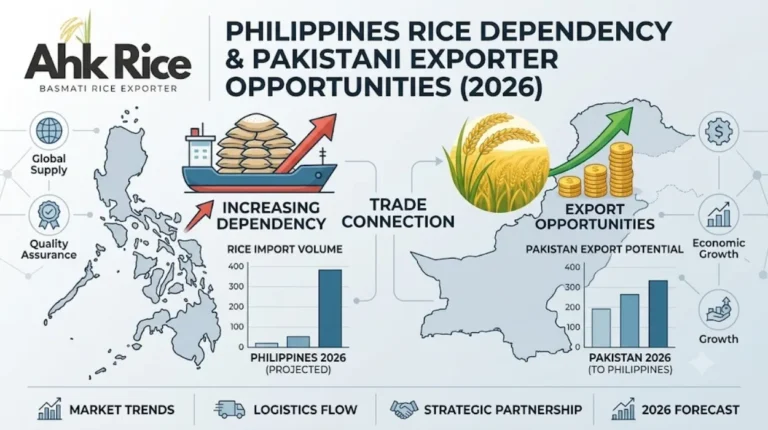
Pakistani Basmati is regularly shipped to more than 15 countries. Key importing regions include:
- The Middle East: Countries such as Saudi Arabia, the United Arab Emirates, and Oman import high volumes of 1121 Sella rice for traditional consumer dishes.
- The European Union: European nations buy premium white and brown Basmati, enforcing strict testing for trace pesticide residue levels.
- East Africa and North America: Markets like Kenya, Tanzania, the United States, and Canada import these varieties to supply expanding ethnic food sectors and mainstream culinary channels.
Essential Industry Certifications
To access these international ports, processing facilities must hold valid certifications:
| Certification Type | Focus Area | Regulatory Relevance |
| ISO 22000 | Food Safety Management | Validates the safety of the entire mechanical supply chain. |
| HACCP | Hazard Analysis Critical Control Point | Prevents biological, chemical, and physical hazards during milling. |
| GMP | Good Manufacturing Practices | Ensures consistent operational hygiene and processing standards. |
| Phytosanitary Certificate | Plant Health & Safety | Issued by Department of Plant Protection to verify cargo is pest-free. |
| Halal Certification | Religious Compliance | Verifies processing lines adhere to strict Islamic dietary guidelines. |
What Are the Common Misconceptions and Problems in the Basmati Trade?
The common misconceptions in the Basmati trade involve confusing grain length with genetic purity, mistaking chalkiness for spoilage, and assuming all long-grain options possess aromatic qualities. Resolving these misunderstandings requires rigorous laboratory testing and adherence to transparent grading criteria.
Misconception 1: All Long-Grain Rice Is Basmati
Many buyers assume that any exceptionally long grain belongs to the Basmati family. Non-aromatic long-grain varieties, such as PK-386 or irri-6, look visually similar but lack the genetic profile needed to produce the 2-acetyl-1-pyrroline compound. True Basmati must be verified by DNA trace testing to prove its origin from authenticated seeds.
Problem 2: Managing Admixture and Broken Grains
A frequent logistical problem is cargo degradation due to high grain admixture or excessive moisture. If moisture levels exceed 14 percent during maritime transport, the rice develops mold and undergoes thermal discoloration. Maintaining processing controls, such as automated length sifting and precision moisture drying, ensures that shipments remain stable throughout their journey to global destinations.