Global Rice Trade in 2026: Navigating the New 10% U.S. Tariff Baseline
The global rice trade faces a critical structural shift following the implementation of the temporary Section 122 tariff baseline. This regulation imposes a flat 10% import duty on non-exempt agricultural commodities entering the United States. Importers and global agricultural suppliers must restructure their pricing frameworks, logistical operations, and supply chains to maintain operational margins under this unified fiscal framework.
What is global rice trade?
Global rice trade is the international commercial exchange of Oryza sativa grains between production countries and consumption markets. This economic sector encompasses agricultural cultivation, industrial milling, cross-border freight logistics, and custom import clearance protocols across worldwide maritime trade routes.
The international movement of rice operates as a highly specialized commodity market divided by specific grain lengths, starch compositions, and aromatic profiles. Long-grain aromatic varieties, such as Pakistani Basmati rice, form a distinct luxury segment within this global network. The trade volume relies on strict balance-of-payment conditions, freight availability, and national import policies.
Production remains heavily concentrated in specific geographic river basins, while consumption spans across every continent. The pricing of this commodity dictates food security strategies for government entities and revenue structures for private corporate enterprises. In 2026, the implementation of broad tariff architectures, such as the United States Section 122 baseline, directly alters the transaction costs between international exporters and destination buyers.
Where is export-quality Basmati rice grown?
Export-quality Basmati rice grows exclusively in the fertile, mineral-rich alluvial soil of the Indus River basin within the Punjab region. This specific geographic zone provides the exact combination of prolonged sun exposure, temperature fluctuations, and natural snowmelt irrigation required for aromatic development.
The cultivation of premium long-grain rice requires distinct macro-climatic conditions that exist only in this specific territory. The soil contains high concentrations of natural minerals deposited by the Indus River system, which feeds the local canal networks. This unique environmental composition activates the genetic synthesis of 2-acetyl-1-pyrroline, which is the chemical compound responsible for the signature fragrance of the grain.
The agricultural cycle depends on the seasonal monsoon pattern, where planting occurs during the peak summer humidity and harvesting finishes during the cooler, dry autumn months. Farmers utilize traditional agronomic methods combined with modern water-management techniques to preserve the elongation potential of the paddy. This specific regional microclimate ensures that varieties, such as Super Kernel, 1121 Basmati, and 1509 Basmati, develop their distinct physical traits, including a slender grain architecture and exceptional longitudinal expansion upon cooking.
How does the end-to-end processing work step by step?
The processing of export-quality rice works through a systematic sequence of mechanical cleaning, hulling, milling, optical sorting, and controlled aging. This multi-stage industrial procedure transforms raw agricultural paddy into a shelf-stable, polished commodity that complies with international phytosanitary standards.
1.Paddy Intake and Pre-Cleaning:Step 1.
Raw harvested paddy undergoes mechanical scalping and aspiration to remove foreign materials, such as straw, stones, dust, and weed seeds.
2.De-Husking and Hulling:Step 2.
Rubber-roll hulling machines apply pneumatic pressure to strip the outer protective husk from the grain, which separates the brown rice from the chaff.
3.Milling and Polishing:Step 3.
Abrasive and friction vertical milling machines remove the nutrient-rich bran layer and germ, transforming the brown grain into white polished rice.
4.Grading and Thickness Separation:Step 4.
Plan-sifters and thickness graders separate broken grains, immature kernels, and oversized debris from the uniform full-length head rice.
5.Optical Color Sorting:Step 5.
High-speed monochromatic or trichromatic digital cameras detect and blast discolored, chalky, or damaged grains out of the product stream using targeted compressed air.
6.Controlled Aging and Packaging:Step 6.
The fully processed head rice undergoes storage in temperature-monitored silos for 9 to 24 months to stabilize starch moisture before custom packaging.
What are the key components of the commercial rice supply chain?
The key components of the commercial rice supply chain include the genetic seed cultivars, advanced processing milling machinery, and international maritime shipping protocols. Each component functions as an interconnected link that determines the ultimate grade, cost structure, and quality of the landed cargo.
Genetic Seed Cultivars
The foundational component of the entire trading network is the specific variety of the crop. Cultivars, such as 1121 Basmati, feature an average pre-cooked grain length of 8.35 millimeters, making them highly sought after in global markets. Another major cultivar is Super Kernel Basmati, which is recognized for its traditional aroma and superior elongation ratio. Newer early-maturing varieties, such as 1509 Basmati, offer high yields and shorter crop cycles, which optimizes land utilization for producers.
Industrial Milling Infrastructure
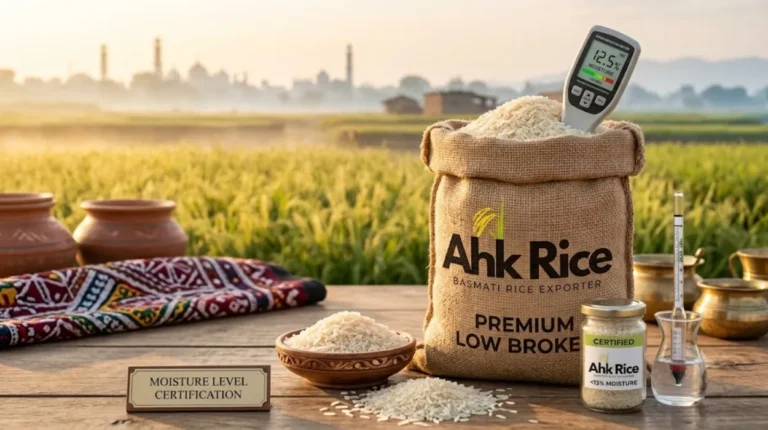
Modern processing plants utilize sophisticated mechanical hardware to minimize grain breakage during production. Satake milling blocks and Buhler optical sorters constitute the primary technological components within high-throughput facilities. These machines manage the grain moisture content, keeping it precisely between 12% and 14% to prevent thermal cracking during friction polishing.
Export Packaging and Logistics
The final physical component involves protective packaging materials and global transport containers. Exporters utilize various packaging options, such as non-woven cotton bags, multi-layer laminated plastic pouches, and heavy-duty polypropylene sacks. These bags protect the aged grain from ambient moisture during ocean transit inside standard 20-foot dry van ocean containers.
What are the available commercial grades of export rice?
The available commercial grades of export rice are classified by the percentage of broken grains, processing type, and specific physical grain dimensions. International trading standards categorize shipments into distinct quality tiers to establish transparent global pricing baselines.
| Rice Grade / Variety | Average Grain Length (mm) | Broken Grain Tolerance (%) | Primary Processing Style |
| 1121 Basmati Premium | 8.35 – 8.40 | Less than 2.0% | Steam / Parboiled / White |
| Super Kernel Traditional | 7.20 – 7.40 | Less than 5.0% | Well-Milled / Naturally Aged |
| 1509 Basmati Long Grain | 8.20 – 8.30 | Less than 5.0% | Parboiled / White Polish |
| PK-386 Long Grain Non-Basmati | 6.80 – 6.90 | Less than 10.0% | Regular Milled / Silky Polish |
The processing style applied to these grades alters the final culinary and nutritional profile. Parboiled rice undergoes a specialized hydrothermal process where the rough paddy is soaked, steamed, and dried before milling. This starch gelatinization process drives water-soluble vitamins into the grain core, creating a firm, yellowish kernel that resists overcooking.
Steamed rice utilizes an altered method where dry steam passes through the grain without full soaking, which preserves the bright white color while hardening the outer starch layer. White rice represents the traditional dry-milled execution, offering maximum starch fluffiness and traditional aromatic release.
Which global markets import premium Pakistani rice?
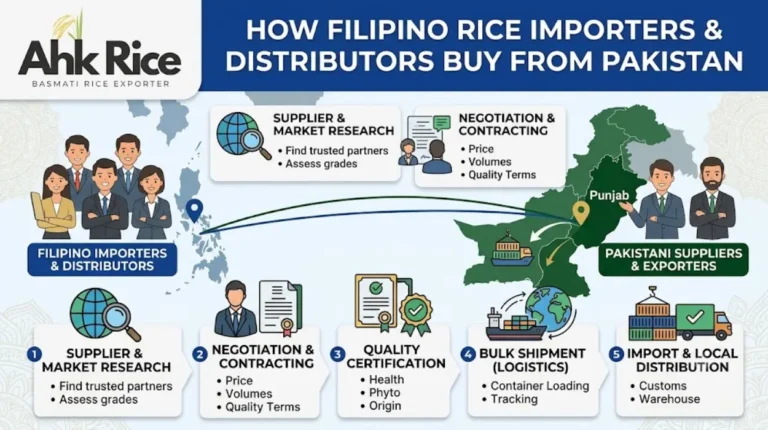
Global markets that import premium Pakistani rice span across the Middle East, the European Union, East Africa, and North America. These consumer regions rely on consistent import pipelines to satisfy both ethnic culinary demands and staple food requirements.
The Gulf Cooperation Council nations constitute the largest volume destination for premium long-grain aromatic shipments. Countries, such as Saudi Arabia, the United Arab Emirates, and Oman, import massive quantities of 1121 parboiled rice for commercial food service operations. These markets prioritize grain elongation and structural integrity under industrial warming trays.
The European Union represents a high-value territory with stringent regulatory oversight. Importers in nations, such as the United Kingdom, Germany, and the Netherlands, require absolute compliance with maximum residue limits for agricultural chemicals. North American buyers in the United States and Canada focus on packaging design and retail-ready configurations for specialized grocery networks.
What certifications apply to international rice exports?
Certifications that apply to international rice exports include global food safety standards, phytosanitary clearances, and country-of-origin statutory documentation. These regulatory frameworks verify that the cargo is fit for human consumption and complies with the legal mandates of destination custom authorities.
Processing facilities must maintain operational certifications, such as ISO 22000 or Hazard Analysis Critical Control Point protocols, to prove systemic food safety management. These audits confirm that the milling environment prevents physical, chemical, and biological contamination during the high-speed sorting and packaging phases.
Before leaving the departure port, individual shipments must obtain a phytosanitary certificate issued by national plant protection organizations. This document proves the container underwent proper aluminum phosphide fumigation to eradicate storage pests, such as the rice weevil (Sitophilus oryzae). Furthermore, specialized destination regions require specific documentation, such as Halal compliance certificates for Islamic countries, and strict non-genetically modified organism declarations for European markets.
What are the core benefits of sourcing rice from Pakistan?
The core benefits of sourcing rice from Pakistan include favorable economic currency conversions, established geographical processing proximity, and unique traditional crop genetics. These elements combine to give international buyers a distinct competitive advantage regarding procurement costs and product differentiation.
Cost Efficiency and Pricing Structure
The macroeconomic currency positioning provides a highly competitive per-ton free-on-board cost baseline for global buyers. This economic factor allows large-scale distributors to secure high volumes of premium Basmati without exceeding their target procurement budgets. The presence of consolidated private processing mills in Punjab lowers localized handling expenses.
Culinary and Physical Superiority
The natural starch properties of the Indus basin crops ensure excellent cooking performance. The grains possess a high amylose content, which prevents sticky clumping during industrial cooking processes. This characteristic makes the product ideal for large-scale catering operations, where grains must remain distinct and visually appealing over multi-hour service windows.
What are the primary use cases for different rice varieties?
The primary use cases for different rice varieties range from luxury commercial catering operations to high-volume industrial food processing applications. Selecting the correct grain specification optimizes culinary outcomes and processing efficiency based on the final preparation method.
Commercial Food Service and Catering
High-elongation varieties, such as 1121 Basmati, are the primary choice for large-scale catering events, wedding banquets, and restaurant chains. The exceptional length of the grain provides a premium visual presentation on the plate. The physical strength of parboiled grains tolerates aggressive mechanical stirring in heavy commercial pots.
Retail Brands and Consumer Packing
Naturally aged Super Kernel Basmati serves the premium retail consumer segment through grocery store networks and specialty boutiques. Home consumers prioritize the traditional aroma and soft mouthfeel of this variety for traditional home preparations. The stable moisture profile guarantees an extended retail shelf life without quality degradation.
What are the common misconceptions about imported rice?
Common misconceptions about imported rice include the belief that fresh harvests are superior to aged stock, and that all long grains are identical. These inaccurate assumptions cause buying errors and supply chain mismanagement among inexperienced procurement officers.
The Misconception of Freshness
Many buyers assume that freshly harvested paddy yields the best culinary results. This is incorrect because fresh rice contains unstable, volatile moisture distributions that cause the grain to split, release excess surface starch, and become mushy during boiling. Premium Basmati must undergo a deliberate aging process for a minimum of 9 to 12 months to allow the internal starches to crystallize, which ensures separate grains after cooking.
Equating Visual Length with Quality
Another frequent industry error is assuming that every long grain possesses aromatic Basmati characteristics. Visual length does not equal genetic classification; non-aromatic long-grain hybrid varieties can look similar to Basmati but lack the essential aromatic compounds and delicate texture. True culinary value relies on genetic purity certifications rather than simple structural measurement alone.