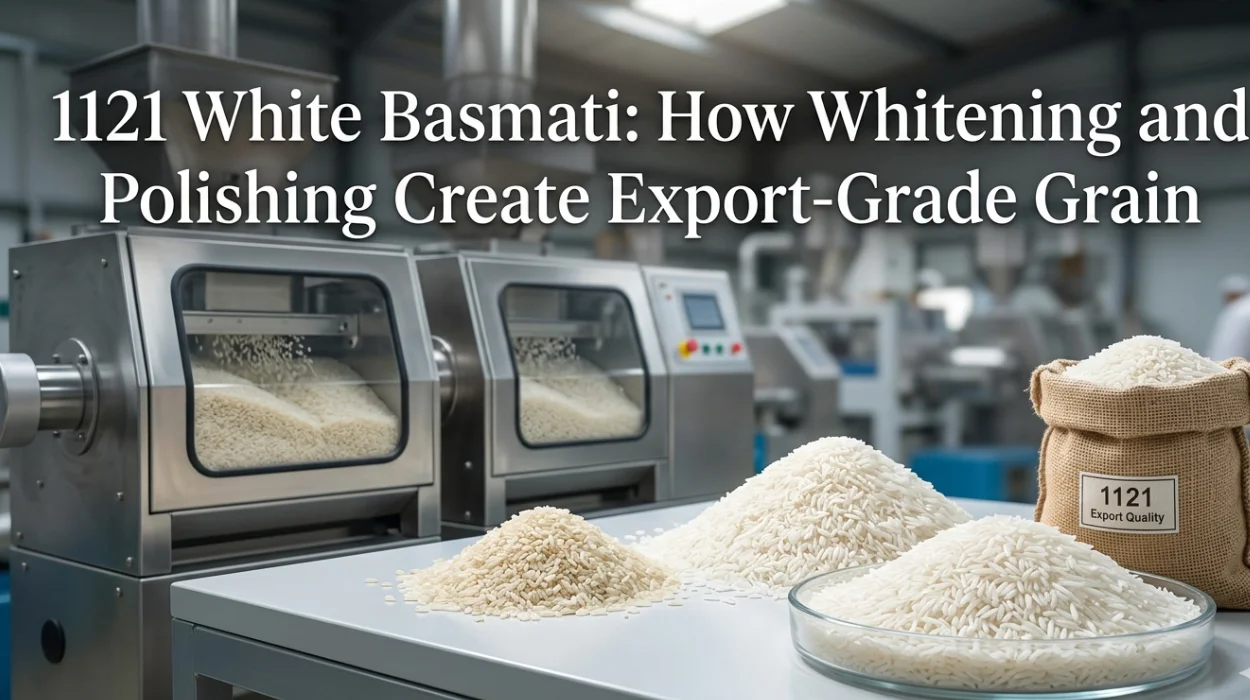
1121 White Basmati: How Whitening and Polishing Create Export-Grade Grain
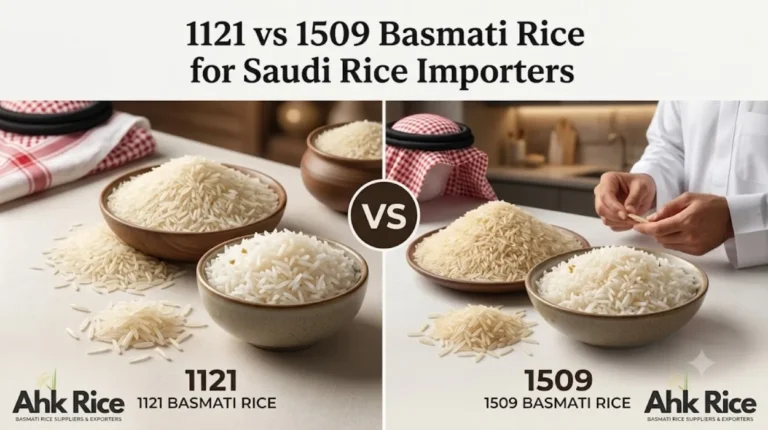
1121 white basmati rice is long-grain basmati paddy that has been hulled, whitened, and polished to remove the husk, bran, and surface layers, producing export-grade white rice with a bright finish, lower moisture retention, and high visual uniformity.
1121 white basmati belongs to the basmati family that grows in the fertile rice belts of Punjab in Pakistan and North India. The grain is known for its extra length, aromatic profile, and strong elongation after cooking. In white form, the grain goes through milling steps that strip away the outer layers and reveal the pale endosperm. That creates the clean appearance associated with export-grade white rice.
The white form is different from brown or steam basmati because it focuses on appearance, cooking speed, and market uniformity. Buyers in many export markets prefer the clean polish and consistent grain shape. AHK Rice supplies 1121 in multiple processing forms, including white, steam, brown, and parboiled, which shows how the same central variety can serve different market needs. This topic sits inside a wider basmati processing system that also includes different grades and destination requirements.
Where is 1121 white basmati grown?
1121 white basmati is grown mainly in the Punjab rice belt, where fertile alluvial soil, controlled irrigation, and warm growing seasons support long-grain development and aromatic quality before the rice enters the whitening and polishing stage.
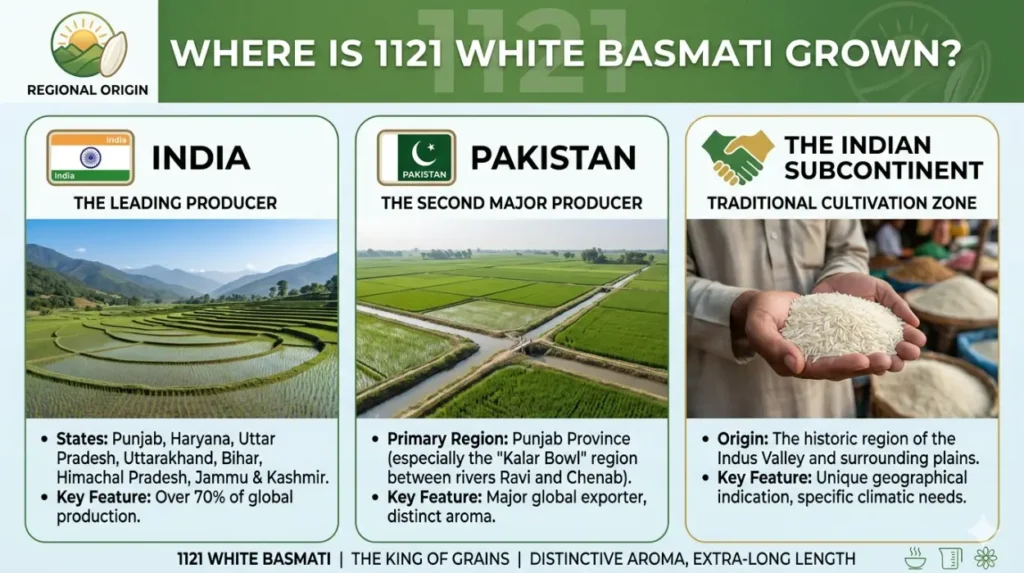
Punjab is one of the most important basmati-growing regions because the soil and climate support grain elongation and aroma development. The crop is usually cultivated under irrigated conditions, and the growing cycle depends on seasonal temperature, water access, and harvest timing. The paddy is harvested as rough rice, not as white rice. White rice only appears after the post-harvest milling chain begins.
This distinction matters because whitening and polishing do not create the basmati identity. They change the final form of the grain. The region of origin contributes the varietal character, while the milling process determines the export appearance. AHK Rice sources from Punjab’s rice belt and then processes the paddy into export-ready forms for different international buyers.
How does the rice whitening process work?
The rice whitening process removes the bran layers from hulled paddy through abrasive or friction-based milling, then polishing smooths the surface to create a bright, export-ready grain with fewer visible imperfections and a more uniform appearance.
The process begins after harvesting and drying. The paddy is first cleaned to remove dust, stones, stalk fragments, and foreign material. It is then hulled to remove the outer husk, which reveals brown rice. Once the grain reaches that stage, whitening machines remove the bran layers around the kernel. This is the stage that creates the characteristic white colour.
After whitening, polishing refines the appearance further. Polishing uses controlled friction or mist polishing to remove remaining surface dust and small bran residues. The final grain looks brighter, smoother, and more visually consistent. This is why white basmati is often described as export grade white rice. The process does not change the variety, but it does change the market presentation and the cooking behaviour.
Stage-by-stage sequence
- Clean the paddy, for example by removing stones, chaff, and broken plant matter.
- Remove the husk, for example by dehusking the paddy to reveal brown rice.
- Whiten the grain, for example by milling off the bran layers.
- Polish the grain, for example by smoothing the surface for a brighter finish.
- Grade and sort the output, for example by separating broken grains from full grains.
What are the key components of whitening and polishing?
The key components are dehusking, whitening, polishing, grading, and sorting, each of which changes the grain’s final appearance, breakage level, and export suitability without changing the underlying basmati variety.
Dehusking is the first mechanical step. It removes the husk and creates brown rice as the intermediate grain. Whitening follows and strips the bran, which is the outer nutritional and colour layer. Polishing refines the output by removing surface residue and improving sheen. Grading then sorts the rice by grain length, breakage ratio, and purity.
These components matter because export buyers assess more than colour. They also check uniformity, moisture, and percentage of whole grains. A polished grain with a low breakage rate looks more premium in retail packaging and often performs better in destination markets that prefer visual consistency. AHK Rice processes basmati through end-to-end systems that include cleaning, dehusking, sorting, and custom packing, which keeps the final grain within export expectations.
Why do buyers choose white basmati?
Buyers choose white basmati because it cooks faster, looks cleaner, and offers a consistent export appearance that fits retail packaging, foodservice contracts, and markets that prioritise uniformity over bran retention.
White basmati fits markets that value a bright and polished grain on shelves. The visual effect matters in retail because consumers often judge quality by appearance before they cook the rice. White rice also tends to be lighter in texture after cooking, which suits many everyday dishes. That makes it a practical choice for importers serving broad consumer groups.
The appeal is also commercial. White basmati often moves well in export channels where buyers want an established, familiar product format. The grain separates cleanly, looks uniform in bags, and aligns with standard consumer expectations. That is why export grade white rice remains a core basmati category. It is not the only form, but it is one of the most widely traded forms.
What export markets import 1121 white basmati?
1121 white basmati is imported by markets across the Middle East, the UK, the EU, North America, and parts of Africa, where buyers value long grain appearance, aroma, and dependable export consistency.
Middle Eastern markets often prefer basmati because of its cooking behaviour and cultural fit with regional cuisine. The UK and EU import white basmati in retail and foodservice channels because consumers recognise the grain style and associate it with premium long-grain rice. North American buyers also import white basmati for retail bags, ethnic grocery channels, and wholesale distribution.
These markets look at more than origin. They also inspect quality documents, purity, moisture level, and packing standards. AHK Rice exports basmati to 15 plus countries and supports custom packaging and full export handling, which makes the product suitable for different destination requirements. White basmati remains one of the most tradeable forms because its clean appearance works across multiple market profiles.
What certifications apply to export-grade white rice?
Export-grade white rice commonly carries phytosanitary documents, origin certification, food safety systems such as HACCP or ISO 22000, and destination specific compliance papers for residue, packing, and labelling requirements.
Certification matters because import markets want proof of safety and traceability. A phytosanitary certificate confirms that the shipment meets plant health requirements. A certificate of origin supports customs clearance and market verification. Food safety systems such as HACCP and ISO 22000 strengthen confidence in the mill’s control procedures. Some destinations also request lab reports for moisture, pesticide residue, and aflatoxin control.
For rice exported from Pakistan, documentation often includes registration, customs paperwork, and market specific compliance steps. Halal certification is relevant for several destination markets. The exact paper set depends on the importing country, packaging format, and buyer contract. Export grade white rice performs best when milling quality and documentation quality align.
What are the benefits of white basmati processing?
White basmati processing creates a bright, uniform grain with faster cooking time, strong visual appeal, and broad export acceptance across retail and foodservice markets that prioritise consistency and shelf presentation.
The first benefit is appearance. Whitening and polishing produce a clean, polished grain that looks premium in bags and bulk packs. The second benefit is cooking performance. White basmati usually cooks faster than less milled forms because the bran layers have already been removed. The third benefit is market flexibility. Many buyers prefer white rice because it fits standard consumer expectations across many countries.
The process also improves grading precision. Once the bran is removed, sorting systems can identify broken grains and impurities more clearly. That supports stronger consistency in final packing. AHK Rice uses these processing steps across its variety range, which includes 1121, Super Kernel, and 1509, so the output can be matched to destination preferences more accurately.
What are common use cases for 1121 white basmati?
1121 white basmati is used in retail packs, restaurant supply, ethnic grocery channels, foodservice contracts, and export bulk trade where grain appearance, texture, and cooking consistency are more important than bran retention.
Retail is one of the strongest use cases because consumers want a bright, familiar grain. Restaurants use white basmati because it cooks predictably and presents well on the plate. Importers choose it for foodservice supply because the grain separates cleanly and maintains its long-grain identity. Wholesale buyers also use it for bulk distribution into supermarkets and grocery chains.
A second use case is destination-specific packaging. White basmati adapts well to 1 kilogram, 5 kilogram, 10 kilogram, and bulk contract formats. That flexibility matters because different markets buy differently. AHK Rice provides custom packaging and full export handling, which allows the same base product to serve multiple channel types without changing the rice identity itself.
What are the common problems and misconceptions?
The most common misconception is that whitening improves the rice itself in nutritional terms, when the process actually improves appearance and export uniformity while removing outer bran layers that carry much of the grain’s fibre and mineral content.
Another misconception is that polishing creates a different rice variety. It does not. Whitening and polishing change the form of the grain, not the underlying basmati type. The same 1121 variety can appear as steam, white, brown, or parboiled depending on the processing route. Buyers sometimes confuse process style with cultivar identity, which leads to wrong procurement assumptions.
A third misconception is that all white rice behaves the same. Basmati remains distinct because of its elongated grain structure and aromatic profile. Whitening and polishing do not remove the basmati character, but they do alter the grain surface and the cooking feel. That is why importers compare the processing method as carefully as the variety name.
How does white basmati compare with steam basmati?
White basmati is chosen for bright appearance and faster cooking, while steam basmati is chosen for stronger aroma retention and longer shelf life, which makes the comparison depend on buyer priorities rather than one universal quality ranking.
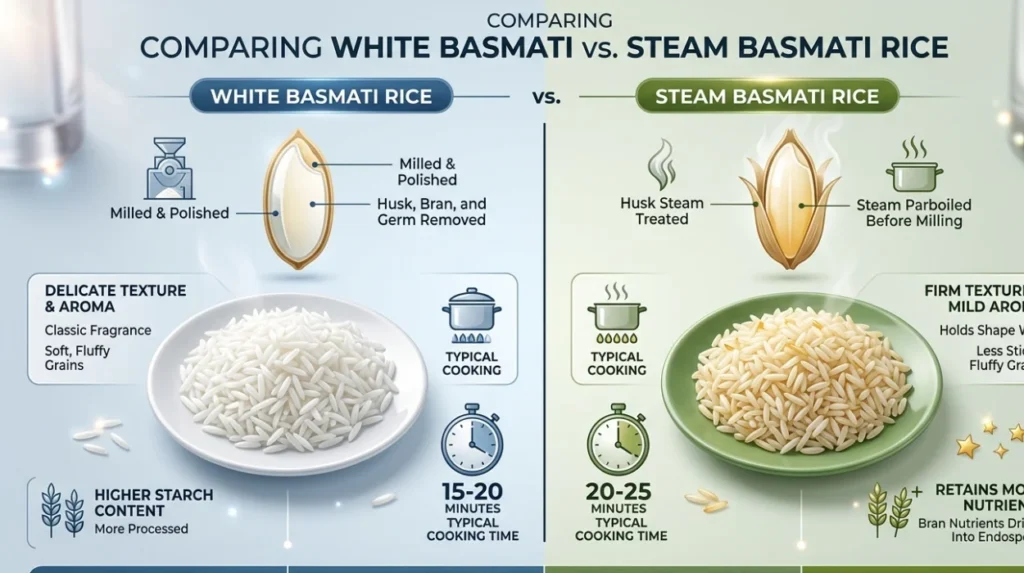
The white version tends to suit retail and table presentation because of its polished surface and clean visual appeal. The steam version often suits buyers who prioritise grain integrity during transport and storage. These differences shape buyer preference in different markets. The same 1121 variety can therefore serve more than one channel, but the processing method changes the market fit.
For buyers comparing performance and shelf behaviour, the next step is usually to look at side by side buyer preference and storage analysis.
What should a buyer understand before ordering?
A buyer should understand that whitening and polishing define the final market form, while origin, grade, moisture control, and export certification determine whether the rice qualifies as reliable export-grade white rice.
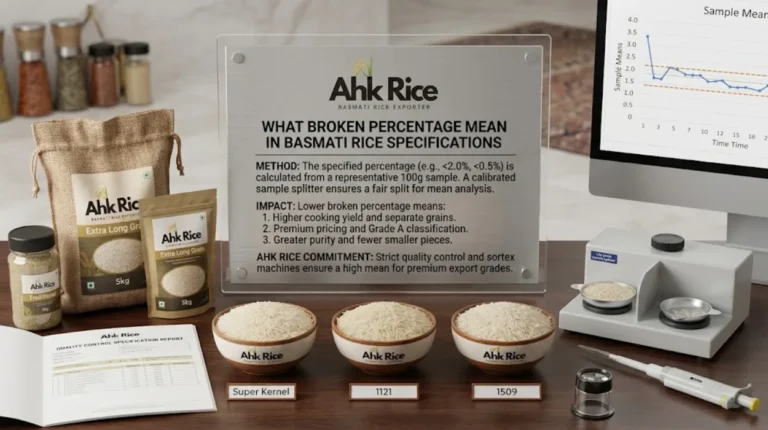
White basmati is not only a product of milling. It is also a product of sourcing discipline, sorting accuracy, and packing control. Importers need to confirm grain length, breakage percentage, destination compliance, and packaging format before finalising the order. AHK Rice handles these stages through an end-to-end export process, which keeps the final rice aligned with buyer specifications.
The key conceptual point is simple. 1121 white basmati begins as Punjab-grown basmati paddy and becomes export grade white rice through a controlled whitening and polishing chain. The process creates the bright grain that many markets expect. The buyer’s task is to understand how that chain affects appearance, cooking behaviour, and market fit before deciding which processing form matches the destination.