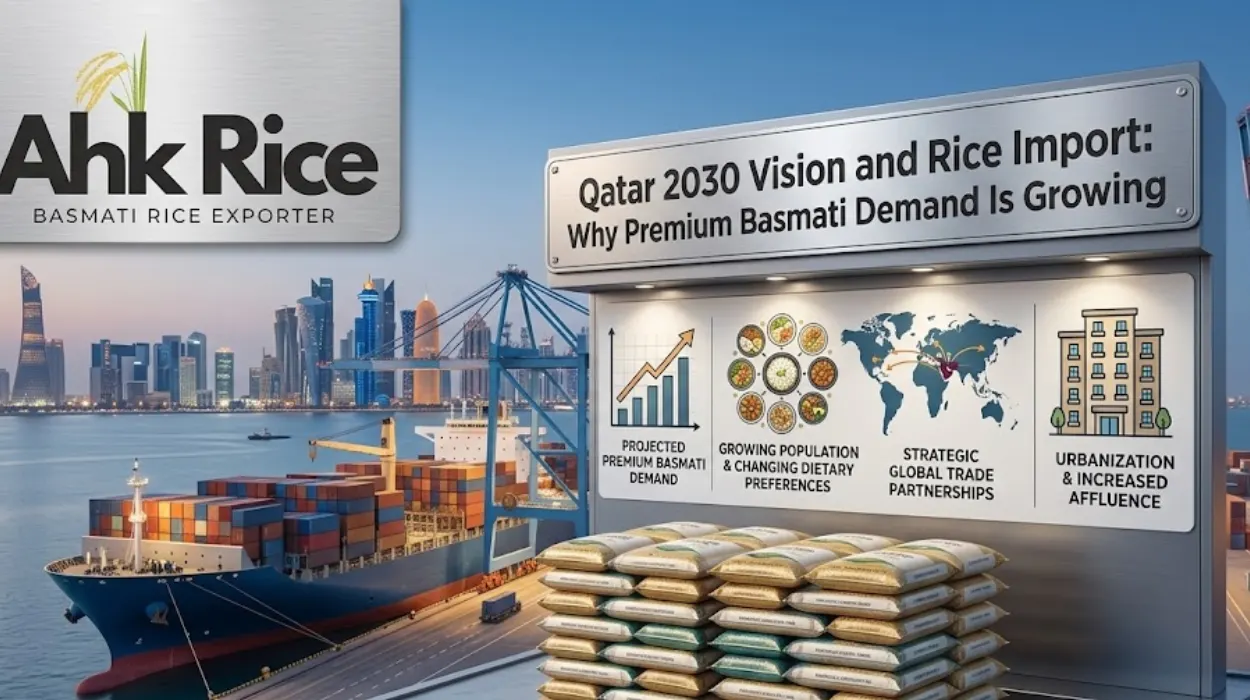
Qatar 2030 Vision and Rice Import: Why Premium Basmati Demand Is Growing
Qatar’s premium Basmati rice demand is growing because Qatar National Vision 2030 increases hospitality investments, luxury tourism, fine dining capacity, and food security imports. Premium rice grades support high-end hotels, airline catering, weddings, and large-scale HORECA operations across Doha and Lusail.
Qatar imported more than 250,000 metric tons of rice during recent trade cycles because local rice cultivation remains commercially limited due to desert climate conditions (source: FAOSTAT, GCC food trade data 2025). Pakistani Basmati rice dominates premium long-grain segments because it delivers aroma, elongation, and cooking consistency required by Gulf hospitality buyers.
What Is Qatar 2030 Vision and How Does It Affect Rice Imports?
Qatar National Vision 2030 focuses on food security, luxury tourism, infrastructure expansion, and hospitality growth. These sectors increase premium rice consumption across hotels, restaurants, catering companies, and airline kitchens.
Qatar National Vision 2030 is a government development framework launched to diversify the economy beyond hydrocarbons. The strategy targets tourism, international business, aviation, urban infrastructure, and sustainable food supply systems. Doha, Lusail, and The Pearl now host expanding hospitality investments because Qatar aims to increase international visitor capacity before 2030.
Rice imports increased alongside hospitality expansion because Qatar depends heavily on imported staple foods. Imported Basmati rice supports hotels, corporate catering, cruise tourism, diplomatic events, and luxury restaurants. Premium rice demand rises faster than commodity rice demand because Gulf consumers prioritize aroma, grain length, and presentation quality.
Qatar food imports depend on strategic sourcing relationships with Pakistan, India, Thailand, and Vietnam. Pakistan supplies premium Basmati varieties because Punjab’s climate supports aromatic long-grain cultivation. Basmati cultivation requires fertile alluvial soil, controlled irrigation, and seasonal temperature variation between day and night.
Qatar hospitality buyers prefer aged Basmati rice because aged grains absorb less moisture during cooking. Aged rice also produces longer cooked grain elongation. Premium restaurants use aged rice for biryani, mandi, kabsa, and fusion rice dishes because plate presentation affects customer perception.
Qatar Airways catering operations, luxury hotel chains, and banquet halls increased procurement standards after tourism investments accelerated. Buyers now request verified grain length, moisture percentages, broken grain ratios, and food safety certifications before procurement approval.
With Qatar Vision 2030 connected to hospitality expansion, the next question is how premium Basmati moves through the international supply chain.
How Does Premium Basmati Rice Reach Qatar Markets?
Premium Basmati rice passes through cultivation, harvesting, drying, milling, grading, packaging, inspection, certification, container loading, and Gulf distribution channels before reaching Qatar retailers and HORECA buyers.
Basmati rice cultivation starts in Punjab because the region provides suitable humidity, river irrigation, and fertile soil composition. Farmers cultivate rice during the Kharif season. Harvesting begins when grain moisture reaches harvestable levels between 20% and 24%.
Rice processors follow structured industrial steps before export approval.
How Is Premium Basmati Processed Step by Step?
- Clean the paddy to remove stones, dust, and field residue.
- Dry the harvested grain to controlled moisture levels.
- De-husk the paddy using industrial shelling machines.
- Polish the rice surface for appearance consistency.
- Grade the grains by length and purity percentage.
- Sort defective grains using optical colour sorters.
- Test moisture, chalkiness, and broken percentage.
- Fumigate containers for export compliance.
- Load containers for shipping to GCC ports.
Each processing stage affects final cooking performance. Improper drying damages elongation quality. Poor grading reduces visual consistency. Weak sorting increases broken grain ratios inside commercial packaging.
Qatar importers inspect rice based on measurable specifications because catering operations require cooking consistency. Premium Basmati buyers request exact grain measurements instead of general quality descriptions.
Which Certifications Apply to Qatar Rice Imports?
Premium rice exports require internationally recognized compliance systems.
- ISO 22000 certification
- HACCP food safety compliance
- Phytosanitary certification
- Fumigation certification
- Halal certification
- Certificate of origin
- SGS inspection reports
Qatar customs authorities inspect documentation because food security standards increased after GCC import reforms. Food importers also verify pesticide residue compliance before market distribution.
Rice processing standards influence cooking quality directly, which leads to the next question about premium Basmati grades preferred in Qatar.
Which Premium Basmati Grades Are Popular in Qatar?
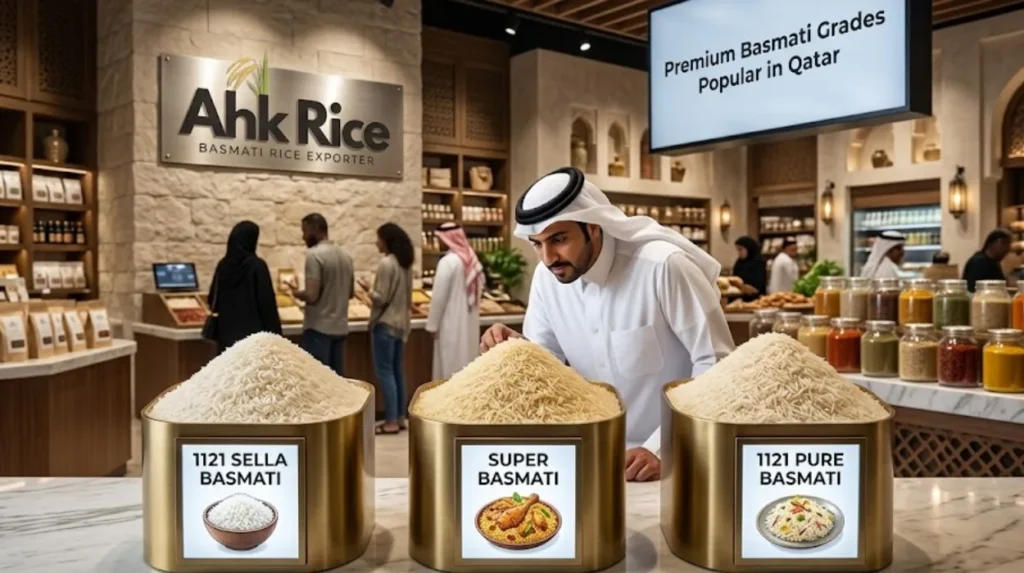
1121 Basmati, Super Kernel Basmati, and 1509 Basmati dominate Qatar premium rice imports because these grades provide long grain structure, aroma retention, and high-volume cooking stability.
Qatar buyers separate rice grades according to hospitality usage. Luxury hotels prefer extra-long grains. Catering companies prioritize holding stability during buffet service. Retail consumers focus on aroma and softness.
What Is 1121 Basmati Rice?
1121 Basmati delivers grain lengths above 8.30 mm with strong elongation performance reaching nearly double after cooking.
1121 Basmati became popular across GCC markets because cooked grains remain separate after steaming. The variety supports biryani and mandi preparation because grains maintain structure under commercial kitchen conditions.
1121 Basmati exists in multiple processing grades.
Which 1121 Processing Grades Reach Qatar?
- 1121 Steam Basmati
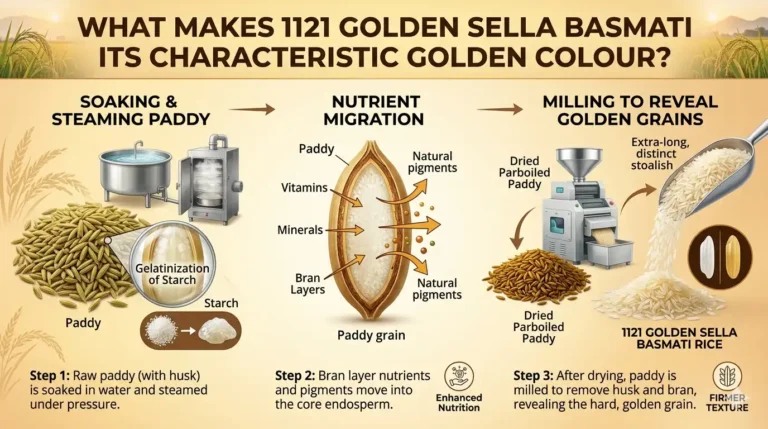
- 1121 Golden Sella Basmati
- 1121 White Basmati
- 1121 Creamy Sella Basmati
Golden Sella remains common in Gulf catering because parboiling strengthens grain durability. Steam rice serves fine dining restaurants because the texture remains softer and lighter.
What Is Super Kernel Basmati Rice?
Super Kernel Basmati delivers traditional aroma, medium-extra grain length, and soft texture preferred in Gulf household consumption.
Super Kernel originates from Punjab cultivation zones with traditional Basmati characteristics. The variety absorbs spices efficiently during cooking. Qatari households use Super Kernel for kabsa and family dining because the texture remains soft after reheating.
Hospitality buyers compare Super Kernel and 1121 according to cooking application. Readers exploring catering specifications can review this detailed comparison of aromatic grain performance and kitchen suitability: [].
What Is 1509 Basmati Rice?
1509 Basmati provides faster crop cycles, strong elongation, and competitive pricing for commercial catering supply chains.
1509 cultivation expanded because the variety matures faster than traditional Basmati. Processors export 1509 Steam and Sella grades to GCC buyers seeking premium appearance with operational cost control.
Different grades solve different operational requirements, which connects directly to the benefits premium Basmati offers Qatar’s hospitality industry.
Why Does Qatar Hospitality Prefer Premium Basmati Rice?
Premium Basmati supports luxury presentation, consistent cooking, aroma retention, buffet stability, and large-scale serving efficiency across hotels, weddings, and airline catering operations.
Hospitality businesses evaluate rice through operational performance metrics. Premium Basmati reduces breakage during cooking. Long grains improve plate presentation. Stable texture supports bulk preparation systems.
Luxury hotels in Doha serve international guests from South Asia, the Levant, Europe, and North Africa. Premium rice supports multicultural menus because Basmati adapts to biryani, pilaf, kabsa, mandi, and grilled meat combinations.
Which Hospitality Segments Use Premium Basmati?
- Five-star hotels
- Airline catering companies
- Wedding catering operations
- Fine dining restaurants
- Corporate food suppliers
- Cruise hospitality kitchens
Qatar wedding catering uses Golden Sella because buffet service lasts several hours. Golden Sella maintains grain separation longer under heated serving conditions. Steam rice performs better for plated fine dining because softer texture improves immediate serving quality.
Premium rice also supports food waste reduction. Broken or sticky rice increases buffet rejection rates. Consistent grain quality improves portion acceptance and visual appeal.
Qatar hospitality demand explains current import growth, which leads naturally to the wider GCC premium rice market.
How Does GCC Premium Rice Demand Influence Qatar Imports?
GCC premium rice demand increases Qatar imports because Gulf consumers prefer aromatic long-grain rice for daily meals, hospitality dining, and ceremonial food traditions.
Saudi Arabia, the UAE, Kuwait, Oman, Bahrain, and Qatar import large rice volumes because regional climates restrict domestic rice cultivation. GCC food security systems depend on stable import partnerships with South Asian exporters.
Pakistan exported over 5 million metric tons of rice during recent export cycles because GCC demand remained strong for premium long-grain varieties (source: REAP export data, December 2025). Basmati exports generate higher value than commodity rice because premium consumers pay for aroma, grain length, and processing quality.
Why Does GCC Demand Focus on Premium Grades?
Premium rice aligns with Gulf dining preferences.
- Long grain appearance
- Aromatic cooking profile
- High elongation ratio
- Soft yet separate texture
- Strong buffet holding performance
Gulf households often serve rice with lamb, chicken, seafood, and grilled dishes. Premium Basmati absorbs spice oils effectively because the grain structure supports layered cooking techniques.
Religious gatherings and wedding events also increase premium rice demand. Large-scale dining events require consistent cooking results across hundreds of servings. Premium grades reduce operational variation during mass preparation.
GCC demand growth also creates misconceptions about rice quality classifications, which requires clarification.
What Misconceptions Exist About Premium Basmati Rice?
Premium Basmati quality depends on grain purity, aging, processing, and origin verification instead of grain length alone.
Many buyers assume extra-long grain automatically means premium quality. Grain length alone does not determine performance. Moisture control, milling quality, and aging directly affect cooking results.
Does Longer Grain Always Mean Better Rice?
Longer grain improves visual presentation but does not guarantee aroma or texture quality. Poorly processed extra-long rice breaks during cooking. Proper grading and moisture control determine final performance.
Is Golden Sella Lower Quality Than Steam Rice?
Golden Sella and Steam serve different operational purposes. Golden Sella lasts longer in hot storage environments because parboiling strengthens grain structure. Steam rice delivers softer texture for immediate service.
In a 40°C GCC warehouse environment, Golden Sella maintains commercial stability for extended storage cycles. Steam rice requires faster inventory turnover because softer texture reacts quicker to humidity variation.
Does All Basmati Come From the Same Region?
Authentic Basmati cultivation concentrates in Punjab regions of Pakistan and India because Himalayan foothill conditions support aromatic compound development. Soil minerals and irrigation systems affect aroma formation during cultivation.
Misconceptions around quality highlight the importance of procurement standards, which leads to the final question about future market direction.
Why Will Premium Basmati Demand Continue Growing in Qatar?
Qatar hospitality expansion, tourism investment, population growth, and premium dining trends will continue increasing demand for certified Basmati rice imports through 2030.
Luxury tourism projects continue expanding across Doha and Lusail. International hotel chains require standardized rice specifications because brand consistency affects guest experience. Airline catering growth also increases demand for high-performance long-grain rice.
Qatar food security policies support diversified sourcing because stable imports protect supply continuity. Pakistan remains strategically important for premium Basmati supply because Punjab cultivation supports large export volumes with established GCC logistics routes.
Premium consumer behavior also shapes demand patterns. GCC consumers increasingly purchase branded packaged rice with traceability and certification visibility. Buyers now evaluate packaging integrity, processing transparency, and origin documentation before procurement decisions.
Digital procurement systems further increase specification-based purchasing. Importers compare grain length, broken percentage, crop year, and certification data during supplier evaluation. Commodity descriptions no longer satisfy institutional buyers.
Premium Basmati demand will remain connected to hospitality performance, food security planning, and Gulf dining culture because rice remains central to regional consumption habits.
Frequently Asked Questions
Why is Qatar importing more premium Basmati rice?
Qatar imports more premium Basmati rice because hospitality, tourism, and food service sectors continue expanding under Qatar National Vision 2030. Luxury hotels, airline catering, and wedding venues require aromatic long-grain rice with consistent cooking quality for high-volume dining operations.
Which Basmati rice is most popular in Qatar?
1121 Basmati rice is the most popular premium variety in Qatar because it delivers extra-long grain length and strong elongation after cooking. Super Kernel Basmati also remains widely consumed in households because of its traditional aroma and softer texture.
Why do Qatar hotels prefer Golden Sella Basmati rice?
Qatar hotels prefer Golden Sella Basmati because parboiling strengthens the grain structure during processing. Golden Sella maintains separation for long buffet service hours and performs well in large-scale catering environments with continuous heating systems.
What certifications are required for rice exports to Qatar?
Rice exports to Qatar require certifications including ISO 22000, HACCP, Phytosanitary Certificate, Fumigation Certificate, Halal Certification, and Certificate of Origin. Qatar import authorities inspect documentation carefully because food safety standards remain strict across GCC markets.
What is the difference between Steam and Golden Sella Basmati?
Steam Basmati delivers a softer texture and lighter appearance for fine dining service. Golden Sella provides stronger grain durability and longer storage stability for catering operations. Gulf catering businesses often choose Golden Sella because it performs better in bulk cooking conditions.
Which countries supply premium Basmati rice to Qatar?
Pakistan and India supply most premium Basmati rice imports to Qatar because Punjab regions provide suitable climate conditions for aromatic rice cultivation. Pakistan remains a major supplier for GCC markets due to strong logistics routes and large export processing capacity.
How does Qatar Vision 2030 affect food imports?
Qatar Vision 2030 increases food imports because tourism projects, population growth, and hospitality investments require stable food supply chains. Premium rice imports grow alongside hotel development, airline expansion, and international dining demand across Doha and Lusail.
Why is aged Basmati rice preferred in GCC markets?
Aged Basmati rice absorbs less moisture during cooking and produces better grain separation. GCC buyers prefer aged rice because it improves biryani, mandi, and kabsa presentation. Aging also strengthens aroma concentration and reduces sticky texture during commercial cooking.
What grain length is considered premium Basmati?
Premium 1121 Basmati grain length generally measures above 8.30 mm before cooking. Buyers also evaluate elongation ratio, broken percentage, moisture content, and aroma strength because grain length alone does not determine export quality.
Why does the GCC market prefer Pakistani Basmati rice?
GCC buyers prefer Pakistani Basmati because Punjab cultivation produces strong aroma, long grain structure, and reliable cooking performance. Pakistani rice also supports Gulf food traditions including biryani, kabsa, and mandi because grains remain separate after cooking.