Which Pakistani Rice Grades Generate the Highest Demand in Iraq’s Import Market
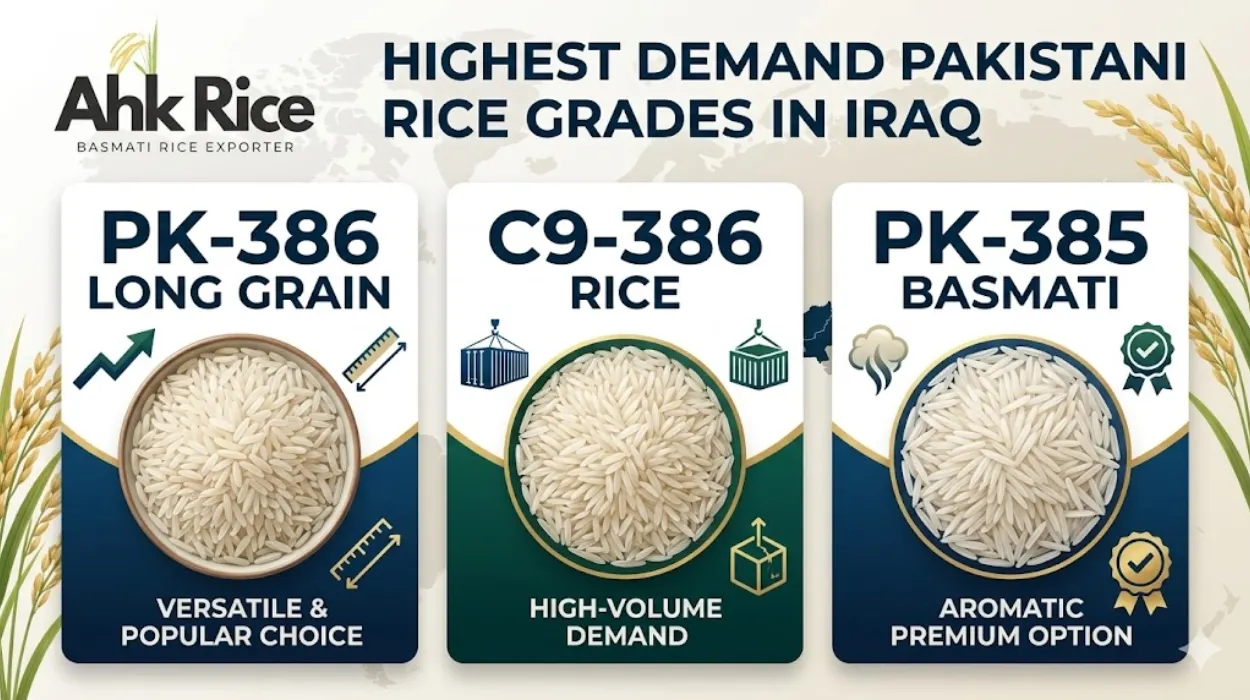
Pakistani rice grades that generate the highest demand in Iraq are 1121 Golden Sella Basmati, 1121 Steam Basmati, Super Kernel Basmati, and 1509 Basmati Rice. These grades match Iraqi consumer preferences for long grain length, strong aroma, high cooking yield, and stable storage performance. Here is why: Iraqi importers prioritize rice specifications that perform consistently in wholesale distribution, retail packaging, and large-scale food service operations.
Pakistan remains one of Iraq’s major rice suppliers because Pakistani Basmati varieties offer distinct aroma, extra-long grain length, and multiple processing grades suitable for different price segments. Iraqi importers source specific grades based on cooking habits, retail demand, and commercial catering requirements.
Understanding which grades dominate Iraq’s import market requires examining cultivation, processing, grading systems, buyer preferences, and market applications. Buyers seeking a deeper understanding of supplier evaluation criteria can also explore how experienced importers assess export capabilities, quality systems, and logistics performance through this detailed guide on selecting reliable Pakistani rice suppliers.
What Are the Most Demanded Pakistani Rice Grades in Iraq?
1121 Golden Sella, 1121 Steam, Super Kernel, and 1509 Basmati account for the strongest demand because they combine long grain length, aroma, cooking expansion, and commercial value.
Pakistani rice grades represent specific combinations of variety and processing method. Variety defines the genetic characteristics of the rice plant. Processing grade defines how the harvested paddy is milled and prepared before export.
Iraqi buyers purchase different grades because each serves a different market segment. Retail brands focus on appearance and aroma. Catering companies focus on cooking yield. Wholesale distributors focus on price stability and storage performance.
1121 Golden Sella Basmati Rice
1121 Golden Sella Basmati undergoes parboiling before milling. The process creates a golden grain color and stronger grain structure.
1121 Golden Sella remains highly demanded because the grain length exceeds 8.30 mm, cooking expansion reaches approximately twice the original length, and storage performance remains stable in warm environments.
1121 Steam Basmati Rice
1121 Steam Basmati receives steam treatment instead of full parboiling.
1121 Steam Basmati attracts Iraqi retail buyers because it preserves a lighter appearance while maintaining the aroma associated with premium Basmati rice.
Super Kernel Basmati Rice
Super Kernel Basmati is a traditional Pakistani Basmati variety.
Super Kernel Basmati remains popular among consumers who prioritize aroma over maximum grain length. Iraqi households frequently recognize this variety for traditional cooking applications.
1509 Basmati Rice
1509 Basmati is an early-maturing Basmati variety.
1509 Basmati offers a competitive price structure while maintaining long grain characteristics. Iraqi importers often source this grade for value-focused market segments.
| Rice Grade | Average Grain Length | Aroma Level | Demand Segment |
|---|---|---|---|
| 1121 Golden Sella | 8.30+ mm | High | Catering & Wholesale |
| 1121 Steam | 8.30+ mm | High | Retail |
| Super Kernel | 7.20–7.50 mm | Very High | Traditional Retail |
| 1509 Basmati | 8.00+ mm | Medium-High | Value Retail |
With the dominant grades identified, the next question is how these rice grades reach export quality standards.
How Does Pakistani Rice Processing Work for Iraq’s Import Market?
Rice processing involves nine key stages: cleaning, drying, dehusking, milling, polishing, grading, sorting, testing, and packaging.
Rice processing transforms harvested paddy into export-ready rice. Each stage influences grain appearance, cooking performance, and compliance with import requirements.
Step 1: Clean the Paddy
Clean the harvested paddy to remove stones, dust, straw, and foreign materials.
Cleaning improves equipment efficiency and prevents contamination during processing.
Step 2: Dry the Paddy
Dry the paddy to controlled moisture levels.
Moisture management protects grain quality during storage and export transportation.
Step 3: De-Husk the Grain
De-husk the grain to remove the outer shell.
De-husking converts paddy into brown rice while preserving the kernel.
Step 4: Mill the Grain
Mill the grain to remove bran layers.
Milling creates the white rice appearance preferred in Iraqi retail markets.
Step 5: Polish the Rice
Polish the rice to improve visual appearance.
Polishing increases brightness and creates uniform grain presentation.
Step 6: Grade by Length
Grade the rice according to grain dimensions.
Length grading separates premium export grades from lower commercial grades.
Step 7: Sort by Color
Sort by color using optical sorting equipment.
Color sorting removes discolored grains and improves consistency.
Step 8: Test Quality Parameters
Test moisture, purity, broken percentage, and grain length.
Quality testing verifies compliance with export specifications.
Step 9: Package for Export
Package rice according to importer requirements.
Export packaging commonly includes 1 kg, 5 kg, 10 kg, 25 kg, and 50 kg formats.
With processing established, the next question is which components determine the value of each rice grade.
What Components Determine Demand for Pakistani Rice Grades in Iraq?
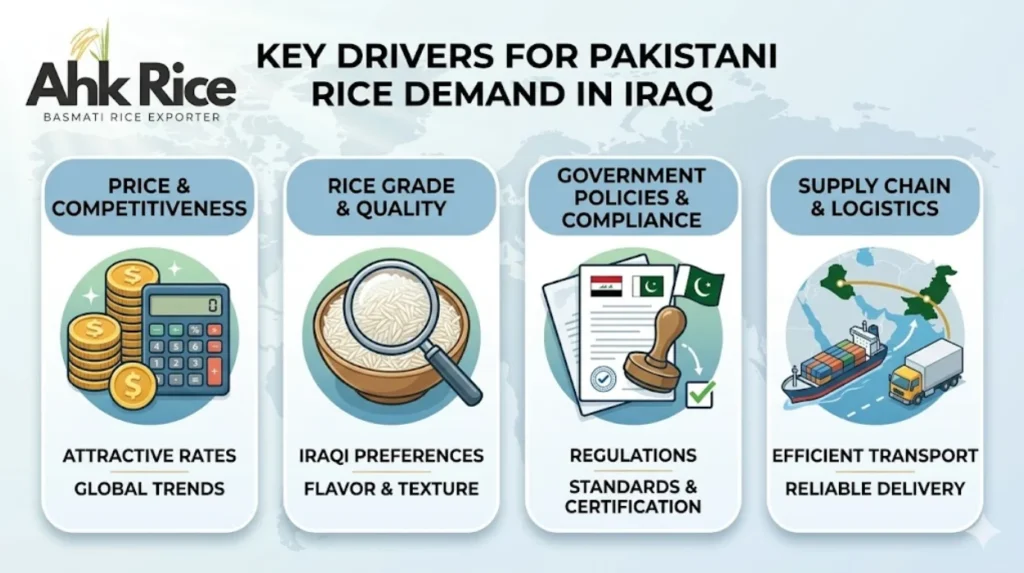
Grain length, aroma, processing method, purity, broken percentage, and cooking performance determine market demand.
Rice buyers evaluate measurable specifications rather than general descriptions.
Grain Length
Grain length influences consumer perception of quality.
Iraqi buyers frequently prioritize extra-long grains because they create visual appeal after cooking.
Aroma
Aroma defines the characteristic fragrance associated with Basmati rice.
Premium Iraqi retail brands often market rice based on aromatic quality.
Processing Method
Processing method affects appearance, shelf life, and cooking behavior.
Golden Sella, Steam, White Rice, and Brown Rice each serve different customer requirements.
Purity
Purity measures the percentage of the declared variety within a shipment.
Higher purity levels improve consistency and brand reputation.
Broken Percentage
Broken percentage measures the amount of fractured grains.
Lower broken percentages increase commercial value.
Cooking Performance
Cooking performance includes grain elongation and texture.
Iraqi food service operators prioritize grades that maintain shape during large-scale preparation.
With value factors defined, the next question is why Iraqi importers continue sourcing Pakistani rice in large volumes.
What Benefits Make Pakistani Rice Popular in Iraq?
Long grain length, distinctive aroma, high cooking yield, multiple grades, and broad price coverage drive demand.
Pakistani Basmati rice provides characteristics that align with Iraqi consumption patterns.
High Grain Elongation
1121 Basmati expands significantly during cooking.
Higher elongation improves plate presentation and serving efficiency.
Strong Aroma
Basmati aroma differentiates Pakistani rice from many non-Basmati alternatives.
Aromatic rice remains preferred for premium meals and celebrations.
Multiple Price Segments
Pakistani exporters supply several varieties and processing grades.
Importers can target premium, mid-range, and value-focused customers.
Strong Distribution Compatibility
Rice grades are available in different packaging formats.
Packaging flexibility supports supermarkets, wholesalers, and institutional buyers.
Stable Export Supply
Pakistan cultivates rice across major agricultural regions including Punjab.
Large production volumes support continuous export activity.
With benefits established, the next question is where these grades are used throughout Iraq.
How Are Different Pakistani Rice Grades Used Across Iraq?
Retail brands, wholesalers, catering companies, restaurants, and government procurement programs use different rice grades for different objectives.
Different buyer groups evaluate rice according to operational requirements.
Retail Packaging
Retail companies package premium Basmati rice for supermarkets.
1121 Steam and Super Kernel frequently appear in consumer-focused product lines.
Wholesale Distribution
Wholesale distributors prioritize storage stability and pricing.
1121 Golden Sella performs strongly in this segment.
Catering Operations
Catering businesses prepare large food volumes daily.
Golden Sella grades provide strong cooking performance during bulk preparation.
Restaurant Sector
Restaurants prioritize aroma and visual presentation.
Premium Basmati grades support customer expectations.
Institutional Procurement
Large procurement programs often balance quality and budget considerations.
1509 Basmati frequently serves value-oriented requirements.
With usage patterns understood, the next question involves common misconceptions about Iraqi rice demand.
What Misconceptions Exist About Pakistani Rice Grades in Iraq?
The most common misconceptions involve grain length, aroma, processing methods, and quality rankings.
Rice buyers often encounter inaccurate assumptions during sourcing decisions.
Longer Grain Always Means Better Quality
Grain length is one quality indicator.
Aroma, purity, cooking behavior, and consistency also determine value.
Golden Sella and Steam Rice Are Identical
Golden Sella and Steam rice use different processing systems.
Golden Sella undergoes parboiling. Steam rice receives steam treatment.
Super Kernel Is an Older Variety With No Demand
Super Kernel continues attracting buyers who prioritize traditional Basmati fragrance.
Iraqi consumers maintain strong recognition of this variety.
Lower Price Means Lower Quality
Different grades target different market segments.
1509 Basmati serves value-focused buyers while maintaining long-grain characteristics.
White Rice and Basmati Rice Are the Same Category
White rice describes a processing result.
Basmati rice describes a specific rice variety with unique aroma and grain structure.
Understanding these misconceptions creates a clearer picture of why certain grades dominate Iraq’s import market and prepares readers to evaluate supplier capabilities more effectively.
1121 Golden Sella Basmati, 1121 Steam Basmati, Super Kernel Basmati, and 1509 Basmati generate the highest demand in Iraq because they match the country’s retail, wholesale, catering, and institutional requirements.
Iraqi buyers evaluate grain length, aroma, processing method, purity, and cooking performance before sourcing rice. Pakistan’s diverse Basmati portfolio allows importers to select grades that fit specific commercial objectives. Understanding these grades, their processing methods, and their market applications provides a clearer view of how Iraqi rice imports are structured and why Pakistani rice continues holding a strong position in the market.
Frequently Asked Questions
Which Pakistani rice grade is most popular in Iraq?
1121 Golden Sella Basmati is one of the most demanded grades because it combines extra-long grain length, strong cooking performance, and good storage stability.
Why do Iraqi importers buy 1121 Steam Basmati?
1121 Steam Basmati offers premium appearance, long grain length, and traditional Basmati aroma preferred in retail markets.
What is the difference between Golden Sella and Steam Basmati?
Golden Sella undergoes parboiling before milling. Steam Basmati receives steam treatment. Golden Sella provides stronger grain structure, while Steam Basmati offers a lighter appearance.
Is Super Kernel Basmati still popular in Iraq?
Yes. Super Kernel Basmati remains popular because of its strong aroma and recognition among traditional Basmati consumers.
Why is 1509 Basmati imported into Iraq?
1509 Basmati provides long grain characteristics at a competitive price, making it suitable for value-focused market segments.
Which factors influence Iraqi rice purchasing decisions?
Grain length, aroma, purity, broken percentage, processing method, packaging, and cooking performance influence purchasing decisions.