How Are Basmati Rice Delivery Timelines Calculated for UAE Importers?
Basmati rice delivery timelines for UAE importers are calculated by combining factory processing time, export documentation, inland transport, vessel transit, customs clearance, and destination port handling. Here is why: every shipment passes through defined operational stages that determine the final delivery schedule.
UAE buyers import significant volumes of Pakistani Basmati rice every year because Pakistan remains one of the world’s leading Basmati-producing countries (source: REAP export data, December 2025). Accurate timeline calculation helps importers plan inventory, manage retail supply, and avoid stock shortages during Ramadan, Eid, and peak hospitality seasons.
What Is a Basmati Rice Delivery Timeline?
A complete UAE import cycle generally ranges from 18 to 35 days depending on processing requirements, vessel schedules, destination ports, and customs procedures.
A Basmati rice delivery timeline represents the total number of days required to move rice from a Pakistani processing facility to a UAE warehouse. The timeline starts when an export order is confirmed and ends when the importer receives the cargo.
Delivery schedules include multiple entities. Examples include rice mills, inspection agencies, freight forwarders, shipping lines, customs authorities, and destination logistics providers.
Importers calculate timelines before placing orders because procurement planning depends on accurate arrival estimates. Hotels, supermarkets, distributors, and catering companies rely on these calculations to maintain inventory levels.
With the timeline concept established, the next question is how the calculation process works.
How Is the Delivery Timeline Calculated?
Processing requires 5–12 days, shipping requires 3–7 days, and clearance requires 2–8 days, creating a total timeline of approximately 18–35 days.
Exporters calculate delivery schedules by adding each operational stage together. Every stage contributes a measurable number of days.
Factory Processing Stage
Rice processing begins after order confirmation. Different specifications require different processing durations.
Processing teams complete the following steps:
- Clean the paddy.
- De-husk the grain.
- Dry the rice.
- Polish the kernels.
- Grade by size.
- Sort by colour.
- Inspect for defects.
- Test quality parameters.
- Pack for export.
Standard processing typically requires 5–8 days. Custom packaging orders often require 8–12 days because packaging materials must be prepared and verified.
Documentation Stage
Export documentation normally requires 1–3 days.
Required documents include:
- Commercial Invoice
- Packing List
- Certificate of Origin
- Phytosanitary Certificate
- Bill of Lading
- Fumigation Certificate
Documentation accuracy directly affects customs clearance speed.
Shipping Stage
Container loading normally requires 1–2 days.
Vessel transit from Karachi Port to Jebel Ali Port generally requires 3–7 days depending on shipping schedules and routing.
The combination of processing, documentation, loading, and transit creates the baseline delivery estimate.
With calculation methods explained, the next question concerns the individual components affecting timelines.
Which Components Affect Basmati Rice Delivery Schedules?
Factory processing, inland transport, vessel schedules, customs clearance, and destination handling determine the final delivery date.
Each component contributes a measurable period to the overall schedule.
Factory Processing
Rice grade selection affects production speed.
1121 Steam Basmati often moves faster through production because steam processing requires fewer handling stages than Golden Sella production.
1121 Golden Sella requires parboiling and drying stages. These additional operations extend production timelines.
Inland Transportation
Trucks transport containers from Punjab rice mills to Karachi Port.
Road transport generally requires 1–2 days depending on container availability and traffic conditions.
Vessel Scheduling
Shipping lines operate according to fixed departure schedules.
Missing a scheduled vessel departure can extend shipment timelines by several days.
Customs Clearance
Customs authorities inspect documentation and cargo declarations.
Accurate paperwork accelerates clearance. Incomplete paperwork delays cargo release.
Destination Port Operations
Port operators unload containers, verify cargo records, and release shipments to importers.
Jebel Ali Port typically processes commercial cargo efficiently because it serves as the region’s largest logistics hub.
With the influencing factors identified, the next question examines timeline differences among rice grades.
Do Different Basmati Grades Have Different Delivery Timelines?
Yes. Golden Sella generally requires longer processing than Steam Rice, while White Rice processing often falls between both categories.
Different rice grades require different manufacturing procedures.
1121 Golden Sella Basmati
1121 Golden Sella undergoes parboiling before milling.
Parboiling strengthens grain structure and improves shelf life. The process adds additional drying and conditioning stages.
Golden Sella processing commonly requires 8–12 days.
1121 Steam Basmati
1121 Steam Rice receives steam treatment rather than full parboiling.
Steam processing preserves colour and aroma while reducing production time.
Steam Rice processing commonly requires 5–8 days.
Super Kernel Basmati
Super Kernel Basmati remains popular across Gulf markets because of its traditional aroma and cooking performance.
Processing timelines typically align with standard white rice production schedules.
1509 Basmati
1509 Basmati offers shorter cultivation cycles than traditional Basmati varieties.
Processing timelines remain similar to other premium export grades.
With grade differences explained, the next question focuses on benefits of timeline planning.
Why Is Accurate Delivery Planning Important for UAE Importers?
Accurate planning reduces inventory shortages, lowers storage costs, improves procurement efficiency, and supports consistent market supply.
Inventory management depends on predictable arrival schedules.
Supermarket chains require continuous stock replenishment. Delayed shipments create shelf shortages. Early arrivals increase warehousing costs.
Restaurant distributors depend on consistent rice supply. Accurate delivery forecasting supports menu planning and procurement scheduling.
Importers use timeline calculations to align shipments with seasonal demand periods.
Ramadan demand increases rice consumption across UAE retail and hospitality sectors. Procurement teams schedule imports weeks before demand peaks.
Businesses that calculate delivery schedules accurately maintain stronger supply continuity.
With the benefits understood, the next question addresses common misconceptions.
What Misconceptions Exist About Basmati Rice Delivery Timelines?
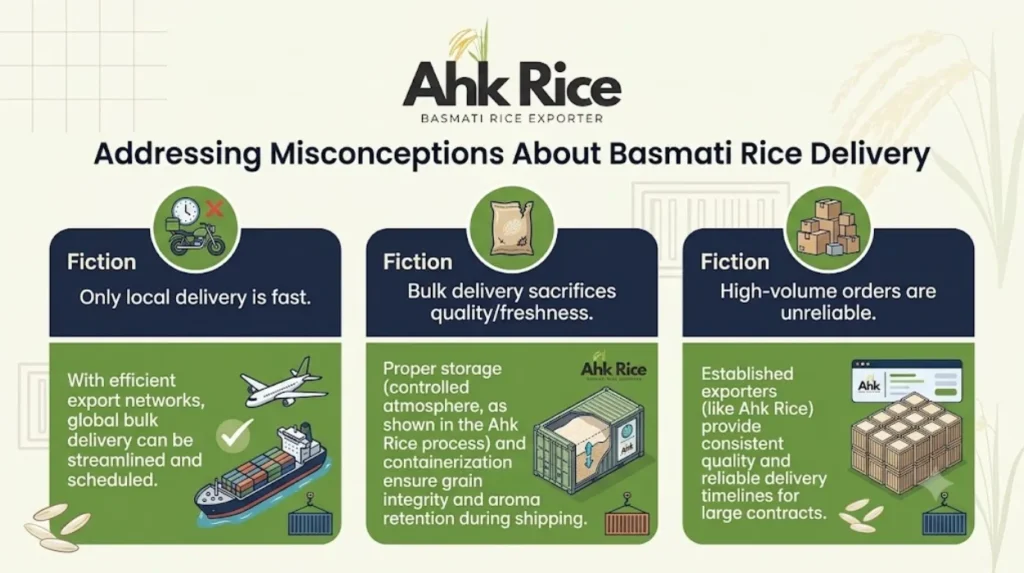
Many importers assume shipping transit alone determines delivery time, but processing and clearance stages often consume more total days.
Transit time represents only one portion of the supply chain.
Many buyers assume Karachi-to-Dubai vessel transit determines delivery schedules. Vessel travel often requires less than one week.
Factory processing frequently requires more time than ocean transport. Golden Sella production illustrates this difference clearly.
Many buyers assume customs clearance always takes one day. Documentation verification, inspections, and regulatory checks often require additional processing time.
Many buyers assume all rice grades require identical preparation periods. Different grades follow different processing paths.
Understanding these misconceptions improves planning accuracy.
With misconceptions clarified, the final question concerns practical timeline estimation.
How Can UAE Importers Estimate Delivery Dates More Accurately?
Add processing days, documentation days, loading days, transit days, clearance days, and local transport days to calculate realistic arrival schedules.
Importers should calculate delivery estimates using a structured framework.
Delivery Calculation Example
| Stage | Days |
|---|---|
| Processing | 8 |
| Documentation | 2 |
| Container Loading | 1 |
| Vessel Transit | 5 |
| Customs Clearance | 3 |
| Local Delivery | 2 |
| Total Timeline | 21 Days |
This calculation creates a realistic delivery expectation rather than relying only on vessel schedules.
Importers should request processing schedules before confirming purchase orders. Processing data improves forecasting accuracy.
Importers should monitor vessel booking availability because shipping schedules directly influence dispatch timing.
Importers should verify documentation requirements before cargo loading. Early verification reduces customs delays.
A structured timeline model produces more reliable procurement planning and inventory control.
Frequently Asked Questions
How long does Basmati rice take to reach UAE from Pakistan?
Most shipments require 18–35 days from order confirmation to warehouse delivery, depending on processing and clearance requirements.
How many days does sea freight take from Karachi to Dubai?
Vessel transit generally requires 3–7 days between Karachi Port and Jebel Ali Port.
Which rice grade requires the longest processing time?
1121 Golden Sella Basmati typically requires the longest processing period because it includes parboiling and drying stages.
What documents are required for UAE rice imports?
Common documents include Commercial Invoice, Packing List, Certificate of Origin, Phytosanitary Certificate, Bill of Lading, and Fumigation Certificate.
Does customs clearance affect delivery timelines?
Yes. Customs procedures commonly require 2–8 days depending on documentation accuracy and inspection requirements.
Why do delivery schedules differ between suppliers?
Processing capacity, packaging specifications, vessel availability, documentation efficiency, and logistics coordination create timeline differences.