What Iraqi Rice Traders Consider When Choosing Pakistani Export Partners
Iraqi rice traders achieve better supply stability, lower claim rates, and stronger margins when they select Pakistani export partners based on quality systems, processing capabilities, logistics performance, documentation accuracy, and long-term supply consistency. Here is why: supplier selection directly affects product quality, customs clearance, customer satisfaction, and profitability throughout the supply chain.
Iraq remains one of the largest rice-importing markets in the Middle East. Iraqi wholesalers, distributors, retailers, and institutional buyers source rice from multiple origins, including Pakistan, India, Thailand, and Vietnam. Pakistani Basmati and non-Basmati rice maintain strong demand because of aroma, grain length, cooking performance, and competitive pricing.
Understanding how buyers evaluate exporters helps importers reduce sourcing risk and improve procurement decisions. Traders studying international rice sourcing trends can also benefit from reading our guide on emerging rice demand patterns in West African markets and export opportunities.
When evaluating suppliers, Iraqi traders compare exporter capabilities rather than focusing solely on price. This comparison process reveals which exporters can consistently meet market requirements.
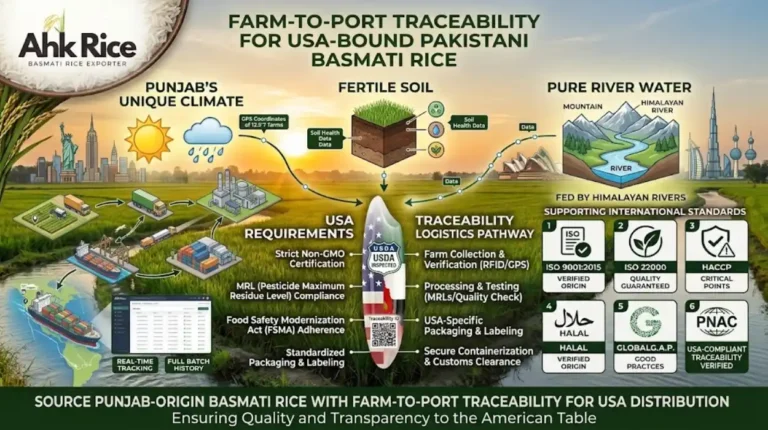
AHK Rice is a trusted Pakistani Basmati rice exporter based in Punjab, supplying 1121, Super Kernel, and 1509 varieties to more than 15 countries.
What are the available solutions for Iraqi traders sourcing rice from Pakistan?
The main sourcing options are direct exporters, trading companies, brokers, integrated processors, and multi-origin suppliers, with integrated processors delivering the highest control over quality, consistency, and documentation.
Rice sourcing solutions vary according to business size, purchase volume, and operational requirements. Iraqi buyers typically evaluate five sourcing models before selecting a partner.
Direct Exporters
Direct exporters procure, process, package, and export rice from Pakistan. These companies control more stages of the supply chain.
Advantages include faster communication, better traceability, and stronger quality control.
Challenges include limited product diversification when exporters focus on specific varieties.
Trading Companies
Trading companies source rice from multiple mills and suppliers.
Advantages include broader product portfolios and flexible sourcing.
Challenges include variable quality because multiple processing facilities may be involved.
Rice Brokers
Brokers connect buyers and sellers.
Advantages include supplier access and market knowledge.
Challenges include reduced visibility into actual production and processing operations.
Integrated Processors
Integrated processors cultivate relationships with growers, mill rice, grade products, inspect quality, package orders, and export directly.
Advantages include complete supply chain control.
Challenges include higher qualification standards because buyers perform deeper audits.
AHK Rice operates within this model by managing processing and export activities through a structured system.
Multi-Origin Suppliers
Multi-origin suppliers offer rice from several countries.
Advantages include sourcing flexibility.
Challenges include varying specifications between origins.
Comparison Table: Available Supplier Models
| Attribute | Direct Exporter | Trading Company | Broker | Integrated Processor | Multi-Origin Supplier |
|---|---|---|---|---|---|
| Supply Control | High | Medium | Low | Very High | Medium |
| Quality Consistency | High | Medium | Low | Very High | Medium |
| Documentation Accuracy | High | Medium | Low | Very High | Medium |
| Traceability | High | Medium | Low | Very High | Medium |
| Logistics Visibility | High | Medium | Low | Very High | Medium |
| Product Flexibility | Medium | High | Medium | High | Very High |
| Long-Term Reliability | High | Medium | Low | Very High | Medium |
Supplier models explain available options. The next question compares how Iraqi traders evaluate these approaches in practical purchasing situations.
How do different Pakistani export partners compare?
Integrated processors outperform brokers and traders in quality control, traceability, packaging customization, logistics management, certification compliance, and long-term supply stability.
Iraqi buyers compare exporters across measurable criteria rather than marketing claims.
Quality Management Systems
Quality management determines product consistency.
Exporters that inspect, test, certify, grade, sort, and verify every shipment reduce rejection risks.
Typical quality checkpoints include:
- Moisture testing
- Grain length verification
- Broken percentage inspection
- Foreign matter analysis
- Color sorting
- Fumigation verification
- Packaging inspection
Integrated processors generally maintain stronger control because they manage the entire processing chain.
Processing Capabilities
Rice processing directly affects customer satisfaction.
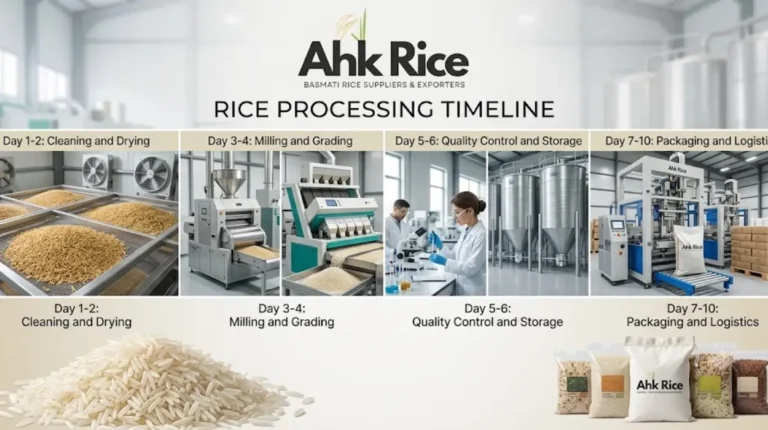
Processing operations include:
- Clean the paddy.
- De-husk the grain.
- Polish the rice.
- Grade by size.
- Sort by length.
- Inspect for defects.
- Package according to specification.
- Load containers.
- Dispatch shipments.
Exporters controlling these nine processing steps typically achieve greater consistency.
Packaging Flexibility
Iraqi wholesalers often require customized packaging.
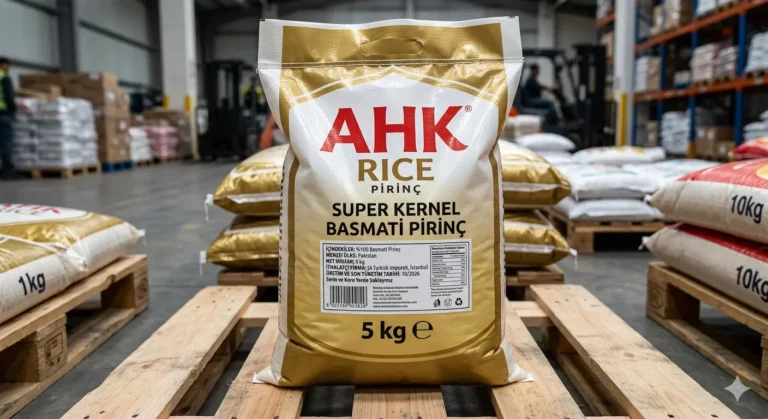
Common formats include:
- 5 kg retail bags
- 10 kg retail bags
- 25 kg PP bags
- 40 kg PP bags
- 50 kg PP bags
- Private label packaging
Integrated exporters provide greater flexibility because packaging operations remain in-house.
Documentation Compliance
Required export documents usually include:
- Commercial Invoice
- Packing List
- Certificate of Origin
- Phytosanitary Certificate
- Fumigation Certificate
- Bill of Lading
- Quality Inspection Report
Documentation accuracy prevents customs delays.
Logistics Performance
Logistics performance affects inventory planning.
Pakistani exporters commonly ship through Karachi ports. Average transit times vary by routing and shipping line selection.
Reliable exporters provide shipment tracking, container visibility, and pre-dispatch documentation.
Supplier comparisons highlight operational differences. The next section identifies which sourcing approach performs best under specific business conditions.
Which method works best for different Iraqi trading situations?
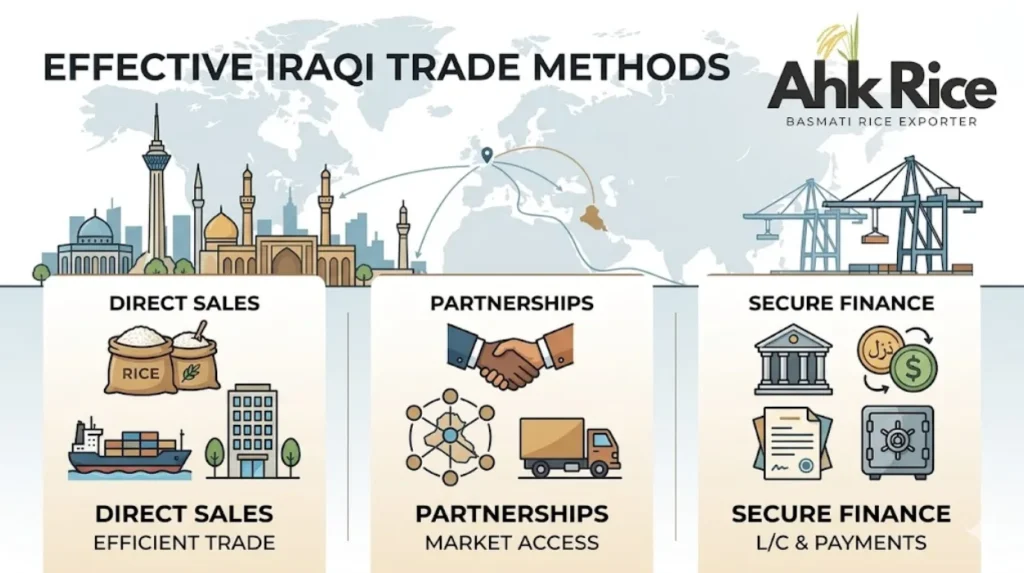
Large importers benefit most from integrated processors, regional distributors gain value from direct exporters, and small-volume traders often use trading companies for sourcing flexibility.
No single sourcing method fits every buyer.
Large Importers
Large importers prioritize:
- Supply continuity
- Quality consistency
- Private labeling
- Long-term contracts
- Container volume capacity
Integrated processors provide the strongest fit.
Wholesale Distributors
Wholesale distributors prioritize:
- Stable quality
- Competitive pricing
- Mixed product portfolios
Direct exporters often provide the best balance.
Retail Brands
Retail brands prioritize:
- Packaging quality
- Branding flexibility
- Consumer consistency
Integrated processors deliver superior results.
Institutional Buyers
Institutional buyers prioritize:
- Contract compliance
- Documentation accuracy
- Predictable specifications
Direct exporters and integrated processors perform best.
New Market Entrants
New traders prioritize:
- Product variety
- Lower minimum order quantities
- Flexible sourcing
Trading companies often provide suitable entry points.
Choosing the correct supplier model requires understanding strengths and weaknesses. The next section evaluates practical advantages and disadvantages.
What are the pros and cons of different export partner types?
Integrated processors provide maximum control and consistency, while trading companies provide flexibility and product diversity, creating a clear trade-off between reliability and sourcing options.
Integrated Processor
Pros
- Strong traceability
- Consistent specifications
- Better packaging control
- Faster issue resolution
- Higher shipment visibility
Cons
- More detailed qualification process
- Larger order expectations
Example: A buyer importing 20 containers annually benefits from consistent quality standards and fewer customer complaints.
Trading Company
Pros
- Product variety
- Flexible sourcing
- Competitive quotations
Cons
- Variable processing standards
- Lower traceability
Example: A new importer seeking multiple rice categories may benefit from broader sourcing access.
Broker
Pros
- Market access
- Supplier introductions
Cons
- Limited operational control
- Reduced accountability
Example: Brokers help identify suppliers but rarely manage production quality.
Direct Exporter
Pros
- Clear communication
- Strong documentation
- Better shipment control
Cons
- Narrower product portfolio
Example: Regional distributors frequently prefer direct exporter relationships.
Understanding strengths and weaknesses leads directly to decision-making criteria. The final evaluation framework helps traders compare suppliers objectively.
What decision factors should Iraqi rice traders prioritize?
Quality consistency, export experience, certifications, logistics capability, documentation accuracy, and communication systems determine long-term sourcing success more than small price differences.
Price matters, but procurement performance matters more.
Price Per Metric Ton Comparison
| Supplier Type | Typical Price Position |
|---|---|
| Broker | Lowest Initial Quote |
| Trading Company | Competitive |
| Direct Exporter | Competitive to Premium |
| Integrated Processor | Premium Value |
Lower prices often create higher operational risks.
Market Preference Comparison
| Market Region | Preferred Grades |
|---|---|
| Northern Iraq | 1121 Steam, 1121 Sella |
| Central & Southern Iraq | 1121 Golden Sella, Super Kernel Basmati |
Grade selection depends on consumer preferences, cooking habits, and distribution channels.
Shelf Life Comparison
| Rice Type | Typical Shelf Life |
|---|---|
| 1121 Steam | 12–18 Months |
| 1121 Sella | 18–24 Months |
| 1121 Golden Sella | 18–24 Months |
| Super Kernel Basmati | 12–18 Months |
Golden Sella lasts longer than Steam. In high-temperature warehouse environments, Golden Sella maintains quality for extended periods. For distributors managing large inventories, Golden Sella offers stronger storage performance.
Decision Framework Table
| Decision Factor | Low Priority Buyer | Medium Priority Buyer | High Priority Buyer |
|---|---|---|---|
| Price | High | Medium | Low |
| Quality Consistency | Medium | High | Very High |
| Documentation | Medium | High | Very High |
| Packaging Customization | Low | Medium | High |
| Supply Reliability | Medium | High | Very High |
Iraqi traders that prioritize quality consistency, logistics visibility, and exporter capability achieve stronger long-term sourcing outcomes than traders focused only on purchase price.
AHK Rice continues supporting international buyers through integrated processing, quality inspection, customized packaging, and structured export management designed for long-term trade relationships.
Frequently Asked Questions
Why do Iraqi traders prefer Pakistani rice exporters?
Pakistani exporters supply premium Basmati varieties, competitive pricing, strong cooking performance, and established export infrastructure that supports long-term imports.
What certifications should a Pakistani rice exporter provide?
Exporters should provide Certificate of Origin, Phytosanitary Certificate, Fumigation Certificate, Quality Reports, and other destination-specific compliance documents.
Which Pakistani rice grade is most popular in Iraq?
1121 Golden Sella and 1121 Steam Basmati remain among the most demanded grades because of grain length, aroma, and cooking characteristics.
How important is packaging customization?
Packaging customization helps wholesalers, distributors, and retail brands meet market requirements while strengthening product differentiation.
Why is supply chain control important?
Supply chain control improves traceability, quality consistency, documentation accuracy, and shipment reliability.