How Climate Conditions Are Affecting Global Rice Production
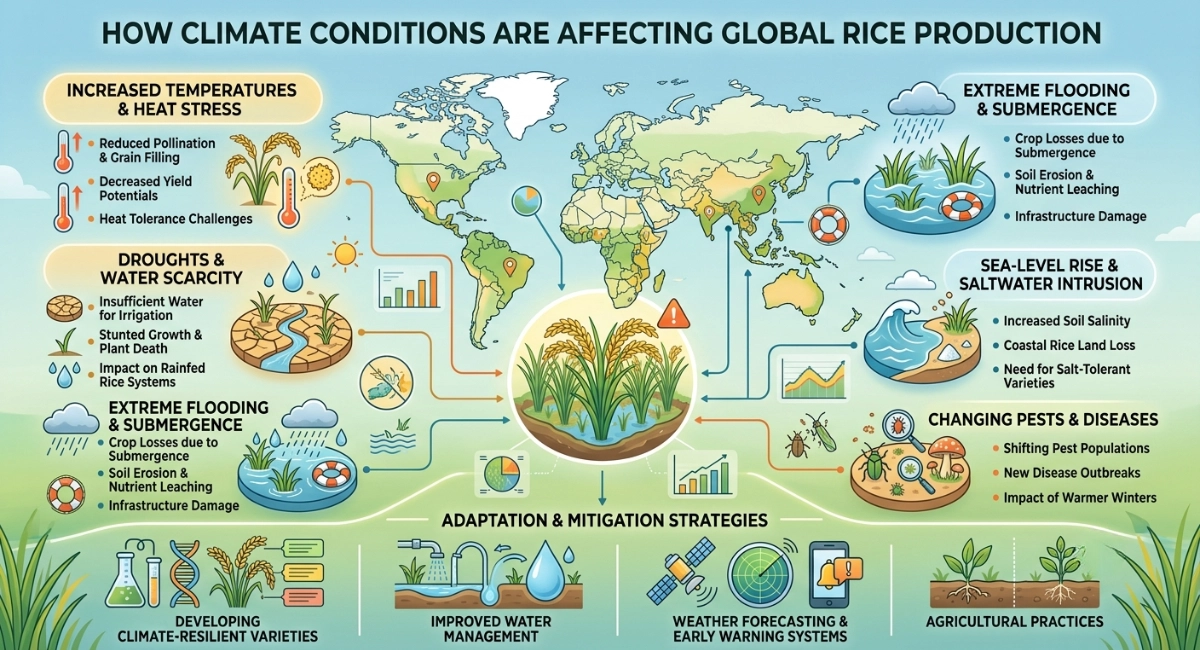
Global agricultural infrastructure is experiencing structural shifts due to evolving atmospheric patterns. Rice, a primary caloric staple for 50% of the global population, serves as the most sensitive indicator of these macro-environmental alterations. Temperature thresholds, precipitation schedules, and groundwater salinity metrics dictate the ultimate volume, structural integrity, and nutritional density of the annual harvest.
Analyzing these environmental inputs through a semantic lens reveals the direct correlation between atmospheric variables and localized economic outputs. Understanding how climate shifts restrict or alter crop cycles helps international supply chains stabilize procurement strategies.
What is the connection between climate dynamics and global rice yields?
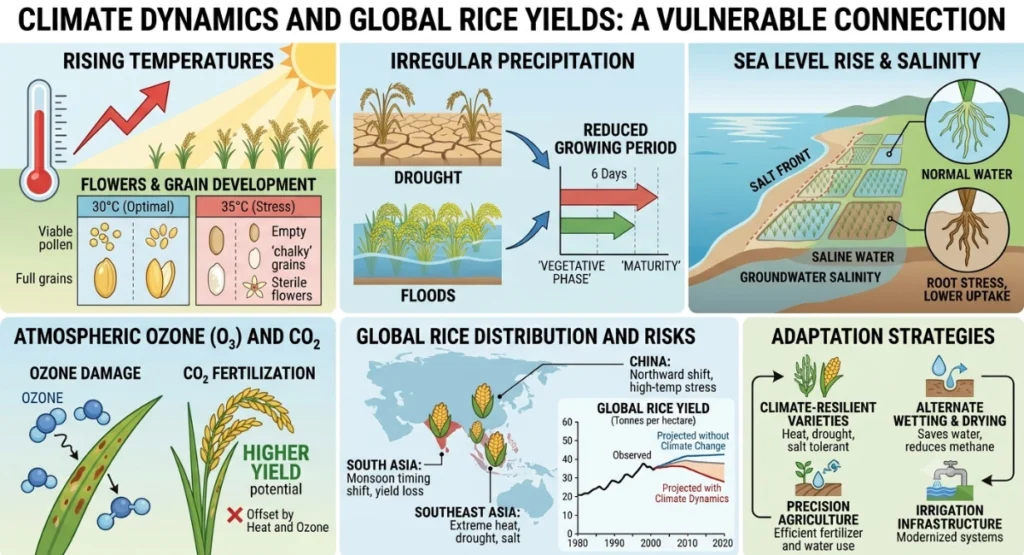
Atmospheric temperature elevations, irregular monsoon cycles, and prolonged drought intervals directly reduce total global rice outputs by disrupting plant pollination, decreasing fertile surface acreage, and accelerating water table depletion across primary agricultural zones in South Asia and Southeast Asia.
The biological lifecycle of the rice plant depends on specific thermal limits. When ambient temperatures exceed 35°C during the critical anthesis (flowering) phase, pollen viability drops significantly. This thermal stress prevents proper fertilization, resulting in empty hulls known as chalky or sterile grains.
In major production centers like the Indo-Gangetic Plains of Pakistan and India, the traditional monsoon timetable has compressed. Shorter, high-intensity rain events trigger flash flooding that submerges fields for extended periods. Conversely, prolonged dry intervals between these downpours force farmers to over-pump subsoil aquifers.
Increased reliance on groundwater accelerates localized water table depletion, which leads to saltwater intrusion in coastal river deltas. For example, the Mekong Delta in Vietnam and the Indus River Delta in Pakistan show rising electrical conductivity in agricultural water supplies, a metric that directly correlates with reduced vegetative growth and restricted plant development.
How does climate change alter agricultural outputs on a structural level?
Climate variations shift geographical production zones, compress the overall duration of the crop vegetative phase, increase the reproductive rate of agricultural pests, and alter the mechanical milling properties of harvested grains during seasonal processing operations.
Thermal elevation accelerates the phenological development of the rice plant, meaning the crop reaches maturity faster. This compressed timeline reduces the total number of days available for the plant to accumulate solar radiation. Consequently, the grain stores fewer carbohydrates, causing a lower total crop weight at harvest.
Warmer nocturnal temperatures also trigger high respiration rates within the plant tissues. The crop consumes its own stored energy reserves during the night instead of channeling nutrients into grain filling. This metabolic imbalance results in an internal structural vulnerability called chalkiness, which refers to loosely packed starch granules inside the endosperm.
When these physically compromised grains enter mechanical milling facilities, they cannot withstand normal abrasive pressures. The weak internal structures cause the grains to fracture easily. This structural failure lowers the head rice yield, which is the percentage of whole grains remaining after hulling and polishing, and increases the volume of low-value broken fractions.
What are the key components of a climate-resilient rice cultivation system?
The primary components of a resilient rice framework include high-thermal-tolerance seed cultivars, precision alternate wetting and drying irrigation networks, laser-guided land leveling hardware, and advanced real-time meteorological forecasting applications.
Advanced Genetic Cultivars
Modern seed breeding focuses on isolating specific genes that control heat and submergence tolerance. Farmers select long-grain varieties, such as 1121 Basmati, Super Kernel, and 1509 Basmati, which exhibit structural resilience against thermal shifts. Short-grain varieties, including Japonica strains, are engineered to survive sudden temperature drops during early spring planting windows.
Water Conservation Infrastructure
Traditional cultivation relies on continuous field flooding, a practice that consumes 2,500 liters of freshwater per kilogram of produced grain. Resilient systems integrate Alternate Wetting and Drying techniques, allowing the soil to dry periodically before the next water application. This protocol reduces total water usage by 30% and curtails anaerobic methane production by 48%.
Precision Agronomic Hardware
Laser land leveling equipment eliminates field topography variations, ensuring an even distribution of water across the entire planting area. Direct Seeded Rice technology bypasses the traditional nursery transplantation phase by sowing seeds directly into dry soil. This modification reduces the crop water requirement by 25% and lowers labor expenses.
What are the macro benefits of adopting climate-adaptive farming methods?
Adopting adaptive agricultural practices stabilizes international grain markets, lowers greenhouse gas emissions from flooded paddies, preserves regional groundwater reserves, and ensures consistent quality metrics for high-value export varieties.
Implementing adaptive agronomy provides immediate protection against unpredictable weather events, such as heatwaves and unseasonal rain. By preserving the structural density of the starch endosperm, these methods keep head rice yields above 55% during milling. This stability prevents abrupt spikes in global commodity pricing.
Environmental preservation is another direct result of these updated farming frameworks. Eliminating permanent field submersion prevents anaerobic soil microbes from generating methane gas, reducing the carbon footprint of global croplands. Lowering overall water consumption allows natural aquifers to recharge, which protects regional agricultural zones from terminal soil dry-out.
Maintaining stable production standards preserves the precise physical dimensions required for premium grain classifications. For example, length-to-width ratios, elongation ratios upon cooking, and gelatinization temperatures remain within specified grading ranges. This consistency allows exporting nations to fulfill international supply contracts without facing quality penalties.
How do global supply chains utilize climate-resilient rice varieties?
International logistics networks utilize resilient grains to secure steady food supplies for hyper-dense import markets, fulfill strict quality protocols in premium European zones, and maintain continuous processing operations in high-capacity milling facilities.
Bulk Staple Procurement
Populous import regions, including Sub-Saharan Africa and Central Asia, rely on consistent trade volumes to prevent local food inflation. Purchasing organizations utilize climate-hardened varieties to ensure steady container shipments throughout the calendar year. This consistent supply flow stabilizes regional food reserves during prolonged regional droughts.
Premium Retail Distribution
High-value consumption markets, such as the European Union, the United Kingdom, and Saudi Arabia, enforce strict import criteria regarding grain length and chemical purity. Exporters utilize climate-adaptive long-grain varieties to meet these consumer expectations. For example, 1121 Basmati grains maintain an average pre-cooked length of 8.35 millimeters despite seasonal temperature variations.
Industrial Food Manufacturing
Milling enterprises and commercial food processors require grains with uniform starch properties for automated processing lines. Resilient crops provide consistent amylose content levels, a chemical property that dictates grain fluffiness and stickiness after cooking. This uniformity prevents machinery blockages during large-scale parboiling and steaming operations.
What are the common misconceptions regarding climate impacts on rice?
A major misconception is that elevated carbon dioxide levels universally increase crop outputs, while another false assumption suggests that simple chemical fertilizer increases can completely offset climate-induced soil degradation.
Contrary to popular belief, higher atmospheric carbon dioxide concentrations do not translate to better crop performance. While carbon dioxide can accelerate early vegetative growth, the accompanying heat stress damages the plant’s reproductive organs, lowering the final grain yield.
Many supply chain operators falsely assume that increasing synthetic nitrogen applications will neutralize the effects of poor soil health. Excessive nitrogen application actually softens the plant’s stem tissues, making the crop vulnerable to lodging, which is the physical flattening of stalks by wind or rain. It also attracts insect pests, including brown planthoppers and stem borers, during humid weather cycles.
Another common misunderstanding is that all rice varieties react identically to thermal stress. Fine aromatic varieties possess different genetic vulnerabilities compared to coarse or hybrid options. For instance, Super Kernel Basmati relies on specific microclimates in the Punjab region to develop its distinct aroma, making its cultivation requirements completely different from standard long-grain white rice.
Which global markets lead the import of premium Pakistani rice varieties?
The primary importers of premium Pakistani rice include the Gulf Cooperation Council nations, the European Union member states, the United Kingdom, East African trade hubs, and Central Asian sovereign republics.
Middle Eastern markets place the highest demand on extra-long grain aromatic varieties, utilizing them as a primary component in regional food services. These buyers enforce strict grading standards, requiring low moisture content levels below 12% to ensure long shelf lives in hot storage environments.
European destinations prioritize rigorous food safety certifications and chemical residue tracking over simple volume metrics. Importers in these locations require detailed documentation verifying compliant Maximum Residue Limits for all applied crop protection products. They also demand verified grain origins to ensure authenticity.
East African markets focus primarily on high-volume shipments of well-milled white rice and parboiled varieties to supply urban centers. These trade networks require flexible packaging options, ranging from 25-kilogram bulk bags to 1-kilogram retail packs. This flexibility allows distributors to efficiently service diverse consumer segments across regional marketplaces.
How do step-by-step processing technologies maintain grain quality?
Modern rice processing uses precise mechanical steps, including automated cleaning, husking, color sorting, and temperature-controlled polishing, to turn raw paddy fields into export-ready products.
Step 1: Pre-Cleaning and De-Stoning
Raw paddy arrives at processing facilities containing field debris, including straw, dust, stones, and weed seeds. High-capacity vibrating sieves separate large particles based on physical size differences. Next, gravity-based de-stoning machinery removes heavy mineral impurities by floating lighter rice grains over a continuous upstream air current.
Step 2: Mechanical Husking and Separation
Cleaned paddy moves into rubber-roll huskers, where two rubber rollers turn in opposite directions at different speeds. The resulting friction strips the outer protective hull from the grain without fracturing the internal endosperm. The mixture then passes through a pneumatic aspirator to separate the light hulls from the heavier brown rice.
Step 3: Precision Milling and Polishing
Brown rice travels into a series of vertical or horizontal polishing cones. Abrasive friction wheels gently remove the nutrient-rich bran layers, transforming the grain from brown to white. Water-injection polishers apply a fine mist during the final stage, gelatinizing the surface starches to give the rice a bright, glossy appearance.
Step 4: Optical Color Sorting and Grading
The polished grains pass through high-speed optical sorters equipped with monochromatic and trichromatic cameras. These sensors identify and reject discolored, chalky, or damaged grains using precision compressed air valves. Finally, plan-sifter modules separate the rice by length, separating broken fractions from whole premium grains.
What certifications validate the export eligibility of global rice shipments?
International trade organizations require comprehensive certifications, including ISO 22000 food safety standards, HACCP risk management protocols, Phytosanitary safety clearances, and regional Non-GMO origin declarations.
ISO 22000 frameworks confirm that a processing facility maintains an end-to-end food safety management system covering every step from raw procurement to final container loading. This standard ensures that processing machinery meets international hygienic designs and prevents batch cross-contamination.
Hazard Analysis Critical Control Point protocols trace and manage biological, chemical, and physical hazards during manufacturing operations. For example, magnets filter out metallic fragments, while strict storage temperature controls prevent aflatoxin development in humid environments.
National plant protection organizations issue Phytosanitary Certificates to verify that shipments are free from quarantine pests, including Khapra beetles and rice weevils. For shipments entering Islamic markets, Halal compliance certificates are mandatory to prove that all processing aids and packaging materials comply with traditional dietary requirements.