How Filipino Rice Importers and Distributors Buy from Pakistan
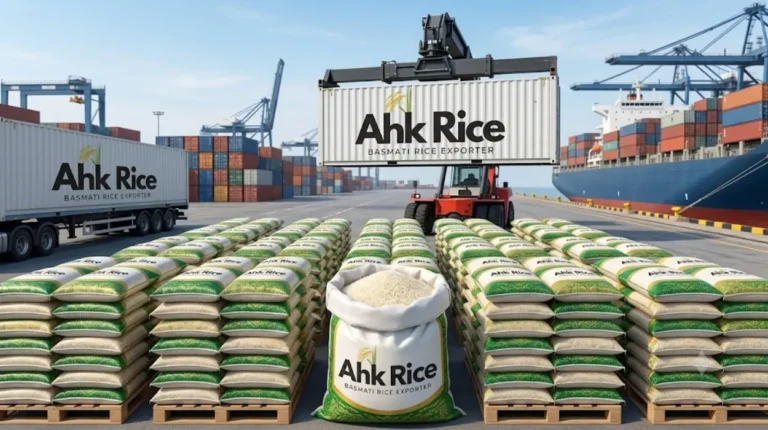
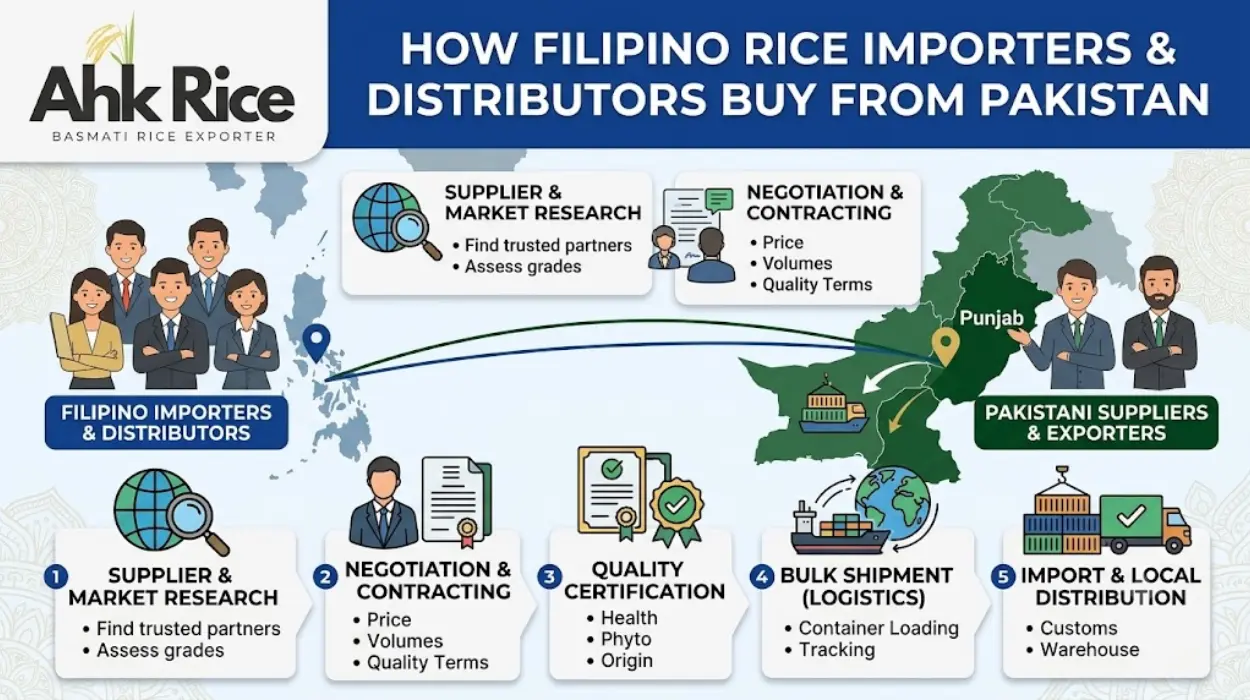
Filipino rice importers and distributors buy from Pakistan because Pakistani exporters offer consistent supply, multiple rice grades, competitive pricing, and reliable shipment schedules. Here is why: Pakistan remains one of the world’s largest rice-exporting countries, with established export infrastructure, quality certification systems, and container shipping routes serving Southeast Asia .
Importers evaluating Pakistani suppliers should first understand market demand. The latest consumption patterns explained in our analysis of changing rice demand in the Philippines how why Filipino buyers continue expanding sourcing relationships with Pakistan.
What Is the Best Solution for Filipino Rice Importers Looking to Buy from Pakistan?
The best solution is sourcing directly from an established Pakistani exporter that provides verified quality specifications, export documentation, sample approval programs, container booking support, and consistent shipment schedules for commercial-scale imports into the Philippines.
Direct sourcing reduces procurement layers. Filipino importers gain better price control and stronger visibility into production specifications.
Pakistani exporters cultivate, harvest, mill, grade, sort, inspect, and ship rice through integrated supply chains. This structure helps distributors secure uniform quality across multiple shipments.
Commercial buyers typically purchase:
- Non-Basmati White Rice
- IRRI-6 Rice
- PK-386 Rice
- Long Grain White Rice
- Parboiled Rice
- Basmati Rice
Filipino distributors often compare grain types before finalizing procurement decisions. Buyers evaluating quality differences can review <a href=”/top-pakistani-rice-varieties-preferred-by-filipino-importers-and-retailers/”>the most preferred Pakistani rice varieties among Filipino importers and retailers</a> before selecting commercial specifications.
AHK Rice supports importers by supplying multiple grades suitable for wholesale distribution, retail packaging, food service operations, and institutional procurement. AHK Rice works with importers requiring container-scale shipments and long-term supply agreements.
Quality consistency becomes the next decision factor after selecting the appropriate rice variety.
Why Choose AHK Rice as a Pakistani Export Partner?
AHK Rice provides export-grade processing, documented quality control, flexible packaging options, shipment coordination, and dedicated support for Filipino importers seeking long-term supply reliability and predictable procurement outcomes.
AHK Rice focuses on export-oriented rice production and international supply management. Filipino buyers require more than product availability. They require shipment predictability.
AHK Rice cultivates relationships with distributors through transparent specifications and documented quality procedures.
Quality Control Process
AHK Rice follows structured quality verification steps:
- Inspect incoming paddy
- Clean foreign materials
- Dehusk grain
- Polish rice
- Grade by size
- Sort by colour
- Test moisture levels
- Verify broken percentage
- Certify export quality
Each processing stage supports shipment consistency.
Export Documentation Support
Commercial imports generally require:
- Commercial Invoice
- Packing List
- Certificate of Origin
- Phytosanitary Certificate
- Bill of Lading
- Quality Inspection Reports
AHK Rice prepares export documentation according to destination requirements and shipping schedules.
Packaging Options
AHK Rice supplies:
- 5 kg retail bags
- 10 kg retail bags
- 25 kg woven bags
- 40 kg PP bags
- 50 kg PP bags
- Private label packaging
Filipino distributors frequently combine wholesale and retail packaging within annual procurement programs.
AHK Rice also assists buyers during sample evaluation, which often determines supplier selection.
What Is the Sample Process Before a Commercial Rice Order?
Most Filipino importers begin with physical rice samples, laboratory review, quality approval, and packaging verification before confirming container bookings and commercial purchase agreements with Pakistani exporters.
Sample approval reduces procurement risk.
AHK Rice typically follows a structured sample process.
Step 1: Define Product Specifications
Importers provide:
- Grain type
- Broken percentage
- Moisture requirements
- Packaging format
- Target market segment
Specification alignment prevents misunderstandings later.
Step 2: Dispatch Samples
AHK Rice prepares representative samples from production lots.
Typical sample quantities range from 500 grams to 5 kilograms.
Step 3: Quality Evaluation
Importers assess:
- Grain length
- Aroma
- Colour
- Cooking performance
- Texture
- Uniformity
Food distributors often conduct cooking trials before approval.
Step 4: Packaging Review
Retail distributors verify:
- Bag design
- Printing quality
- Branding elements
- Label compliance
Step 5: Commercial Confirmation
Importers finalize:
- Quantity
- Delivery schedule
- Payment terms
- Packaging specifications
Sample Costs
Sample costs vary according to destination and courier service.
Typical ranges include:
| Item | Estimated Cost |
|---|---|
| Sample preparation | Often complimentary |
| Courier shipment | USD 50–150 |
| Custom packaging sample | USD 30–100 |
| Laboratory testing | Variable by market |
AHK Rice frequently supports sample programs for serious commercial buyers.
Once samples receive approval, shipping schedules become the next major consideration.
How Long Does Shipping from Pakistan to the Philippines Take?
Shipping generally requires between 18 and 35 days depending on port selection, vessel schedules, container availability, customs clearance procedures, and seasonal shipping conditions affecting Southeast Asian trade routes.
Shipping timelines influence inventory planning.
Karachi to Manila
Typical transit:
22–30 days
Karachi to Cebu
Typical transit:
25–35 days
Karachi to Davao
Typical transit:
28–35 days
Export Preparation Timeline
Before vessel departure:
- Inspect cargo
- Load containers
- Clear customs
- Issue export documents
- Dispatch shipment
Typical export preparation requires:
5–10 business days
AHK Rice coordinates shipment schedules to support distributor inventory requirements.
Reliable delivery schedules become especially important for importers managing retail supply chains.
What Results Can Filipino Importers Expect?
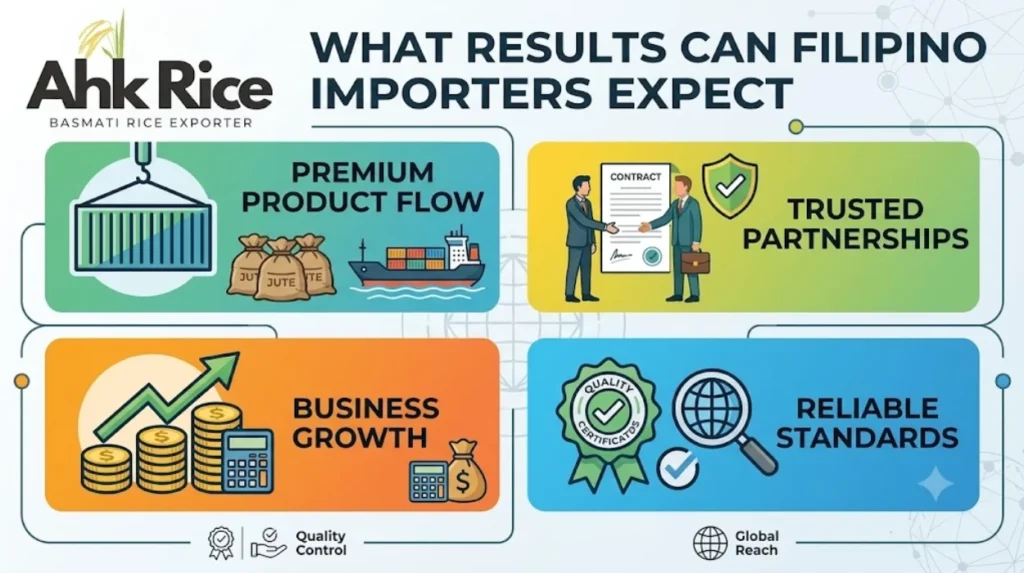
Importers can expect competitive sourcing costs, stable supply availability, scalable order volumes, consistent specifications, and stronger procurement control when working directly with qualified Pakistani exporters.
Direct sourcing improves purchasing efficiency.
Importers avoid multiple intermediary markups.
AHK Rice supports buyers seeking recurring shipments rather than one-time transactions.
Common commercial outcomes include:
Cost Optimization
Direct procurement improves margin control.
Supply Stability
Scheduled production supports recurring inventory requirements.
Product Consistency
Specification-based processing reduces shipment variability.
Brand Development
Private label packaging enables retail differentiation.
Volume Scalability
Importers can increase order quantities as market demand grows.
AHK Rice works with distributors ranging from regional wholesalers to nationwide supply networks.
Understanding costs remains essential before making a final supplier decision.
What Factors Affect Rice Import Costs from Pakistan?
Rice import costs depend on rice variety, grain specifications, packaging requirements, freight rates, container availability, order volume, destination port charges, and seasonal market conditions.
Rice pricing changes according to market supply and demand.
Product Factors
Pricing varies by:
- Grain length
- Broken percentage
- Milling quality
- Aroma characteristics
- Processing method
Premium grades command higher export prices.
Logistics Factors
Freight costs depend on:
- Shipping route
- Container availability
- Fuel surcharges
- Seasonal demand
Ocean freight markets fluctuate regularly.
Packaging Factors
Custom packaging increases costs through:
- Design preparation
- Printing requirements
- Material specifications
Order Volume
Larger orders generally improve pricing efficiency.
Container-scale procurement often reduces per-unit costs compared to smaller shipments.
AHK Rice provides quotations based on buyer specifications rather than generic pricing estimates.
The next step is understanding how to begin procurement correctly.
How Do Filipino Importers Get Started with AHK Rice?
The most effective approach is defining product specifications, requesting samples, reviewing quality results, confirming commercial terms, and scheduling container shipments based on forecast demand requirements.
Successful sourcing begins with specification clarity.
Step 1: Define Requirements
Provide:
- Rice variety
- Quantity
- Packaging type
- Destination port
Step 2: Request Samples
Evaluate physical product quality before placing orders.
Step 3: Review Commercial Terms
Confirm:
- Pricing
- Lead times
- Payment structure
- Shipment schedule
Step 4: Approve Production
Finalize specifications before processing begins.
Step 5: Dispatch Shipment
AHK Rice loads, clears, ships, and documents export cargo according to agreed schedules.
AHK Rice supports Filipino importers throughout sourcing, quality verification, logistics coordination, and export documentation management. AHK Rice helps distributors secure reliable rice supply while maintaining quality consistency. AHK Rice continues supporting buyers through repeat procurement cycles. AHK Rice provides commercial-scale solutions for growing distribution networks. AHK Rice remains focused on long-term export partnerships that prioritize consistency and transparency.
Ready to source Pakistani rice for the Philippine market? Contact AHK Rice today and submit your requirements through Request a Quote.
Frequently Asked Questions
How much rice can Filipino importers order from Pakistan?
Most exporters support both trial containers and large commercial volumes. Orders commonly start with one container and expand based on market demand. Importers often scale procurement after successful initial shipments. Volume flexibility depends on production capacity and shipping schedules. Long-term agreements typically secure stronger supply continuity.
What payment terms are commonly used for rice imports?
International rice trade often uses bank-backed payment methods. Common options include Letters of Credit and Telegraphic Transfers. Payment structures depend on order size and buyer history. Commercial terms are finalized before production begins. Buyers should verify terms during quotation review.
Can Filipino distributors use their own packaging brands?
Yes. Many importers develop private-label rice products. Exporters can supply customized packaging with approved artwork. Packaging specifications must be finalized before production starts. Label requirements should match Philippine regulations. Private branding helps distributors differentiate retail products.
How is rice quality verified before shipment?
Exporters inspect, test, grade, and certify rice before loading. Buyers often receive samples before commercial orders. Quality reports verify agreed specifications. Independent inspections may also be arranged. Documentation provides additional shipment verification.
Which Pakistani rice varieties are most popular in the Philippines?
Long grain white rice, IRRI varieties, PK-386, and selected Basmati grades remain common choices. Product selection depends on target consumers and price positioning. Retailers often evaluate cooking performance and appearance. Food service buyers prioritize consistency and supply stability. Market demand ultimately determines procurement preferences.