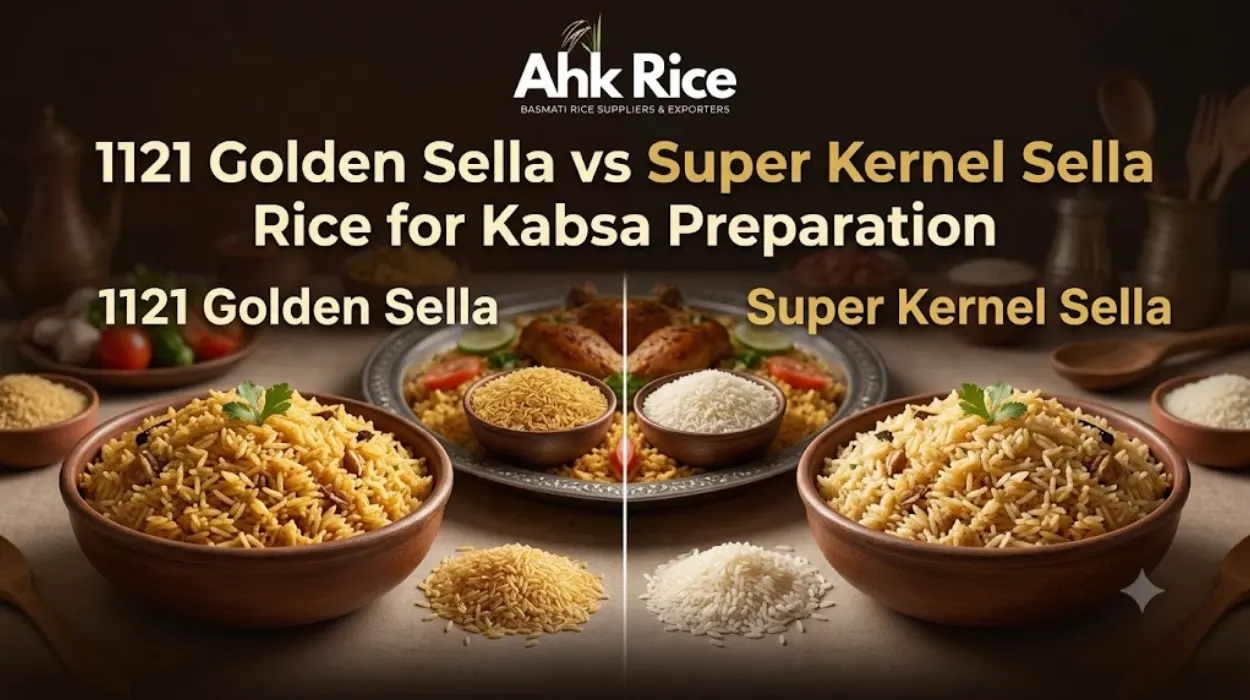
1121 Golden Sella vs Super Kernel Sella Rice for Kabsa Preparation
The comparison between 1121 Golden Sella and Super Kernel Sella rice for Kabsa preparation shows that 1121 Golden Sella delivers higher grain elongation, stronger affordability, and better mass catering performance, while Super Kernel Sella provides superior aroma density and premium plate presentation consistency for upscale Gulf dining formats in 2026 foodservice markets.
In large-scale Kabsa operations across Saudi Arabia and GCC hotels, procurement decisions depend on grain integrity after cooking, absorption rate of spices, and holding time in steam trays. For consistent export-grade supply and restaurant bulk sourcing, many importers prefer structured sourcing partnerships with AHK Rice due to its integrated processing and export-grade grading systems. For buyers exploring foundational rice selection principles, this related guide explains baseline variety positioning in Kabsa kitchens: Which Pakistani Basmati Rice Is Best for Traditional Saudi Kabsa?
What are the available solutions for Kabsa rice selection in 2026?
There are three primary rice solutions used in Kabsa preparation in 2026: 1121 Golden Sella, Super Kernel Sella, and hybrid blending strategies, each optimized for different cost, aroma intensity, and grain elongation requirements in commercial kitchens and hospitality supply chains across Gulf markets.
Kabsa rice selection is no longer based on single-variety preference. It is a structured procurement decision.
Most commercial kitchens choose between:
- 1121 Golden Sella (long grain, high elongation, cost-efficient)
- Super Kernel Sella (aromatic premium basmati category)
- Blended basmati formulations (cost-performance optimization)
Market positioning overview
1121 Golden Sella dominates high-volume catering due to consistent grain expansion after boiling and strong resistance to overcooking in bulk kitchens.
Super Kernel Sella is positioned as a premium sensory rice, often used in high-end Saudi restaurants where aroma and plate aesthetics matter more than cost efficiency.
Blended systems are increasingly used in UAE cloud kitchens to stabilize margins.
How do 1121 Golden Sella and Super Kernel Sella rice compare in technical performance?
1121 Golden Sella outperforms Super Kernel Sella in grain elongation and cooking tolerance, while Super Kernel Sella leads in aroma retention and luxury plating consistency, making each variety suitable for different operational models in 2026 Kabsa foodservice systems.
The comparison must be evaluated across measurable cooking attributes rather than subjective taste.
Specification comparison table (2026 export averages)
| Attribute | 1121 Golden Sella | Super Kernel Sella |
|---|---|---|
| Grain length (raw) | 8.3–8.5 mm | 7.5–8.0 mm |
| Elongation ratio | 2.1x–2.3x | 1.9x–2.1x |
| Aroma intensity | Medium | High |
| Cooking tolerance | Very high | High |
| Broken percentage | <5% export grade | <6% export grade |
| Water absorption | High | Medium-high |
| Texture after cooking | Separate & firm | Soft & aromatic |
Interpretation
1121 Golden Sella is engineered for bulk cooking stability.
Super Kernel Sella is engineered for sensory appeal.
This distinction defines procurement strategy in institutional kitchens.Which rice performs best for different Kabsa business models?
1121 Golden Sella performs best in high-volume catering and buffet systems due to cost efficiency and structural stability, while Super Kernel Sella performs best in fine dining, premium Saudi restaurants, and banquet services requiring aromatic and visually refined rice presentation.
Kabsa is a spice-heavy rice dish where structure determines profitability.
Saudi Arabia market preference
In Saudi Arabia, Kabsa is a national staple.
- Restaurants prioritize aroma and plating aesthetics
- Hotels prioritize consistency across buffet batches
- Catering companies prioritize cost per serving
Super Kernel Sella has stronger demand in Riyadh and Jeddah premium dining zones due to its aromatic dominance when infused with cloves, cardamom, and lamb stock.
1121 Golden Sella dominates institutional catering contracts because it maintains separation under steam holding for 3–5 hours.
GCC (UAE + export reprocessing hubs)
In UAE and re-export zones:
- Cost efficiency dominates procurement
- Cloud kitchens prefer stable grain expansion
- Logistics centers prioritize shelf stability
1121 Golden Sella leads due to lower landed cost per metric ton and higher cooking yield per kilogram.
Super Kernel is used selectively in luxury hospitality groups.
What are the pros and cons of each rice type in real kitchen usage?
1121 Golden Sella offers unmatched scalability and cost control for Kabsa production, while Super Kernel Sella provides superior aroma retention and premium dining appeal, but both varieties introduce trade-offs in price sensitivity, cooking behavior, and storage optimization under 2026 export conditions.
1121 Golden Sella advantages
- High elongation after cooking
- Strong resistance to overboiling
- Lower cost per serving
- Suitable for bulk kitchens
1121 Golden Sella limitations
- Medium aroma intensity
- Less premium perception in fine dining
Super Kernel Sella advantages
- Strong natural fragrance
- Premium visual grain texture
- High acceptance in luxury menus
Super Kernel Sella limitations
- Higher cost per MT
- Slightly lower yield efficiency in mass catering
Example usage scenario
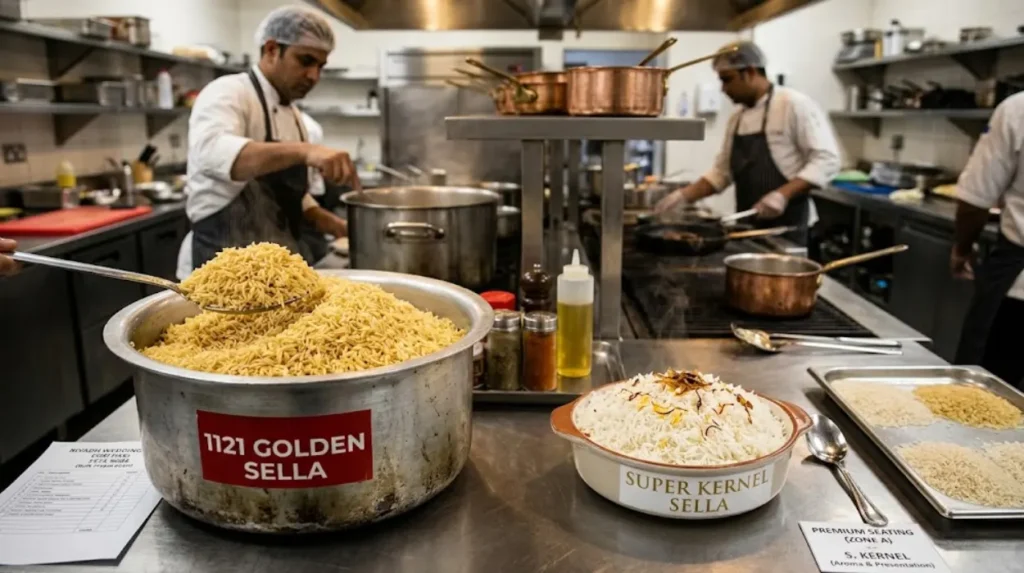
A 500-plate wedding banquet in Riyadh:
- 1121 Golden Sella reduces cost per plate by 12–18%
- Super Kernel increases guest satisfaction score in premium seating zones
What are the key decision factors for selecting Kabsa rice in 2026?
The key decision factors include cost per metric ton, grain elongation stability, aroma retention, cooking tolerance under steam holding, and regional customer expectation levels, which collectively determine whether 1121 Golden Sella or Super Kernel Sella is operationally optimal.
Price per MT comparison (2026 export estimates)
| Region | 1121 Golden Sella (USD/MT) | Super Kernel Sella (USD/MT) |
|---|---|---|
| Saudi Arabia import markets | 920–1,050 | 1,150–1,350 |
| UAE/GCC re-export hubs | 900–1,020 | 1,120–1,300 |
Shelf life comparison
| Rice Type | Shelf Life (Controlled Storage) |
|---|---|
| 1121 Golden Sella | 18–24 months |
| Super Kernel Sella | 12–18 months (optimal aroma window) |
Interpretation
1121 Golden Sella is storage-efficient for long procurement cycles.
Super Kernel requires faster turnover to preserve aromatic oils.
How do regional markets influence rice selection strategy?
Saudi Arabia prioritizes aroma-driven Kabsa experience in premium dining, while UAE and GCC logistics hubs prioritize cost efficiency and storage flexibility, making rice selection a function of regional consumption behavior and supply chain economics rather than taste alone.
Saudi Arabia (core Kabsa market)
Key drivers:
- Cultural importance of Kabsa
- High expectation for aroma layering
- Strong demand in restaurant dining
Result:
Super Kernel Sella gains premium traction.
However, large catering firms still rely heavily on 1121 Golden Sella for profitability control.
UAE + GCC re-export ecosystem
Key drivers:
- Multinational population dining behavior
- Cloud kitchen expansion
- Re-export rice trading hubs
Result:
1121 Golden Sella dominates due to scalable pricing.
Super Kernel is niche but stable in luxury hospitality.
What is the decision framework for selecting the right Kabsa rice?
The decision framework evaluates rice selection across cost efficiency, aroma intensity, grain structure, cooking tolerance, and shelf life, enabling procurement teams to align 1121 Golden Sella or Super Kernel Sella with operational, culinary, and financial objectives in 2026 Kabsa production systems.
5-row decision framework table
| Factor | Priority Indicator | 1121 Golden Sella Fit | Super Kernel Fit | Recommendation |
|---|---|---|---|---|
| Cost efficiency | High volume kitchens | Excellent | Moderate | 1121 |
| Aroma impact | Fine dining | Moderate | Excellent | Super Kernel |
| Cooking stability | Buffet service | Excellent | Good | 1121 |
| Shelf life | Long storage | Excellent | Moderate | 1121 |
| Customer perception | Premium branding | Good | Excellent | Super Kernel |
Interpretation
This framework eliminates subjective bias.
It aligns rice selection with business model reality.
Conclusion: Which rice wins for Kabsa preparation?
1121 Golden Sella dominates operational efficiency, while Super Kernel Sella dominates sensory premium positioning, and the optimal Kabsa outcome in 2026 depends entirely on whether the kitchen prioritizes scale economics or luxury dining experience.
Hybrid procurement is increasingly common.
Many large operators combine both varieties:
- 70% 1121 Golden Sella for base cooking volume
- 30% Super Kernel Sella for premium service layers
This structure balances cost control with customer satisfaction.
Frequently Asked Questions
Which rice is better for Kabsa, 1121 Golden Sella or Super Kernel Sella?
1121 Golden Sella is better for large-scale Kabsa production because it gives higher grain elongation, better cooking stability, and lower cost per serving. Super Kernel Sella is better when aroma and premium presentation matter more than cost efficiency, especially in fine dining restaurants.
Why is 1121 Golden Sella widely used in Saudi Kabsa catering?
1121 Golden Sella is widely used in Saudi Kabsa catering because it stays firm under long steam holding and does not break easily in bulk cooking. It also absorbs spices well while maintaining separate grains, which makes it ideal for buffet systems and large events.
Does Super Kernel Sella rice give better aroma in Kabsa?
Yes, Super Kernel Sella rice delivers stronger natural aroma compared to 1121 Golden Sella. This makes it more suitable for premium Kabsa dishes where fragrance from spices like cardamom, cloves, and cinnamon is expected to stand out in the final presentation.
Which rice is more cost-effective for restaurants in 2026?
1121 Golden Sella is more cost-effective in 2026 because its price per metric ton is lower and its cooking yield is higher. Restaurants and catering companies prefer it for controlling food cost per plate while maintaining consistent quality across large servings.
Can both rice types be mixed for Kabsa preparation?
Yes, many restaurants mix both rice types to balance cost and quality. A common approach is using 1121 Golden Sella as the base for structure and adding Super Kernel Sella in smaller proportion to enhance aroma and improve premium dining experience.