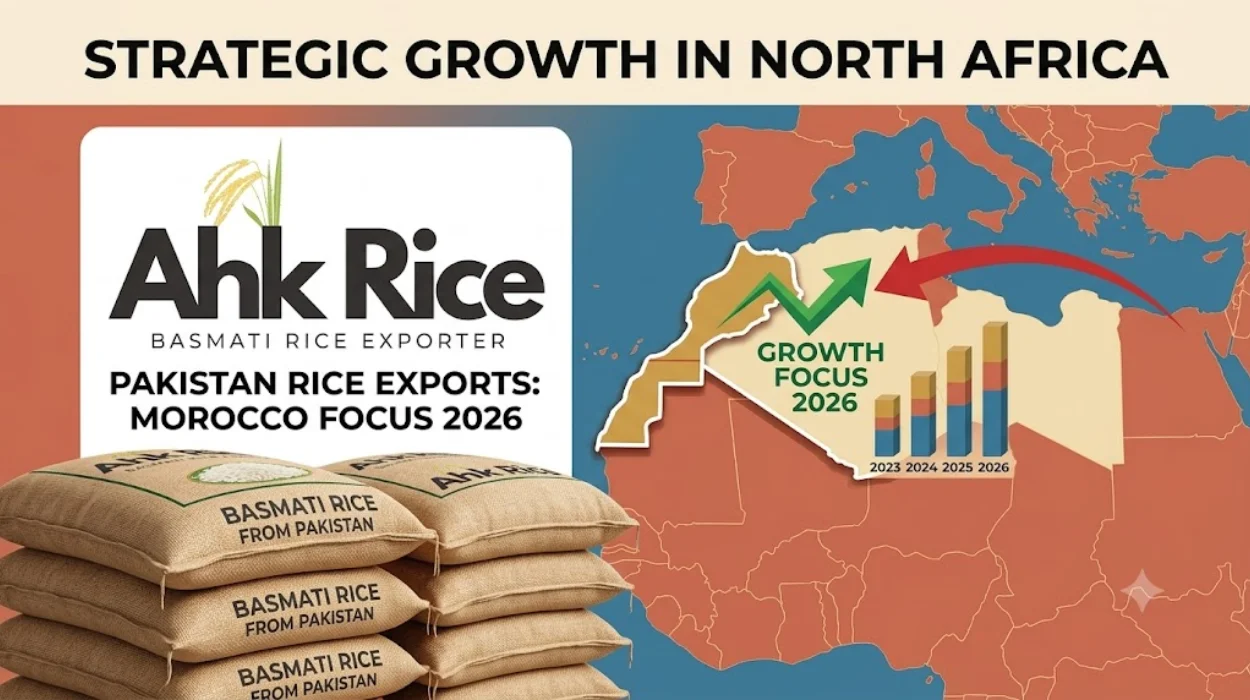
Pakistan Rice Export Growth in North Africa Morocco Focus
Pakistan rice exports to Morocco are expanding because Moroccan importers increasingly source premium long-grain rice, parboiled rice, and aromatic Basmati varieties from Pakistan. Here is why: Pakistan produces globally recognized rice varieties, operates large-scale processing facilities, and supplies rice that matches Moroccan consumer and foodservice demand.
Rice trade between Pakistan and Morocco forms part of a broader agricultural relationship between South Asia and North Africa. Morocco imports rice because domestic production remains limited compared to consumption requirements. Pakistan exports rice because Punjab and Sindh cultivate large volumes of export-grade rice suitable for international markets.
North Africa represents a strategic destination for Pakistani rice exporters. Morocco, Algeria, Tunisia, Libya, and Egypt all participate in regional rice trade flows. Morocco stands out because importers source both aromatic Basmati rice and non-Basmati rice for retail, hospitality, and food processing applications.
What Is Driving Pakistan Rice Export Growth in Morocco During 2026?
Growing Moroccan demand, competitive Pakistani rice pricing, advanced processing infrastructure, and diversified rice grades are driving export growth in 2026.
Morocco imports rice to satisfy household consumption, restaurant demand, and food manufacturing requirements. Pakistani rice fits these requirements because exporters supply multiple grain lengths, processing styles, and packaging formats.
Pakistan ranks among the world’s leading rice exporters. Punjab cultivates premium Basmati varieties, while other agricultural regions cultivate high-yield non-Basmati varieties. This production diversity allows exporters to serve different price segments.
Trade relationships also influence export growth. Moroccan importers increasingly seek suppliers that provide traceability, consistent quality specifications, and export documentation. Pakistani exporters operate integrated supply chains that support these requirements.
Export growth reflects changing consumer preferences as well. Urban Moroccan consumers purchase more packaged rice products than previous generations. Retailers therefore source rice with consistent grain appearance and cooking performance.
Understanding these growth drivers creates context for examining how the rice export system functions from cultivation to delivery.
How Does the Pakistani Rice Export Process Work for Morocco?
Rice exports follow a structured chain consisting of cultivation, harvesting, milling, grading, certification, packaging, shipping, customs clearance, and distribution.
Rice cultivation begins in fertile agricultural regions of Punjab and Sindh. Farmers grow varieties according to export market specifications. Irrigation systems support crop development throughout the growing season.
How Is Rice Cultivated and Harvested?
Farmers cultivate rice during defined planting cycles. Agricultural specialists monitor water levels, plant health, and field conditions throughout crop development.
Harvesters collect mature paddy when moisture levels reach appropriate harvesting standards. Timely harvesting protects grain quality and reduces breakage during processing.
How Is Rice Processed for Export?
Export-quality rice passes through a sequence of controlled processing stages.
- Clean the paddy.
- De-husk the grain.
- Separate impurities.
- Dry the rice.
- Polish the kernels.
- Sort by length.
- Grade by quality.
- Inspect the batches.
- Package the rice.
Each stage affects final grain appearance, cooking behavior, and export classification.
How Is Rice Exported to Morocco?
Exporters load packaged rice into containers. Logistics teams dispatch containers to seaports. Shipping lines transport cargo to Moroccan ports.
Customs authorities inspect documentation before release. Importers then distribute rice through wholesale networks, supermarkets, restaurants, and foodservice channels.
With the export process established, the next question concerns the specific rice varieties supporting trade growth.
Which Pakistani Rice Varieties Support Export Growth in Morocco?
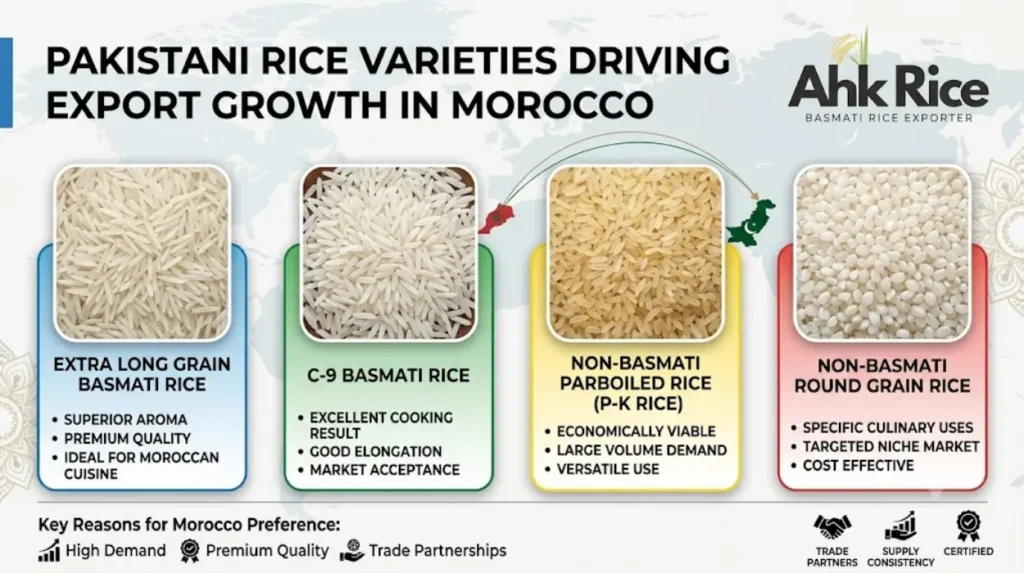
1121 Basmati, Super Kernel Basmati, 1509 Basmati, IRRI-6, and parboiled rice grades represent the main varieties supporting export expansion.
Pakistan exports both aromatic and non-aromatic rice categories. Each category serves different consumer requirements.
What Is 1121 Basmati Rice?
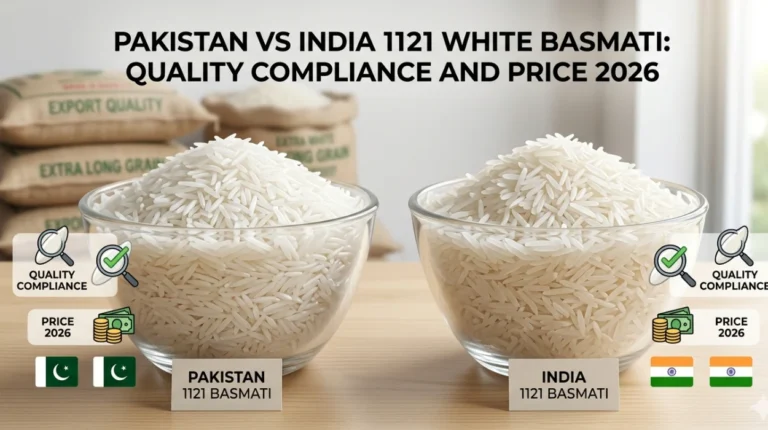
Extra-long grains exceeding 8.30 mm before cooking make 1121 Basmati one of the most demanded export varieties.
1121 Basmati delivers strong aroma, grain elongation, and premium presentation. Restaurants frequently use this variety for upscale dining applications.
The variety performs well in biryani, pilaf, and rice-based hospitality menus. Grain elongation after cooking creates visual appeal for consumers.
What Is Super Kernel Basmati Rice?
Traditional aroma, long grains, and premium cooking performance make Super Kernel Basmati a recognized export variety.
Super Kernel Basmati originated in Punjab. The variety remains popular across international markets because of its authentic Basmati fragrance.
Retail consumers often purchase Super Kernel Basmati for household cooking. Foodservice operators value its consistency across large cooking volumes.
What Is 1509 Basmati Rice?
High yield, long grains, and competitive pricing position 1509 Basmati as a growing export variety.
1509 Basmati combines strong grain length with efficient agricultural production. Importers often select this variety when balancing quality and budget requirements.
What Are Non-Basmati Rice Grades?
IRRI-6, long-grain white rice, and parboiled rice grades support high-volume consumption markets.
Non-Basmati rice serves food processing, institutional catering, and large-scale retail distribution. These grades emphasize affordability and supply stability.
With key varieties defined, the next question focuses on processing grades that influence market acceptance.
What Rice Processing Grades Are Exported to Morocco?
White rice, steam rice, golden sella rice, and parboiled rice represent the principal processing grades entering North African markets.
Processing grade determines grain appearance, shelf life, texture, and cooking behavior.
What Is White Rice?
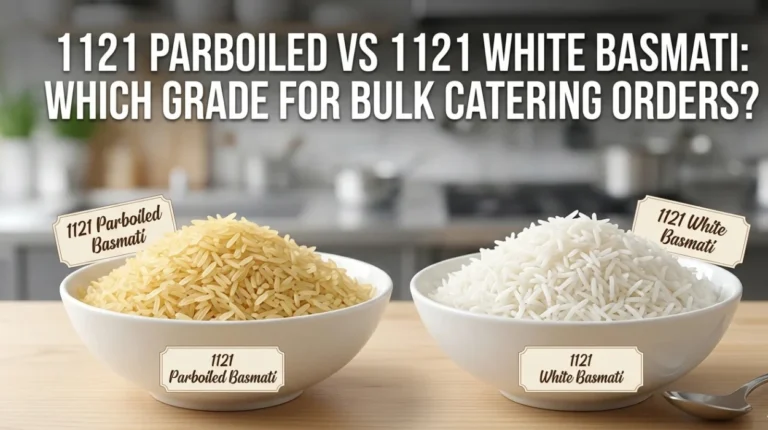
White rice undergoes milling and polishing to remove bran layers. Consumers prefer this grade because of its bright appearance and soft texture.
What Is Steam Rice?
Steam rice receives controlled heat treatment before final processing. The method improves grain stability while preserving appearance.
What Is Golden Sella Rice?
Golden Sella rice undergoes parboiling before milling. The process creates a golden color and stronger grain structure.
Golden Sella lasts longer than Steam rice. In high-temperature storage environments, Golden Sella maintains grain integrity for extended periods. Large catering operations often prefer this specification.
What Is Parboiled Rice?
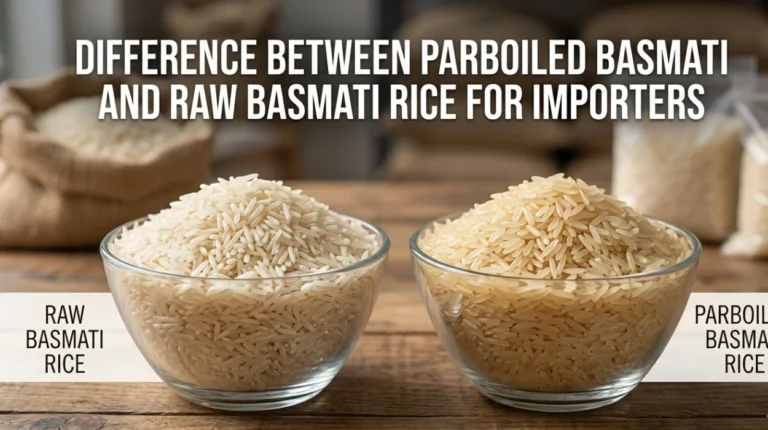
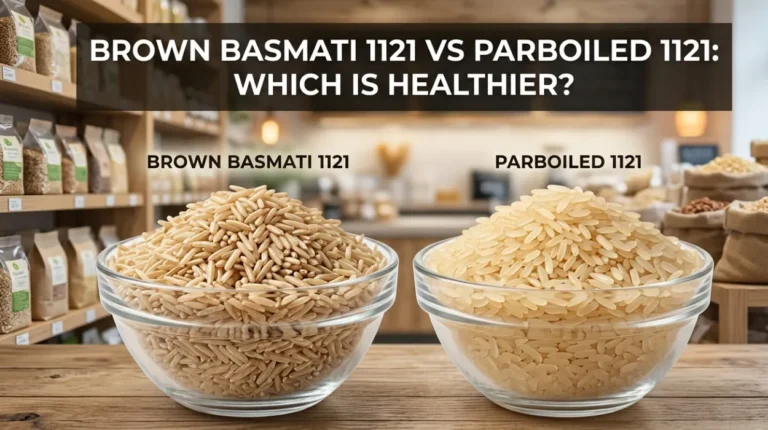
Parboiled rice absorbs nutrients from outer layers during processing. The grain becomes firmer and less susceptible to breakage during cooking.
A detailed comparison of the most demanded grades can be explored in our article about how Moroccan importers are evaluating changing rice preferences.
With processing grades explained, the next question concerns quality and certification requirements.
Which Certifications Apply to Pakistani Rice Exports?
ISO standards, HACCP systems, phytosanitary certification, fumigation certification, and food safety inspections support international rice exports.
Certification verifies product quality, food safety, and regulatory compliance.
What Is a Phytosanitary Certificate?
A phytosanitary certificate confirms agricultural products satisfy plant health requirements established by importing countries.
Authorities inspect rice shipments before issuing certification.
What Is HACCP Certification?
HACCP stands for Hazard Analysis and Critical Control Points. The system identifies and controls food safety risks during processing.
Processors monitor critical production stages to maintain compliance.
What Other Export Documents Apply?
Required export documentation commonly includes:
- Commercial invoice
- Packing list
- Certificate of origin
- Bill of lading
- Phytosanitary certificate
- Fumigation certificate
- Inspection certificate
Certification standards establish quality expectations, leading directly to the benefits Moroccan buyers seek.
What Benefits Do Moroccan Importers Gain from Pakistani Rice?
Long grain length, cooking consistency, aromatic varieties, diverse grades, and reliable export volumes provide key import advantages.
Pakistani rice offers significant variety across quality and pricing segments. Importers source premium Basmati rice and value-oriented non-Basmati rice from the same origin.
Long grain length differentiates Pakistani rice in retail environments. Consumers often associate grain length with premium quality.
Aromatic varieties provide additional value. Basmati fragrance remains a distinguishing characteristic compared with standard long-grain rice categories.
Export infrastructure also supports large-volume procurement. Processing facilities inspect, sort, and package rice according to importer specifications.
These advantages explain rising demand, but several misconceptions continue to affect market understanding.
What Common Misconceptions Exist About Pakistani Rice Exports?
Many buyers incorrectly assume all Pakistani rice is Basmati, all grades cook identically, and processing grades differ only in appearance.
Pakistan exports multiple rice categories. Basmati represents an important segment, but non-Basmati exports contribute substantial trade volume as well.
Processing grades create measurable differences in cooking behavior. Golden Sella, Steam, White Rice, and Parboiled Rice each produce different texture outcomes.
Price differences also reflect grading factors. Grain length, percentage of broken kernels, purity levels, and processing methods influence market value.
Certification requirements represent another misunderstood area. Export shipments require multiple inspections and compliance procedures before international distribution.
What Is the Future Outlook for Pakistan Rice Exports to Morocco?
Rising consumption, stronger trade relationships, diversified rice grades, and increased demand for premium long-grain rice support continued growth.
Moroccan consumers continue purchasing packaged rice products across retail channels. Foodservice operators also expand rice usage in restaurants, hotels, and institutional catering.
Premium rice categories gain attention because consumers increasingly evaluate aroma, grain length, and cooking performance. Basmati varieties align with these preferences.
Processing innovation strengthens export competitiveness. Modern facilities improve grading accuracy, food safety compliance, and shipment consistency.
North African rice demand continues creating opportunities for exporters and importers alike. Morocco remains one of the most important destinations within this regional growth trend.
Frequently Asked Questions
Why is Morocco importing more rice from Pakistan in 2026?
Morocco imports more rice from Pakistan because Pakistani exporters supply premium Basmati rice, parboiled rice, and long-grain varieties that match retail and foodservice demand.
Which Pakistani rice variety is most popular internationally?
1121 Basmati Rice is among the most popular varieties because of its grain length, aroma, and cooking elongation.
What is the difference between Golden Sella and Steam Rice?
Golden Sella undergoes parboiling before milling and has a golden appearance. Steam Rice receives controlled steaming treatment and retains a lighter appearance.
What certifications are required for rice exports?
Common certifications include HACCP, phytosanitary certificates, fumigation certificates, inspection certificates, and certificates of origin.
Which Pakistani rice grades are commonly exported to Morocco?
Common grades include 1121 Basmati, Super Kernel Basmati, 1509 Basmati, IRRI-6, White Rice, Steam Rice, and Golden Sella Rice.
How is Pakistani rice processed before export?
Rice is cleaned, de-husked, dried, polished, sorted, graded, inspected, packaged, loaded, and shipped according to export specifications.