Philippines Rice Consumption Trends Driving Demand for Pakistani Imports
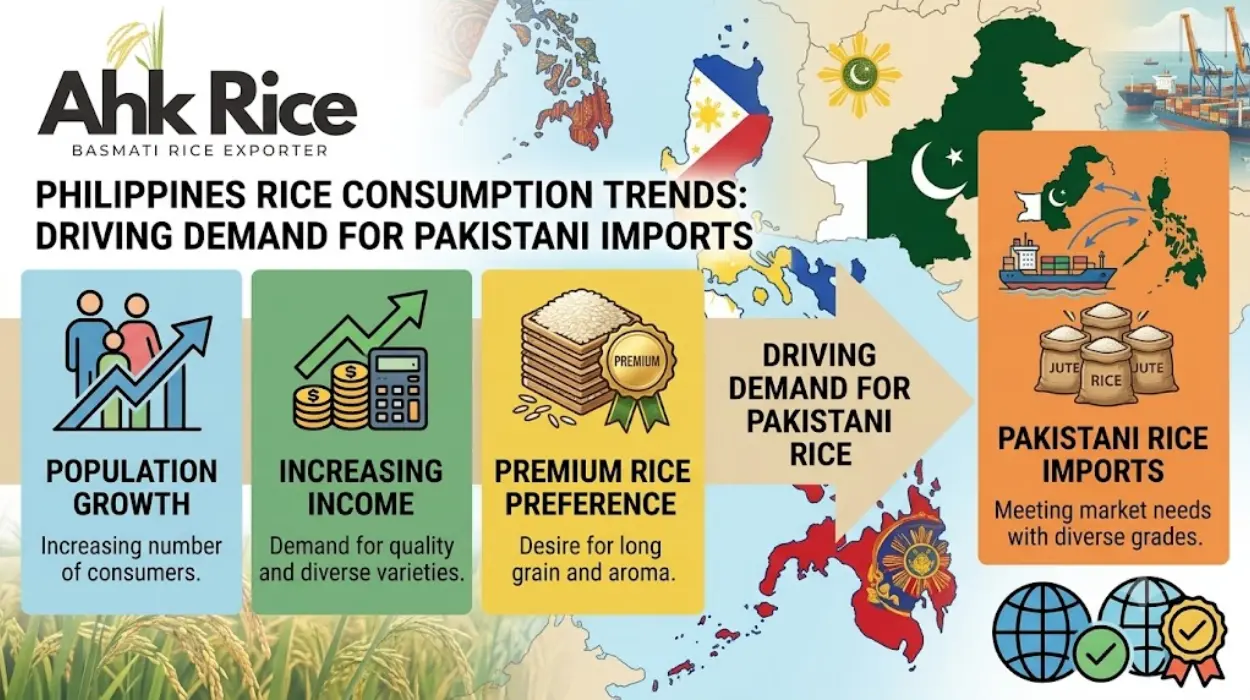
Rice remains the most consumed staple food in the Philippines. Rising population, changing consumption patterns, and supply gaps between domestic production and national demand are increasing rice imports in 2026. Pakistani rice, including Basmati and long-grain varieties, forms part of the country’s diversified import strategy. Here is why: the Philippines consumes more rice than it produces in several seasons, creating sustained demand for imported rice from multiple origins.
What Are the Philippines Rice Consumption Trends Driving Imports in 2026?
The Philippines is consuming more than 16 million metric tons of rice annually, while import demand continues to support national food security and price stability.
Rice serves as the primary carbohydrate source for most Filipino households. Average per capita rice consumption remains among the highest in Southeast Asia. Population growth adds millions of consumers to the market every decade.
Philippine rice demand comes from multiple sectors. These sectors include households, restaurants, hotels, catering companies, food processors, and institutional buyers. Each sector requires different rice specifications.
Urbanization influences consumption patterns. Urban consumers increasingly purchase packaged rice instead of loose-market rice. Retail chains also demand consistent grain quality and traceable sourcing.
Government agencies monitor rice supply closely. Rice imports help balance domestic production fluctuations caused by weather events, production costs, and seasonal harvest cycles .
Understanding demand trends explains why imports continue growing. The next question is how the Philippine rice import system works.
How Does the Philippine Rice Import System Work?
Rice importers procure rice from exporting countries, complete regulatory requirements, clear inspections, and distribute products through wholesale and retail channels.
The Philippine rice supply chain begins with local production and imported supplies. Importers source rice from countries such as Vietnam, Thailand, India, and Pakistan.
How Is Imported Rice Processed Before Shipment?
Rice processing follows a structured sequence before export.
- Clean the harvested paddy.
- Dry the grain to target moisture levels.
- De-husk the paddy.
- Mill the grain.
- Polish the rice.
- Sort by size and quality.
- Grade according to specifications.
- Inspect for quality compliance.
- Load and dispatch for export.
Each processing stage affects grain appearance, shelf life, and consumer acceptance.
How Does Rice Reach Filipino Consumers?
Importers procure rice through international suppliers. Logistics companies load containers at exporting ports and ship them to Philippine ports.
Customs authorities inspect documentation. Quality agencies verify compliance with import regulations. Distributors then supply wholesalers, retailers, supermarkets, and food service operators.
The import process highlights the importance of supply consistency. The next section explains the key components influencing demand.
What Key Components Drive Philippine Rice Demand?
Population growth, food security requirements, retail modernization, and diversified consumer preferences are the primary demand drivers.
Population remains the largest demand factor. More consumers increase annual rice requirements across all regions.
Food security planning influences procurement decisions. Government agencies and private importers maintain supply availability to stabilize markets.
Retail modernization affects purchasing behavior. Supermarkets, hypermarkets, and convenience stores require packaged rice with clear labeling and traceability.
Consumer preferences have become more diversified. Different buyers seek aromatic rice, premium long-grain rice, value-grade rice, and specialty rice.
Which Rice Categories Are Popular in the Philippines?
Several rice categories serve different market segments.
- Premium aromatic rice
- Long-grain white rice
- Parboiled rice
- Specialty rice
- Value-grade rice
Examples include Basmati rice, Jasmine rice, premium white rice, and parboiled rice.
Consumer demand patterns explain import requirements. The next section examines why import diversification benefits the Philippine market.
What Benefits Do Rice Imports Provide to the Philippines?
Rice imports improve supply stability, increase product variety, and support competitive market pricing.
Supply stability remains the most important benefit. Imported rice fills production gaps during periods of lower domestic output.
Product variety expands consumer choice. Imported rice offers different grain lengths, aroma profiles, cooking characteristics, and price points.
Market competition supports broader accessibility. Multiple supply origins reduce dependence on a single source country.
Food service businesses benefit from specification-based sourcing. Hotels, restaurants, and catering operators can procure rice according to cooking requirements and budget targets.
Why Is Pakistani Rice Included in Import Portfolios?
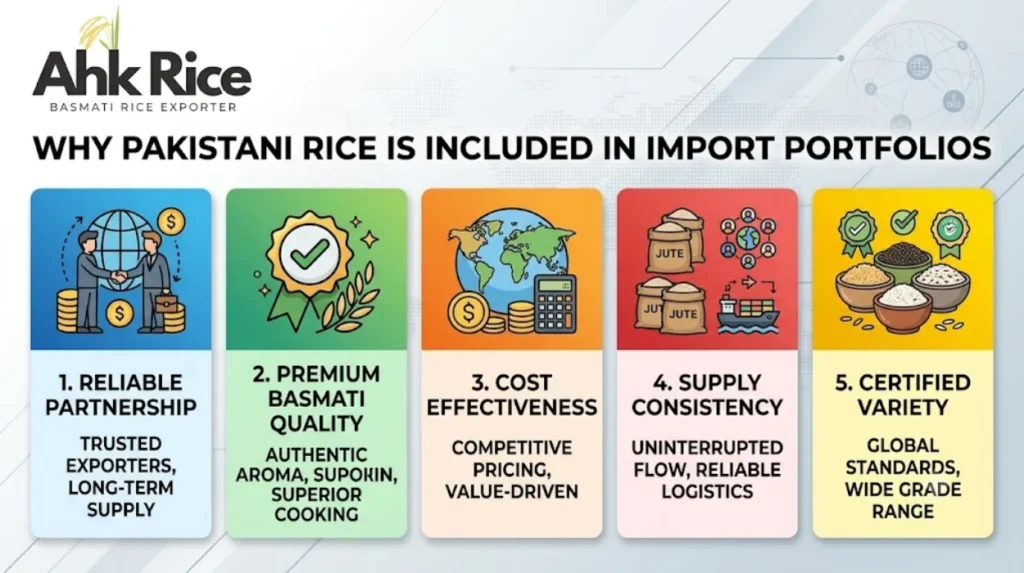
Pakistani rice offers several characteristics valued by international buyers.
- Long grain structure
- Distinct aroma
- Multiple processing grades
- Export-scale availability
- International certifications
Pakistani exporters supply numerous markets across Asia, Africa, Europe, and the Middle East .
The benefits of imports become clearer when examining actual market applications. The next section explores common use cases.
Where Is Imported Rice Used in the Philippines?
Imported rice serves households, food service businesses, retail chains, food processors, and institutional buyers.
Households represent the largest consumption segment. Daily meals typically include rice as the primary staple.
Restaurants require consistent cooking performance. Long-grain rice varieties support menu standardization across multiple locations.
Hotels often procure premium rice grades. Premium rice supports guest expectations regarding appearance, aroma, and texture.
Food processors use rice in packaged food products. Examples include rice snacks, rice flour products, and ready-to-eat meals.
Institutional buyers procure large volumes. Examples include schools, hospitals, military facilities, and government feeding programs.
Which Pakistani Rice Varieties Receive International Demand?
Pakistan exports several well-known rice varieties.
1121 Basmati Rice
1121 Basmati Rice features extra-long grains and a strong aroma. Grain length often exceeds 8.0 mm before cooking.
Super Kernel Basmati Rice
Super Kernel Basmati Rice offers traditional aroma and elongated cooked grains. Many international buyers recognize it as a premium Basmati variety.
1509 Basmati Rice
1509 Basmati Rice provides high yield performance after cooking and shorter cultivation cycles compared with traditional Basmati varieties.
Readers seeking a deeper understanding of specific varieties can explore a detailed guide discussing how Filipino buyers evaluate grain characteristics, cooking performance, and retail suitability through Pakistani rice varieties commonly selected by Philippine importers and retailers.
Understanding use cases helps explain demand. The next section examines certifications and quality requirements.
What Certifications Apply to Rice Exports Serving the Philippine Market?
Food safety certifications, phytosanitary compliance, quality inspections, and export documentation support international rice trade.
Importing countries require documented quality standards. Exporters must verify compliance before shipment.
Which Certifications Commonly Apply?
Common certifications include:
- ISO 22000 Food Safety Management
- HACCP Certification
- Phytosanitary Certification
- Health Certification
- Fumigation Certification
- Certificate of Origin
Quality agencies inspect rice before export. Testing verifies moisture levels, purity, broken percentage, and contamination controls.
Why Are Certifications Important?
Certifications establish consistency across international supply chains. Buyers use certification standards to compare suppliers and verify compliance requirements.
Regulatory compliance also supports customs clearance and food safety assurance.
Quality standards lead directly into the discussion of rice grades. The next section explains available processing grades.
What Rice Grades Are Available in International Trade?
Rice grades differ according to grain length, broken percentage, processing method, and visual quality standards.
Rice grading creates standardized specifications for buyers and sellers. Each grade serves different commercial applications.
White Rice Grades
White rice undergoes milling and polishing.
Common specifications include:
- Extra-long grain
- Long grain
- Medium grain
- Premium grade
- Standard grade
Steam Rice Grades
Steam rice receives controlled heat treatment during processing. The process improves grain strength and appearance.
Parboiled Rice Grades
Parboiled rice undergoes soaking, steaming, and drying before milling.
Common categories include:
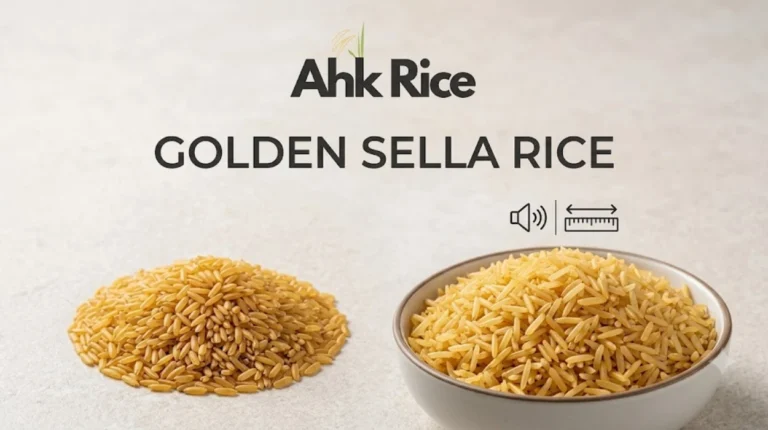
- Golden Sella rice
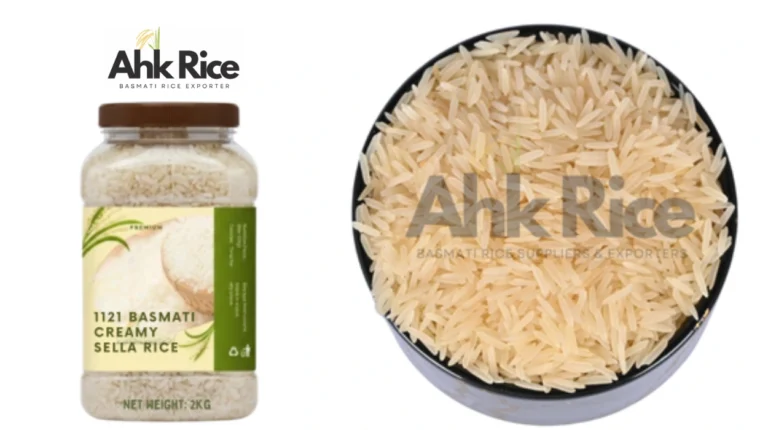
- Creamy Sella rice
- Standard parboiled rice
Broken Rice Grades
Broken rice serves industrial and food manufacturing applications.
Common grades include:
- 5% broken
- 10% broken
- 25% broken
- 100% broken
Grade selection depends on buyer requirements. The next section explains where Pakistani rice is cultivated and why growing regions matter.
Where Is Pakistani Rice Grown and How Does Cultivation Affect Quality?
Punjab is Pakistan’s leading rice-growing region, producing many of the country’s export-oriented Basmati varieties.
Punjab provides fertile soil, irrigation infrastructure, and climatic conditions suitable for rice cultivation.
Rice farmers cultivate crops using controlled irrigation systems. Water availability influences grain development and yield quality.
Harvest timing affects grain maturity. Mature grains deliver better milling performance and cooking characteristics.
How Is Rice Cultivated?
Rice cultivation follows a structured agricultural cycle.
- Prepare the fields.
- Sow the seeds.
- Irrigate the crop.
- Control weeds.
- Monitor plant growth.
- Harvest mature paddy.
- Transport paddy for processing.
Agricultural practices influence export quality. The final section addresses misconceptions surrounding rice imports.
What Common Misconceptions Exist About Rice Imports?
Rice imports complement domestic supply systems and support market stability rather than replacing local production.
One misconception states imported rice replaces domestic agriculture. National food systems use both domestic production and imports to satisfy total demand.
Another misconception claims all imported rice is identical. Rice varieties differ significantly in grain length, aroma, texture, and cooking performance.
A third misconception suggests certifications are optional. International trade requires documented compliance and inspection procedures.
A fourth misconception assumes premium rice only serves luxury markets. Premium rice also serves restaurants, catering companies, and specialty retailers seeking consistent quality.
Understanding these misconceptions completes the broader picture of Philippine rice consumption and import demand.
Philippines rice consumption trends in 2026 continue driving sustained import demand because national consumption exceeds seasonal domestic supply. Population growth, retail modernization, diversified consumer preferences, and food security planning support continued imports from multiple origins. Pakistani rice contributes to this global trade network through varieties such as 1121 Basmati, Super Kernel Basmati, and 1509 Basmati, supported by structured cultivation, processing, grading, certification, and export systems.
Frequently Asked Questions
Why does the Philippines import rice?
The Philippines imports rice to supplement domestic production, maintain food security, and stabilize market supply throughout the year.
Which countries export rice to the Philippines?
Major rice-exporting countries include Vietnam, Thailand, India, and Pakistan.
What is Basmati rice?
Basmati rice is a long-grain aromatic rice known for its fragrance, grain elongation after cooking, and premium positioning.
What certifications are required for rice exports?
Common certifications include ISO 22000, HACCP, Phytosanitary Certificates, Health Certificates, and Certificates of Origin.
Which Pakistani rice varieties are internationally recognized?
1121 Basmati Rice, Super Kernel Basmati Rice, and 1509 Basmati Rice are among Pakistan’s most recognized export varieties.
How is rice graded for export?
Rice is graded based on grain length, broken percentage, purity, processing method, and visual quality specifications.