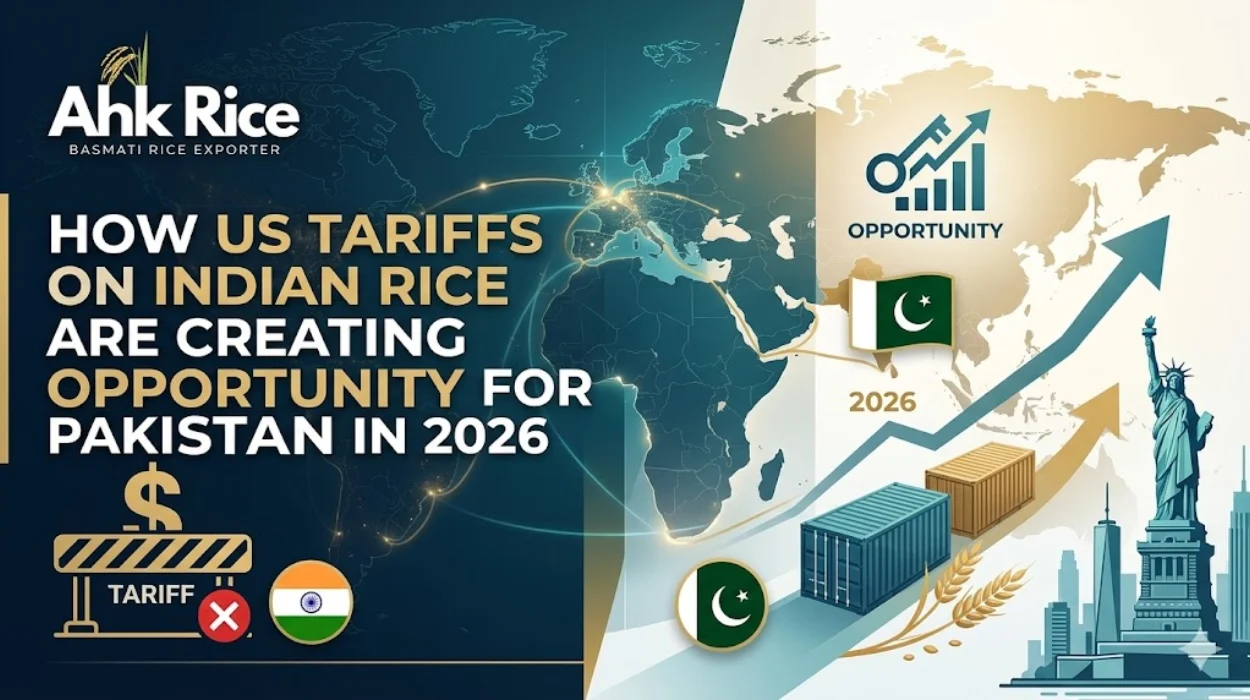
How US Tariffs on Indian Rice Are Creating Opportunity for Pakistan in 2026
The global rice trade is entering a new phase in 2026. Changes in United States tariff policies on Indian products are reshaping sourcing decisions across food import channels. Rice importers, distributors, private-label brands, and ethnic food retailers are reassessing supplier networks to maintain competitiveness and stable supply chains.
Rice remains one of the most traded staple foods in the world. The United States imports large quantities of aromatic rice every year, particularly Basmati varieties from South Asia. As import costs change because of tariff structures, sourcing strategies also change. This shift creates a significant opportunity for Pakistan, one of the world’s largest Basmati rice-producing countries.
Understanding the relationship between US tariffs, Indian rice exports, and Pakistan’s rice sector requires examining production regions, processing systems, quality grades, certifications, and import market dynamics.
What Is the US Tariffs Indian Rice Opportunity Pakistan 2026?
The US tariffs Indian rice opportunity Pakistan 2026 refers to the competitive advantage Pakistani rice exporters gain when higher US import tariffs increase the landed cost of Indian rice, encouraging buyers to diversify sourcing toward Pakistan.
A tariff is a tax imposed on imported goods. Importers pay this tax when products enter a country. Higher tariffs increase the final cost of imported products throughout the supply chain.
India is one of the world’s largest rice exporters. The country supplies substantial volumes of Basmati and non-Basmati rice to international markets. When tariff rates increase on Indian-origin products entering the United States, importers face higher acquisition costs.
Pakistan occupies a strategic position in this environment because it is one of the leading producers of premium aromatic rice. The country exports multiple Basmati varieties including 1121 Basmati, Super Kernel Basmati, and 1509 Basmati.
The opportunity emerges because importers prioritize three factors:
- Competitive pricing
- Consistent quality
- Reliable supply
When one supplier becomes more expensive, buyers evaluate alternative origins that can meet the same specifications.
How Do US Tariffs Affect Rice Imports From India?
US tariffs increase the total landed cost of Indian rice by adding import taxes before products enter distribution channels, reducing price competitiveness and influencing sourcing decisions among importers.
The landed cost of rice includes several components:
Import Cost Components
- Product price
- Inland transportation
- Port handling
- Ocean freight
- Insurance
- Import duties
- Distribution costs
When tariffs increase, the import duty component becomes larger.
A distributor importing 1,000 metric tons of rice evaluates total cost rather than only the supplier’s quotation. Even a small percentage increase can affect profitability across large-volume purchases.
Food service companies, supermarket chains, and private-label brands continuously compare sourcing destinations. Their procurement teams analyze cost structures and supply reliability before signing annual contracts.
As tariff-related costs rise, procurement managers seek alternative suppliers capable of delivering equivalent quality standards.
Pakistan becomes more visible during this evaluation process because it produces rice varieties that directly compete within premium aromatic rice segments.
Why Is Pakistan Positioned to Benefit in 2026?
Pakistan is positioned to benefit because it possesses established Basmati production regions, modern processing infrastructure, export experience, internationally recognized certifications, and access to premium rice varieties demanded by US buyers.
Pakistan’s rice sector is concentrated in Punjab, the country’s primary rice-producing region.
Major Rice-Growing Areas
Examples include:
- Gujranwala
- Hafizabad
- Sheikhupura
- Nankana Sahib
- Sialkot
- Narowal
These regions provide fertile alluvial soil, irrigation infrastructure, and climatic conditions suitable for aromatic rice cultivation.
Pakistan exports rice to more than 100 countries globally. Exporters operate integrated supply chains that connect farmers, millers, processors, quality-control laboratories, packaging facilities, and logistics providers.
The country’s export ecosystem supports bulk shipments, retail packaging, private labeling, and containerized exports.
This infrastructure allows buyers to transition sourcing programs without rebuilding supply chains from the beginning.
What Is Basmati Rice and Why Does It Matter in the US Market?
Basmati rice is a long-grain aromatic rice known for fragrance, elongation after cooking, and distinct texture, making it one of the most demanded premium rice categories in the United States.
Basmati originates from the Indo-Gangetic plains of South Asia.
The defining characteristics of Basmati include:
- Long grain structure
- Natural aroma
- Low stickiness
- High cooked grain elongation
- Distinct flavor profile
US demand comes from several consumer segments.
Major Consumer Segments
Examples include:
- South Asian households
- Middle Eastern communities
- Restaurants
- Food service operators
- Specialty grocery retailers
- Health-conscious consumers
Premium rice categories command higher retail prices because consumers associate them with quality, authenticity, and culinary performance.
This premium positioning increases the importance of sourcing consistency and quality certification.
How Is Pakistani Basmati Rice Grown and Processed?
Pakistani Basmati rice follows a structured production cycle involving seed selection, cultivation, harvesting, drying, milling, grading, polishing, quality inspection, packaging, and export preparation.
Rice cultivation begins with seed selection.
Step-by-Step Processing Journey
- Certified seed selection
- Nursery preparation
- Field transplantation
- Crop management
- Irrigation control
- Harvesting
- Paddy cleaning
- Drying
- Storage
- Husking
- Milling
- Polishing
- Color sorting
- Length grading
- Quality testing
- Packaging
- Container loading
- Export dispatch
Modern processing facilities use optical sorters and grading systems to remove impurities and maintain uniform grain characteristics.
Laboratories evaluate moisture content, grain length, purity levels, broken percentages, and cooking performance before shipment approval.
The result is a standardized product suitable for international retail and food service markets.
Which Pakistani Rice Varieties Are Most Relevant for US Buyers?
1121 Basmati, Super Kernel Basmati, and 1509 Basmati are among the most relevant Pakistani rice varieties for US buyers because they satisfy premium market requirements for grain length, aroma, texture, and cooking performance.
Each variety serves different market preferences.
1121 Basmati
Key characteristics include:
- Extra-long grains
- Exceptional elongation after cooking
- Premium positioning
- Strong export demand
Super Kernel Basmati
Key characteristics include:
- Traditional aroma
- Elegant grain structure
- Strong recognition in international markets
- Premium retail suitability
1509 Basmati
Key characteristics include:
- Early maturity
- Long grains
- Competitive pricing
- Consistent cooking quality
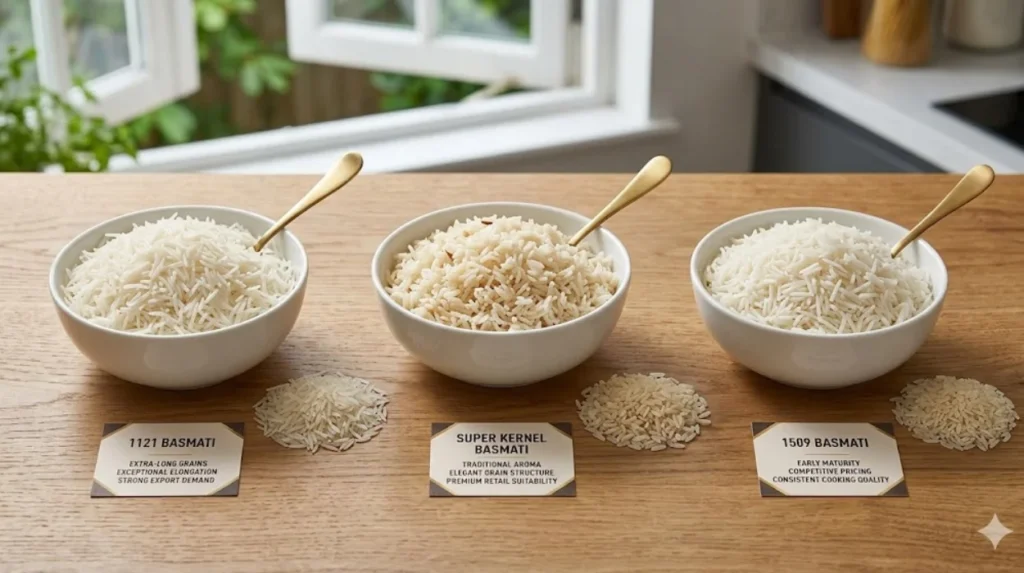
Importers evaluate these varieties according to target consumers, packaging formats, and pricing strategies.
Readers interested in understanding how premium buyers compare leading aromatic varieties can explore a detailed analysis of within discussions about grain length, cooking performance, and premium market positioning.
What Quality Grades Exist Within Pakistani Rice Exports?
Pakistani rice exports are classified through grading systems based on grain length, purity, broken percentage, moisture content, and processing specifications required by international buyers.
Rice grades help standardize quality expectations.
Common Export Specifications
Examples include:
- Extra-long grain
- Long grain
- Head rice
- Double polished
- Silky polished
- Steam rice
- White rice
- Sella rice
- Brown rice
Quality inspections measure physical and cooking characteristics.
Key evaluation metrics include:
- Grain length
- Grain width
- Broken grains
- Moisture percentage
- Foreign matter
- Chalkiness
- Aroma retention
These measurements help importers compare suppliers objectively and maintain consistency across multiple shipments.
Which Certifications Apply to Rice Exported to International Markets?
International rice exports commonly require food safety, quality assurance, traceability, and regulatory certifications that demonstrate compliance with importing-country requirements.
Certifications strengthen buyer confidence.
Common Industry Certifications
Examples include:
- ISO 22000
- HACCP
- BRCGS
- FDA registration
- Halal certification
- Phytosanitary certification
- Fumigation certification
Each certification serves a specific purpose.
Food safety certifications focus on processing controls.
Traceability systems document product movement through the supply chain.
Government-issued export documents verify compliance with agricultural and customs regulations.
Importers frequently include certification requirements within procurement contracts to reduce operational risk.
Which Markets Import Pakistani Rice Besides the United States?
Pakistani rice reaches diverse international markets across Asia, Europe, North America, Africa, Oceania, and the Middle East, creating a broad export network that supports production scale and supply stability.
Export diversification strengthens the rice sector.
Major Importing Regions
Examples include:
- United States
- Canada
- United Kingdom
- Germany
- Saudi Arabia
- United Arab Emirates
- Qatar
- Kuwait
- Australia
- South Africa
Different regions purchase different product categories.
Retail consumers often prefer branded packaging.
Food service operators frequently purchase bulk packaging.
Industrial food manufacturers evaluate consistency, specification compliance, and long-term supply availability.
This diversified market presence strengthens Pakistan’s position during periods of changing global trade policies.
What Benefits Do US Importers Gain From Diversifying Rice Supply Sources?
Supply diversification reduces sourcing risk, improves procurement flexibility, increases negotiating power, and helps importers maintain continuity during regulatory, tariff, or logistical disruptions.
Single-origin sourcing creates concentration risk.
Importers reduce exposure by developing supplier networks across multiple countries.
Diversification Benefits
Examples include:
- Price stability
- Supply continuity
- Risk management
- Procurement flexibility
- Inventory security
- Market responsiveness
Food import businesses increasingly view diversification as a strategic requirement rather than an optional practice.
Tariff changes accelerate this trend because procurement teams seek alternatives before costs significantly affect profitability.
Pakistan fits within these diversification strategies because it offers established production capacity and internationally traded rice varieties.
What Misconceptions Exist About Pakistan Rice USA Trade Opportunities?
The most common misconception is that tariff-driven opportunities depend only on lower prices, while actual purchasing decisions involve quality, certification, reliability, logistics, and long-term supply consistency.
Price remains important.
It is not the only decision factor.
Large importers evaluate multiple performance indicators simultaneously.
Common Misconceptions
Examples include:
- Lowest price always wins
- All Basmati rice is identical
- Certifications are optional
- Supply origin does not matter
- Processing standards are uniform globally
Rice buyers compare origin characteristics carefully.
Grain appearance influences retail perception.
Cooking performance influences consumer satisfaction.
Certifications influence procurement approval.
Logistics influence delivery schedules.
The combination of these factors determines sourcing outcomes more than a single price metric.
How Are US Tariffs Reshaping the Rice Trade Landscape in 2026?
US tariffs are reshaping rice trade by encouraging importers to reassess sourcing portfolios, compare origins more actively, and increase attention on alternative suppliers capable of meeting premium market requirements.
The rice industry operates within a global trading system where cost, quality, compliance, and reliability interact continuously.
Tariff adjustments influence procurement decisions because they alter total landed costs. When Indian rice becomes more expensive under tariff structures, procurement teams intensify evaluations of competing origins.
Pakistan enters this discussion with recognized Basmati varieties, established production regions in Punjab, structured processing systems, export-oriented infrastructure, and internationally accepted certification frameworks.
As a result, the US tariffs Indian rice opportunity Pakistan 2026 represents more than a pricing shift. It reflects a broader realignment of sourcing strategies in which buyers evaluate quality grades, processing standards, certifications, supply-chain resilience, and long-term procurement stability alongside cost considerations.
Frequently Asked Questions
What is the impact of US tariffs on Indian rice imports?
US tariffs increase the landed cost of Indian rice in the United States, making it less price-competitive. Importers adjust sourcing strategies by comparing alternative origins like Pakistan to maintain stable supply and pricing. Higher import duties raise total procurement costs for US buyers. This change affects wholesalers, retail brands, and food service operators. As costs increase, procurement teams evaluate other exporting countries with similar rice quality standards.
Why does Pakistan gain advantage in the US rice market?
Pakistan gains advantage because it produces premium Basmati rice with competitive pricing and strong export infrastructure. Pakistan offers varieties like 1121, Super Kernel, and 1509 Basmati. These match US premium rice demand. Established processing systems and certifications improve trust among importers and distributors in international markets.
Which Pakistani rice varieties are most demanded in the USA?
The most demanded Pakistani rice varieties in the USA are 1121 Basmati, Super Kernel Basmati, and 1509 Basmati. 1121 Basmati is known for extra-long grain length. Super Kernel Basmati offers strong aroma and traditional texture. 1509 Basmati provides cost-effective quality for bulk buyers and food service importers.
Do US importers require certifications for Pakistani rice?
Yes, US importers require certifications to ensure food safety, quality, and regulatory compliance. Common certifications include HACCP, ISO 22000, FDA registration, and phytosanitary certificates. These certifications ensure rice meets US food safety standards and supports smooth customs clearance.
How does US demand affect Pakistan rice exports in 2026?
US demand increases Pakistan rice exports by creating new sourcing opportunities in premium and bulk segments. As importers diversify away from higher-cost suppliers, Pakistan becomes a stronger sourcing option. Demand grows across retail packaging, food service supply, and private-label rice brands in the US market.