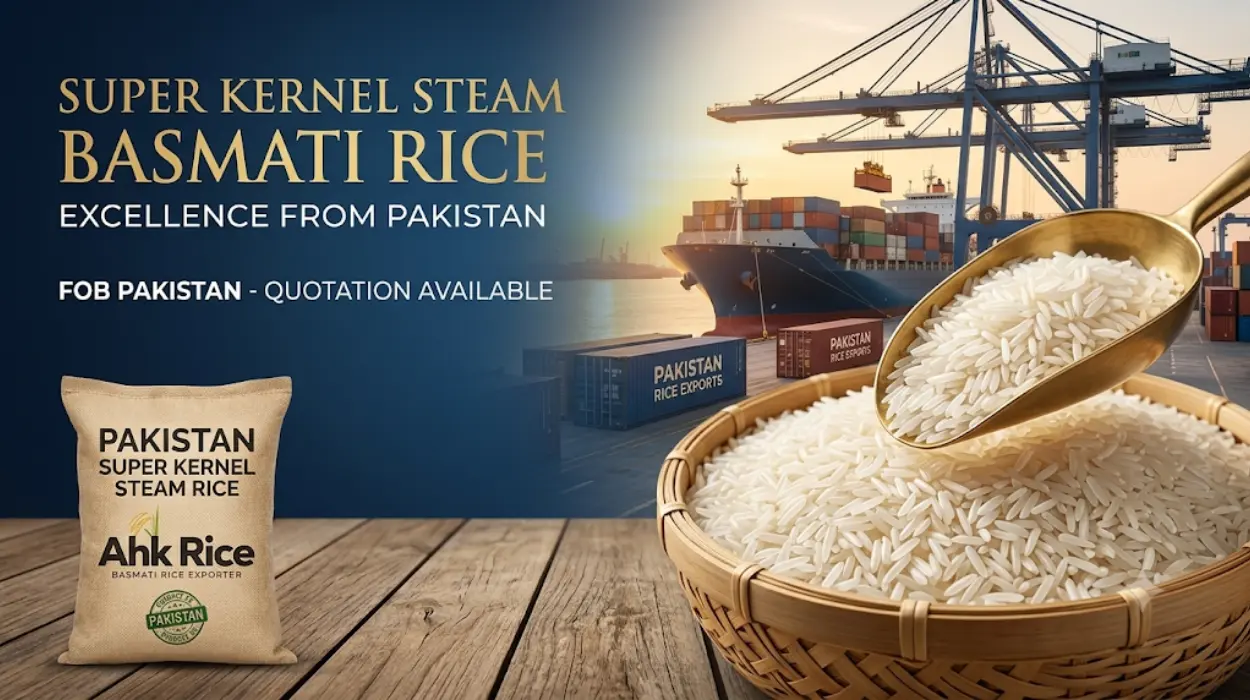
How Super Kernel Steam Rice FOB Pakistan Pricing Impacts UAE Import Costs
Super Kernel Steam Rice FOB Pakistan pricing directly determines the final landed cost in the UAE. Here is why: FOB pricing includes cultivation, milling, grading, packaging, inland logistics, and export handling costs before cargo is loaded onto a vessel. Every increase or decrease in FOB value changes the importer’s total procurement cost and affects distributor margins, wholesale pricing, and inventory planning.
Super Kernel Steam Rice remains one of Pakistan’s most exported aromatic rice varieties. UAE importers purchase large volumes for retail brands, foodservice distributors, catering companies, and wholesale markets. Understanding the relationship between FOB pricing and UAE import costs helps buyers calculate budgets accurately and select suitable specifications.
What Is Super Kernel Steam Rice FOB Pakistan Pricing?
FOB pricing represents the rice value at the Pakistani port before ocean freight and UAE destination charges are added.
FOB stands for Free on Board. Under FOB terms, the exporter prepares, processes, packs, clears, and loads the cargo onto the vessel at the departure port. The buyer pays ocean freight, marine insurance, destination handling charges, and local UAE expenses.
Super Kernel Steam Rice is a long-grain aromatic rice cultivated primarily in Punjab, Pakistan. The grain undergoes steam processing before milling. Steam treatment strengthens the grain structure and reduces breakage during transport.
FOB pricing combines several cost elements:
- Paddy procurement
- Milling operations
- Steam processing
- Colour sorting
- Quality testing
- Packaging materials
- Inland transportation
- Export documentation
- Port handling charges
Super Kernel Steam Rice FOB prices change according to paddy availability, harvest conditions, export demand, and logistics costs.
With FOB pricing defined, the next question is how this pricing structure works throughout the export chain.
How Does Super Kernel Steam Rice Move From Farm to Export Port?
Nine major processing and logistics steps determine the export-ready FOB value.
Super Kernel rice begins its journey in Punjab’s rice-growing regions. Farmers cultivate and harvest paddy during the crop season. Exporters procure paddy and move it to processing facilities.
What Are the Main Processing Steps?
- Clean the harvested paddy.
- Steam the grain under controlled conditions.
- Dry the steamed paddy.
- Store the paddy for stabilization.
- De-husk the grain.
- Polish the rice surface.
- Grade the rice by size.
- Sort defects through colour sorting.
- Pack the finished rice.
Each stage adds value and contributes to FOB pricing.
Steam processing improves grain strength. Milling removes husk layers. Colour sorting eliminates discoloured kernels. Quality control teams inspect moisture, purity, and broken percentage before shipment.
After processing, exporters dispatch rice to ports such as Karachi. Port operators load containers onto vessels bound for UAE ports.
With processing explained, the next step is understanding which cost components influence FOB pricing.
Which Components Influence Super Kernel Steam Rice FOB Prices?
Paddy costs, processing costs, packaging costs, logistics costs, and export expenses create the FOB value.
Paddy procurement represents the largest portion of FOB pricing. Higher farm-gate prices immediately increase export quotations.
Processing expenses include:
- Steam treatment
- Energy consumption
- Labour costs
- Milling operations
- Equipment maintenance
Packaging costs vary according to bag specifications. Common export options include 1 kg, 5 kg, 10 kg, 25 kg, and 40 kg packaging formats.
Logistics expenses include:
- Truck transportation
- Container movement
- Port handling
- Documentation fees
Export compliance costs include laboratory testing, inspections, certifications, and customs clearance.
Pakistan’s rice exports contribute significantly to national agricultural trade revenue (source: Pakistan Bureau of Statistics, FY2024-25).
Understanding cost components helps explain why FOB prices fluctuate throughout the year.
Why Does FOB Pricing Affect UAE Import Costs So Strongly?
Every increase in FOB pricing directly raises the importer’s landed cost and selling price.
UAE importers calculate procurement costs using a formula.
Basic Landed Cost Formula
CIF Cost = FOB Price + Ocean Freight + Insurance
Landed Cost = CIF Cost + UAE Charges + Warehousing + Distribution
A USD 50 increase per metric ton in FOB pricing increases procurement expenses across the entire shipment.
For a 25-ton container:
- FOB increase: USD 50/MT
- Additional cost: USD 1,250 per container
Wholesale distributors often import multiple containers monthly. Small FOB changes therefore create substantial annual procurement differences.
Retail packers also experience margin pressure because higher procurement costs affect shelf pricing.
With the pricing relationship established, the next question involves the benefits of understanding FOB structures.
What Benefits Do UAE Importers Gain From Understanding FOB Pricing?
Accurate budgeting, supplier comparison, inventory planning, and margin protection become easier.
FOB transparency helps buyers compare quotations correctly. Two suppliers can offer different FOB values while maintaining identical product specifications.
Importers gain better forecasting accuracy. Procurement teams can estimate future inventory costs before placing orders.
Budget planning improves because freight and destination charges remain separate from product costs.
Supplier evaluations become more reliable. Buyers can identify whether price changes originate from paddy costs, freight fluctuations, or packaging differences.
Food distributors also benefit from stronger pricing negotiations because they understand each cost component.
These advantages lead naturally to examining practical import applications.
How Do UAE Businesses Use Super Kernel Steam Rice?

Retail, wholesale, catering, hospitality, and food manufacturing sectors import Super Kernel Steam Rice regularly.
Retail brands import packaged rice for supermarkets and hypermarkets.
Wholesale traders procure bulk containers and distribute rice throughout regional markets.
Hotels purchase aromatic rice for buffet operations and daily meal preparation.
Catering companies require consistent grain performance and reliable cooking characteristics.
Food manufacturers use rice in prepared meal products and packaged food applications.
Examples include:
- Retail supermarket brands
- Restaurant supply distributors
- Airline catering providers
- Hotel procurement departments
- Institutional foodservice companies
Different sectors prefer different specifications. Retail buyers often prioritize appearance. Catering operators prioritize consistency and cooking performance.
These use cases highlight the importance of selecting the correct rice grade.
What Grades of Super Kernel Steam Rice Are Available for Export?
Multiple grading options allow importers to balance quality requirements and procurement budgets.
Super Kernel Steam Rice Premium Grade
Premium grades contain high purity levels and minimal broken kernels. Retail brands commonly prefer this specification.
Super Kernel Steam Rice 5% Broken
This grade balances quality and cost efficiency. Many wholesalers select this category.
Super Kernel Steam Rice 10% Broken
This specification serves cost-sensitive distribution channels.
Super Kernel Steam Rice 15% Broken
Large-volume buyers frequently source this grade for institutional use.
Super Kernel Steam Rice 25% Broken
Industrial and bulk foodservice operations commonly procure this category.
Grading standards directly influence FOB quotations because higher purity levels require additional sorting and quality control.
With grades established, the next concern involves certifications and compliance requirements.
Which Certifications Apply to Super Kernel Steam Rice Exports?
Food safety, quality assurance, and export compliance certifications support international trade requirements.
Common certifications include:
- ISO 22000
- HACCP
- FSSC 22000
- Phytosanitary Certificate
- Certificate of Origin
- Health Certificate
- SGS Inspection Reports
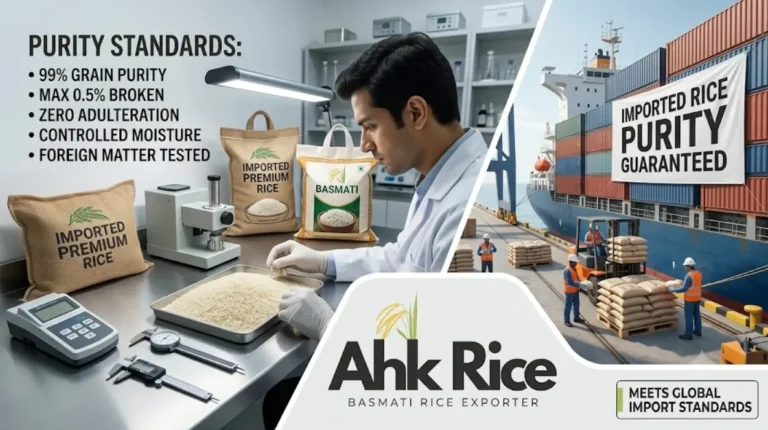
Quality laboratories test moisture, purity, grain length, and foreign matter levels before shipment.
Export authorities inspect and certify cargo according to importing country requirements.
Certification costs contribute to FOB pricing but improve trade reliability and compliance.
Understanding certifications helps clarify common misconceptions surrounding FOB pricing.
What Misconceptions Exist About FOB Pricing and UAE Import Costs?
Many buyers incorrectly assume FOB pricing represents the final import cost.
FOB pricing does not include ocean freight. Freight costs vary according to shipping routes and vessel availability.
FOB pricing does not include destination charges. UAE port fees, customs processing, warehousing, and inland transportation remain separate expenses.
Another misconception involves rice quality. Higher FOB pricing does not automatically indicate superior rice. Specification details determine quality.
Another misconception concerns seasonal pricing. Harvest periods often create different market conditions than off-season procurement cycles.
Understanding these misconceptions helps buyers evaluate quotations more accurately and avoid procurement errors.
Super Kernel Steam Rice FOB Pakistan pricing serves as the foundation of UAE import cost calculations. Paddy procurement, steam processing, grading, packaging, certifications, logistics, and export handling all contribute to FOB values. UAE importers use FOB pricing to estimate landed costs, compare suppliers, manage margins, and plan inventory. A clear understanding of FOB structures allows wholesalers, distributors, retailers, and foodservice operators to make informed sourcing decisions and control procurement expenses effectively.
Frequently Asked Questions
What does FOB mean in rice exports?
FOB means Free on Board. The exporter covers costs until the cargo is loaded onto the vessel at the export port.
Does FOB pricing include ocean freight?
No. Ocean freight is paid separately by the buyer under FOB terms.
Why does Super Kernel Steam Rice cost more than some non-steamed grades?
Steam processing adds operational costs and improves grain strength, appearance, and handling performance.
Which UAE industries import Super Kernel Steam Rice?
Retailers, wholesalers, hotels, restaurants, catering companies, and food manufacturers import this rice variety.
What factors change FOB rice prices?
Paddy costs, processing expenses, packaging materials, export demand, energy costs, and logistics expenses affect FOB pricing.
How can importers compare supplier quotations accurately?
Importers should compare grade specifications, broken percentage, grain length, certifications, packaging, and FOB terms together.