What Foreign Matter Specifications Differentiate Premium Pakistan Rice Exporters for UAE Importers?
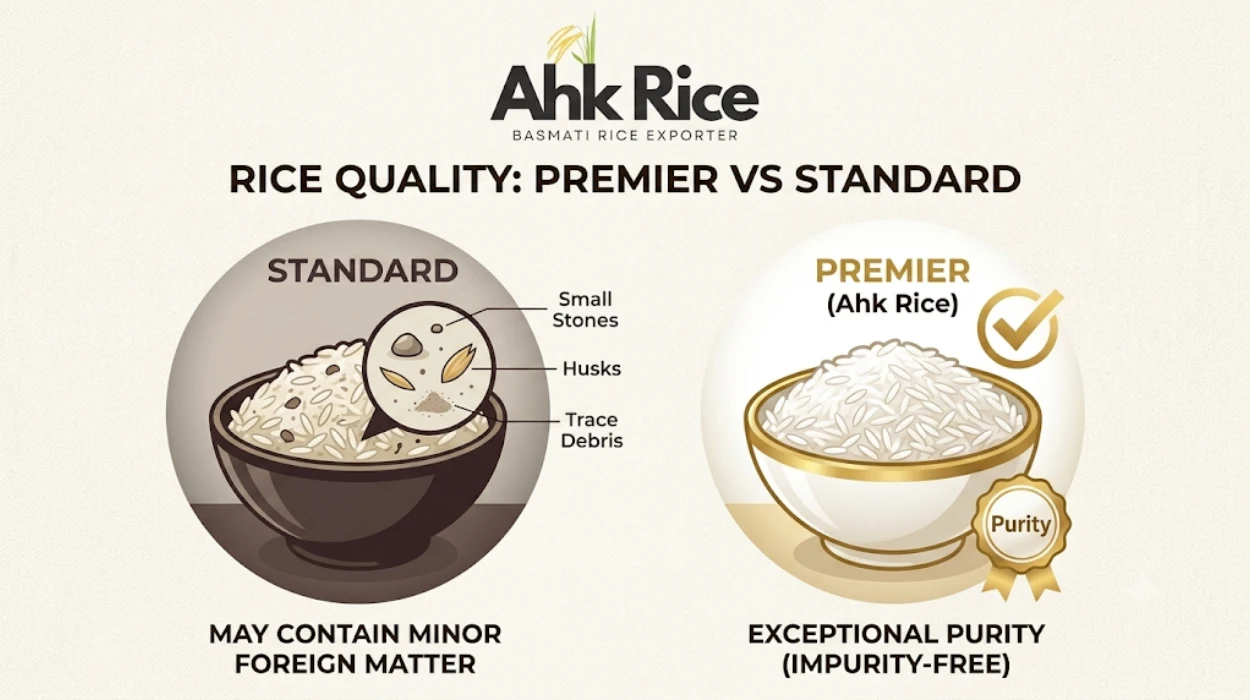
Foreign matter specifications distinguish premium Pakistan rice exporters by defining the maximum amount of non-rice material permitted in every shipment. These specifications include limits for stones, dust, husk, damaged grains, weed seeds, and other contaminants. UAE importers use these standards to verify food safety, product consistency, and commercial value before accepting cargo.
Pakistan ranks among the world’s leading Basmati rice exporters. Every export shipment undergoes inspection before loading. Foreign matter testing forms one of the most important quality checkpoints because contamination directly affects consumer safety, processing efficiency, and buyer confidence.
Foreign matter specifications represent measurable quality parameters rather than general descriptions. Inspection laboratories determine contamination percentages using standardized sampling methods. Buyers compare these results with contractual specifications before approving shipments.
Pakistan rice exporters process rice through several cleaning and grading stages to reduce foreign matter to export-grade limits. Modern mills combine mechanical cleaning with optical sorting to achieve consistent quality across every production batch.
Understanding these specifications explains why premium exporters consistently satisfy UAE food regulations and commercial purchasing requirements. The next question defines foreign matter and explains its role in rice exports.
What are foreign matter specifications in Pakistan rice exports?
Foreign matter specifications define the maximum allowable percentage of non-rice materials inside exported rice. These limits protect food safety, improve milling quality, satisfy import regulations, and create consistent commercial grades for international buyers, including food distributors, supermarkets, hotels, and catering companies.
Foreign matter refers to every material that does not belong to the edible rice kernel. Inspection standards classify contamination into measurable categories instead of broad descriptions.
Rice inspection separates contaminants before shipment because imported food products must satisfy strict quality regulations. Every percentage point affects product acceptance and commercial pricing.
Common foreign matter includes:
- Stones
- Dust
- Sand
- Straw
- Paddy husks
- Weed seeds
- Metal fragments
- Glass particles
- Insect remains
- Plastic pieces
Each contaminant creates a different food safety or processing concern. Stones damage industrial cooking equipment. Dust affects appearance. Metal fragments create safety hazards. Weed seeds reduce product purity.
Premium exporters reduce contamination during milling instead of relying on manual sorting after packaging. Multiple inspection stages improve consistency throughout production.
Foreign matter specifications differ from broken rice percentages. Broken grains remain edible rice. Foreign matter consists entirely of unwanted materials removed during processing.
Understanding the definition of foreign matter provides the foundation for examining how exporters remove these contaminants.
How do Pakistan rice exporters remove foreign matter during processing?
Premium Pakistan rice exporters remove foreign matter through nine sequential processing stages that combine mechanical cleaning, gravity separation, optical sorting, polishing, grading, laboratory testing, and final inspection before shipment. Each stage eliminates specific contaminants and improves export quality.
Rice processing follows a structured sequence because each machine removes different contaminant types. The complete process produces uniform export-grade rice.
Initial Cleaning
Initial cleaning removes large contaminants before milling.
Processing equipment separates:
- Straw
- Leaves
- Large stones
- Twigs
- Soil clumps
Large debris damages milling equipment. Early removal protects machinery and improves production efficiency.
De-husking
De-husking removes the protective outer husk from harvested paddy rice.
Rubber rollers separate the husk while preserving kernel integrity. Proper calibration minimizes grain breakage.
Paddy Separation
Paddy separation identifies grains that retain husks after de-husking.
Specialized separators return these grains for another processing cycle instead of mixing them with finished rice.
Whitening and Polishing
Whitening removes bran layers.
Polishing smooths kernel surfaces and improves appearance.
These processes also eliminate remaining bran particles that contribute to dust contamination.
Length Grading
Length graders classify kernels according to size.
Uniform grain length improves cooking consistency and commercial presentation.
Broken grains separate from whole kernels during this stage.
Gravity Separation
Gravity separators remove heavy contaminants through density differences.
Equipment extracts:
- Stones
- Sand
- Dense mineral particles
Gravity separation improves product safety before optical inspection.
Optical Color Sorting
Color sorters scan every kernel using high-speed cameras.
The system rejects:
- Black grains
- Yellow grains
- Chalky kernels
- Discolored grains
- Foreign particles
Compressed air removes defective materials immediately after detection.
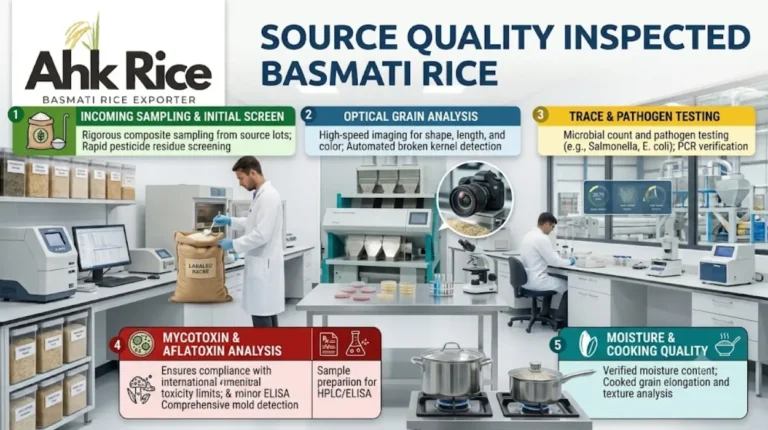
Laboratory Testing
Laboratory technicians inspect representative samples.
Testing measures:
- Moisture
- Foreign matter percentage
- Broken rice percentage
- Chalkiness
- Grain dimensions
- Purity
Inspection reports verify compliance with export contracts.
Final Packaging Inspection
Packaging inspection verifies finished products before loading.
Inspectors examine:
- Bag integrity
- Label accuracy
- Net weight
- Cleanliness
- Export documentation
Only approved lots proceed for container loading.
Rice processing reduces contamination step by step instead of relying on a single machine. The next section explains which specification categories buyers evaluate before approving shipments.
What components make up foreign matter specifications?
Foreign matter specifications consist of physical contaminants, grain defects, purity measurements, moisture limits, sampling procedures, and laboratory verification. Together, these components determine whether export rice satisfies UAE quality requirements.
Foreign matter evaluation includes several measurable quality indicators rather than one inspection result.
Physical Contaminants
Physical contaminants include materials unrelated to rice production.
Examples include:
- Stones
- Metal
- Plastic
- Glass
- Sand
These materials create immediate food safety concerns.
Organic Contaminants
Organic contamination originates during cultivation or harvesting.
Examples include:
- Straw
- Husk
- Weed seeds
- Plant residue
- Insect fragments
Cleaning equipment removes these materials before packaging.
Grain Purity
Purity measures the proportion of rice compared with unwanted materials.
Higher purity improves appearance, cooking quality, and buyer satisfaction.
Moisture Content
Moisture influences storage stability.
Controlled moisture reduces mold development during long-distance sea transport from Pakistan to the UAE.
Sampling Accuracy
Sampling determines inspection reliability.
Laboratories collect representative samples from different production batches instead of testing one package.
Laboratory Verification
Independent laboratories verify compliance through standardized analytical methods.
Certificates provide objective evidence supporting commercial transactions.
What benefits do strict foreign matter specifications provide for UAE importers?
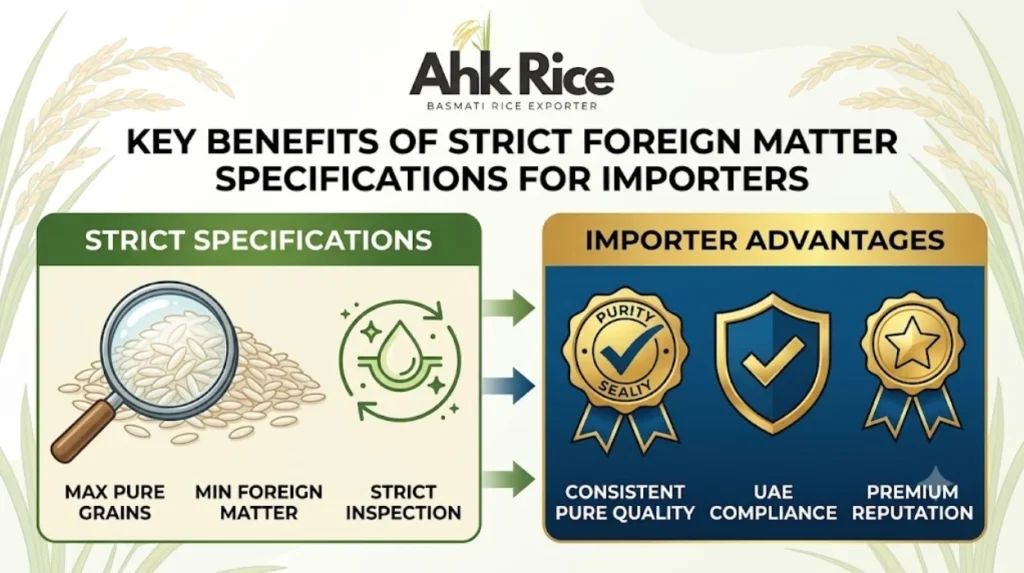
Strict foreign matter specifications improve food safety, import compliance, product consistency, customer satisfaction, equipment protection, storage stability, and commercial value. UAE importers receive cleaner rice, reduce inspection failures, minimize processing losses, and strengthen long-term relationships with reliable Pakistan rice exporters.
Foreign matter specifications protect every stage of the rice supply chain. Cleaner rice reaches distributors, retailers, hotels, restaurants, catering companies, and consumers with fewer quality concerns.
Food safety becomes the first advantage. Physical contaminants such as stones, metal fragments, and glass present direct hazards. Removing these materials before shipment protects consumers and reduces product recalls.
Commercial consistency becomes the second advantage. Every shipment arrives with similar appearance, purity, and cooking performance. Buyers avoid unexpected quality variations between production batches.
Processing efficiency also improves. Industrial kitchens use automated washing and cooking systems. Foreign materials damage machinery, increase maintenance costs, and interrupt daily operations.
Warehouse management becomes easier because clean rice stores better. Dust and organic residues increase the possibility of moisture retention and insect activity during long sea transport.
Brand reputation also depends on product cleanliness. UAE supermarkets and food distributors evaluate imported rice based on appearance before consumers even prepare the product.
Export quality creates measurable business value. Buyers spend less time sorting products after delivery and more time distributing finished inventory.
Foreign matter specifications therefore support both food safety and commercial performance. The next section explains where these standards matter most in practical import operations.
Where are foreign matter specifications most important for UAE rice buyers?
Foreign matter specifications are essential for retail distribution, hotel procurement, restaurant supply, catering operations, food manufacturing, government purchasing, and wholesale import businesses. Every sector requires consistent rice quality because contamination directly affects operations and consumer satisfaction.
Retail Supermarkets
Retail stores sell packaged rice directly to consumers.
Clean rice improves shelf presentation. Transparent packaging immediately reveals dust, husk, and foreign particles. Attractive appearance increases customer confidence.
Hotels
Hotels prepare premium rice dishes every day.
Luxury hospitality requires uniform grain quality because presentation influences guest experience. Foreign materials damage brand reputation.
Restaurants
Restaurants cook rice continuously during daily service.
Consistent grain quality reduces preparation time and improves cooking performance across multiple recipes.
Catering Companies
Large catering businesses prepare thousands of meals every day.
Clean rice minimizes washing losses and prevents unexpected contaminants from reaching prepared meals.
Food Manufacturers
Food processors use rice as an ingredient in packaged products.
Consistent raw materials improve production efficiency and maintain standardized product quality.
Government Procurement
Public food programs purchase large rice quantities through detailed specifications.
Foreign matter limits form part of official purchasing requirements because food safety standards remain mandatory.
Wholesale Distribution
Wholesalers supply rice to retailers across the UAE.
Consistent export quality reduces customer complaints and strengthens long-term commercial relationships.
These examples show that foreign matter specifications influence every level of the food supply chain. Understanding their importance also helps identify common misconceptions about rice quality.
What common problems affect foreign matter control in Pakistan rice exports?
Foreign matter problems originate from harvesting, drying, storage, transportation, outdated machinery, poor sampling, and inadequate inspection. Modern processing systems eliminate these issues through multiple cleaning stages and laboratory verification before export.
Rice quality begins in the field rather than inside the mill.
Harvesting during unsuitable field conditions increases soil contamination. Proper harvesting schedules reduce dirt and plant residue before processing begins.
Improper drying creates additional dust and broken grain fragments. Controlled drying preserves kernel integrity and improves milling efficiency.
Storage conditions also influence contamination. Open warehouses expose rice to dust, insects, birds, and environmental debris. Modern storage facilities reduce these risks through controlled environments.
Transportation before milling introduces additional contaminants when vehicles remain uncovered or improperly cleaned.
Older milling equipment removes fewer contaminants than modern automated systems. Optical sorting technology identifies defective kernels with greater precision than manual inspection.
Sampling errors also create quality problems. Testing one small sample does not accurately represent an entire production batch. International inspection standards require representative sampling from multiple locations.
Laboratory verification solves many of these problems because standardized testing confirms actual contamination levels instead of relying on visual estimates.
Identifying these operational challenges creates a better understanding of several common misconceptions surrounding foreign matter specifications.
What misconceptions exist about foreign matter specifications?
Foreign matter specifications are frequently misunderstood because buyers confuse broken rice with contamination, assume polishing removes every impurity, believe visual inspection replaces laboratory testing, and treat all export grades as identical. These assumptions produce inaccurate quality evaluations.
Foreign matter is not broken rice.
Broken rice remains edible rice.
Foreign matter consists of materials that do not belong to the rice kernel. Inspection reports evaluate these categories separately.
Polishing does not remove every contaminant.
Polishing improves surface appearance.
Stone removal, gravity separation, magnetic separation, and optical sorting perform different quality functions during processing.
Clean-looking rice is not automatically export quality.
Visual appearance provides only one quality indicator.
Laboratory analysis measures contamination percentages with standardized inspection procedures.
Every export grade does not share identical specifications.
Different markets purchase different quality grades.
Premium retail products require stricter foreign matter limits than industrial processing applications.
One inspection is not enough.
Quality verification continues throughout production.
Inspectors evaluate rice before milling, during processing, after grading, before packaging, and before shipment.
Understanding these misconceptions helps buyers interpret inspection reports more accurately. The final section summarizes why foreign matter specifications remain one of the most important indicators of export quality.
Foreign matter specifications define the cleanliness, safety, and commercial quality of exported Pakistan rice. They establish measurable limits for unwanted materials, standardize inspection procedures, and support international food safety requirements.
Premium Pakistan rice exporters achieve low foreign matter levels through systematic processing rather than a single cleaning stage. Initial cleaning, de-husking, gravity separation, optical sorting, laboratory testing, and final inspection work together to produce consistent export-quality rice.
For UAE importers, these specifications reduce operational risks, improve food safety, strengthen customer confidence, and simplify import compliance. Every shipment benefits from objective quality measurements instead of subjective visual assessments.
Understanding foreign matter specifications also helps buyers compare exporters using technical standards instead of marketing claims. Inspection reports, laboratory certificates, and documented processing procedures provide reliable evidence of export quality.
As UAE food quality regulations continue to prioritize safety and consistency, foreign matter specifications will remain one of the primary benchmarks used to evaluate Pakistan rice exporters.
Frequently Asked Questions
What is foreign matter in rice?
Foreign matter includes every material that is not an edible rice kernel, including stones, dust, husk, straw, weed seeds, metal fragments, plastic, and glass particles.
Why do UAE importers check foreign matter specifications?
UAE importers verify foreign matter specifications to ensure food safety, comply with import regulations, protect consumers, and maintain consistent product quality.
How is foreign matter measured?
Inspection laboratories collect representative rice samples and determine contamination percentages using standardized testing methods before shipment.
Does broken rice count as foreign matter?
No. Broken rice is still edible rice. Foreign matter consists only of unwanted non-rice materials.
Which processing machines remove foreign matter?
Cleaning machines, de-stoners, gravity separators, magnetic separators, optical color sorters, graders, and laboratory inspection systems remove different types of contaminants.
Why do premium Pakistan rice exporters achieve lower foreign matter levels?
Premium exporters use multi-stage processing, modern optical sorting technology, laboratory verification, and repeated quality inspections throughout production to maintain consistent export standards.