Choose a Pakistan Basmati Rice Supplier That Meets UAE Foreign Matter Requirements
Choosing a Pakistan Basmati rice supplier that consistently meets UAE foreign matter requirements reduces import risks, protects food safety, and improves commercial value. Here is why: suppliers with documented inspection systems, modern sorting technology, and export-grade quality control consistently achieve lower foreign matter percentages and smoother customs clearance. (Source: REAP Export Data, December 2025)
UAE buyers evaluate much more than price before approving a supplier. Foreign matter specifications directly influence product acceptance, warehouse losses, consumer satisfaction, and brand reputation. Buyers who want to understand these quality parameters before comparing suppliers can first read our guide on understanding foreign matter specifications for Pakistan Basmati rice exports . That knowledge makes supplier evaluation more objective and specification-driven.
AHK Rice supplies premium Pakistan Basmati rice from Punjab through an integrated export process. The company cultivates relationships with selected growers, mills paddy using modern equipment, grades every lot, inspects quality, customizes packaging, and dispatches export containers to more than 15 countries. This complete supply chain allows AHK Rice to maintain consistent foreign matter specifications for UAE importers.
Selecting the right supplier requires comparing inspection systems rather than marketing claims. A supplier must demonstrate grading capability, laboratory testing, certification procedures, packaging quality, shipment documentation, and production consistency before becoming a dependable export partner.
What solutions are available for meeting UAE foreign matter requirements?
The most effective solutions combine modern optical sorting, multiple cleaning stages, laboratory inspection, export certification, and documented quality management. Suppliers using integrated quality systems consistently achieve lower foreign matter percentages than suppliers relying only on manual inspection or basic milling equipment.
UAE import regulations define foreign matter as every non-rice material present inside a shipment. Foreign matter includes stones, dust, husk, straw fragments, weed seeds, insects, metal particles, and damaged organic materials. These contaminants reduce commercial value and increase food safety concerns.
Pakistan exporters generally follow three quality management approaches before dispatching export cargo.
Supplier Type 1: Conventional Milling
Conventional mills perform basic cleaning before polishing rice. They remove larger impurities but cannot eliminate many microscopic contaminants. Quality consistency depends heavily on manual inspection.
This approach reduces production costs. However, foreign matter percentages vary between production batches. UAE buyers importing retail brands rarely prefer this system.
Supplier Type 2: Semi-Automated Processing
Semi-automated facilities combine mechanical cleaning with colour sorting and grading equipment. These systems remove broken kernels, husk particles, immature grains, and many foreign materials before packaging.
Medium-sized distributors often purchase rice from suppliers using this model because it balances production cost with acceptable export quality.
Supplier Type 3: Fully Integrated Export Processing
Fully integrated exporters inspect rice throughout every production stage rather than only before shipment.
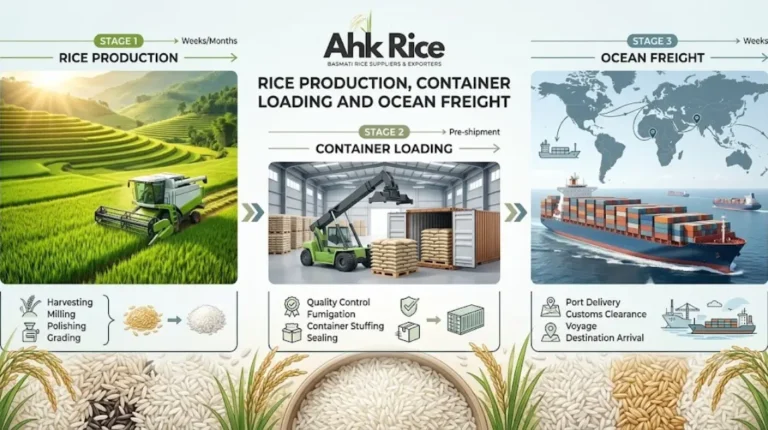
AHK Rice follows an end-to-end processing workflow consisting of:
- Cultivate selected Basmati varieties
- Harvest mature paddy
- Clean harvested paddy
- De-husk rice carefully
- Polish kernels uniformly
- Grade by size
- Sort using optical colour sorters
- Inspect laboratory samples
- Load export containers
Each stage removes additional contamination while improving shipment consistency.
Specification Comparison
| Specification | Conventional Mill | Semi-Automated Exporter | Fully Integrated Exporter |
|---|---|---|---|
| Cleaning stages | 2–3 | 4–5 | 7–9 |
| Colour sorting | No | Yes | Multiple passes |
| Laboratory testing | Limited | Batch testing | Every production lot |
| Foreign matter control | Moderate | Good | Excellent |
| Shipment consistency | Variable | Stable | Highly consistent |
| Export documentation | Standard | Complete | Complete with traceability |
| UAE suitability | Basic wholesale | Regional distributors | Retail and premium importers |
Integrated quality systems provide measurable advantages. The next comparison examines how these different supplier approaches perform in commercial importing environments.
How do different supplier approaches compare?
Integrated exporters deliver the highest consistency, while conventional suppliers compete primarily on price. UAE buyers usually prioritize specification stability over small price differences because rejected shipments create greater financial losses than initial procurement savings.
Supplier comparison extends beyond foreign matter percentages. Buyers also evaluate production capacity, shipment reliability, packaging options, certification, traceability, and long-term consistency.
Comparison by Quality Performance
Modern exporters inspect rice before milling, after polishing, after colour sorting, and before packaging. Multiple inspections reduce contamination throughout production rather than correcting problems at the end.
Traditional mills inspect mainly before dispatch. This approach identifies defects later, making correction more expensive and less effective.
Comparison by Documentation
Professional exporters provide complete export documentation.
Typical documentation includes:
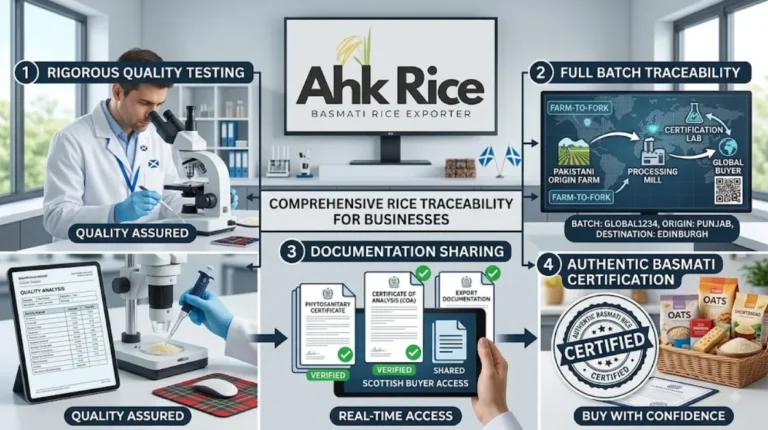
- Phytosanitary Certificate
- Certificate of Origin
- Commercial Invoice
- Packing List
- Fumigation Certificate
- Inspection Report
- Quality Certificate
Complete documentation accelerates UAE customs clearance and reduces shipment delays.
Comparison by UAE Market Preferences
Different UAE buyer categories prioritize different rice grades.
| Market Segment | Preferred Grade | Main Priority |
|---|---|---|
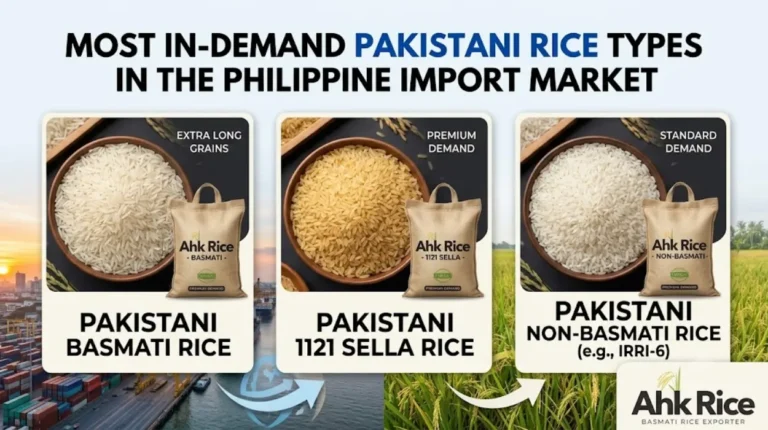
| Premium Retail | 1121 Steam Basmati | Low foreign matter |
| Hospitality | 1121 Golden Sella | Long holding performance |
| Catering Companies | 1509 Steam | Competitive pricing |
| Wholesale Traders | Super Kernel | Balanced quality |
| Food Service Chains | 1121 White | Uniform cooking quality |
UAE vs GCC Buyer Preferences
| Region | Preferred Grades | Main Buying Factor |
|---|---|---|
| UAE | 1121 Steam, Golden Sella | Premium consistency |
| Saudi Arabia | Golden Sella | Shelf stability |
| Oman | Steam Rice | Aroma |
| Qatar | Extra Long Grain | Premium presentation |
| Kuwait | White Basmati | Uniform appearance |
Regional preferences help buyers shortlist suppliers. The next section explains which supplier model delivers the best value for different purchasing situations.
Which supplier method works best for different UAE import cases?
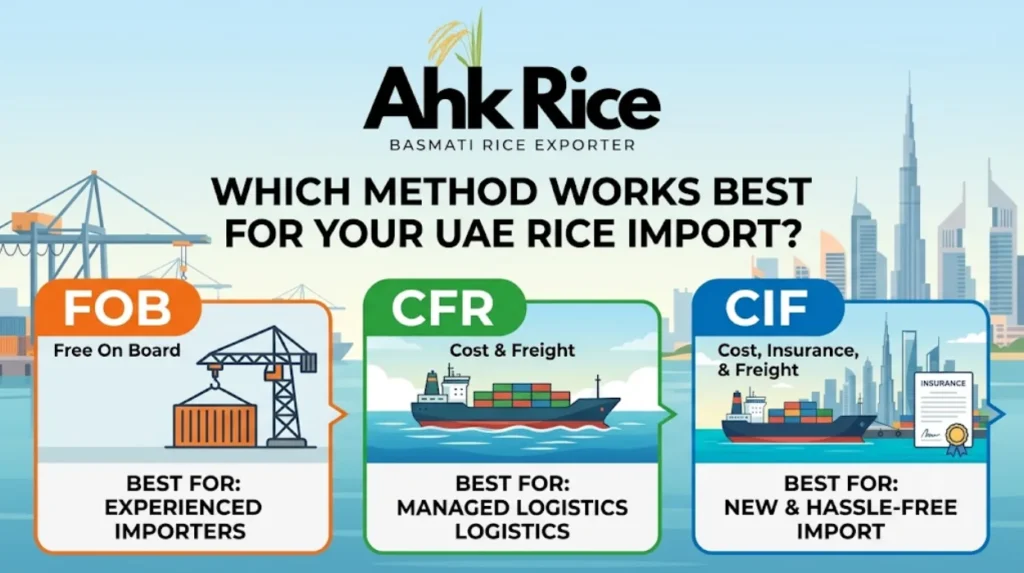
The best supplier depends on the buyer’s market segment, but fully integrated exporters consistently provide the lowest commercial risk. Premium retailers need strict foreign matter compliance, while food service distributors often balance specification, price, and delivery schedules to maximize profitability.
Different importers purchase Pakistan Basmati rice for different commercial purposes. Retail brands focus on consumer satisfaction and repeat purchases. Hotels and restaurants require cooking consistency across every batch. Wholesale traders prioritize inventory turnover and competitive pricing. Matching the supplier’s processing capability to the intended market produces better commercial results.
Premium Retail Brands
Premium retail companies require highly uniform rice because customers easily notice impurities. A shipment containing excessive husk, stones, or damaged kernels increases complaints and weakens brand reputation.
AHK Rice processes 1121 Steam Basmati, 1121 White Basmati, and Super Kernel Basmati using multiple grading and sorting stages. Consistent inspection helps maintain export specifications expected by UAE supermarkets.
Hospitality and Catering
Hotels prepare hundreds of meals every day. Rice must cook uniformly and maintain grain separation after cooking.
Golden Sella Basmati performs well in commercial kitchens because parboiling strengthens the grain. The variety tolerates longer holding periods without excessive breakage.
Wholesale Distribution
Wholesale importers usually purchase higher volumes and distribute rice to smaller retailers.
Competitive pricing remains important, but shipment consistency still determines long-term supplier relationships. Receiving one excellent shipment followed by one inconsistent shipment increases commercial risk more than paying a slightly higher procurement cost.
Price Comparison by Grade
| Rice Grade | Typical Export Price (USD/MT)* | Common UAE Buyers |
|---|---|---|
| Super Kernel White | $950–1,100 | Wholesale traders |
| 1509 Steam | $1,000–1,180 | Catering companies |
| 1121 White | $1,150–1,350 | Retail distributors |
| 1121 Steam | $1,250–1,500 | Premium supermarkets |
| 1121 Golden Sella | $1,300–1,550 | Hotels and hospitality |
*Prices vary with crop year, market demand, packing specification, and freight conditions.
Choosing the correct grade simplifies supplier selection. The next comparison examines the advantages and limitations of each sourcing approach.
What are the advantages and disadvantages of different supplier types?
Integrated exporters offer greater consistency and lower rejection risk, while smaller mills often provide lower prices with greater specification variation. Buyers should evaluate total procurement cost instead of comparing only the invoice price.
Every sourcing model involves trade-offs. Understanding these differences helps procurement managers make informed purchasing decisions.
Conventional Mill
Advantages
- Lower purchase prices
- Flexible order quantities
- Suitable for lower-specification markets
Disadvantages
- Greater specification variation
- Limited traceability
- Higher inspection risk
- Reduced production consistency
Example:
A wholesale buyer supplying traditional markets may accept moderate quality variation because customers purchase primarily on price.
Semi-Automated Exporter
Advantages
- Better cleaning performance
- Improved colour sorting
- Stable export quality
- Competitive pricing
Disadvantages
- Batch variation remains possible
- Limited customization
- Moderate production capacity
Example:
Regional distributors often select this option because it balances quality and procurement cost.
Fully Integrated Exporter
Advantages
- Multiple quality inspections
- Low foreign matter levels
- Complete export documentation
- Packaging customization
- Production traceability
- Better shipment consistency
Disadvantages
- Higher production cost
- Longer planning for customized orders
Example:
UAE supermarket chains typically prioritize consistent specifications because consumer expectations remain high across every shipment.
With supplier advantages established, buyers can now evaluate which commercial factors deserve the greatest attention before signing a contract.
Which decision factors matter most when selecting a Pakistan Basmati rice supplier?
Foreign matter compliance, quality consistency, certification, production capacity, and logistics reliability determine long-term supplier performance. Buyers evaluating all five factors reduce procurement risk and improve shipment acceptance rates across multiple purchasing cycles.
Many buyers compare suppliers using only quotations. A stronger procurement process compares technical capability, quality systems, and operational reliability together.
Decision Framework
| Decision Factor | Why It Matters | Low Priority Situation | High Priority Situation |
|---|---|---|---|
| Foreign matter specification | Determines shipment acceptance | Wholesale trading | Premium retail |
| Quality consistency | Protects repeat orders | Spot purchases | Annual contracts |
| Production capacity | Supports continuous supply | Small containers | Multiple containers monthly |
| Export documentation | Speeds customs clearance | Regional shipments | UAE retail imports |
| Packaging flexibility | Supports branding | Generic bags | Private label products |
Shelf Life Comparison
Proper processing influences storage stability during transportation and warehousing.
| Rice Type | Recommended Shelf Life | Typical Application |
|---|---|---|
| 1121 Steam | 12–18 months | Premium retail |
| 1121 White | 12 months | Supermarkets |
| Golden Sella | 18–24 months | Hospitality |
| Super Kernel | 12–18 months | Wholesale |
| 1509 Steam | 12–18 months | Food service |
Correct storage conditions remain essential. Dry warehouses, controlled humidity, and proper palletization preserve grain quality throughout storage.
AHK Rice supports buyers through controlled milling, laboratory inspection, grading, packaging customization, and export documentation. These processes help maintain consistent shipment quality from production through delivery.
Understanding supplier capability naturally leads to another purchasing consideration. Buyers comparing qualified exporters should also evaluate how harvest timing affects rice quality by reading our guide explaining why crop year influences UAE imports of Pakistan Basmati rice.
Selecting a Pakistan Basmati rice supplier involves much more than comparing quotations. UAE buyers benefit from evaluating foreign matter control, processing technology, laboratory testing, documentation, production capacity, and shipment consistency together. These factors determine whether rice meets import specifications and maintains quality throughout the supply chain.
AHK Rice follows an integrated export process that includes careful cultivation, modern milling, multiple grading stages, optical sorting, laboratory inspection, customized packaging, and complete export documentation. This systematic approach helps maintain consistent quality across every shipment while supporting the requirements of premium retailers, hospitality businesses, wholesalers, and food service distributors.
Buyers who understand supplier capabilities make more informed sourcing decisions. Comparing quality systems instead of prices alone reduces procurement risk and creates stronger long-term partnerships.
Frequently Asked Questions
What is foreign matter in Pakistan Basmati rice?
Foreign matter refers to all non-rice materials found in a shipment. It includes stones, dust, husk, straw, weed seeds, insects, metal fragments, and other contaminants. UAE importers inspect foreign matter because it directly affects food safety, product quality, and commercial acceptance. Exporters reduce foreign matter through cleaning, grading, colour sorting, and laboratory inspection before dispatch.
Why do UAE buyers pay close attention to foreign matter specifications
UAE buyers use foreign matter specifications to protect their brands and comply with food safety regulations. Lower contamination reduces customer complaints, minimizes warehouse losses, speeds customs inspections, and improves consumer confidence. Consistent specifications also help distributors maintain long-term retail contracts.
Which Pakistan Basmati rice grade is most popular in the UAE
1121 Steam Basmati Rice remains the preferred choice for premium supermarkets because of its extra-long grain, aroma, and cooking performance. 1121 Golden Sella is widely used by hotels and catering companies because it offers excellent grain strength and longer holding performance after cooking. Super Kernel Basmati remains popular among wholesalers seeking a balance between quality and pricing.
How can buyers verify a supplier’s foreign matter standards?
Buyers should request recent laboratory reports, inspection certificates, product specifications, and shipment samples before placing commercial orders. Reliable exporters also provide phytosanitary certificates, fumigation certificates, packing lists, and quality inspection reports to support each shipment.
Does better foreign matter control increase rice prices?
Modern processing increases production costs because exporters use advanced cleaning equipment, optical colour sorters, laboratory testing, and multiple inspection stages. However, lower rejection rates, better customer satisfaction, and reduced commercial risk usually offset the higher purchase price over long-term supply agreements.