Buy Aged Pakistan Basmati Rice for UAE Retail and Food Service Markets
Businesses that purchase aged Pakistan Basmati rice reduce customer complaints, improve cooking consistency, and strengthen long-term profitability. Before selecting an exporter, understanding how crop year influences rice quality helps buyers evaluate aging, aroma development, and commercial value
For UAE importers serving supermarkets, restaurants, hotels, catering companies, and private label brands, buying aged Basmati is often the safest commercial choice. Properly matured rice delivers stable moisture, longer grains after cooking, improved aroma, and better customer satisfaction.
AHK Rice supplies export-quality aged Pakistan Basmati rice with complete quality inspection, documentation, and shipment support for UAE buyers. Whether you import containers regularly or are placing your first commercial order, AHK Rice provides consistent specifications that reduce purchasing risk.
What Is the Best Solution for Buying Aged Pakistan Basmati Rice?
The best solution is selecting an exporter that offers naturally aged rice, verified quality specifications, laboratory testing, export documentation, consistent grading, and dependable logistics. Buyers who prioritize supplier transparency achieve better cooking performance, stronger retail reputation, and fewer shipment disputes throughout the supply chain.
Many suppliers describe rice as “aged” without explaining how long it has matured or how storage conditions were maintained. Commercial buyers should verify aging practices instead of relying only on marketing claims.
The best purchasing process includes:
- Crop year verification
- Moisture testing
- Grain length specification
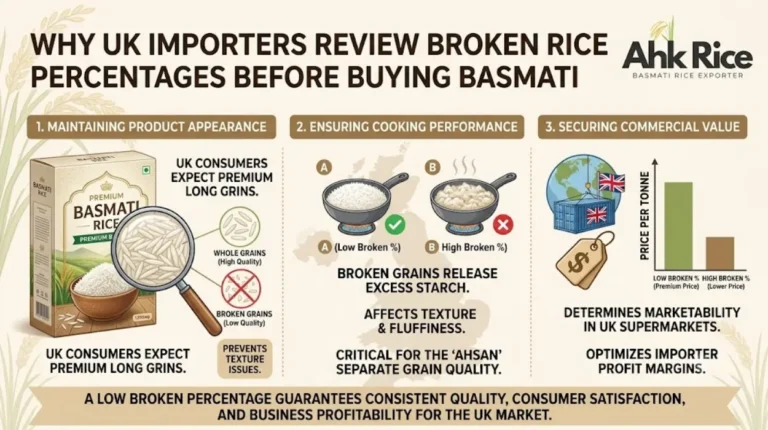
- Broken percentage
- Foreign matter inspection
- Color sorting
- Laboratory analysis
- Container loading inspection
AHK Rice follows these quality procedures before every shipment. Every production batch is inspected to ensure consistency from sampling through final container loading.
When evaluating suppliers, it is also useful to compare the commercial differences between fresh and matured rice. Our guide explaining fresh versus aged Pakistan 1121 rice for UAE wholesale buyers provides additional purchasing insight before final supplier selection.
Why Choose AHK Rice?
AHK Rice combines experienced export operations, reliable quality control, competitive pricing, flexible packaging, international documentation, and responsive customer support. UAE buyers receive dependable products that meet retail, wholesale, hospitality, and food service requirements while minimizing purchasing uncertainty and supply chain disruptions.
The first reason many UAE buyers select AHK Rice is consistency.
Exporting premium rice requires much more than purchasing paddy and filling containers. Every shipment passes through multiple quality control stages before loading.
AHK Rice provides:
- Naturally aged Pakistan Basmati rice
- Pakistan 1121 Basmati Rice
- Super Kernel Basmati
- PK 386 Rice
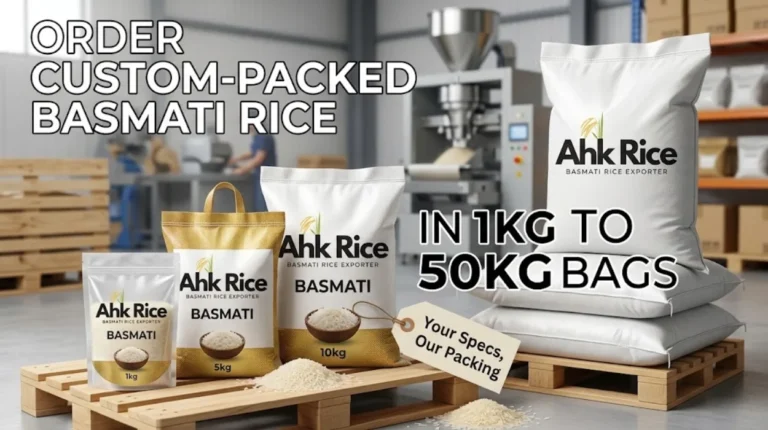
- Customized packaging
- Private label solutions
- Laboratory testing
- Export documentation
- Phytosanitary certificates
- Fumigation support
- Commercial invoice
- Packing list
- Certificate of Origin
Every shipment is prepared according to customer specifications.
This process helps UAE retailers maintain consistent shelf quality while allowing restaurants and catering companies to produce uniform cooking results throughout the year.
Because AHK Rice works directly with international buyers, communication remains straightforward during production, inspection, loading, and shipment.
What Results Can UAE Buyers Expect?
Buyers who source aged Pakistan Basmati rice from experienced exporters receive longer cooked grains, stronger aroma, lower moisture, improved customer satisfaction, fewer product complaints, and predictable inventory performance. These measurable outcomes support repeat purchases and stronger commercial relationships in competitive UAE markets.
Properly aged rice offers several commercial advantages.
Restaurants appreciate grain separation after cooking.
Hotels prefer attractive presentation.
Retail brands experience fewer consumer complaints.
Food service companies achieve more predictable cooking performance across large production volumes.
Examples include:
A premium restaurant serving biryani requires rice that remains fluffy after holding for extended periods.
A supermarket private label brand requires consistent grain length across every shipment.
A catering company needs dependable cooking performance for thousands of meals each day.
In every scenario, AHK Rice supplies standardized export specifications designed to support commercial consistency.
What Affects the Cost of Aged Pakistan Basmati Rice?
Pricing depends on rice variety, crop year, aging duration, grain length, quality specifications, packaging requirements, order quantity, certification, and international freight costs. Understanding these variables helps buyers compare quotations accurately instead of choosing suppliers based solely on the lowest advertised price.
Several factors influence export pricing.
Rice Variety
1121 Basmati generally commands premium pricing because of its exceptional cooked grain length.
Aging Period
Rice aged for 12–24 months usually costs more than fresh crop rice because of storage expenses.
Quality Specifications
Lower broken percentage and better grain uniformity increase commercial value.
Packaging
Private label packaging increases production costs compared to standard export bags.
Certifications
Additional certifications may affect pricing depending on destination requirements.
Shipping Costs
Ocean freight fluctuates throughout the year.
Typical Shipping Transit Times
| Destination | Estimated Transit Time |
|---|---|
| Jebel Ali, UAE | 12–16 days |
| Abu Dhabi | 13–18 days |
| Sharjah | 12–17 days |
| Ajman | 13–18 days |
| Fujairah | 15–20 days |
Transit times vary according to vessel schedules, customs clearance, and seasonal port congestion.
How Does the Sample Process Work?
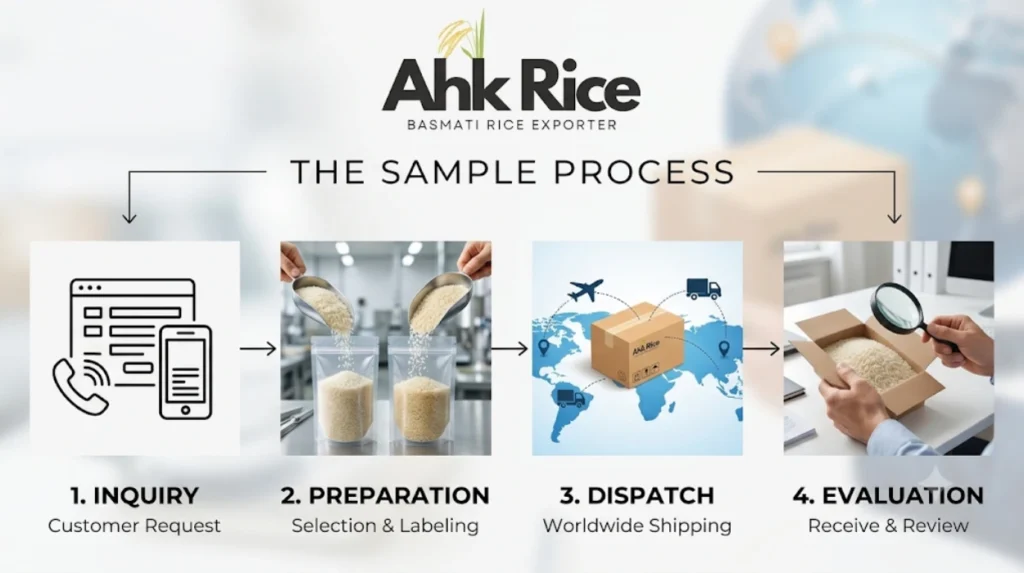
Professional exporters provide representative rice samples before commercial production begins. Sampling enables buyers to evaluate aroma, grain length, cooking performance, moisture, and overall quality before approving bulk manufacturing, significantly reducing purchasing risk and preventing misunderstandings during international trade transactions.
Typical Sample Costs
| Sample Type | Approximate Cost |
|---|---|
| Sample Product | Usually Free |
| DHL/FedEx Courier | USD 40–90 |
| Multiple Samples | Based on weight |
| Customized Packaging Sample | Additional cost if required |
Most buyers only pay courier charges.
Commercial orders usually proceed after successful sample approval.
How Can Buyers Get Started?
The purchasing process becomes straightforward when buyers clearly define product specifications, packaging requirements, annual demand, delivery schedule, and documentation needs. Early communication with the exporter shortens production timelines and helps avoid unnecessary delays before shipment.
A recommended purchasing workflow includes:
- Submit inquiry.
- Share required specifications.
- Receive quotation.
- Request samples.
- Approve quality.
- Confirm packaging.
- Finalize contract.
- Begin production.
- Container inspection.
- Shipment.
Throughout this process, AHK Rice maintains communication with buyers to ensure specifications remain consistent until cargo reaches its destination.
Whether purchasing for supermarkets, wholesale distribution, hotels, restaurants, or catering operations, working with an experienced exporter minimizes risk and improves supply reliability.
If you are ready to discuss specifications, packaging options, or receive a customized quotation, visit Request a Quote today.
Frequently Asked Questions
Why should UAE buyers choose aged Pakistan Basmati rice instead of fresh crop rice?
Aged Pakistan Basmati rice develops a richer aroma, lower moisture content, and better cooking performance after proper storage. It produces longer, separate grains that are highly preferred by restaurants and retail consumers. This consistency reduces customer complaints and improves brand reputation. For commercial buyers, aged rice often delivers better long-term value despite a slightly higher purchase price.
How long is Pakistan Basmati rice normally aged before export?
Premium exporters generally age Basmati rice for around 12 to 24 months, depending on customer requirements and market demand. During this period, moisture stabilizes and aroma naturally improves. Proper storage conditions are essential to preserve grain quality. Buyers should always ask exporters to verify the crop year and aging period before placing an order.
What documents are required when importing Pakistan Basmati rice into the UAE?
Most commercial shipments include a Commercial Invoice, Packing List, Certificate of Origin, Phytosanitary Certificate, Fumigation Certificate where required, and Bill of Lading. Some buyers may also request laboratory reports or additional certifications depending on customer or regulatory requirements. A reliable exporter prepares these documents accurately to avoid customs delays.
How long does shipping from Pakistan to the UAE usually take?
Sea freight from Pakistan to major UAE ports generally takes between 12 and 20 days depending on the destination, shipping line, vessel schedule, and customs clearance. Seasonal congestion may extend transit times slightly. Buyers should also allow additional time for production, inspection, and documentation before shipment.
Why is AHK Rice a suitable supplier for UAE retail and food service businesses?
AHK Rice provides naturally aged Pakistan Basmati rice with strict quality inspections, export documentation, customized packaging, and reliable logistics support. The company supplies retail brands, wholesalers, hotels, restaurants, and catering businesses with consistent product specifications. Buyers also benefit from structured sample approval and responsive communication throughout the export process.