Pakistan Basmati Rice Exporter Providing Crop-Year Verification for UAE Customers
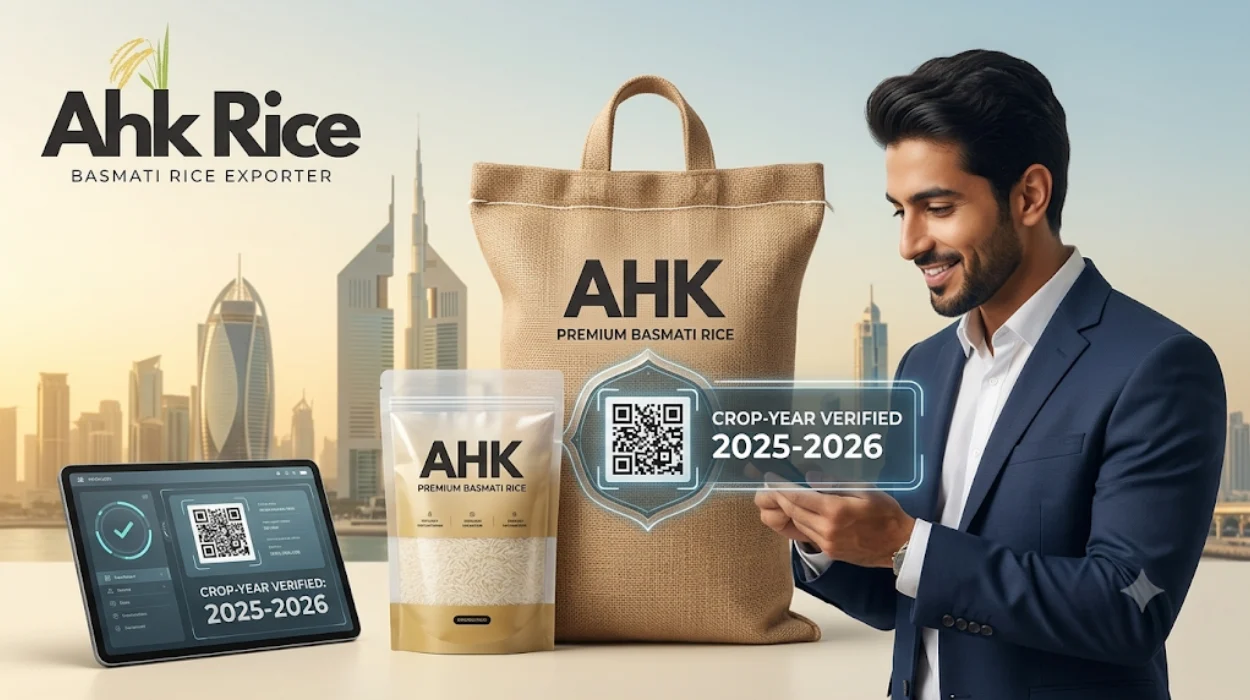
Pakistan Basmati rice exporters that provide verified crop-year documentation help UAE buyers reduce purchasing risks and improve product consistency. Here is why: verified harvest records, laboratory testing, processing transparency, and export documentation allow importers to purchase rice with confidence while maintaining consistent quality across every shipment.
UAE food distributors, supermarkets, hotel suppliers, catering companies, and private-label brands increasingly request crop-year verification before confirming bulk orders. Buyers understand that harvest year directly affects moisture, aroma development, cooking performance, storage life, and commercial value.
Before comparing suppliers, learn how UAE buyers evaluate crop year before purchasing Pakistan Basmati rice.
When selecting a reliable exporter, AHK Rice provides verified crop-year documentation, quality inspection, export certification, and commercial support designed specifically for UAE importers. AHK Rice helps buyers verify every shipment before production begins. AHK Rice also supplies complete export documentation that simplifies customs clearance and procurement decisions.
What Is the Best Solution for UAE Buyers Looking for Verified Crop-Year Basmati Rice?
The best solution is choosing an exporter that provides verified harvest records, laboratory reports, milling transparency, export certifications, production traceability, and shipment documentation before production begins. This approach reduces purchasing risk, improves cooking consistency, and protects long-term commercial value for UAE importers.
Buying rice based only on appearance creates unnecessary commercial risk. Grain colour may appear identical while moisture, aging period, aroma development, and cooking quality differ significantly between crop years.
Crop-year verification allows procurement managers to compare suppliers using measurable specifications instead of marketing claims. This creates predictable product quality throughout the supply chain.
Why Crop-Year Verification Matters
| Specification | Commercial Benefit |
|---|---|
| Verified harvest year | Confirms actual crop season |
| Moisture report | Improves storage stability |
| Milling date | Indicates processing freshness |
| Laboratory testing | Verifies physical specifications |
| Batch traceability | Supports product consistency |
| Export certification | Simplifies customs clearance |
| Container inspection | Reduces shipment disputes |
How AHK Rice Verifies Every Shipment
AHK Rice follows a structured verification process before export.
- Verify farm procurement records.
- Inspect harvested paddy.
- Test moisture content.
- Mill the grain.
- Grade by length.
- Sort using optical colour sorters.
- Inspect broken percentage.
- Certify export quality.
- Prepare shipment documentation.
Each production stage creates documented evidence that buyers can review before confirming container production.
For UAE wholesalers supplying supermarkets, this verification protects retail consistency.
For hotel suppliers, verification improves cooking performance.
For catering companies, verification produces uniform grain expansion across high-volume kitchens.
This verification process explains why documentation matters. The next question is why choosing the right exporter makes an even greater commercial difference.
Why Choose AHK Rice as Your Pakistan Basmati Rice Exporter?
AHK Rice combines verified crop-year documentation, modern milling, international quality inspections, flexible packaging, export compliance, and reliable shipping schedules. UAE buyers receive transparent specifications before production, reducing procurement uncertainty and supporting long-term supplier relationships.
Choosing an exporter involves more than comparing prices. Reliable exporters provide consistent quality, transparent documentation, responsive communication, and dependable logistics.
AHK Rice specializes in supplying Pakistan Basmati rice to international buyers with complete commercial support.
Export Services Offered
- Crop-year verification
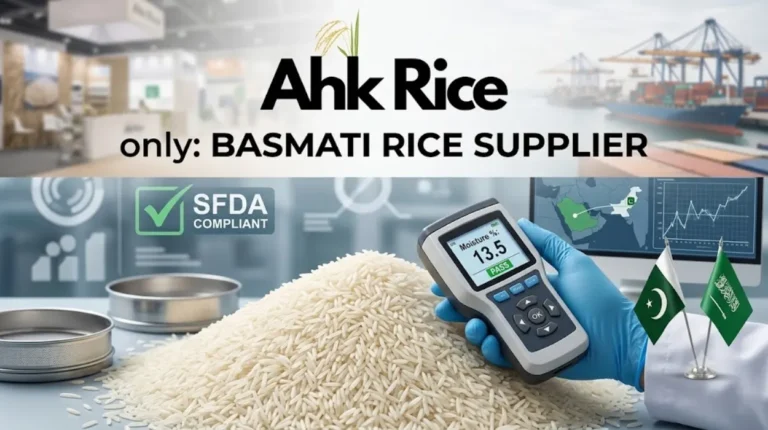
- Laboratory inspection
- Moisture testing
- Grain grading
- Optical colour sorting
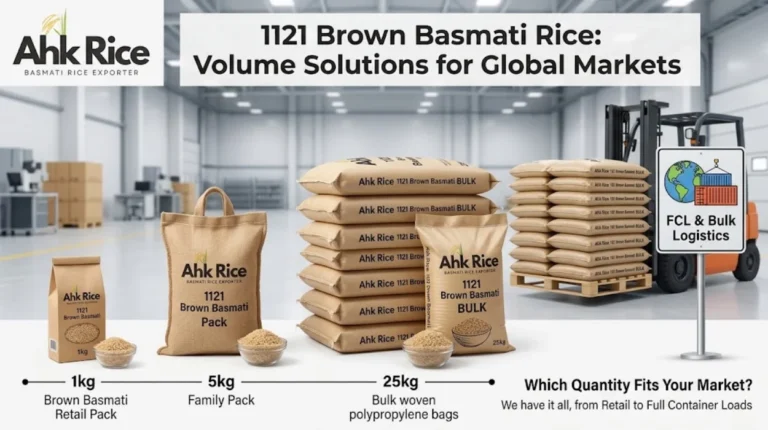
- Private-label packaging
- OEM manufacturing
- Container loading supervision
- Export documentation
- Shipping coordination
Processing Grades Available
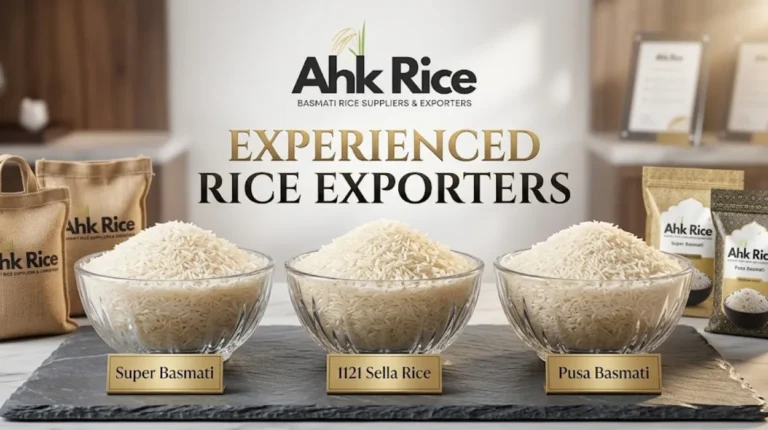
AHK Rice supplies multiple commercial grades including:
- 1121 Steam Basmati Rice
- 1121 Golden Sella Basmati Rice
- 1121 White Basmati Rice
- Super Kernel Basmati Rice
- PK-385 Rice
- IRRI-6 Rice
- IRRI-9 Rice
Every grade undergoes inspection before dispatch.
AHK Rice also supports customized specifications for supermarkets, distributors, foodservice companies, and private-label brands.
Buyers requesting specification comparisons can also read our guide explaining crop-year specifications requested by UAE buyers of Pakistan Basmati rice, helping procurement teams compare different harvest years before placing commercial orders.
Choosing the right exporter establishes supply confidence. The following section explains the measurable business results buyers can expect after selecting a verified supplier.
What Results Can UAE Buyers Expect from a Crop-Year Verified Pakistan Basmati Rice Exporter?
Verified crop-year sourcing delivers consistent cooking performance, fewer customer complaints, improved inventory control, stronger brand reputation, and predictable purchasing outcomes. UAE buyers benefit from repeatable quality, transparent documentation, and reliable export schedules that support profitable long-term business relationships.
Verified crop-year documentation helps importers purchase rice with confidence instead of relying only on supplier claims. Each shipment contains measurable specifications that reduce quality disputes after arrival.
AHK Rice supplies verified crop-year information before production begins. Buyers receive harvest records, laboratory reports, moisture analysis, and grading specifications that support informed purchasing decisions. This transparency helps procurement teams approve shipments faster.
Restaurant distributors experience better cooking consistency because aged Basmati develops lower moisture and stronger aroma. Supermarkets receive products with stable shelf life, while catering companies achieve uniform grain elongation during large-scale cooking.
Business Benefits for UAE Buyers
| Business Objective | Expected Result |
|---|---|
| Product consistency | Uniform grain quality |
| Customer satisfaction | Fewer complaints |
| Inventory planning | Better stock management |
| Brand reputation | Higher buyer confidence |
| Repeat orders | Long-term supplier relationships |
A verified crop year also improves warehouse performance. Properly matured rice maintains quality during storage and transportation under Gulf climate conditions. Fresh rice may cook well, but aged rice generally provides better aroma, grain separation, and cooking stability.
For private-label brands, verified documentation strengthens customer trust because every batch follows the same production standards.
The commercial advantages establish measurable value. The next consideration is understanding the costs behind verified export quality.
What Factors Affect Pricing for Crop-Year Verified Pakistan Basmati Rice?
Rice pricing depends on crop year, variety, aging period, processing grade, packaging requirements, laboratory testing, order volume, shipping destination, and freight costs. Understanding these factors helps UAE importers compare quotations accurately instead of focusing only on price per metric ton.
Every quotation includes more than the rice itself. Product specifications directly influence export pricing.
Major Pricing Factors
| Factor | Impact on Price |
|---|---|
| Crop year | Older aged rice commands higher value |
| Rice variety | Premium varieties cost more |
| Processing grade | Additional grading increases value |
| Packaging | Custom bags increase production cost |
| Laboratory testing | Certification adds inspection expense |
| Order quantity | Larger volumes reduce unit costs |
| Shipping season | Freight rates fluctuate |
| Destination port | Logistics influence landed cost |
Aged 1121 Basmati generally costs more than newly harvested rice because storage, moisture stabilization, and aroma development require additional time.
Custom packaging also changes production costs. Printed retail bags require artwork approval, printing plates, and packaging materials before production begins.
Laboratory testing increases confidence rather than simply increasing cost. Verified specifications often prevent expensive disputes after containers arrive.
Freight charges vary throughout the year according to shipping demand and fuel prices. Buyers planning seasonal purchases usually secure more competitive logistics rates.
Pricing becomes clearer after understanding the approval process. The next step explains how UAE buyers evaluate samples before confirming bulk production.
How Does the Sample Process Work Before Bulk Orders?
Professional exporters provide physical samples, laboratory reports, specification sheets, and commercial quotations before production. This process allows UAE buyers to verify quality, compare grades, approve packaging, and reduce purchasing risks before confirming full container shipments.
AHK Rice follows a structured sampling procedure that protects both buyer and supplier.
Sample Approval Process
- Submit product requirements.
- Select the required rice grade.
- Receive a commercial quotation.
- Dispatch physical rice samples.
- Review laboratory specifications.
- Test cooking quality.
- Approve packaging artwork.
- Confirm production.
- Schedule container loading.
This structured process minimizes misunderstandings before commercial production starts.
Typical Sample Costs
| Item | Typical Cost |
|---|---|
| Product sample | Usually complimentary or nominal value |
| Courier charges | Paid by buyer or shared by agreement |
| Laboratory reports | Included or quoted separately |
| Custom packaging sample | Additional cost when required |
| Commercial quotation | Free |
Many UAE buyers request several rice grades before making a final selection. Comparing Steam, Golden Sella, and White Basmati helps procurement teams choose the best specification for their market.
Once samples receive approval, attention shifts to delivery schedules and shipment planning. Understanding transit times helps buyers manage inventory more efficiently.
How Long Does Shipping Take from Pakistan to UAE and Other GCC Markets?
Pakistan exports Basmati rice to the UAE quickly through established shipping routes. Production planning, documentation, customs clearance, and vessel schedules determine total delivery time, allowing importers to maintain stable inventory throughout the year.
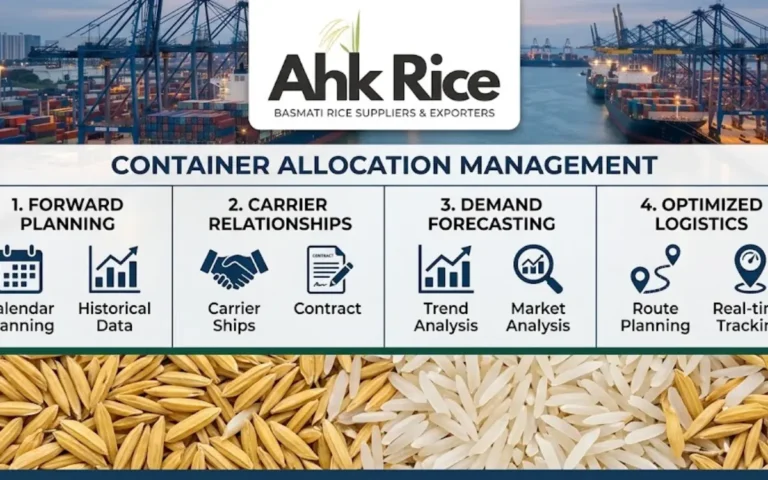
AHK Rice coordinates production, documentation, and logistics to dispatch containers according to agreed schedules.
Typical Shipping Transit Times
| Market | Approximate Shipping Days |
|---|---|
| UAE (Jebel Ali) | 8–12 days |
| Oman | 10–15 days |
| Bahrain | 12–16 days |
| Qatar | 12–18 days |
| Kuwait | 14–18 days |
| Saudi Arabia | 15–22 days |
Production generally requires additional preparation time depending on packaging customization, inspection requirements, and container availability.
Every shipment includes commercial documentation, packing lists, certificates, and export paperwork required for customs processing.
Reliable scheduling allows wholesalers to replenish stock without disrupting supermarket supply chains or hospitality contracts.
With pricing, sampling, and logistics explained, the final step is selecting the right export partner and requesting a commercial quotation.
How Can UAE Buyers Get Started with AHK Rice?

Getting started is simple. Share your required rice specifications, packaging preferences, destination port, and estimated order quantity. AHK Rice reviews your requirements, verifies the crop year, prepares samples, provides a detailed quotation, and schedules production after your approval.
Choosing the right supplier begins with clear communication. Procurement teams should define the rice variety, processing grade, broken percentage, moisture requirement, packaging type, and expected delivery schedule. Providing these details allows AHK Rice to prepare an accurate commercial quotation without unnecessary delays.
After receiving your inquiry, AHK Rice verifies the requested crop year and checks raw material availability. The production team then confirms processing specifications and prepares representative samples for approval. Laboratory reports, moisture analysis, grain length, and other quality parameters accompany the samples whenever requested.
Once samples receive approval, AHK Rice issues the final Proforma Invoice and begins production. Every batch passes through inspection, grading, colour sorting, moisture testing, and final quality verification before loading. Export documents are prepared according to the destination country’s import requirements.
Throughout production, buyers receive updates regarding milling, packaging, container loading, and vessel booking. This transparent communication reduces uncertainty and allows UAE importers to plan warehouse inventory and customer deliveries more efficiently.
Whether you import one container or establish a long-term procurement program, AHK Rice focuses on consistent quality, verified documentation, dependable logistics, and responsive customer service. These advantages help buyers build stronger supply chains while protecting their commercial reputation.
Choosing a verified exporter is the final step toward reducing procurement risk and improving long-term profitability. Contact AHK Rice today through to request your quotation and verified crop-year documentation.
Frequently Asked Questions
Why is crop-year verification important when importing Pakistan Basmati rice?
Crop-year verification confirms when the rice was harvested and helps buyers understand its expected cooking characteristics. Properly verified rice offers greater transparency during procurement and reduces the risk of receiving mixed harvests. It also supports better inventory planning because moisture and aging levels are documented. UAE importers can compare suppliers using measurable specifications rather than marketing claims. This creates greater confidence before placing bulk orders.
What documents should a Pakistan Basmati rice exporter provide?
A professional exporter should provide a commercial invoice, packing list, certificate of origin, phytosanitary certificate, laboratory reports when requested, and crop-year verification documents. Shipping documents should also match the buyer’s import requirements. Complete documentation helps customs clearance proceed smoothly. It also minimizes delays and reduces the possibility of shipment disputes after arrival.
How long does it take to export Basmati rice from Pakistan to the UAE?
Production time depends on the rice grade, packaging customization, and order quantity. After production is completed, sea freight to Jebel Ali usually requires approximately 8–12 days under normal shipping conditions. Vessel schedules and customs processing may influence total transit time. Planning orders in advance helps buyers maintain continuous inventory throughout the year.
Can AHK Rice supply private-label packaging?
Yes. AHK Rice provides customized packaging for wholesalers, supermarkets, retailers, distributors, and hospitality suppliers. Buyers can choose different bag sizes, printing designs, branding, and packaging materials according to their target market. Artwork approval is completed before production begins. Every private-label order follows the same quality inspection and export procedures as standard shipments.
Why should UAE buyers choose AHK Rice?
AHK Rice combines verified crop-year documentation, modern processing facilities, laboratory testing, quality inspection, flexible packaging, and reliable export logistics. Buyers receive transparent specifications before production starts, allowing informed purchasing decisions. Responsive communication and consistent product quality support long-term business relationships. These advantages help UAE importers reduce procurement risks while building dependable supply chains.