Import Extra Long Grain 1121 Basmati Rice from Pakistan to USA
The most reliable way to import extra long grain 1121 Basmati rice into the United States is to work directly with an experienced Pakistani exporter that offers verified quality specifications, export documentation, certified processing, transparent pricing, and dependable shipping schedules. Before comparing suppliers, it helps to understand why American buyers consistently prefer premium extra-long grain rice in our guide,
Why Do USA Rice Buyers Prioritize Extra Long Grain Basmati Rice? If you are evaluating technical quality standards, you can also explore:
How Is Grain Length Measured in Export Grade 1121 Basmati Rice? before making a purchasing decision.
When importers move from research to supplier selection, the focus shifts from product features to execution. That includes milling consistency, laboratory testing, packaging, export compliance, logistics, documentation, and post-shipment support. AHK Rice provides these services through its USA export solutions, enabling wholesalers, food distributors, retailers, restaurant suppliers, and private-label brands to source premium Pakistani 1121 Basmati rice with confidence.
What is the best solution for importing extra long grain 1121 Basmati rice into the USA?
The best solution is selecting an exporter that controls every stage of production, verifies grain specifications before shipment, complies with United States import requirements, provides complete export documentation, and maintains predictable delivery schedules throughout the supply chain for consistent commercial performance and customer satisfaction.
Importing rice successfully involves much more than purchasing containers at competitive prices. Buyers must ensure every shipment meets the agreed specifications before loading. Even small inconsistencies in grain length, broken percentage, moisture content, or packaging quality can create problems after arrival.
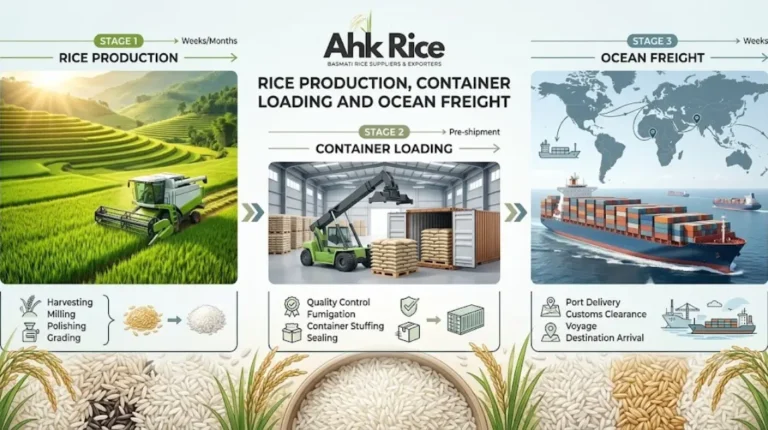
AHK Rice manages the complete export process from procurement to container loading. This integrated approach reduces supplier coordination, minimizes communication delays, and improves shipment consistency.
For USA buyers, the typical commercial requirements include:
- Extra long grain export-grade 1121 Basmati
- Uniform milling quality
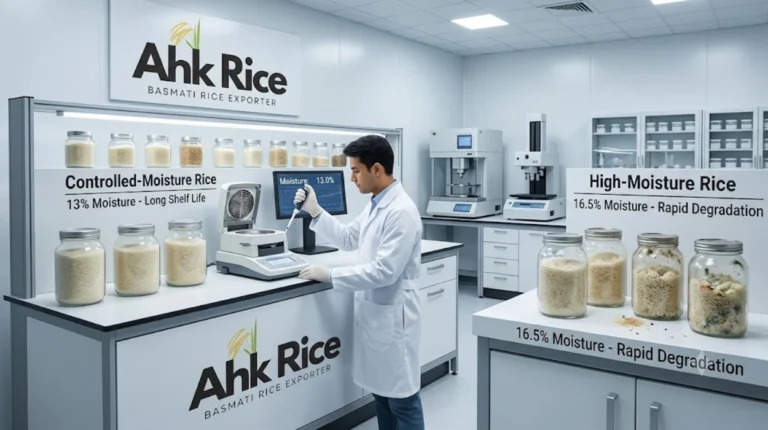
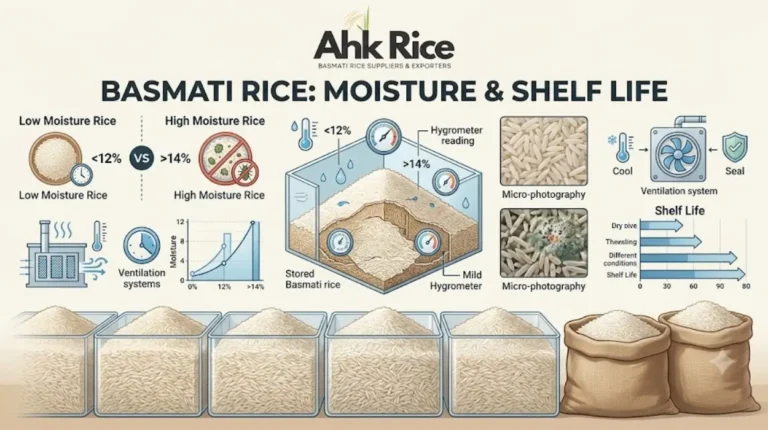
- Controlled moisture levels
- High purity
- Low broken percentage
- Clean appearance
- Strong natural aroma
- Food-grade packaging
- Export-compliant documentation
Instead of sourcing from multiple intermediaries, buyers receive one coordinated export solution supported by AHK Rice, reducing operational risk while improving purchasing efficiency.
Why should USA importers choose AHK Rice?
USA buyers benefit from exporters that combine modern processing facilities, quality assurance systems, certified production, transparent communication, flexible packaging, dependable logistics, and responsive commercial support, creating lower purchasing risk and stronger long-term supply reliability across multiple shipment cycles.
The American imported rice market expects consistency more than occasional premium quality. Restaurants, supermarket chains, wholesalers, and distributors require products that perform identically across repeated purchases.
AHK Rice focuses on delivering repeatable quality rather than isolated premium shipments.
Key advantages include:
- Modern rice processing
- Export-grade cleaning
- Color sorting
- Multiple quality inspections
- Laboratory verification
- Flexible packaging options
- Private labeling support
- Professional export documentation
- Container loading supervision
For distributors serving multiple states, predictable quality reduces customer complaints and strengthens retailer confidence.
Restaurant suppliers also benefit because chefs expect identical cooking performance from every delivery.
Private-label brands reduce quality variation, helping build stronger consumer trust.
How does the export quality verification process work?
Professional exporters follow structured inspection procedures beginning with raw paddy selection and ending with final container verification, ensuring buyers receive documented confirmation that every commercial specification has been satisfied before international shipment leaves Pakistan for the United States.
Quality verification follows several stages.
Step 1: Raw Material Selection
Only suitable paddy lots meeting export standards enter processing.
Step 2: Cleaning
Dust, stones, immature grains, and foreign material are removed.
Step 3: Milling
The rice is processed using calibrated milling equipment to preserve grain integrity.
Step 4: Color Sorting
Optical sorting removes defective grains and discoloration.
Step 5: Laboratory Testing
Samples are tested for:
- Grain length
- Moisture
- Broken percentage
- Purity
- Foreign matter
Step 6: Packaging Inspection
Packaging materials are checked before filling.
Step 7: Container Loading Inspection
Containers are inspected for:
- Cleanliness
- Dry condition
- Structural integrity
- Proper sealing
AHK Rice documents these procedures to support export consistency and buyer confidence.
What sample process should buyers expect before placing a bulk order?
A structured sampling process enables importers to evaluate physical quality, cooking performance, packaging standards, and laboratory specifications before committing to commercial quantities, reducing procurement uncertainty while ensuring the selected product matches market expectations in the United States.
Professional exporters encourage sample approval before production begins.
A typical process includes:
- Initial buyer consultation.
- Product recommendation based on market requirements.
- Preparation of representative samples.
- Laboratory specification sheet.
- Packaging confirmation.
- Buyer cooking evaluation.
- Commercial quotation.
- Contract confirmation.
- Production scheduling.
Typical sample costs in 2026
| Sample Type | Typical Cost |
|---|---|
| Product sample (500 g–1 kg) | Usually complimentary; courier charges may apply |
| Courier delivery | Approximately USD 40–90 depending on destination and service |
| Laboratory testing (if requested separately) | Approximately USD 50–150 |
| Customized packaging sample | Cost varies according to packaging requirements |
Many commercial orders proceed after successful sample approval because buyers can verify grain appearance, elongation, aroma, and cooking characteristics before committing to container purchases.
AHK Rice supports this evaluation process to help buyers make informed purchasing decisions.
What shipping timelines can USA buyers expect in 2026?
Reliable exporters provide realistic production schedules, transparent shipment planning, and predictable transit estimates rather than optimistic promises, allowing importers to coordinate inventory management, customs clearance, retail launches, and foodservice distribution more efficiently throughout the supply chain.
Shipping time consists of two stages.
Production Time
After payment confirmation:
- Production generally requires 7–10 working days
- Private-label packaging may require additional preparation
- Large-volume orders may extend production depending on quantity
Ocean Transit
Typical shipping durations in 2026 include:
| Destination | Estimated Transit Time |
|---|---|
| USA East Coast | 28–35 days |
| USA Gulf Coast | 30–38 days |
| USA West Coast | 22–30 days |
Actual schedules depend on:
- Shipping line availability
- Port congestion
- Customs processing
- Seasonal demand
- Weather conditions
AHK Rice provides shipment updates throughout production and transportation to improve planning accuracy.
What results can importers expect after choosing the right exporter?
Working with an experienced exporter delivers measurable commercial benefits including fewer quality disputes, better cooking consistency, stronger retailer satisfaction, improved inventory planning, enhanced brand reputation, and reduced procurement costs over repeated purchasing cycles when quality remains consistently verified.
Successful imports create value beyond the first shipment.
Typical commercial outcomes include:
Higher customer retention because product quality remains consistent.
Reduced complaint rates due to stable grain specifications.
Improved restaurant satisfaction through predictable cooking performance.
Better shelf presentation resulting from uniform grain appearance.
Lower operational costs because fewer quality claims require resolution.
Greater purchasing confidence through long-term supplier relationships.
For private-label businesses, consistency supports repeat consumer purchases and long-term brand growth.
These outcomes explain why many professional buyers prioritize exporter capability rather than selecting suppliers solely on price.
What affects the price of extra long grain 1121 Basmati rice?
Commercial pricing depends on multiple quality and logistics variables including grain specifications, processing method, packaging configuration, shipment quantity, certification requirements, seasonal availability, freight rates, and destination logistics rather than a single market price per metric ton.
Import pricing changes throughout the year based on supply and demand.
Major pricing factors include:
- Paddy availability
- Export season
- Grain length
- Broken percentage
- Moisture level
- Milling quality
- Packaging type
- Private labeling
- Container quantity
- Ocean freight
- Exchange rates
- Certification requirements
Buyers requesting premium specifications generally receive higher-value products with improved consistency and stronger market acceptance.
Rather than focusing exclusively on the lowest quotation, importers should compare the total commercial value, including quality assurance, documentation, logistics, and after-sales support.
AHK Rice provides transparent quotations based on the buyer’s required specifications instead of offering generic pricing.
How do you get started with importing from Pakistan?
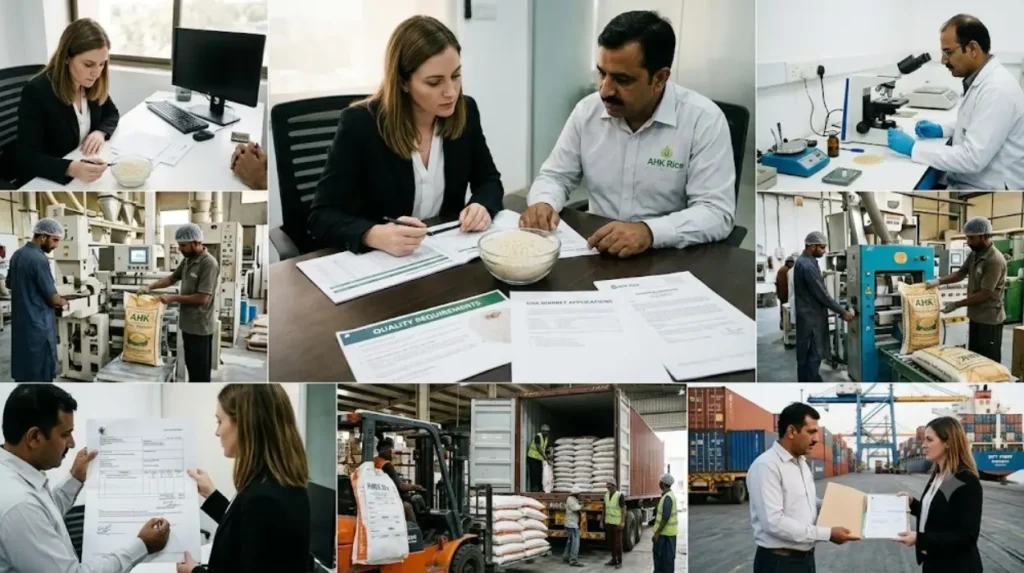
The purchasing process becomes straightforward when buyers define their product specifications, review representative samples, approve commercial terms, confirm packaging, finalize documentation, and coordinate shipment scheduling with an experienced export partner capable of managing every stage professionally.
The recommended purchasing process is:
- Define your quality requirements.
- Discuss intended USA market applications.
- Request representative samples.
- Review laboratory specifications.
- Approve packaging design.
- Receive a commercial quotation.
- Confirm order details.
- Begin production.
- Complete quality inspection.
- Load containers.
- Receive shipping documents.
- Coordinate customs clearance and delivery.
Following this structured workflow reduces uncertainty while improving purchasing efficiency.
Throughout the process, AHK Rice provides commercial guidance, documentation support, production updates, and logistics coordination, allowing buyers to focus on growing their distribution business instead of managing multiple suppliers.
Importing premium extra long grain 1121 Basmati rice is ultimately a strategic sourcing decision. Selecting an exporter with verified quality systems, transparent communication, dependable shipping, and comprehensive export support helps reduce risk while improving long-term commercial performance in the competitive USA market. To discuss your specifications, request samples, and receive a tailored quotation, visit /request-a-quote/ and start your sourcing process with AHK Rice today.
Frequently Asked Questions
How can I verify the quality of 1121 Basmati rice before placing a bulk order?
Request representative product samples, laboratory test reports, grain specifications, and cooking evaluations before confirming your commercial order. This helps ensure the rice meets your quality requirements.
What is the minimum order quantity for importing 1121 Basmati rice into the USA?
The minimum order quantity depends on the exporter and packaging requirements. Most commercial shipments begin with a full 20-foot container, while some exporters also support mixed-container orders.
How long does it take to ship 1121 Basmati rice from Pakistan to the USA?
Production generally takes 7–10 working days after order confirmation. Ocean transit typically ranges from 22–35 days depending on the destination port and shipping schedule.
What documents are required to import 1121 Basmati rice into the USA?
Importers generally require a commercial invoice, packing list, bill of lading, certificate of origin, phytosanitary certificate, and any additional documents requested by U.S. customs or the buyer.
Can AHK Rice provide private label packaging for USA distributors?
Yes. AHK Rice offers customized private label packaging, retail bag designs, and branding options to help wholesalers, supermarkets, and distributors build their own rice brands in the U.S. market.
What factors influence the price of extra long grain 1121 Basmati rice?
Pricing depends on grain quality, broken percentage, moisture level, packaging type, order quantity, certifications, freight costs, and seasonal market conditions.
Why is Pakistan the preferred source for extra long grain 1121 Basmati rice?
Pakistan is recognized for producing premium 1121 Basmati rice with extra-long grains, distinctive aroma, excellent cooking elongation, and consistent export quality, making it a preferred choice for global buyers.