How Does Pakistan Preserve Extra Long Grain Basmati Rice During Export to Saudi Arabia?
Pakistan preserves extra long grain Basmati rice during export to Saudi Arabia through controlled drying, scientific milling, moisture management, grading, fumigation, food-safe packaging, and container monitoring. These steps protect grain length, aroma, texture, and appearance throughout the export journey. Here is why: Saudi Arabia imports large volumes of Pakistani Basmati rice every year, and maintaining grain integrity during transit is essential for retail, wholesale, catering, and foodservice markets (source: REAP export data, December 2025).
What Is Extra Long Grain Basmati Rice?
Extra long grain Basmati rice measures more than 8.0 mm before cooking and commonly elongates up to twice its original length after cooking.
Extra long grain Basmati rice is a premium aromatic rice variety cultivated mainly in Punjab, Pakistan. The grain is naturally slender and contains a distinctive aroma compound called 2-acetyl-1-pyrroline. This compound creates the characteristic Basmati fragrance recognized by consumers across Gulf markets.
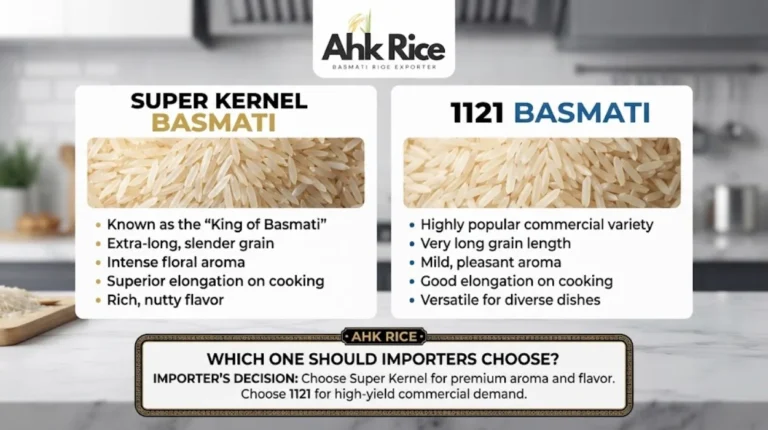
Pakistan cultivates several extra long grain Basmati varieties. Examples include 1121 Basmati Rice, Super Kernel Basmati Rice, and 1509 Basmati Rice. Each variety differs in grain length, cooking performance, and market application.
Saudi Arabian consumers prefer extra long grain rice because grain appearance remains an important quality indicator. Long, separate grains are commonly used in kabsa, mandi, biryani, and large-scale catering meals.
Pakistan’s Basmati-growing belt includes districts such as Gujranwala, Hafizabad, Narowal, Sheikhupura, and Sialkot. These regions provide suitable soil composition, irrigation systems, and climatic conditions for premium Basmati cultivation.
Understanding the product itself creates the foundation for understanding how exporters preserve its quality during international shipment.
Why Does Rice Preservation Matter During Export to Saudi Arabia?
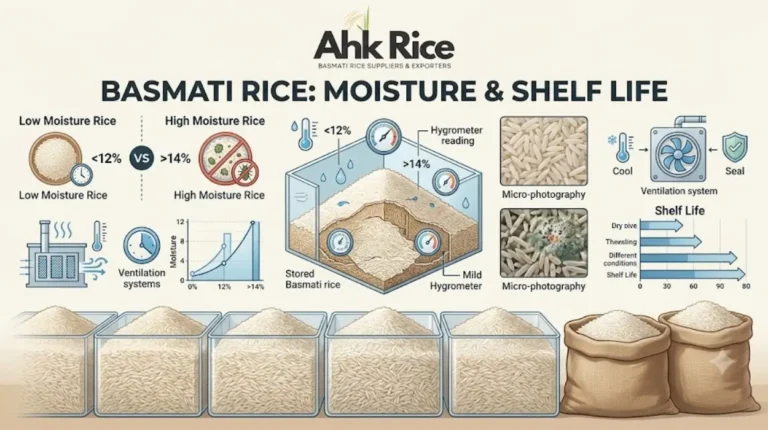
Rice quality depends on maintaining grain moisture between 12% and 14%, minimizing breakage, and protecting aroma throughout transit.
Saudi Arabia receives rice shipments through maritime routes that often require several weeks of transportation. Temperature fluctuations, humidity exposure, and improper handling can damage grain quality during this period.
Extra long grain Basmati rice faces specific risks during export. Examples include broken grains, moisture absorption, discoloration, insect activity, and aroma loss.
Saudi Arabian importers evaluate shipments according to physical appearance, grain length, broken percentage, cooking performance, and cleanliness. A shipment that arrives with excessive breakage loses commercial value immediately.
Quality preservation also supports compliance with food safety regulations. Importers require rice to meet approved specifications before customs clearance and distribution.
Rice preservation begins immediately after harvest and continues until final delivery at the destination market.
With the importance of preservation established, the next question is how the preservation process actually works.
How Does Pakistan Preserve Extra Long Grain Basmati Rice During Export?
Pakistan preserves Basmati rice through nine processing stages: harvesting, drying, storage, milling, grading, sorting, testing, packaging, and container management.
Harvest the Paddy at Proper Maturity
Farmers harvest Basmati rice when grain moisture reaches suitable harvesting levels. Proper harvesting reduces grain cracking during later processing stages.
Harvesting at the correct maturity stage protects grain length. Premature harvesting increases breakage rates during milling operations.
Dry the Paddy to Export-Safe Moisture Levels
Processors dry paddy rice until moisture reaches approximately 12%–14%.
Moisture control remains one of the most important preservation measures. Excess moisture encourages microbial activity and quality deterioration during storage and shipping.
Store the Paddy Under Controlled Conditions
Storage facilities maintain clean environments and controlled ventilation.
Controlled storage prevents insect infestation and reduces moisture fluctuations before milling begins.
Mill the Rice Carefully
Processors remove the husk through dehusking equipment.
Milling transforms paddy into edible rice while protecting grain structure. Modern equipment reduces mechanical stress and minimizes breakage.
Grade the Rice by Length
Grading separates rice according to grain size specifications.
Length grading creates uniform lots suitable for export contracts. Uniform grain appearance improves acceptance among Saudi buyers.
Sort the Rice Using Optical Technology
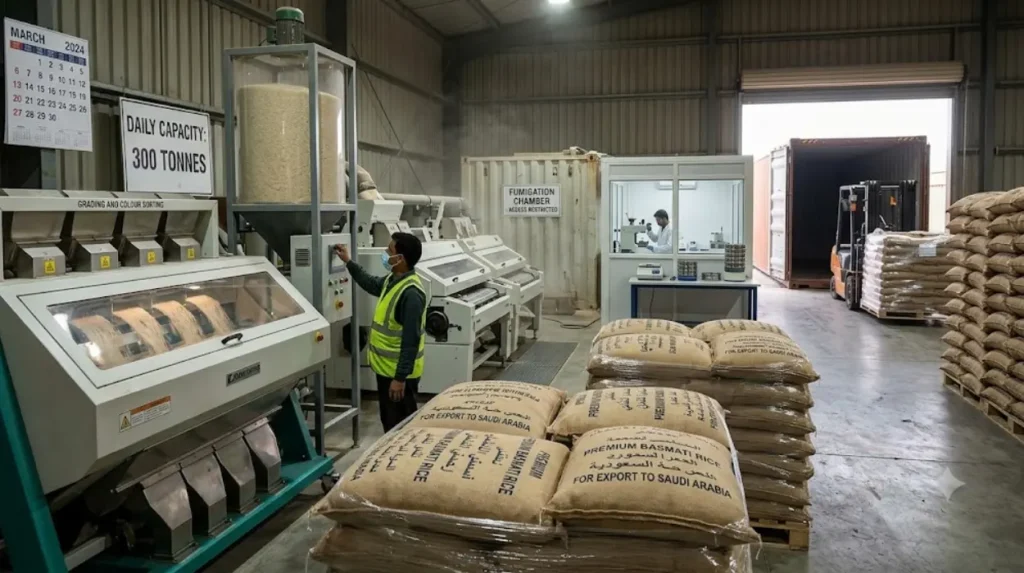
Colour sorters identify and remove defective grains.
Optical sorting removes discolored kernels, damaged grains, foreign material, and unwanted particles.
Test the Rice in Laboratories
Laboratories verify quality specifications before shipment.
Testing commonly includes moisture analysis, broken percentage verification, purity assessment, and residue compliance checks.
Package the Rice Securely
Packaging protects rice from contamination and environmental exposure.
Common export formats include 5 kg, 10 kg, 20 kg, 25 kg, and 40 kg bags. Packaging materials include PP woven bags, BOPP laminated bags, and private-label retail packaging.
Monitor the Shipping Container
Exporters inspect containers before loading.
Container inspections verify cleanliness, dryness, structural integrity, and absence of contamination risks.
These nine preservation stages work together to maintain grain quality from farm to destination port.
With the process explained, the next question concerns the specific components that protect rice quality.
What Components Protect Basmati Rice During Export?
Moisture control, grading systems, colour sorting, fumigation, laboratory testing, and packaging form the core preservation system.
Moisture Control
Moisture management protects rice against spoilage and quality loss.
Export-grade Basmati rice generally maintains moisture levels between 12% and 14%. This range supports safe transportation and long-term storage.
Length Grading
Length grading preserves consistency throughout a shipment.
Uniform grain length improves visual appeal and supports importer specifications.
Colour Sorting
Colour sorting removes defective grains.
Modern optical systems identify damaged kernels that human inspection cannot consistently detect.
Fumigation
Fumigation protects shipments from pest activity.
Approved fumigation procedures support compliance with importing country requirements and shipping standards.
Laboratory Verification
Laboratory verification confirms export specifications.
Testing provides measurable data regarding moisture, purity, broken percentage, and food safety requirements.
Protective Packaging
Protective packaging acts as the final barrier against contamination.
High-quality packaging maintains product integrity throughout handling, storage, and transportation.
These preservation components work together to support quality retention during export journeys to Saudi Arabia.
With the protection system explained, the next question is which grades Saudi importers purchase most frequently.
Which Pakistan Basmati Rice Grades Are Exported to Saudi Arabia?
1121 Basmati, Super Kernel Basmati, and 1509 Basmati represent the most widely imported Pakistani premium rice grades in Saudi Arabia.
1121 Basmati Rice
Average grain length exceeds 8.30 mm before cooking.
1121 Basmati Rice is known for exceptional elongation after cooking. Saudi wholesalers frequently source this grade for premium retail and hospitality channels.
1121 Basmati Rice also attracts buyers seeking long visual grain presentation in traditional Gulf dishes.
Super Kernel Basmati Rice
Average grain length ranges from 7.20 mm to 7.60 mm.
Super Kernel Basmati Rice combines aroma, texture, and affordability. This variety remains widely recognized throughout Gulf markets.
Saudi distributors often source Super Kernel Basmati Rice for mainstream retail demand.
1509 Basmati Rice
Average grain length ranges from 8.10 mm to 8.40 mm.
1509 Basmati Rice matures earlier than traditional Basmati varieties. This characteristic supports stable supply availability throughout the year.
Saudi buyers frequently procure 1509 Basmati Rice for value-focused market segments.
Rice grades differ significantly in grain dimensions and breakage characteristics. Readers interested in detailed quality comparisons should review the article discussing how different Basmati specifications achieve lower broken grain levels in Saudi import shipments.
With the major grades identified, the next question concerns the benefits of effective preservation.
What Benefits Does Proper Preservation Provide?
Proper preservation protects grain length, maintains aroma, reduces breakage, extends shelf life, and improves importer acceptance.
Grain length preservation supports premium market positioning. Saudi consumers associate long grains with quality and authenticity.
Aroma retention protects one of Basmati rice’s defining characteristics. Proper moisture management helps maintain aromatic compounds throughout transportation.
Breakage reduction increases usable product volume. Lower broken percentages improve commercial value for wholesalers and retailers.
Shelf-life stability supports inventory management. Rice preserved under controlled conditions maintains quality for extended storage periods.
Food safety compliance supports smooth customs clearance procedures. Certified testing and inspection systems reduce regulatory complications.
These benefits explain why preservation remains a central component of export operations.
With the advantages explained, the next question is where preserved Basmati rice is ultimately used.
Where Is Preserved Pakistani Basmati Rice Used in Saudi Arabia?
Saudi Arabia uses preserved Pakistani Basmati rice in retail distribution, foodservice operations, catering companies, hotels, and restaurants.
Retail brands distribute packaged Basmati rice throughout supermarkets and grocery stores. Product appearance remains critical in this segment because consumers visually evaluate grain quality before purchase.
Hotels utilize premium Basmati rice for large-scale dining operations. Consistency helps kitchens maintain standardized meal quality.
Restaurants prepare traditional rice dishes that require long grain separation after cooking. Proper preservation supports this cooking performance.
Catering companies purchase rice in bulk quantities. Stable grain quality assists food preparation for weddings, corporate events, and institutional dining.
Food distributors supply preserved rice throughout different Saudi regions. Consistent quality supports repeat procurement decisions.
Understanding these applications highlights why preservation standards remain important across the supply chain.
With the use cases covered, the final question addresses common misconceptions.
What Misconceptions Exist About Basmati Rice Preservation?
Preservation does not mean chemical treatment, longer storage does not improve every grade, and packaging alone does not protect rice quality.
Many buyers assume preservation depends mainly on chemicals. Modern preservation relies primarily on moisture control, grading, sorting, testing, and packaging systems.
Some buyers believe all aged rice performs better. Aging improves certain characteristics in specific grades, but improper storage reduces quality regardless of rice variety.
Another misconception involves packaging. Packaging protects rice, but packaging alone cannot compensate for poor drying or inadequate grading.
Some importers focus only on grain length. Grain length remains important, yet moisture levels, broken percentage, purity, and aroma also determine overall quality.
Another misunderstanding concerns container transport. Container quality directly affects shipment conditions. Clean, dry containers remain essential for preserving rice during maritime transit.
These misconceptions demonstrate why understanding the complete preservation process is necessary when evaluating export-quality Basmati rice.
Frequently Asked Questions
How long does it take to export Basmati rice from Pakistan to Saudi Arabia?
Sea shipments from Pakistan to Saudi Arabia generally take between 10 and 20 days, depending on the departure port, shipping route, and destination port. Exporters also complete quality inspections, documentation, and customs clearance before dispatch.
What moisture level is considered safe for exporting Basmati rice?
Export-grade Basmati rice is usually maintained at 12% to 14% moisture content. This range helps preserve grain quality, prevents spoilage, and supports safe storage during transportation and distribution.
Which Pakistani Basmati rice variety is most popular in Saudi Arabia?
1121 Basmati Rice is one of the most popular varieties in Saudi Arabia because of its extra-long grain length, strong aroma, and excellent elongation after cooking. Super Kernel Basmati and 1509 Basmati are also widely imported.
How is broken grain percentage reduced during export processing?
Processors reduce broken grain percentage through controlled drying, modern milling equipment, precise grading systems, and optical colour sorting technology. These steps protect grain structure and improve shipment quality.
What certifications are commonly required for Basmati rice exports to Saudi Arabia?
Common certifications include Phytosanitary Certificate, Certificate of Origin, Health Certificate, Halal compliance documentation, and laboratory test reports verifying quality and food safety requirements. Import requirements vary according to current Saudi regulations.