1509 Steam Basmati Rice Pricing Structure for UAE Buyers Importing from Pakistan
1509 Steam Basmati Rice pricing for UAE buyers depends on paddy costs, milling expenses, grading standards, packaging specifications, inland logistics, export handling, and international freight. Here is why: every stage from cultivation in Punjab to vessel loading in Pakistan adds a measurable cost component that determines the final import price.
1509 Steam Basmati Rice remains one of Pakistan’s most traded long-grain aromatic rice varieties. UAE importers purchase it for retail brands, foodservice distributors, catering companies, and wholesale networks because it combines long grain length, strong cooking performance, and competitive pricing.
Rice exporters calculate prices using a structured chain of agricultural, processing, quality control, and logistics costs. Understanding this structure helps UAE buyers evaluate quotations and compare suppliers using objective specifications rather than price alone.
What Is 1509 Steam Basmati Rice?
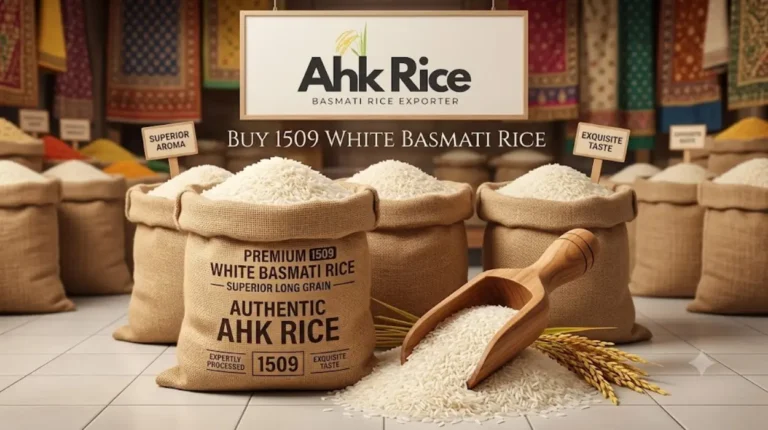
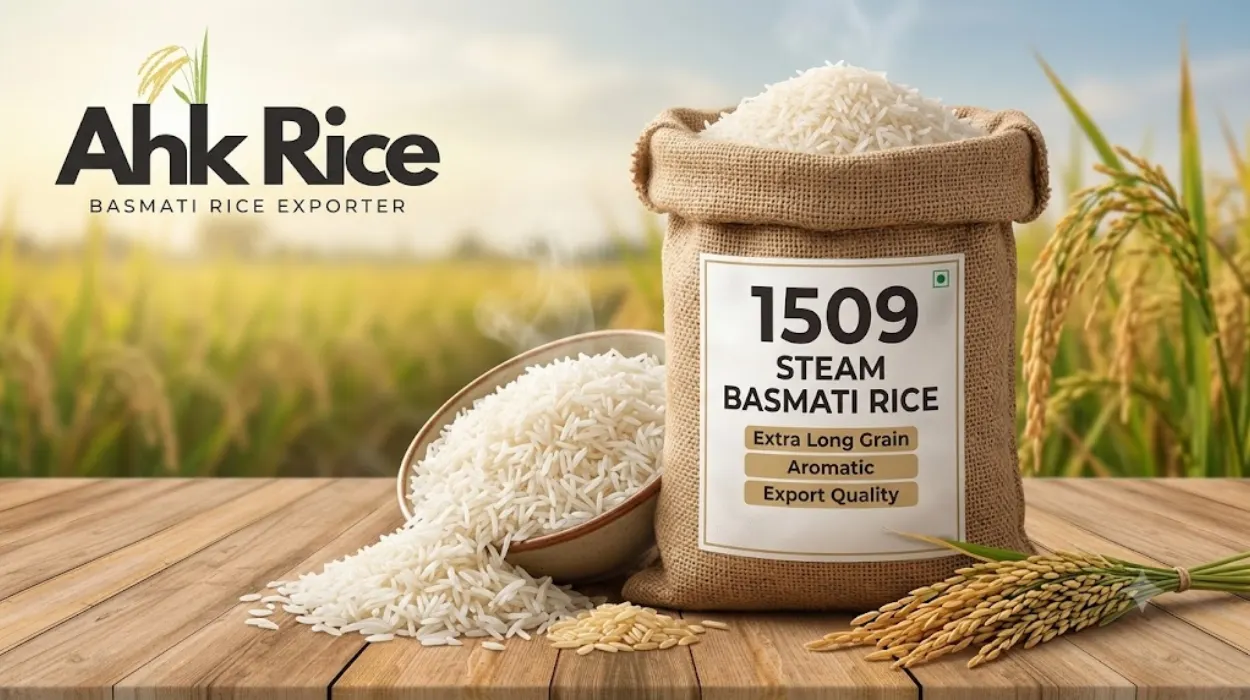
1509 Steam Basmati Rice is a long-grain aromatic rice variety processed through steam treatment and milling, delivering grain lengths of approximately 8.20–8.40 mm with high cooking elongation.
1509 Basmati originated from agricultural breeding programs developed to improve yield and maintain traditional Basmati characteristics. Farmers cultivate this variety primarily in Punjab, Pakistan, where fertile soil and irrigation systems support consistent grain development.
1509 Steam Basmati Rice undergoes steam processing before final polishing. Steam treatment strengthens grain structure and improves shelf stability while preserving aroma and appearance.
UAE importers source this rice because it offers competitive pricing compared to premium varieties while maintaining desirable cooking qualities. Retail brands frequently package it in 1 kg, 5 kg, and 10 kg formats. Foodservice distributors often purchase 25 kg and 40 kg bags.
Pakistan remains among the world’s largest Basmati exporters, with Gulf countries representing a major destination market (source: REAP export data, December 2025).
With the definition of 1509 Steam Basmati established, the next question is how the pricing structure develops throughout the supply chain.
How Does the Pricing Structure Work?
Pricing begins with paddy procurement and ends with export shipment, with each stage adding specific operational costs to the final price.
Rice pricing starts during harvest season. Paddy prices fluctuate according to crop yield, weather conditions, irrigation costs, and market demand.
Exporters purchase paddy from growing regions and transport it to rice mills. Transportation costs become part of the final export calculation.
What Processing Steps Add Cost?
1509 Steam Basmati Rice passes through a structured processing sequence:
- Clean the paddy
- Steam the grain
- Dry the grain
- De-husk the rice
- Polish the kernels
- Sort by size
- Grade by quality
- Inspect the product
- Pack for export
Each processing stage requires machinery, labor, energy, and quality controls. Milling costs increase when buyers request tighter quality tolerances.
Packaging specifications also influence pricing. Printed retail bags cost more than standard PP export bags. Multi-layer packaging increases material expenses and handling requirements.
Export handling includes container stuffing, customs clearance, fumigation, documentation, and port operations. These costs form part of the final export quotation.
With pricing mechanics explained, understanding the individual cost components provides deeper insight into quotation differences.
What Components Influence 1509 Steam Basmati Rice Prices?
Paddy cost, milling expense, quality grade, packaging, certification, logistics, and freight represent the primary pricing components.
Paddy procurement usually represents the largest percentage of total rice cost. Crop quality directly affects milling recovery and finished rice yield.
Which Quality Specifications Affect Price?
| Specification | Typical Range |
|---|---|
| Grain Length | 8.20–8.40 mm |
| Moisture | 12–14% |
| Broken Rice | 0–15% |
| Purity | 95–100% |
| Foreign Matter | Minimal |
| Damage Kernels | Controlled |
| Chalky Grains | Specified by grade |
Longer grain lengths command higher prices because buyers associate them with premium presentation and stronger cooking performance.
Lower broken percentages require additional grading and sorting. Higher purity standards also increase processing costs because mills perform stricter quality separation.
Freight charges create another major pricing variable. Shipping rates fluctuate according to vessel availability, fuel costs, and regional demand.
With pricing components understood, examining available grades clarifies why quotations vary significantly.
What Grades of 1509 Steam Basmati Rice Are Available?
Exporters supply multiple grades ranging from premium whole grain specifications to commercial grades with higher broken percentages.
Premium Grade
Premium grade contains maximum whole kernels and strict purity standards. Retail brands and premium supermarkets commonly import this specification.
Sortex Grade
Sortex grade undergoes advanced color sorting. Optical equipment removes defective kernels and improves visual consistency.
Double Sortex Grade
Double Sortex grade receives two rounds of color sorting. Buyers seeking premium appearance frequently select this grade.
5% Broken Grade
This grade allows up to five percent broken kernels. Importers balance quality and cost using this specification.
10% Broken Grade
Foodservice distributors often source this grade because it offers lower acquisition costs while maintaining cooking performance.
15% Broken Grade
Commercial buyers and institutional users commonly purchase this grade for large-volume consumption programs.
Different grades serve different market requirements. Premium retail buyers prioritize appearance, while catering operators focus on value and cooking consistency.
With grade structures explained, understanding certifications helps buyers evaluate compliance requirements.
What Certifications Apply to 1509 Steam Basmati Rice Exports?
Food safety, quality assurance, and export compliance certifications verify product consistency and market acceptance.
Rice exporters maintain certifications to satisfy importer requirements and regulatory standards.
Common certifications include:
- ISO 22000
- HACCP
- GMP
- Halal Certification
- Phytosanitary Certification
- Fumigation Certification
- Certificate of Origin
- SGS Inspection Reports
Food safety certifications verify processing controls. Importers use these documents to validate supplier compliance and product quality systems.
Halal certification remains important across Gulf markets because it aligns with regional consumer requirements.
Phytosanitary certification confirms the rice meets plant health regulations required for international trade.
Certification standards influence operational costs because exporters conduct inspections, testing, audits, and documentation procedures.
With compliance requirements established, examining import demand explains why UAE buyers continue sourcing this variety.
Why Do UAE Buyers Import 1509 Steam Basmati Rice?
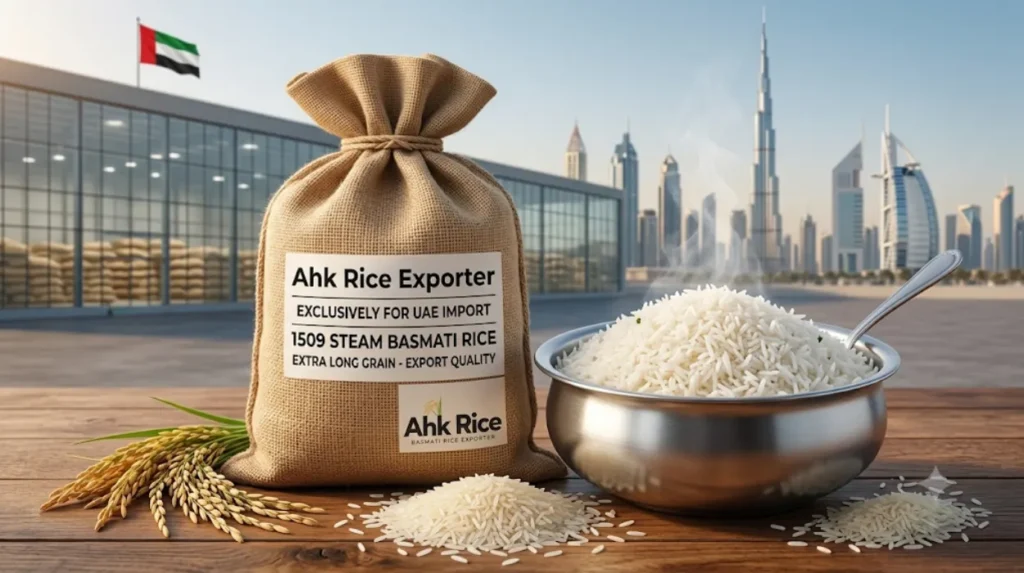
UAE buyers import 1509 Steam Basmati Rice because it combines competitive pricing, long grain appearance, reliable supply, and broad consumer acceptance.
UAE food consumption relies heavily on imported rice. Population growth and tourism continue supporting demand for Basmati products (source: UAE Food Security Strategy reports).
Retail distributors package 1509 Steam Basmati Rice for household consumption. Restaurants serve it with traditional Gulf, South Asian, and Middle Eastern dishes.
Catering companies value consistent cooking performance. Bulk importers focus on stable supply chains and predictable procurement costs.
Which Markets Import 1509 Steam Basmati Rice?
Major importing regions include:
- United Arab Emirates
- Saudi Arabia
- Oman
- Qatar
- Bahrain
- Kuwait
- Iraq
- Yemen
Gulf markets frequently prefer steam rice because it balances aroma, appearance, and affordability.
UAE importers often use Dubai and Jebel Ali as regional redistribution hubs serving neighboring countries.
Understanding buyer demand leads naturally to common misconceptions about rice pricing and quality.
What Are Common Misconceptions About 1509 Steam Basmati Rice Pricing?
Higher prices do not automatically indicate higher quality, and lower prices do not always represent better value.
Many buyers compare quotations without evaluating specifications. Grain length, broken percentage, packaging type, and certification scope significantly affect pricing.
Some importers assume all steam rice grades are identical. Quality differences exist between premium, Sortex, and commercial specifications.
Another misconception involves freight costs. Ocean shipping charges change regularly. Freight fluctuations alter landed costs even when FOB pricing remains stable.
Some buyers focus only on purchase price. Total procurement evaluation includes quality consistency, packaging standards, documentation accuracy, and supply reliability.
Premium grade costs more than commercial grade. Premium grade offers superior appearance. Premium grade supports higher retail positioning. Commercial grades support cost-focused distribution models.
Understanding these misconceptions allows buyers to interpret quotations accurately and compare offers using objective standards.
What Benefits Does Understanding Pricing Structure Provide?
Pricing knowledge improves supplier evaluation, budget forecasting, procurement planning, and specification selection.
UAE buyers who understand pricing structures identify the reasons behind quotation differences. This knowledge reduces procurement uncertainty.
Importers evaluate grades more effectively when they understand processing requirements. Better evaluation improves purchasing decisions.
Budget forecasting becomes more accurate because buyers understand how agricultural conditions, logistics costs, and freight rates influence pricing.
Specification analysis helps buyers align product grades with market requirements. Retail brands often prioritize appearance. Catering companies often prioritize operational value.
A structured understanding of pricing creates stronger procurement decisions and prepares buyers for deeper FOB and CIF cost evaluation models.
Frequently Asked Questions
What is the average grain length of 1509 Steam Basmati Rice?
1509 Steam Basmati Rice typically measures 8.20–8.40 mm before cooking and elongates significantly after cooking.
Why is 1509 Steam Basmati Rice popular in the UAE?
UAE buyers prefer it because of its long grain appearance, aroma, cooking performance, and competitive pricing.
Which factors influence export pricing the most?
Paddy costs, milling expenses, grading requirements, packaging specifications, logistics, certifications, and freight charges influence pricing.
What is the difference between Premium and Sortex grades?
Premium grade focuses on whole grain quality, while Sortex grade undergoes advanced optical color sorting for improved appearance.
Which certifications are commonly required for UAE imports?
ISO 22000, HACCP, Halal, Phytosanitary Certificates, Fumigation Certificates, and Certificates of Origin are commonly required.
Is 1509 Steam Basmati Rice suitable for restaurants?
Yes. Restaurants and catering companies frequently use this variety because of its cooking consistency and cost efficiency.