1121 Golden Sella Rice Quality Assurance and Delivery Commitments
Strong quality assurance and documented delivery commitments provide the most reliable way to secure consistent 1121 Golden Sella Rice imports. Here is why: standardized grading, laboratory testing, process controls, and shipment verification reduce quality variation, delivery delays, and commercial risk throughout the export supply chain.
1121 Golden Sella Rice remains one of the most demanded Basmati categories across the Gulf, Africa, and Europe. Importers select this grade because it combines long grain length, strong cooking performance, attractive golden color, and excellent storage stability.
Quality assurance has become a critical buying factor. Buyers no longer compare suppliers only on price. They compare inspection systems, traceability controls, processing standards, shipment accuracy, and delivery reliability.
Understanding how quality assurance systems work helps importers evaluate suppliers effectively. Readers seeking a broader understanding of Basmati quality standards can also explore our guide on understanding how export rice quality specifications are evaluated across international markets.
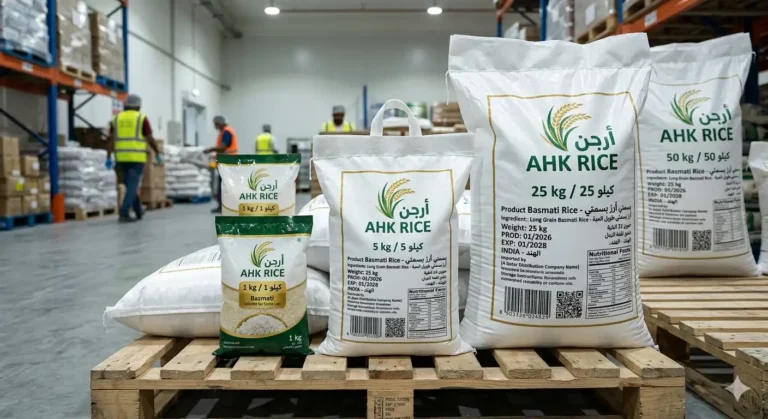
1121 Golden Sella Rice supplied through AHK Rice undergoes defined processing, grading, inspection, packaging, and export procedures designed for consistent international supply.
What quality assurance solutions are available for 1121 Golden Sella Rice buyers?
The most effective solutions include laboratory testing, third-party inspection, process control systems, moisture management, shipment verification, and traceability documentation. Together they reduce quality risks and improve delivery consistency.
What does quality assurance mean in rice exports?
Quality assurance refers to the systems used to inspect, test, certify, and verify rice quality before shipment.
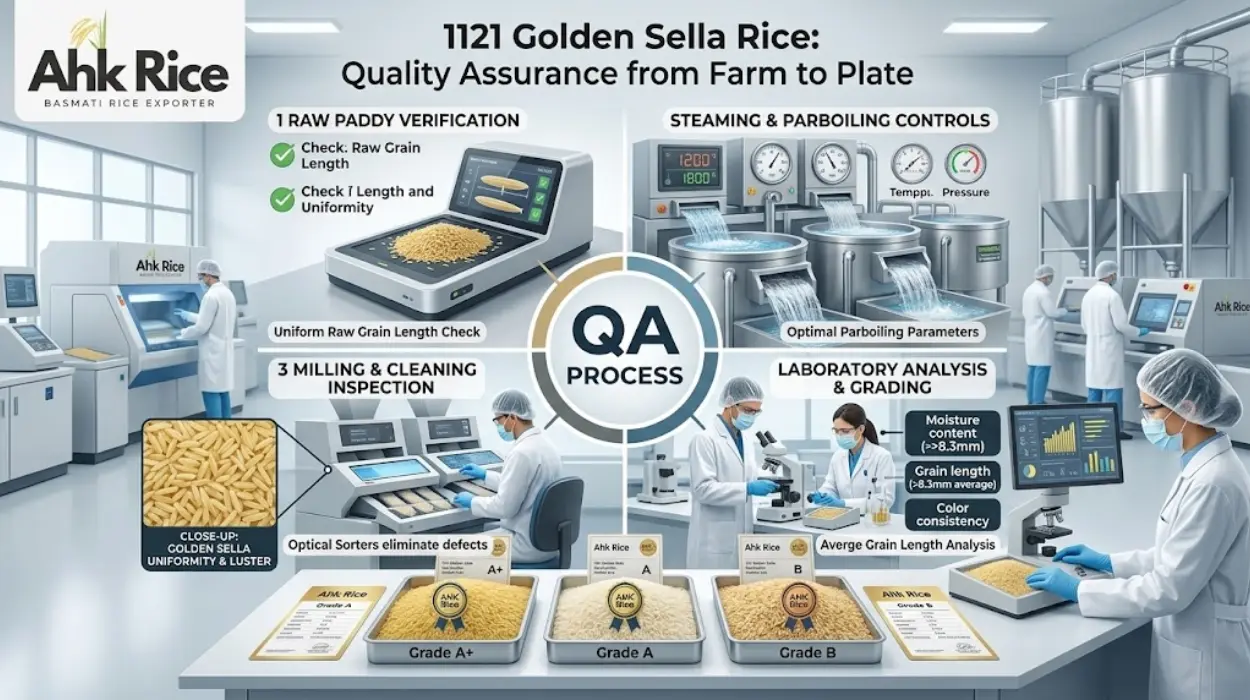
1121 Golden Sella Rice quality programs typically focus on grain length, moisture content, purity level, broken percentage, foreign matter, color consistency, and cooking performance.
Exporters implement quality controls throughout processing instead of relying on final inspection alone. This approach prevents defects before loading.
What quality control steps are commonly used?
AHK Rice follows nine processing and control stages:
- Clean the harvested paddy.
- Parboil the grain.
- Dry the rice.
- De-husk the kernels.
- Polish the grain.
- Grade by size.
- Sort by color.
- Inspect laboratory samples.
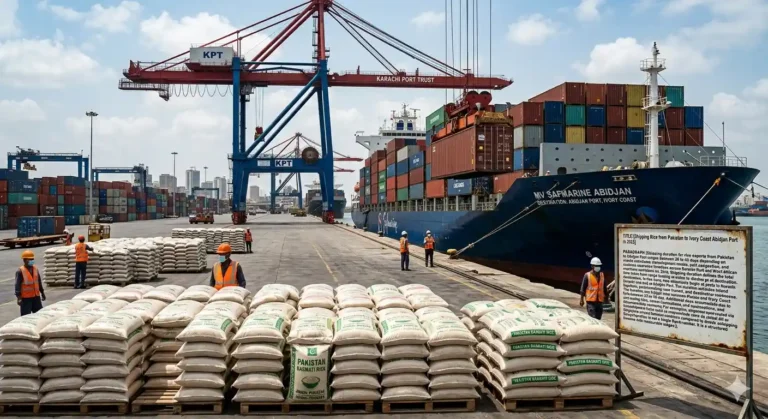
- Load export containers.
Each stage removes a specific risk factor.
What grades are commonly available?
AHK Rice supplies multiple processing grades:
- 100% Sortex
- Double Sortex
- Triple Sortex
- Premium Export Grade
- Super Premium Grade
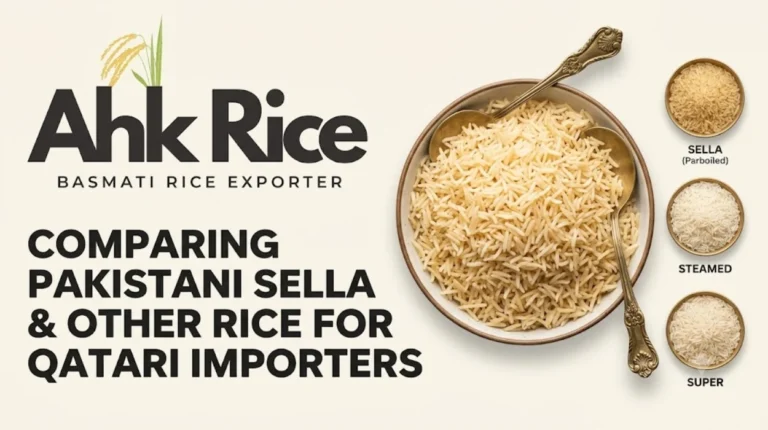
- Steam Grade
- Golden Sella Grade
Each grade targets different import requirements and budget levels.
With available quality assurance methods established, the next question is how these approaches compare in real importing situations.
How do different quality assurance approaches compare?
Integrated process control delivers the strongest results. Final inspection alone identifies defects, while process-based quality assurance prevents defects before shipment.
Specification Comparison Table
| Attribute | Process Control System | Final Inspection Only |
|---|---|---|
| Quality Consistency | High | Moderate |
| Defect Prevention | Proactive | Reactive |
| Moisture Stability | Controlled | Variable |
| Traceability | Full Batch Tracking | Limited |
| Shipment Accuracy | High | Moderate |
| Customer Claims Risk | Low | Higher |
| Long-Term Reliability | Strong | Moderate |
Process-based systems create measurable advantages. Defects are identified before packaging.
Final inspection remains valuable. However, final inspection alone cannot correct problems created during processing.
Product Specification Comparison
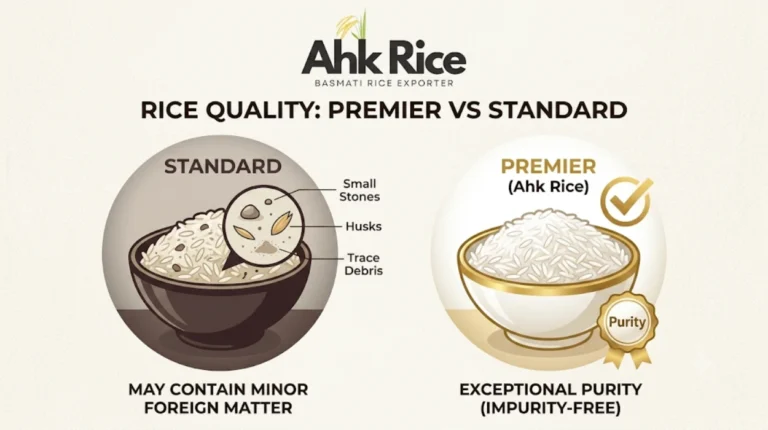
| Specification | Premium 1121 Golden Sella | Standard 1121 Golden Sella |
|---|---|---|
| Grain Length | 8.30 mm+ | 8.00–8.20 mm |
| Broken Rice | 2–5% | 5–10% |
| Moisture | 12–13% | 13–14% |
| Purity | 99.9% | 99.5% |
| Foreign Matter | Minimal | Low |
| Color Uniformity | Excellent | Good |
| Cooking Expansion | Up to 2.5x | Up to 2.2x |
Premium grades support retail and branded markets. Standard grades support institutional and food-service channels.
Shelf Life Comparison
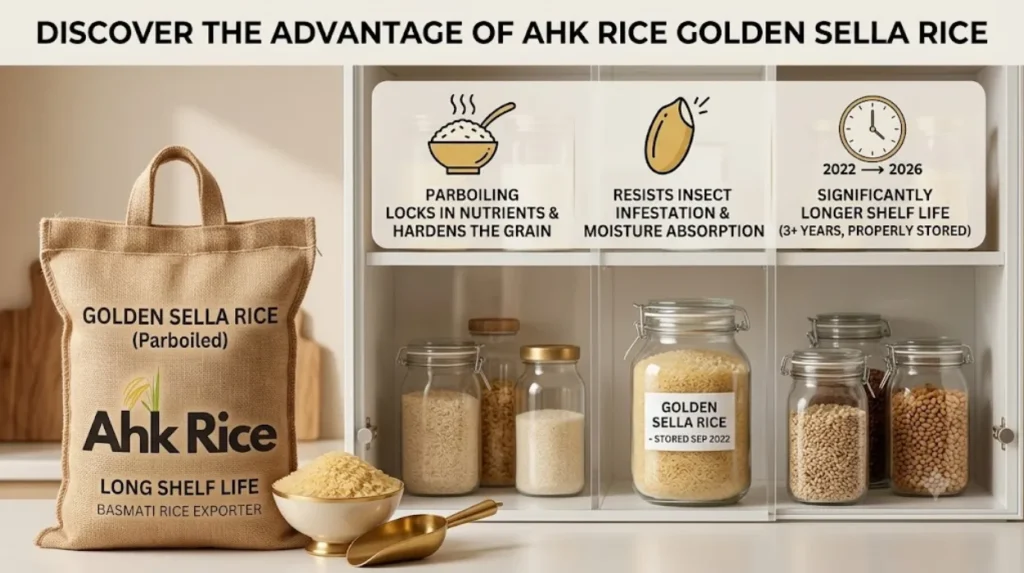
Golden Sella processing improves grain stability.
| Rice Type | Shelf Life |
|---|---|
| 1121 Golden Sella | 18–24 Months |
| 1121 Steam Rice | 12–18 Months |
| White Basmati Rice | 12 Months |
Golden Sella lasts longer than Steam Rice.
In UAE warehouses operating above 40°C, Golden Sella maintains quality longer.
In West African markets with seasonal storage conditions, Golden Sella preserves grain integrity more effectively.
With comparison factors understood, buyers can evaluate which approach suits their market requirements.
Which quality assurance method works best for different markets?
Gulf markets prioritize premium grading and appearance, while African markets prioritize durability, value, and storage stability. The best solution depends on the distribution channel and customer expectations.
Gulf Cooperation Council (GCC) Markets
Countries including Saudi Arabia, UAE, Oman, Kuwait, Bahrain, and Qatar favor premium specifications.
Preferred characteristics include:
- Long grain appearance
- Uniform golden color
- Low broken percentage
- Strong cooking elongation
- Retail packaging consistency
Premium Triple Sortex grades dominate this region.
African Markets
West African importers often prioritize value and storage performance.
Preferred characteristics include:
- Storage durability
- Consistent cooking
- Competitive pricing
- Stable supply availability
- Strong packaging protection
Standard export grades remain highly competitive.
Price Per MT Comparison
| Market Region | Typical Preferred Grade | Relative Price Position |
|---|---|---|
| GCC Markets | Premium Triple Sortex | Highest |
| Europe | Premium Export Grade | High |
| East Africa | Standard Export Grade | Medium |
| West Africa | Commercial Export Grade | Competitive |
Premium grades command higher prices because processing costs, sorting requirements, and inspection standards increase.
Market requirements influence quality systems. The next consideration is understanding the advantages and limitations of each approach.
What are the pros and cons of different quality assurance strategies?
Comprehensive quality systems create stronger consistency and lower claim rates, while simplified systems reduce operational costs but increase commercial risk.
Comprehensive Quality Assurance
Advantages
- Lower rejection rates
- Better customer retention
- Improved shipment consistency
- Strong documentation support
- Reduced claim exposure
Example:
A UAE retail importer receives identical specifications across multiple shipments. Consistent quality supports brand reputation.
Limitations
- Higher processing costs
- Additional inspection expenses
- Longer preparation timelines
Basic Inspection Systems
Advantages
- Lower operating costs
- Faster shipment preparation
- Competitive pricing
Example:
A wholesale trader purchasing container volumes may prioritize cost efficiency over premium retail presentation.
Limitations
- Greater quality variation
- Higher dispute risk
- Reduced traceability
Comprehensive systems generally provide stronger long-term commercial performance.
With strengths and weaknesses understood, buyers can evaluate the final decision criteria.
What decision factors should importers evaluate before selecting a supplier?
Five factors determine supply reliability: grading standards, inspection systems, documentation accuracy, delivery performance, and export experience.
Decision Framework Table
| Evaluation Factor | Low Priority | Medium Priority | High Priority |
|---|---|---|---|
| Quality Consistency | Basic Grade | Export Grade | Premium Grade |
| Inspection Standards | Internal Only | Mixed | Third-Party Verified |
| Documentation | Basic | Complete | Fully Verified |
| Delivery Reliability | Occasional | Consistent | Contract-Based |
| Supply Capacity | Limited | Regional | Multi-Market Export |
Additional Questions Buyers Should Ask
Before selecting a supplier, buyers should verify:
- Laboratory testing procedures
- Moisture testing standards
- Container loading protocols
- Fumigation procedures
- Export certification systems
- Shipment tracking methods
Common Export Documents
- Commercial Invoice
- Packing List
- Certificate of Origin
- Phytosanitary Certificate
- Fumigation Certificate
- Bill of Lading
- Quality Inspection Report
These documents support customs clearance and shipment verification.
Quality assurance decisions ultimately depend on balancing quality requirements, budget expectations, and delivery commitments.
Frequently Asked Questions
What is the ideal moisture level for 1121 Golden Sella Rice?
The ideal export moisture level remains between 12% and 14%. This range supports storage stability and cooking performance during international transport.
Why does Golden Sella Rice have a longer shelf life?
Golden Sella Rice undergoes a controlled parboiling process. This process strengthens the grain structure and improves storage durability for up to 24 months.
Which market imports the most premium Golden Sella Rice?
GCC countries remain among the largest buyers of premium Golden Sella specifications because consumers prefer long grains, uniform color, and superior presentation.
What inspection methods improve rice quality consistency?
Laboratory testing, color sorting, moisture analysis, grading controls, and third-party verification create the highest consistency levels.
How many quality checkpoints should an exporter use?
Leading exporters implement quality checks during cleaning, parboiling, drying, milling, grading, sorting, packaging, and loading operations.
What broken percentage is considered premium quality?
Premium 1121 Golden Sella Rice typically contains 2–5% broken grains, depending on contract specifications.