Pakistan-Malaysia Rice Trade Developments Creating New Export Opportunities in 2026
Pakistan-Malaysia rice trade developments in 2026 are creating stronger export opportunities for qualified suppliers and importers. Here is why: rising Malaysian demand for premium rice, diversified sourcing strategies, competitive Pakistani pricing, and improved trade relationships are increasing procurement opportunities for Malaysian buyers. Buyers seeking detailed market knowledge can first explore insights about Malaysian grade preferences in our guide on Pakistani rice varieties preferred by Malaysian buyers in 2026.
Malaysia remains one of the most important rice-importing markets in Southeast Asia. Pakistani exporters are responding with higher quality specifications, stronger certifications, and improved logistics solutions. AHK Rice is positioned to support importers, wholesalers, distributors, and food service operators seeking reliable rice procurement solutions in 2026.
What is the best solution for Malaysian buyers seeking new rice sourcing opportunities in 2026?
Pakistani Basmati rice offers competitive pricing, stable supply, premium grain quality, flexible packaging, certified processing, and dependable shipping schedules for Malaysian importers seeking long-term sourcing solutions in 2026.
Malaysia continues to diversify rice procurement channels to strengthen food security and maintain stable consumer pricing. Pakistani rice exporters benefit from this trend because Pakistan produces large volumes of premium Basmati and non-Basmati rice suitable for retail and food service markets.
AHK Rice supports this demand through its export-focused processing system. Buyers can source premium rice directly through AHK Rice, reducing sourcing complexity and improving consistency across shipments.
How does Pakistani rice meet Malaysian market requirements?
Pakistani rice matches Malaysian market expectations through grain length, aroma, cooking performance, and price competitiveness. Malaysian distributors often require products suitable for supermarkets, restaurants, catering operations, and private-label packaging.
AHK Rice supplies multiple export grades including:
- 1121 Steam Basmati Rice
- 1121 Golden Sella Basmati Rice
- 1121 White Basmati Rice
- Super Kernel Basmati Rice
- 1509 Basmati Rice
- IRRI-6 Rice
- PK-386 Rice
Specifications commonly requested by Malaysian buyers
| Specification | Typical Requirement |
|---|---|
| Grain Length | 8.2 mm+ |
| Moisture | 12%–14% |
| Broken Grains | 2%–5% |
| Purity | 95%–100% |
| Packaging | 5kg–50kg |
| Shelf Life | 18–24 months |
| Certification | ISO, HACCP, Phytosanitary |
Malaysia’s retail sector generally favors premium Basmati products, while institutional buyers may select cost-efficient non-Basmati grades depending on application.
With the sourcing solution established, the next question is why importers should select a specific export partner.
Why choose AHK Rice for Malaysia rice imports?
AHK Rice provides export-grade processing, verified quality control, flexible packaging options, shipment support, documentation management, and responsive commercial communication for Malaysian rice importers.
Rice sourcing success depends on supplier reliability. Product quality alone is insufficient. Importers require predictable specifications, accurate documentation, and shipment consistency.
AHK Rice operates from Punjab, Pakistan’s primary rice-growing region. The company works closely with cultivation, milling, grading, inspection, and export operations to maintain quality standards.
What processing steps does AHK Rice follow?
AHK Rice follows a structured processing workflow:
- Harvest the paddy at optimal maturity.
- Clean the incoming raw material.
- De-husk the grain.
- Mill the rice.
- Polish the kernels.
- Sort by grain length.
- Grade according to specifications.
- Inspect quality parameters.
- Pack for export dispatch.
Each stage contributes to product consistency and export compliance.
What quality controls support export shipments?
AHK Rice maintains:
- Moisture testing
- Length grading
- Colour sorting
- Metal detection
- Quality inspection
- Batch traceability
- Export certification
These controls help reduce shipment disputes and improve importer confidence.
Importers evaluating sourcing options can also review our detailed procurement guide explaining how Malaysian companies compare suppliers and specifications in this article about evaluating sourcing channels for Malaysian retail and food service procurement.
With supplier selection clarified, buyers naturally want to understand expected commercial outcomes.
What results can Malaysian importers expect from Pakistan-Malaysia rice trade growth in 2026?
Importers can expect greater supplier choice, competitive procurement costs, stable supply availability, premium product access, improved logistics efficiency, and stronger long-term sourcing partnerships.
Malaysia’s growing demand for imported rice creates opportunities for importers to diversify procurement strategies. Pakistan remains competitive because of production capacity and established export infrastructure.
Expected benefits for distributors
Distributors gain:
- Consistent inventory availability
- Multiple grade selections
- Competitive procurement costs
- Retail-ready packaging options
- Private-label opportunities
Expected benefits for food service operators
Food service buyers gain:
- Reliable cooking performance
- Consistent grain appearance
- Bulk packaging availability
- Cost control opportunities
- Long shelf life
Expected benefits for retailers
Retail chains gain:
- Premium Basmati positioning
- Attractive packaging options
- Strong consumer recognition
- Product differentiation
- Stable sourcing channels
Shipping timelines from Pakistan to Malaysia
| Destination Market | Estimated Transit Days |
|---|---|
| Port Klang | 12–16 Days |
| Penang | 13–17 Days |
| Johor Port | 13–18 Days |
| East Malaysia | 18–25 Days |
Transit periods vary based on vessel schedules, port congestion, customs procedures, and seasonal demand.
AHK Rice coordinates shipment planning to help buyers maintain inventory continuity throughout the year.
With results understood, buyers should evaluate cost considerations before making procurement decisions.
What factors affect pricing for Pakistani rice exports to Malaysia?
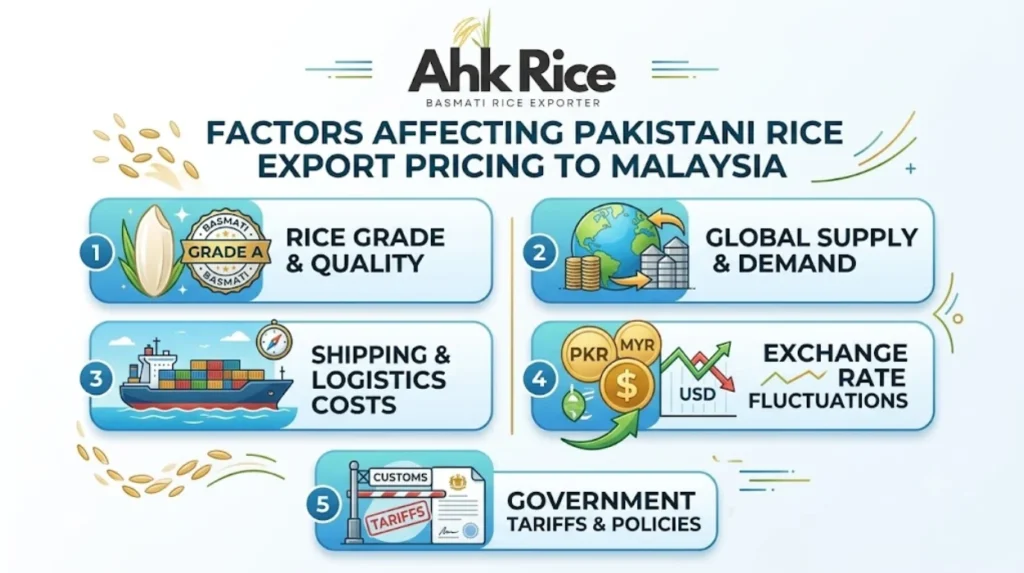
Rice pricing depends on variety, grain length, processing method, packaging specifications, order volume, shipping costs, seasonal availability, and market demand conditions.
Rice procurement decisions require understanding the complete cost structure rather than focusing solely on product pricing.
Main pricing factors
| Factor | Impact on Cost |
|---|---|
| Rice Variety | High |
| Processing Type | Medium-High |
| Packaging Format | Medium |
| Container Volume | Medium |
| Freight Costs | High |
| Market Conditions | High |
| Certifications | Medium |
Grade-based pricing considerations
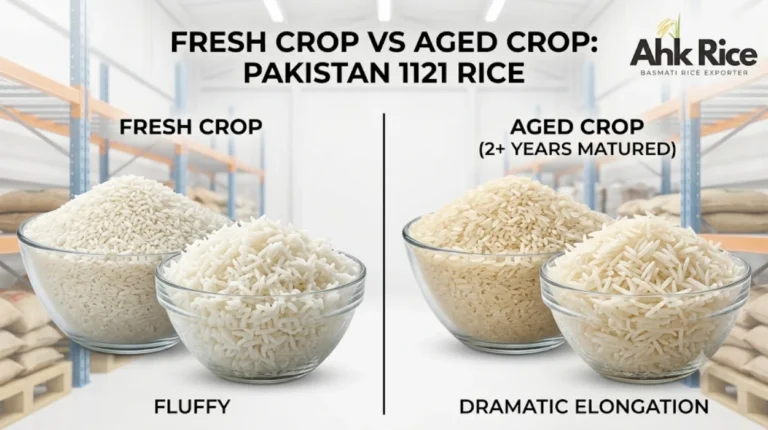
1121 Golden Sella Basmati generally commands premium pricing because of its longer shelf life and stronger grain stability.
1121 Steam Basmati often attracts buyers seeking softer cooking characteristics and premium retail positioning.
IRRI-6 and PK-386 frequently provide more economical solutions for volume-focused procurement programs.
Shelf life comparison
| Rice Type | Typical Shelf Life |
|---|---|
| Golden Sella | 18–24 Months |
| Steam Basmati | 12–18 Months |
| White Basmati | 12–18 Months |
Golden Sella lasts longer than Steam rice. In tropical warehouse environments, Golden Sella maintains grain integrity for extended periods. For distributors managing longer inventory cycles, Golden Sella often becomes the preferred specification.
Sample process and associated costs
AHK Rice follows a structured sampling process:
- Request the desired rice grade.
- Confirm technical specifications.
- Prepare representative samples.
- Inspect quality internally.
- Dispatch samples internationally.
- Review buyer feedback.
- Finalize commercial terms.
Typical sample costs include:
| Item | Estimated Cost |
|---|---|
| Product Sample | Usually Free |
| Courier Charges | $40–$120 |
| Laboratory Testing | Optional |
| Certification Copies | Usually Included |
Actual costs vary by destination and courier provider.
With pricing factors reviewed, the final step is understanding how to begin the procurement process.
How can Malaysian importers get started with AHK Rice?
Importers should define specifications, request samples, verify certifications, evaluate pricing, confirm shipment requirements, and finalize contracts before placing container orders.
Successful procurement begins with clear specifications. Buyers should identify rice variety, grain length requirements, packaging format, target market, and annual volume projections.
Required export documents
- Commercial Invoice
- Packing List
- Certificate of Origin
- Phytosanitary Certificate
- Fumigation Certificate
- Bill of Lading
- Quality Inspection Documents
Recommended buyer workflow
- Define procurement objectives.
- Select the required rice grade.
- Request product specifications.
- Review certifications.
- Approve samples.
- Confirm pricing.
- Finalize shipment schedule.
- Execute purchase agreement.
- Receive container delivery.
AHK Rice supports buyers throughout this process by coordinating quality verification, documentation preparation, shipment scheduling, and export communication.
Pakistan-Malaysia rice trade developments in 2026 are creating meaningful opportunities for importers seeking dependable rice sourcing solutions. AHK Rice continues to help distributors, wholesalers, retailers, and food service operators secure quality Pakistani rice with competitive export support. Contact AHK Rice today through our quotation request form to begin your procurement process.
Frequently Asked Questions
How is Pakistan-Malaysia rice trade changing in 2026?
Pakistan-Malaysia rice trade is expanding through stronger commercial cooperation and growing demand for imported rice. Malaysian buyers are seeking reliable supply partners with stable quality standards. Pakistani exporters are improving processing and logistics capabilities. This creates more opportunities for importers. AHK Rice supports buyers through export-focused supply solutions.
Which Pakistani rice varieties are most popular in Malaysia?
1121 Basmati, Super Kernel Basmati, and 1509 Basmati remain popular choices. Retail buyers often prefer aromatic premium rice. Food service operators evaluate performance and procurement costs. Different grades serve different market segments. Product selection should align with customer demand and pricing goals.
How long does it take to ship rice from Pakistan to Malaysia?
Most shipments arrive within 12 to 18 days depending on destination ports. Shipping schedules vary according to vessel availability. Customs clearance also affects delivery timelines. Advance planning improves inventory management. AHK Rice helps coordinate shipment schedules efficiently.
What certifications are important for Malaysian rice imports?
Importers commonly request phytosanitary certificates, certificates of origin, and quality documentation. Food safety certifications can strengthen market acceptance. Certification requirements depend on customer segments. Retail and food service channels may have different expectations. Documentation verification should occur before shipment.
Why do Malaysian importers work with AHK Rice?
AHK Rice offers export-grade processing, quality controls, documentation support, and responsive communication. Buyers receive assistance throughout the sourcing process. Product specifications are clearly defined before shipment. Samples can be evaluated before procurement decisions. This helps reduce sourcing risks and improve consistency.