Choose a Pakistan Rice Exporter Using Moisture-Controlled Shipping for Saudi Arabia
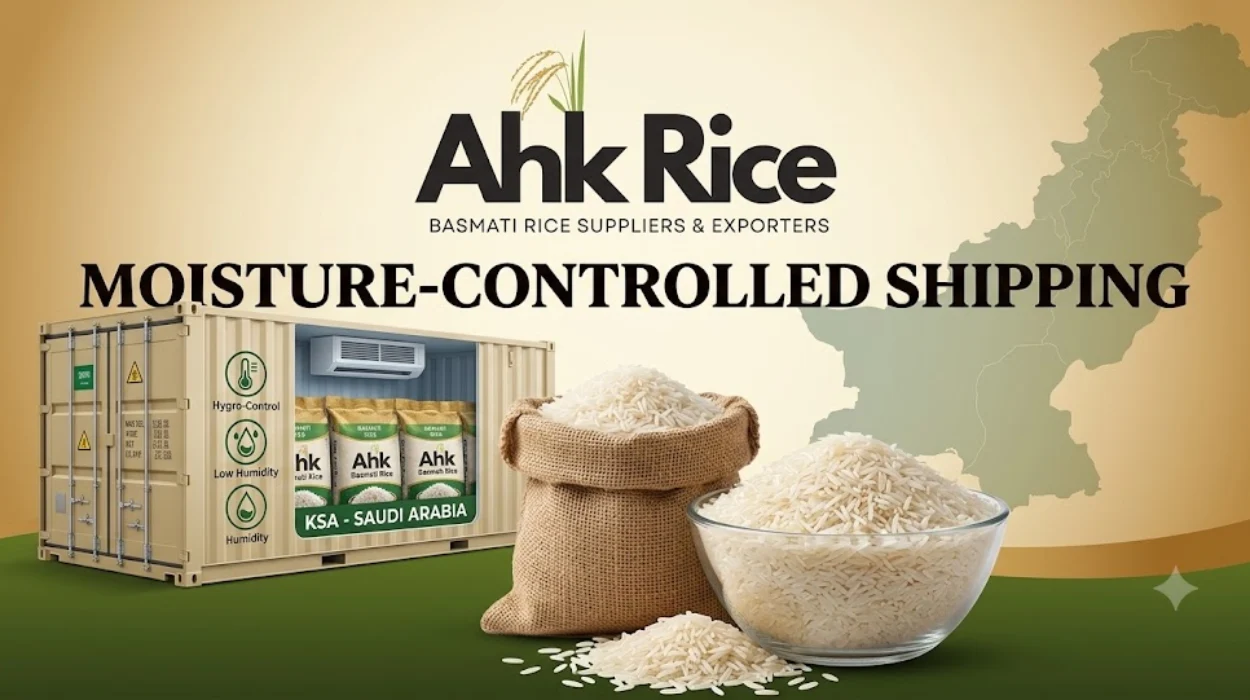
Selecting a Pakistan rice exporter that uses moisture-controlled shipping is the most reliable way to reduce quality risks, protect your investment, and ensure consistent delivery standards in the Saudi Arabian market. Before comparing suppliers, it helps to understand how moisture damage develops during transit in this guide on:
How moisture affects Basmati rice shipments to Saudi Arabia. If you already know the fundamentals, reviewing the:
A comparison of modern moisture-control methods for Saudi-bound rice exports will help you evaluate exporters more effectively. stable quality, documentation compliance, and dependable logistics for Saudi Arabia.
What is the best solution for choosing a Pakistan rice exporter for Saudi Arabia?
The best solution is selecting an exporter that controls moisture from procurement to final container sealing while providing complete documentation, laboratory testing, transparent communication, and proven shipping experience with Saudi import regulations. This approach minimizes commercial risk, protects product quality, and supports long-term supply relationships.
Saudi Arabia remains one of the largest destinations for Pakistani Basmati and non-Basmati rice. Importers expect consistent grain appearance, aroma, moisture levels, and shelf life. Even premium rice can lose value if moisture rises during storage or ocean transportation.
Many exporters focus only on pricing. Experienced importers evaluate the complete export process because shipment quality depends on much more than the rice itself.
A professional exporter should demonstrate control over every stage of the supply chain, including procurement, milling, grading, laboratory analysis, packaging, warehouse conditions, container inspection, loading supervision, and shipping documentation.
AHK Rice follows this process to reduce quality variation between production batches and export consignments. Instead of treating moisture control as a single inspection, AHK Rice manages it throughout production and logistics until the container leaves Pakistan.
The first mention of Saudi Arabia export services should naturally direct buyers to the dedicated Saudi Arabia export service.
Professional buyers should verify:
| Evaluation Factor | Why It Matters |
|---|---|
| Moisture testing | Prevents spoilage during shipment |
| Export documentation | Ensures customs compliance |
| Container inspection | Reduces condensation risks |
| Packaging quality | Protects rice during transport |
| Laboratory reports | Confirms specifications |
| Shipment history | Demonstrates exporter reliability |
| Communication | Supports smooth import operations |
Why should buyers choose AHK Rice for Saudi Arabia?
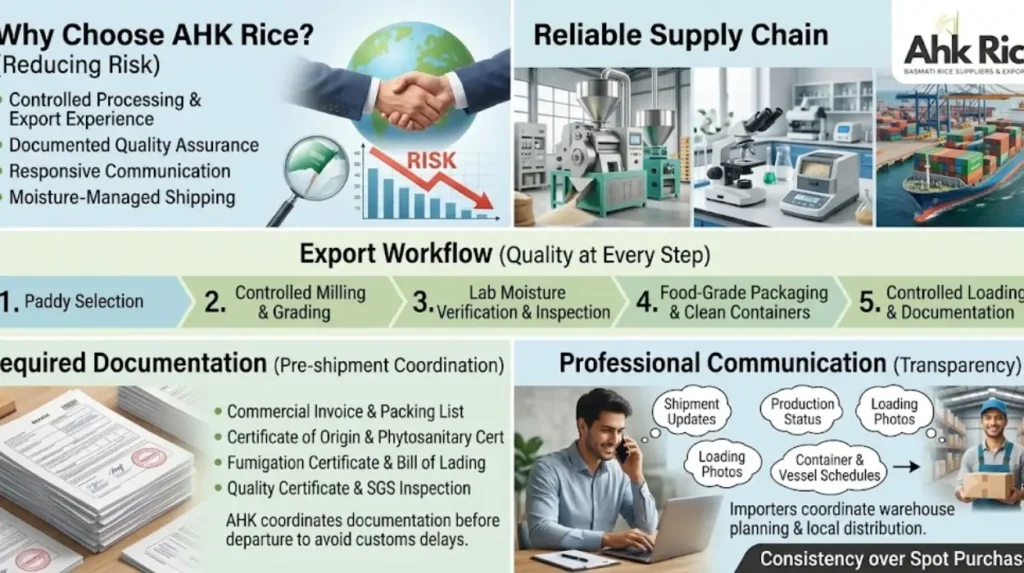
AHK Rice combines controlled processing, export experience, documented quality assurance, responsive communication, and moisture-managed shipping practices that help Saudi importers receive rice matching agreed commercial specifications while reducing unnecessary operational and financial risks throughout the supply chain.
Choosing an exporter is ultimately about reducing risk rather than finding the lowest quotation.
AHK Rice works with buyers who require consistency across repeated shipments rather than occasional spot purchases.
The export workflow includes:
- Careful selection of paddy
- Controlled milling
- Grading according to buyer specifications
- Laboratory moisture verification
- Quality inspection
- Food-grade packaging
- Container cleanliness inspection
- Controlled loading procedures
- Complete export documentation
Saudi importers commonly require:
- Commercial Invoice
- Packing List
- Certificate of Origin
- Phytosanitary Certificate
- Fumigation Certificate (when applicable)
- Bill of Lading
- Quality Certificate
- SGS or third-party inspection (if requested)
AHK Rice can coordinate documentation according to contractual requirements before shipment departure, helping buyers reduce customs delays.
Communication is another important factor.
Professional exporters provide shipment updates, production status, loading photographs, container numbers, and vessel schedules instead of leaving buyers uncertain after payment.
This transparency helps importers coordinate warehouse planning and local distribution.
What shipping times can buyers expect for Saudi Arabia?
Shipping time depends on the destination port, vessel schedules, customs processing, and transshipment requirements. Most direct shipments from Pakistan to Saudi Arabian ports arrive within approximately two to four weeks under normal commercial shipping conditions.
Typical transit estimates during 2026 are:
| Destination Port | Typical Transit Time |
|---|---|
| Jeddah Islamic Port | 12–18 days |
| Dammam | 14–20 days |
| King Abdullah Port | 12–18 days |
| Jubail | 16–22 days |
Additional time should be planned for:
- Production scheduling
- Quality inspection
- Container booking
- Customs clearance
- Seasonal shipping congestion
Peak demand periods before Ramadan and Hajj may increase booking times because shipping lines experience higher container demand.
AHK Rice helps buyers schedule production according to vessel availability, reducing unnecessary warehouse delays.
What sample process should importers expect before placing a commercial order?
Professional exporters provide a structured sampling process that allows buyers to verify grain quality, cooking characteristics, aroma, specifications, packaging options, and laboratory values before committing to larger commercial purchases with clearly defined sampling procedures and associated logistics costs.
Sampling protects both exporter and importer.
A typical export sampling process includes:
Step 1: Requirement Discussion
The buyer specifies:
- Rice variety
- Grain length
- Broken percentage
- Moisture requirement
- Packaging type
- Destination market
Step 2: Sample Preparation
AHK Rice prepares representative samples from available production lots matching buyer specifications.
Step 3: Laboratory Verification
Samples may include:
- Moisture report
- Broken percentage
- Chalkiness
- Foreign matter
- Purity
- Grain length
Step 4: International Shipping
Courier companies such as DHL, FedEx, or UPS deliver samples internationally.
Typical 2026 sample costs:
| Item | Estimated Cost |
|---|---|
| Rice sample | Usually complimentary |
| Courier charges | USD 45–95 depending on destination |
| Laboratory testing (optional) | USD 20–80 |
| Customized packaging sample | Additional if requested |
Many exporters adjust sample policies depending on future order size. Some may credit sample costs against confirmed commercial orders.
What results can buyers expect from moisture-controlled shipping?
Moisture-controlled shipping helps maintain grain quality, reduce condensation-related losses, preserve aroma, extend shelf life, minimize packaging damage, improve customer satisfaction, and decrease the likelihood of commercial disputes resulting from transportation-related quality deterioration.
Proper moisture management produces measurable commercial benefits.
Expected outcomes include:
- Better grain appearance
- Lower risk of mold growth
- Reduced discoloration
- Improved cooking consistency
- Longer storage stability
- Lower rejection rates
- Reduced insurance claims
- Higher importer confidence
These outcomes become increasingly valuable for distributors serving supermarkets, wholesalers, hospitality businesses, and food service companies across Saudi Arabia.
Because reputation matters in competitive food markets, consistent shipment quality often generates repeat business.
AHK Rice focuses on maintaining these standards throughout export operations instead of relying on final inspections alone.
What factors affect export pricing?
Rice export pricing depends on crop availability, rice variety, grade, packaging specifications, currency exchange rates, shipping costs, certification requirements, inspection services, destination port, and seasonal market demand rather than a single fixed price per metric ton.
Several variables influence quotations.
Product factors
- Super Kernel Basmati
- PK-386
- IRRI-6
- 1121 Basmati
- Brown rice
- White rice
- Steam rice
- Sella rice
Premium grades naturally command higher prices.
Packaging
Options include:
- 1 kg
- 2 kg
- 5 kg
- 10 kg
- 20 kg
- 25 kg
- 40 kg
- 50 kg
Private labeling also affects pricing.
Shipping
Ocean freight changes according to:
- Fuel prices
- Shipping line capacity
- Seasonal demand
- Container availability
Certifications
Additional buyer requirements may include:
- SGS inspection
- Halal documentation
- ISO compliance
- HACCP systems
- BRCGS certification where applicable
Each requirement influences total export cost.
Instead of comparing only FOB prices, buyers should compare total landed value, shipment consistency, and supplier reliability.
How can importers evaluate exporter reliability before placing a large order?
Reliable exporters demonstrate consistency through verified documentation, transparent communication, production capability, inspection records, repeat international customers, responsive support, and clearly defined commercial processes rather than relying solely on marketing claims or unusually low quotations.
Before placing a container order, buyers should request:
- Company profile
- Export history
- Product specifications
- Laboratory reports
- Sample shipment
- Packaging photographs
- Factory images
- Certifications
- Production capacity
- Estimated delivery schedule
Professional suppliers answer these questions confidently because they have documented processes.
AHK Rice encourages buyers to review specifications before confirming production so expectations remain aligned throughout the transaction.
How do buyers get started with AHK Rice?
The process begins with discussing product specifications, reviewing available grades, receiving a quotation, approving samples, confirming packaging, arranging payment terms, scheduling production, completing export documentation, and coordinating shipment until delivery at the Saudi destination port.
A straightforward purchasing process generally includes:
- Submit product requirements.
- Receive specifications and quotation.
- Approve physical samples.
- Confirm packaging artwork.
- Sign commercial agreement.
- Begin production.
- Complete quality inspection.
- Load containers.
- Dispatch shipment.
- Receive shipping documents.
Throughout this workflow, AHK Rice maintains communication so buyers understand production status, shipment scheduling, and documentation progress.
Long-term partnerships are built through consistency rather than individual transactions. Buyers who prioritize moisture-controlled shipping, transparent quality assurance, and dependable export support are better positioned to reduce supply chain risks and maintain customer satisfaction in Saudi Arabia.
Frequently Asked Questions
How does moisture-controlled shipping benefit rice exports to Saudi Arabia?
Moisture-controlled shipping helps maintain grain quality, preserve aroma, reduce the risk of mold and discoloration, and extend shelf life during transit. It also minimizes the chances of shipment rejection and customer complaints upon arrival.
Why should I choose a Pakistan rice exporter with moisture control?
An exporter with moisture-control practices ensures rice is tested, stored, packed, and shipped under conditions that reduce condensation and quality deterioration. This provides greater consistency and protects your investment.
How long does it take to ship rice from Pakistan to Saudi Arabia?
Transit time generally ranges from 12 to 22 days, depending on the destination port, shipping line, customs clearance, and vessel schedule. Production and documentation may require additional time before shipment.
Does AHK Rice provide samples before bulk orders?
Yes. AHK Rice offers representative product samples so buyers can evaluate grain quality, cooking performance, aroma, and specifications before confirming a commercial order. International courier charges may apply.
What documents are provided with rice exports to Saudi Arabia?
Typical export documentation includes the Commercial Invoice, Packing List, Bill of Lading, Certificate of Origin, Phytosanitary Certificate, Quality Certificate, and other documents requested by the buyer or Saudi authorities.
What factors affect the price of rice exports to Saudi Arabia?
Pricing depends on the rice variety, grade, packaging, order quantity, certification requirements, shipping costs, seasonal demand, and international freight rates.
What packaging options are available for Saudi importers?
Most exporters offer packaging in 1 kg, 2 kg, 5 kg, 10 kg, 20 kg, 25 kg, 40 kg, and 50 kg bags, along with private-label and customized packaging solutions for wholesale and retail markets.
How can I verify the reliability of a Pakistan rice exporter?
Request product specifications, laboratory reports, certifications, export history, production capacity, sample shipments, and customer references. Reliable exporters also provide transparent communication throughout the export process.
Which rice varieties are commonly exported to Saudi Arabia?
Popular varieties include Super Kernel Basmati, 1121 Basmati, PK-386, IRRI-6, Sella Rice, Steam Rice, White Rice, Brown Rice, and other grades based on buyer requirements.
How do I start importing rice from AHK Rice?
Begin by sharing your product specifications and quantity requirements. After receiving a quotation and approving samples, production, packaging, documentation, and shipment are arranged according to your agreed delivery schedule.