How Does Moisture Build-Up Affect Pakistan Basmati Rice During Shipment to Saudi Arabia?
Pakistan Basmati rice travels more than 2,500 kilometres from rice mills in Punjab to distribution centres across Saudi Arabia. During this journey, moisture control determines whether the rice reaches buyers with its natural aroma, grain length, and cooking quality intact. Moisture build-up inside containers changes the physical condition of rice, encourages mould growth, reduces shelf life, and increases the risk of quality claims. Understanding how moisture develops during international shipping explains why exporters follow strict drying, milling, storage, packaging, and container preparation standards before every shipment.
What is moisture build-up during Pakistan Basmati rice shipment to Saudi Arabia?
Moisture build-up is the accumulation of water vapor inside rice packaging or shipping containers during transport. It forms through temperature differences, humidity changes, and trapped moisture within cargo spaces, directly affecting grain quality, food safety, storage stability, and export compliance throughout the shipping process.
Moisture build-up refers to excess water vapor that condenses inside a shipping container or packaging during transportation. It differs from the natural moisture content of harvested rice. Every rice grain contains internal moisture after drying. Condensation develops when warm, humid air inside a container meets cooler container walls.
Pakistan exports premium Basmati rice from Punjab, where the climate during harvesting differs significantly from conditions at Arabian Sea ports and Saudi Arabian destinations. These changing environmental conditions create temperature fluctuations throughout sea transport.
Saudi Arabia remains one of the largest import markets for Pakistani Basmati rice because of strong consumer demand for premium long-grain aromatic rice used in dishes such as Kabsa, Mandi, Biryani, and Saleeg. Protecting rice quality throughout transit preserves the characteristics expected by wholesalers, retailers, and food service businesses.
Rice exporters maintain export moisture levels according to customer specifications and international food safety standards before loading cargo.
How does moisture build-up develop during sea shipment?
Moisture develops when water vapor inside sealed shipping containers condenses after repeated temperature changes between daytime heat and nighttime cooling. Condensation forms droplets on container roofs and walls before falling onto rice bags, cartons, or bulk packaging during transportation.
International shipping containers remain sealed throughout most of the voyage. Air trapped inside the container contains humidity from the surrounding environment and the cargo itself.
How does the condensation cycle occur?
The process follows predictable physical steps.
- Rice is loaded into a dry shipping container.
- Air inside the container contains humidity.
- Daytime temperatures increase the temperature of container air.
- Warm air holds larger quantities of water vapor.
- Night temperatures cool the steel container.
- Water vapor condenses into droplets.
- Droplets collect on the container ceiling.
- Water falls onto packaged rice.
- Repeated temperature cycles increase moisture exposure.
This process is widely known in container logistics as container rain or cargo sweat.
Long sea voyages between Pakistan and Saudi Arabia expose containers to continuous environmental changes. Proper container preparation interrupts this condensation cycle before shipment begins.
Which factors increase moisture build-up inside rice export containers?
Several measurable factors increase moisture accumulation, including excessive grain moisture, humid loading environments, damaged packaging, poor ventilation, container contamination, and sudden temperature changes during ocean transport between Pakistan and Saudi Arabia.
Multiple conditions influence moisture formation.
Rice moisture content
Freshly milled rice requires controlled drying before packaging. Export-grade Basmati generally remains within buyer specifications that preserve grain quality during long-distance transportation.
Higher grain moisture increases evaporation inside sealed containers.
Container condition
Shipping containers require inspection before loading.
Inspection includes checking for:
- Roof leaks
- Floor moisture
- Rust damage
- Previous cargo contamination
- Door seal integrity
- Ventilation openings
A clean and dry container reduces condensation risk.
Port humidity
Pakistan’s southern ports experience seasonal humidity influenced by coastal weather. Loading cargo during periods of elevated humidity introduces additional water vapor into containers.
Packaging quality
Strong export packaging slows moisture transfer.
Examples include woven polypropylene bags, laminated polypropylene bags, paper bags with moisture barriers, and vacuum-packed retail pouches.
Voyage duration
Longer transit periods expose containers to additional heating and cooling cycles, increasing opportunities for condensation.
What parts of Pakistan Basmati rice are affected by moisture?
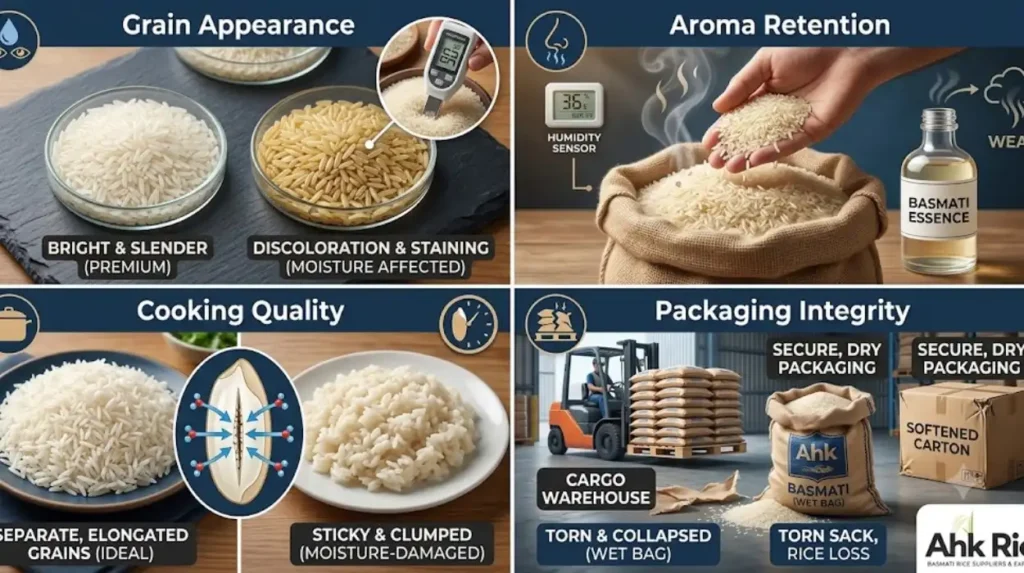
Moisture affects the entire rice product, including grain texture, aroma compounds, appearance, milling quality, storage life, packaging integrity, and food safety characteristics that importers evaluate before accepting export shipments.
Moisture changes several important quality characteristics.
Grain appearance
Premium Basmati is recognized by its slender grains and bright appearance.
Excess moisture reduces visual quality through discoloration or staining.
Aroma
Pakistan Basmati contains natural aromatic compounds developed during cultivation and aging.
High humidity weakens aroma retention over extended storage.
Cooking quality
Moisture imbalance affects cooking consistency.
Consumers expect separate, elongated grains after cooking.
Stable moisture preserves this characteristic.
Packaging
Wet bags lose structural strength.
Examples include torn woven sacks, softened cartons, and damaged retail packaging.
Damaged packaging increases handling losses during unloading and warehousing.
How is Pakistan Basmati rice processed before export to reduce moisture risks?
Pakistan Basmati rice passes through controlled harvesting, drying, milling, grading, polishing, sorting, packaging, storage, and container inspection processes that reduce moisture exposure before international shipment begins.
The export chain begins in Punjab, Pakistan’s primary Basmati-growing region.
Harvesting
Farmers harvest mature rice after grain moisture reaches suitable harvesting levels.
Harvest timing influences final grain quality.
Drying
Freshly harvested paddy undergoes controlled drying.
Drying stabilizes internal grain moisture before storage.
Milling
Rice mills remove husk and bran layers using modern processing equipment.
This stage produces white Basmati rice or brown Basmati rice according to customer requirements.
Grading
Rice passes through grading equipment that separates grains according to size and quality.
Common export grades include:
- Extra Long Grain
- Head Rice
- Broken Rice
- Premium Export Grade
- Brown Basmati Rice
Different markets specify different grade requirements.
Color sorting
Optical sorting machines remove damaged grains.
Examples include chalky grains, black grains, yellow grains, immature grains, and foreign material.
Packaging
Rice enters moisture-resistant packaging immediately after quality inspection.
Finished products move into clean warehouses before container loading.
Which Pakistan Basmati rice varieties are commonly exported to Saudi Arabia?
Saudi Arabian importers purchase several Pakistan Basmati varieties, each offering different grain characteristics, cooking performance, and commercial applications across wholesale, retail, hospitality, and food manufacturing sectors.
Pakistan exports multiple premium varieties.
Examples include:
- 1121 Basmati Rice
- Super Kernel Basmati Rice
- 1509 Basmati Rice
- PK-386 Long Grain Rice
- Brown Basmati Rice
- Steam Basmati Rice
- Sella Basmati Rice
- White Basmati Rice
Each variety follows identical moisture management principles throughout processing and shipping.
Which certifications support moisture-safe Pakistan Basmati rice exports?
Food safety certifications establish standardized processing, storage, packaging, hygiene, and traceability practices that reduce contamination risks while supporting international trade requirements for rice exports entering Saudi Arabian markets.
Export certifications define quality management systems throughout production.
Common certifications include:
- ISO 22000 Food Safety Management System
- HACCP
- GMP
- Halal Certification
- Phytosanitary Certificate
- Certificate of Origin
- Fumigation Certificate, when required by destination regulations
- Quality Inspection Reports
- Laboratory Moisture Analysis Reports
Saudi Arabian import procedures require documentation supporting food safety and customs clearance.
Which countries import Pakistan Basmati rice besides Saudi Arabia?
Pakistan exports Basmati rice to markets across the Middle East, Europe, North America, Africa, Asia, and Oceania, where consumers value aromatic long-grain rice for traditional cuisine and premium retail products.
Pakistan serves diverse international markets.
Major importing countries include:
- Saudi Arabia
- United Arab Emirates
- Qatar
- Kuwait
- Oman
- Bahrain
- Iraq
- United Kingdom
- Germany
- Canada
- United States
- Australia
- Belgium
- Netherlands
- South Africa
Every destination requires stable moisture levels to preserve quality during transportation.
What benefits result from effective moisture control during rice exports?
Effective moisture control preserves grain quality, protects food safety, extends storage life, reduces financial losses, maintains export compliance, supports customer satisfaction, and improves supply chain efficiency from Pakistan to Saudi Arabia.
Stable moisture provides measurable operational benefits.
Food safety improves because mold growth remains controlled.
Shelf life increases because grains remain physically stable during storage.
Importers receive cleaner cargo with fewer damaged bags.
Warehouses experience fewer spoilage incidents.
Retail packaging maintains appearance on store shelves.
Restaurants receive rice with consistent cooking performance.
Companies reduce insurance claims linked to cargo damage.
Exporters experience fewer shipment rejections.
Readers interested in the practical systems used to achieve these results can continue with:
Moisture control practices followed during Pakistan’s rice export process.
What misconceptions exist about moisture build-up during Basmati rice shipment?
Several misconceptions confuse natural grain moisture with shipping condensation, leading people to underestimate container preparation, packaging quality, storage conditions, and transportation management required for successful rice exports.
One misconception states that dry rice never absorbs moisture.
Rice naturally exchanges moisture with surrounding air until equilibrium develops.
Another misconception claims that waterproof bags eliminate condensation.
Packaging slows moisture transfer but does not stop condensation forming inside containers.
Some buyers assume sea transport creates all moisture problems.
Most moisture risks begin before loading through improper drying, warehouse conditions, or container preparation.
Another misunderstanding suggests all rice varieties react identically.
Different grain structures and processing methods respond differently to environmental humidity, although every export variety requires controlled moisture management.
Moisture build-up remains one of the most important quality factors in Pakistan Basmati rice exports to Saudi Arabia. It begins with environmental humidity, develops through container condensation, and directly influences aroma, appearance, cooking quality, storage life, and food safety. Export-quality rice undergoes drying, milling, grading, sorting, packaging, warehouse storage, and container inspection before shipment to minimize moisture exposure. Combined with internationally recognized food safety certifications and careful logistics management, these practices preserve the premium characteristics that define Pakistan Basmati rice throughout international transportation.
Frequently Asked Questions
What causes moisture build-up inside rice shipping containers?
Moisture build-up occurs when warm, humid air inside a sealed shipping container cools and condenses into water droplets. This condensation, often called container rain, forms on the container ceiling and can fall onto rice bags if proper moisture control measures are not implemented.
How does moisture affect the quality of Pakistan Basmati rice?
Excess moisture reduces grain quality by affecting aroma, appearance, texture, and cooking performance. It also shortens shelf life, weakens packaging, and increases the risk of mold growth during storage and transportation.
What is the ideal moisture level for export-quality Basmati rice?
Export-quality Pakistan Basmati rice is dried to the moisture level specified by buyers and international quality standards before packaging. Maintaining the correct moisture level ensures safe storage, transportation, and consistent cooking quality.
Why is Saudi Arabia an important market for Pakistan Basmati rice?
Saudi Arabia is one of the largest importers of Pakistan Basmati rice due to strong demand from households, restaurants, hotels, and food service businesses that prefer premium aromatic long-grain rice for traditional dishes.
Which Pakistan Basmati rice varieties are commonly exported to Saudi Arabia?
The most commonly exported varieties include 1121 Basmati Rice, Super Kernel Basmati Rice, 1509 Basmati Rice, Steam Basmati Rice, Sella Basmati Rice, White Basmati Rice, and Brown Basmati Rice.
Which certifications are required for Pakistan Basmati rice exports?
Common certifications include ISO 22000, HACCP, Halal Certification, GMP, Phytosanitary Certificate, Certificate of Origin, and other export documents required by importing countries and food safety regulations.
How do exporters reduce moisture during international rice shipments?
Exporters control moisture by properly drying the rice, inspecting containers, using moisture-resistant packaging, storing rice in dry warehouses, and monitoring conditions throughout processing and loading.
Does packaging alone prevent moisture damage during shipment?
No. High-quality packaging reduces moisture transfer, but effective moisture control also depends on proper drying, container inspection, warehouse conditions, and careful logistics management before shipment.