1509 Golden Sella Rice Delivery Timelines and Quality Guarantees
1509 Golden Sella Rice offers the best balance of fast delivery, long shelf life, and consistent export quality. Here is why: the variety matures earlier than traditional Basmati, remains stable during long transit periods, and reaches major importing markets within 10–35 days depending on destination.
1509 Golden Sella Rice is a parboiled Basmati variety cultivated in Punjab, Pakistan. The grain undergoes soaking, steaming, drying, milling, grading, and color sorting before export. The parboiling process strengthens the grain structure and improves storage performance. International buyers choose this variety because it combines competitive pricing with reliable cooking results.
AHK Rice supplies 1509 Golden Sella Rice through complete processing, packaging, inspection, and export management. Buyers researching delivery expectations should first understand how export-grade Basmati moves through the supply chain. A detailed overview of rice processing and export specifications can be found in our guide about understanding Pakistani Basmati rice grades and export standards.
What delivery timelines can buyers expect for 1509 Golden Sella Rice?
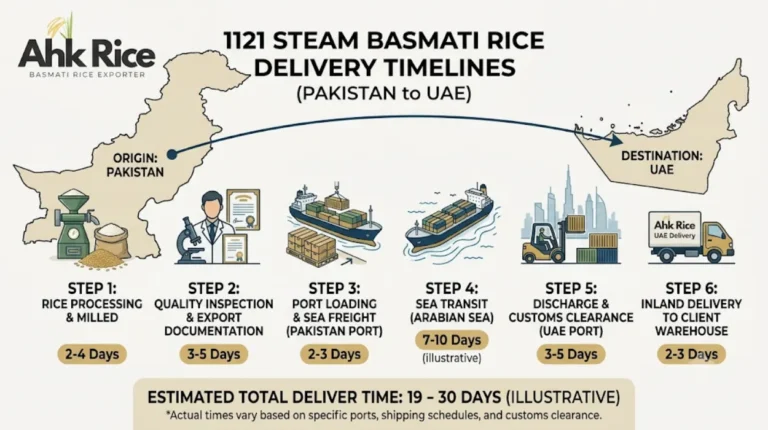
Most buyers receive shipments within 10–35 days after cargo loading, while production and export preparation require an additional 7–15 days depending on packaging specifications and destination requirements.
Delivery timelines depend on processing schedules, container availability, documentation requirements, and destination port congestion. Exporters first inspect paddy, parboil the grain, dry it, mill it, grade it, sort it, pack it, and clear customs before dispatching containers.
Typical Export Timeline
| Export Stage | Average Duration |
|---|---|
| Quality testing | 1–2 days |
| Milling and grading | 2–4 days |
| Packaging | 1–3 days |
| Documentation | 2–3 days |
| Container loading | 1–2 days |
| Customs clearance | 1–3 days |
| Ocean transit | 10–35 days |
Shipping Time by Market Region
| Destination Market | Average Transit Time |
|---|---|
| UAE | 10–15 days |
| Saudi Arabia | 12–18 days |
| Oman | 10–14 days |
| Qatar | 12–16 days |
| Iraq | 15–22 days |
| East Africa | 18–25 days |
| United Kingdom | 25–35 days |
| Europe | 25–35 days |
UAE importers often prioritize rapid replenishment cycles. Saudi distributors usually focus on retail inventory planning. Both markets require dependable shipment schedules because delayed containers increase warehousing costs.
Delivery timelines establish expectations, but buyers also need to understand which quality assurance systems protect product consistency.
What quality guarantees are available for 1509 Golden Sella Rice?
Export-grade suppliers verify moisture, grain length, purity, color, foreign matter, and cooking performance before dispatching every shipment.
Quality guarantees refer to documented standards verified through inspection and testing procedures. A guarantee becomes meaningful only when measurable specifications support it.
Quality Control Process
- Inspect incoming paddy.
- Test moisture levels.
- Parboil the grain.
- Dry the rice.
- Mill the kernels.
- Grade by size.
- Sort by color.
- Verify purity.
- Load approved lots.
Common Export Certifications
- ISO Certification
- HACCP Compliance
- Phytosanitary Certification
- Fumigation Certification
- Certificate of Origin
- SGS Inspection Reports
- Food Safety Management Systems
Standard Export Specifications
| Attribute | 1509 Golden Sella Rice |
|---|---|
| Grain Length | 8.20–8.40 mm |
| Moisture | 12–14% |
| Purity | 95–100% |
| Broken Rice | 0–5% |
| Damage Grains | Below 1% |
| Foreign Matter | Near 0% |
| Shelf Life | 18–24 months |
Buyers should request pre-shipment inspection reports before cargo loading. Verified reports reduce commercial disputes and simplify import clearance procedures.
Quality standards define shipment reliability. The next step is comparing available sourcing approaches.
How do different sourcing approaches compare?
Direct exporters provide greater specification control, while traders provide broader sourcing networks but less production visibility.
International buyers generally choose among three sourcing models.
Specification Comparison Table
| Attribute | Direct Exporter | Trading Company | Import Wholesaler |
|---|---|---|---|
| Factory Access | Full | Limited | None |
| Grade Customization | High | Medium | Low |
| Packaging Options | Extensive | Medium | Limited |
| Price Transparency | High | Medium | Low |
| Quality Control | Factory Managed | Supplier Managed | Import Managed |
| Delivery Flexibility | High | Medium | Low |
| Technical Support | Direct | Limited | Limited |
Direct sourcing gives buyers access to production schedules, inspection reports, and packaging customization. Trading companies may source from multiple mills, creating flexibility but reducing traceability.
Import wholesalers provide immediate local stock. However, they generally offer fewer customization opportunities and higher landed costs.
Sourcing models affect both pricing and quality outcomes. The next section compares available grades and their market applications.
Which 1509 Golden Sella Rice grades work best for different markets?
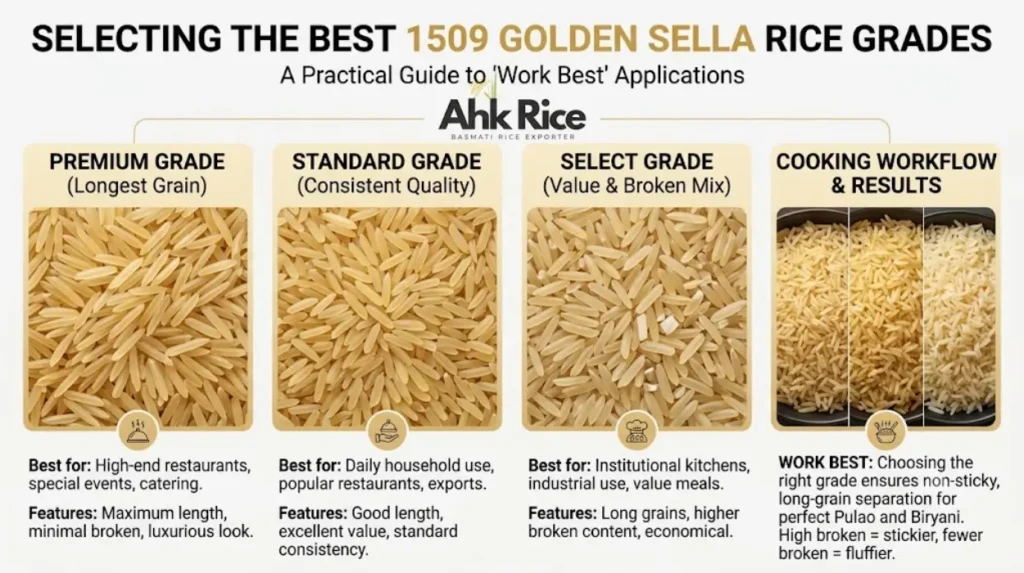
Premium grades suit retail brands, while commercial grades suit catering, foodservice, and bulk distribution channels.
1509 Golden Sella Rice is available in multiple processing grades. Each grade serves a specific commercial objective.
Available Processing Grades
- Extra Long Grain Premium
- Super Premium
- Premium
- Standard
- 5% Broken
- 10% Broken
- Commercial Grade
Market Preference Comparison
Gulf Cooperation Council (GCC)
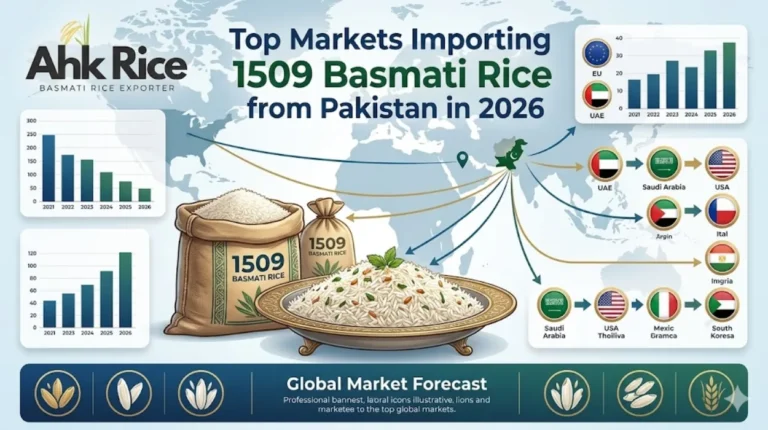
UAE, Saudi Arabia, Qatar, Oman, Bahrain, and Kuwait buyers typically prefer premium long-grain specifications. Retail consumers expect superior grain appearance and strong elongation after cooking.
Preferred grades:
- Premium
- Super Premium
- Extra Long Grain
East Africa
Kenya, Tanzania, Uganda, and Mozambique importers frequently prioritize value-focused grades. Institutional buyers focus on consistency and affordability.
Preferred grades:
- Standard
- 5% Broken
- Commercial Grade
Price Comparison per Metric Ton
| Grade | Average Price Range (USD/MT) |
|---|---|
| Extra Long Grain | $1,050–1,250 |
| Super Premium | $950–1,150 |
| Premium | $900–1,050 |
| Standard | $800–950 |
| Commercial | $700–850 |
Prices fluctuate according to harvest conditions, freight rates, exchange rates, and global demand levels (source: REAP export data, December 2025).
Grade selection influences storage performance. Shelf life comparisons provide another decision factor.
How does shelf life compare with other rice processing methods?
1509 Golden Sella Rice delivers the longest practical storage life among common Basmati processing styles because parboiling strengthens the grain and improves stability.
Parboiling transfers nutrients from the husk into the grain. The process also hardens kernels and reduces breakage during transport.
Shelf Life Comparison
| Rice Type | Shelf Life |
|---|---|
| 1509 Golden Sella | 18–24 Months |
| 1509 Steam Rice | 12–18 Months |
| White Basmati Rice | 12 Months |
| Brown Rice | 6–12 Months |
Golden Sella lasts longer than Steam Rice. In Gulf warehouses operating above 40°C, Golden Sella maintains appearance and cooking quality longer than many white rice alternatives.
Golden Sella lasts longer than White Rice. Large distributors can hold inventory for extended periods without significant quality degradation.
Shelf-life performance affects inventory strategy. Buyers should next evaluate practical decision criteria.
What decision factors should buyers evaluate before choosing a supplier?
Quality verification, delivery reliability, documentation support, packaging flexibility, and market-specific grades determine sourcing success.
Many buyers compare suppliers using price alone. Professional procurement teams evaluate operational performance instead.
Decision Framework
| Decision Factor | Why It Matters | Priority |
|---|---|---|
| Quality Reports | Verifies specifications | High |
| Delivery History | Reduces stock shortages | High |
| Export Documents | Prevents customs delays | High |
| Packaging Options | Supports branding goals | Medium |
| Grade Availability | Matches target market | Medium |
Pros and Cons of Different Purchasing Strategies
| Strategy | Advantages | Limitations |
|---|---|---|
| Direct Factory Purchase | Better control, lower cost | Larger order volumes |
| Trader Purchase | Multiple sourcing options | Less traceability |
| Local Importer Purchase | Faster availability | Higher pricing |
Procurement teams serving retail brands usually prioritize consistency. Catering distributors often prioritize availability and value.
Decision criteria help narrow supplier options. The final consideration is selecting an export partner capable of maintaining both quality and delivery performance.
Frequently Asked Questions
How long does 1509 Golden Sella Rice take to reach the UAE?
Most shipments arrive within 10–15 days after vessel departure, depending on port schedules and customs processing.
What is the shelf life of 1509 Golden Sella Rice?
The standard shelf life is 18–24 months when stored in dry and ventilated warehouse conditions.
Which grade is best for retail packaging?
Extra Long Grain Premium and Super Premium grades are preferred for retail brands because of appearance and cooking performance.
What documents accompany export shipments?
Typical documents include a commercial invoice, packing list, certificate of origin, phytosanitary certificate, fumigation certificate, and bill of lading.
Why do importers prefer Golden Sella Rice?
Importers prefer Golden Sella Rice because it offers stronger grains, lower breakage, longer shelf life, and reliable cooking consistency.
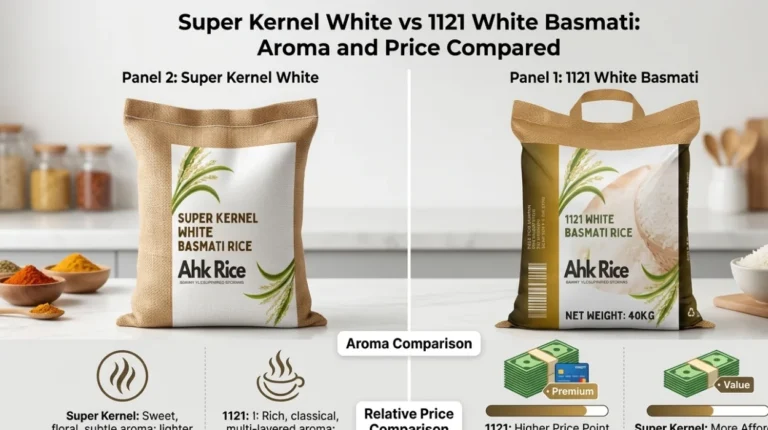
Does 1509 Golden Sella Rice cost less than 1121 Golden Sella?
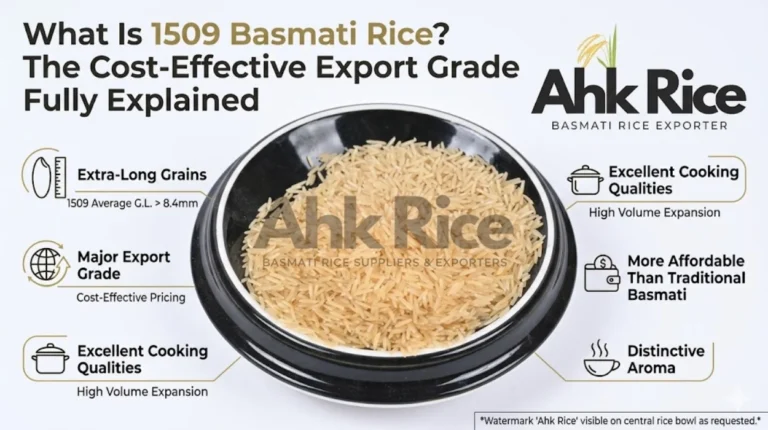
Yes. 1509 Golden Sella Rice generally costs less while still providing excellent grain length and cooking performance.