Super Kernel White Rice Quantity Options for UAE Importers
Super Kernel White Rice quantity options for UAE importers range from retail packs of 1 kg to bulk export shipments exceeding 25 metric tons per container. Importers select quantities based on their target market, distribution model, storage capacity, and consumer demand across the UAE.
The UAE remains one of the largest destinations for Pakistani rice exports. Super Kernel White Rice is widely imported because of its long grain structure, pleasant aroma, high cooking performance, and suitability for Middle Eastern cuisines. Understanding quantity options helps importers align procurement strategies with market requirements while maintaining efficient inventory management.
What Is Super Kernel White Rice?
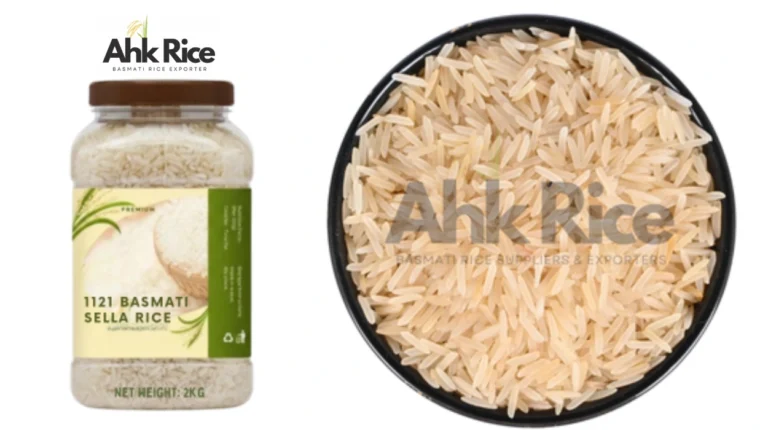
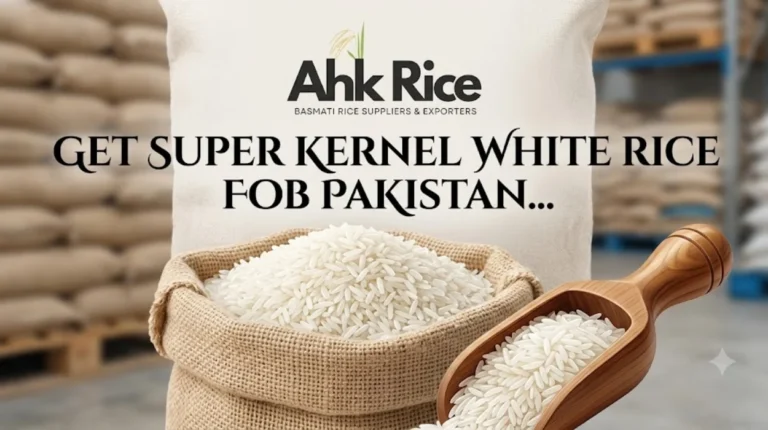
Super Kernel White Rice is a premium long-grain rice variety grown in Pakistan. It is known for its slender grains, natural aroma, white appearance, and strong cooking performance, making it a preferred choice for households, restaurants, hotels, and food distributors in UAE markets.
Super Kernel White Rice belongs to the Basmati rice family cultivated mainly in Punjab, Pakistan. The variety has earned recognition because of its grain length, aroma retention, and cooking quality.
The rice is harvested from fertile agricultural regions where climatic conditions support grain development. Areas including Gujranwala, Hafizabad, Sheikhupura, Narowal, and Sialkot contribute significantly to production.
The grain remains long and separate after cooking. This characteristic makes it suitable for dishes such as biryani, mandi, kabsa, pulao, and steamed rice preparations commonly consumed throughout the UAE.
Super Kernel White Rice differs from shorter grain varieties because it expands significantly during cooking while maintaining structure. This quality contributes to its popularity among foodservice operators and retail consumers.
How Is Super Kernel White Rice Produced and Processed?
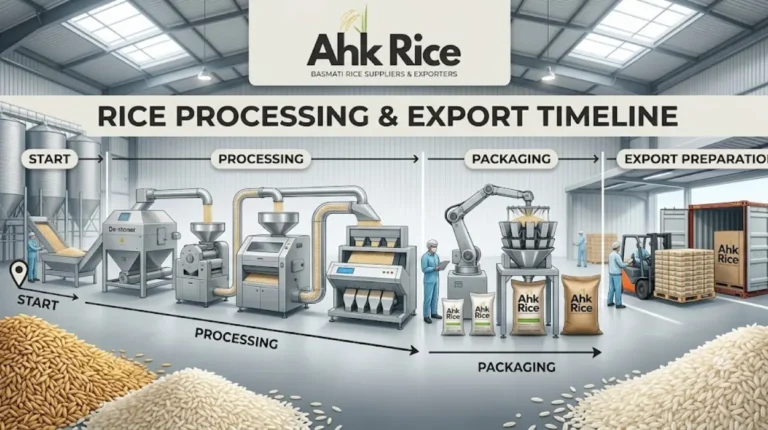
Super Kernel White Rice production follows a structured process that includes cultivation, harvesting, drying, milling, polishing, grading, quality inspection, and packaging. Each stage contributes directly to grain quality, consistency, appearance, and export readiness.
The production cycle begins with seed selection and field preparation. Farmers plant certified seeds during the cultivation season to ensure uniform crop development.
Cultivation Stage
Rice plants grow under controlled irrigation conditions. Adequate water management supports grain formation and yield quality.
Agricultural experts monitor crop health throughout the growing period. Pest control, nutrient management, and field inspections maintain crop standards required for export markets.
Harvesting Stage
The crop is harvested once grain maturity reaches the required level. Modern harvesting equipment minimizes grain damage and improves efficiency.
Freshly harvested rice contains moisture levels that require controlled drying before storage and milling.
Drying and Storage
Drying reduces moisture content to safe levels. Proper moisture management prevents spoilage and preserves grain quality during storage.
Stored paddy rice remains protected from contamination, insects, and environmental fluctuations.
Milling and Polishing
Milling removes the outer husk layer. The rice then passes through whitening and polishing stages to achieve the bright white appearance preferred in many export markets.
Modern processing facilities use automated machinery to maintain consistency across production batches.
Grading and Quality Inspection
Grading systems separate rice according to grain length, purity, and defect percentages.
Quality inspectors evaluate physical characteristics including broken grain percentage, foreign matter content, moisture levels, and color consistency.
Packaging
The final product is packed according to importer specifications before shipment preparation.
What Quantity Options Are Available for UAE Importers?
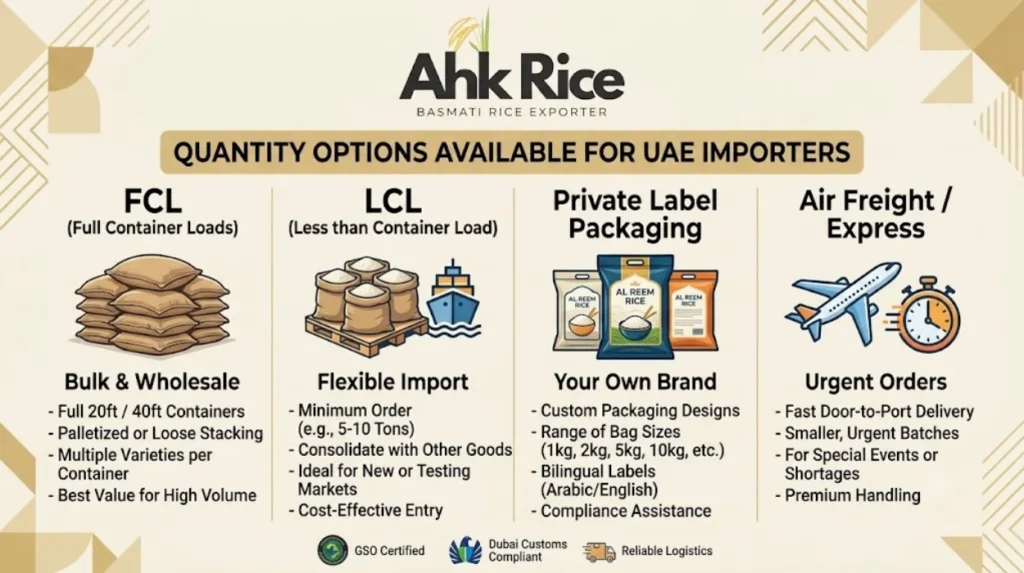
UAE importers can purchase Super Kernel White Rice in retail packs, wholesale bags, palletized shipments, and full container loads. Quantity selection depends on market segment, distribution channels, and inventory requirements.
Rice exporters provide multiple packaging formats to meet varying buyer needs.
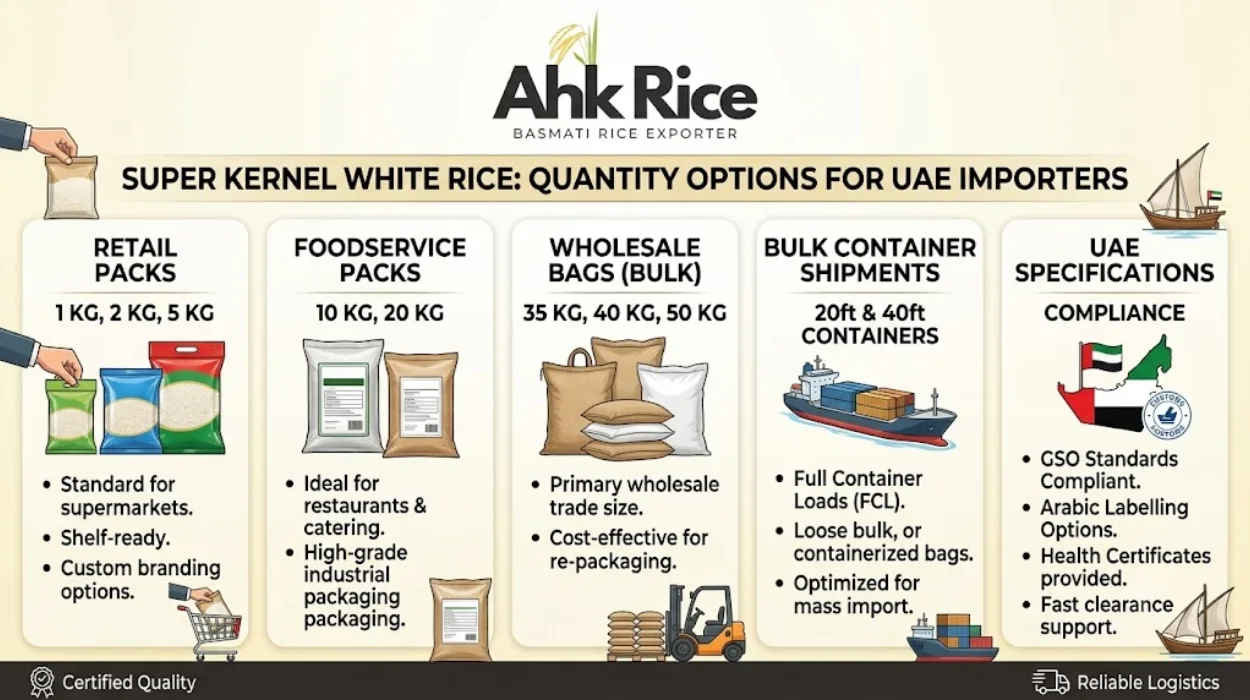
Retail Packaging Sizes
Retail-focused businesses commonly import:
- 1 kg bags
- 2 kg bags
- 5 kg bags
- 10 kg bags
These sizes target supermarkets, grocery stores, and online retailers.
Wholesale Packaging Sizes
Food distributors and wholesalers frequently import:
- 20 kg bags
- 25 kg bags
- 40 kg bags
- 50 kg bags
Larger bags reduce packaging costs and simplify warehouse operations.
Container Load Quantities
Export shipments generally move in standardized container quantities.
A 20-foot container commonly carries approximately 24 to 26 metric tons depending on packaging configuration.
A 40-foot container commonly carries approximately 26 to 28 metric tons based on cargo arrangement and shipping regulations.
These shipment sizes support efficient transportation and lower freight costs per metric ton.
What Are the Main Grades of Super Kernel White Rice?
Super Kernel White Rice is available in multiple grades based on grain purity, broken percentage, and quality specifications. Different grades serve different market requirements across retail, wholesale, hospitality, and foodservice sectors.
Rice grading ensures buyers receive products aligned with their commercial objectives.
Premium Grade
Premium grade contains high grain uniformity and minimal broken grains.
This category targets premium retail brands, luxury hotels, and specialty food distributors.
Standard Export Grade
Standard export grade balances quality and affordability.
Many distributors serving mainstream retail markets select this grade due to its broad consumer acceptance.
Broken Rice Grades
Broken rice grades contain higher percentages of fragmented grains.
These grades support industrial food production, institutional catering, and value-focused markets.
Importers evaluate grades according to customer expectations, price positioning, and intended use.
What Certifications Apply to Super Kernel White Rice Exports?
Super Kernel White Rice exports often comply with food safety, quality management, and regulatory certifications required by international buyers and government authorities. Certifications help ensure traceability, safety, and market acceptance.
Certification requirements vary according to importer policies and destination regulations.
Food Safety Certifications
Common food safety systems include:
- HACCP
- ISO 22000
- FSSC 22000
These frameworks establish procedures for hazard control and food safety management.
Quality and Compliance Documents
Export shipments commonly include:
- Phytosanitary Certificate
- Certificate of Origin
- Fumigation Certificate
- Quality Inspection Reports
- Packing Lists
- Commercial Invoices
These documents facilitate customs clearance and regulatory compliance.
Halal Compliance
Halal documentation is important throughout Gulf markets because it supports consumer expectations and procurement requirements.
What Benefits Do UAE Importers Gain from Different Quantity Options?
Multiple quantity options allow UAE importers to manage costs, inventory levels, distribution strategies, and market expansion plans more effectively. Flexible purchasing structures support businesses of different sizes and operational models.
Small retail businesses benefit from limited inventory exposure through smaller purchase volumes.
Regional distributors gain efficiency through container-scale procurement that reduces freight cost per unit.
Hospitality suppliers use bulk packaging formats to support restaurants, catering companies, and hotel chains.
Importers entering new market segments can test demand using smaller shipment quantities before expanding procurement volumes.
Quantity flexibility also improves warehouse utilization and stock rotation management.
These operational advantages contribute directly to supply chain performance.
Where Is Super Kernel White Rice Used in the UAE Market?
Super Kernel White Rice serves diverse sectors including retail, hospitality, foodservice, catering, institutional supply, and food manufacturing. Its versatility supports widespread consumption across multiple consumer groups and commercial applications.
The retail sector represents a significant consumption channel. Supermarkets and grocery chains stock various package sizes for household consumers.
Hotels rely on long-grain rice varieties for buffet service and specialty cuisine offerings.
Restaurants serving biryani, mandi, kabsa, and grilled meat dishes use Super Kernel White Rice because of its cooking performance and presentation quality.
Institutional buyers including schools, labor camps, and large catering operations purchase bulk quantities for daily meal preparation.
Food manufacturers also incorporate rice into packaged meal products and value-added food applications.
Readers interested in understanding shipment planning and product specifications in greater detail should review the related guide on rice logistics and quality standards discussed in Super Kernel White Rice delivery schedules and specification requirements for UAE buyers .
What Common Misconceptions Exist About Super Kernel White Rice Imports?
Many importers assume all rice grades, packaging formats, and shipment quantities are identical. In reality, specifications, quality levels, packaging structures, and logistics requirements vary significantly between suppliers and product categories.
One common misconception is that longer grain automatically indicates higher quality. Grain length represents only one quality parameter. Purity, moisture content, and broken percentage also influence product value.
Another misconception involves container capacity. Importers often assume every container carries the same quantity. Actual loading weights differ according to packaging materials, bag sizes, and shipping regulations.
Some buyers focus exclusively on price while overlooking specifications. Product consistency depends on grading standards, processing controls, and inspection procedures.
Another misunderstanding involves packaging. Retail packaging and wholesale packaging serve different commercial purposes and require separate procurement strategies.
Understanding these distinctions improves purchasing decisions and supply chain planning.
Super Kernel White Rice remains one of Pakistan’s most recognized export rice varieties and holds strong demand throughout the UAE market. Importers can source quantities ranging from small retail packs to full container shipments exceeding 25 metric tons.
The product undergoes a structured production process involving cultivation, harvesting, drying, milling, grading, inspection, and packaging. Multiple grades support different commercial applications, while certification systems help maintain food safety and regulatory compliance.
Quantity selection depends on market objectives, customer segments, warehouse capacity, and distribution strategies. Understanding packaging formats, grades, certifications, and shipment structures allows UAE importers to make informed sourcing decisions and optimize supply chain efficiency.
Frequently Asked Questions
What is the standard export quantity for Super Kernel White Rice?
Most exporters ship Super Kernel White Rice in full container loads ranging between 24 and 28 metric tons depending on packaging specifications and container type.
Which packaging size is most popular in the UAE retail market?
The most commonly sold retail sizes include 5 kg and 10 kg bags because they align with household purchasing patterns and supermarket requirements.
Is Super Kernel White Rice a Basmati variety?
Yes. Super Kernel White Rice belongs to the Basmati rice family and is recognized for its long grains, aroma, and cooking quality.
Which Pakistani regions produce Super Kernel White Rice?
Major production regions include Gujranwala, Hafizabad, Sheikhupura, Narowal, and Sialkot in Punjab, Pakistan.
What documents are typically required for rice exports to the UAE?
Common export documents include a Certificate of Origin, Phytosanitary Certificate, Commercial Invoice, Packing List, Quality Certificate, and Fumigation Certificate.