Buy Pakistan 1121 Long Grain Rice for Saudi Arabian Kabsa Businesses
Pakistan 1121 Long Grain Rice is the preferred specification for Saudi Arabian Kabsa businesses because it delivers extra-long grain appearance, high volume expansion, consistent cooking performance, and strong import value. Here is why: Saudi restaurants, catering companies, wholesalers, and food distributors require rice that remains separate after cooking, absorbs meat stock efficiently, and presents a premium appearance on large serving platters. Pakistan 1121 Basmati consistently meets these requirements. Businesses seeking deeper knowledge about Kabsa rice specifications can first review our guide on choosing the right grain length for authentic Saudi Kabsa preparation.
Saudi Arabia remains one of the largest import destinations for Pakistani Basmati rice (source: REAP export data, December 2025). Premium restaurants increasingly prefer extra-long grain varieties because presentation quality directly affects customer satisfaction. AHK Rice supplies Pakistan 1121 Long Grain Rice to importers, wholesalers, catering companies, and hospitality groups across Saudi Arabia through controlled processing, export-grade packaging, and documented quality verification.
Pakistan 1121 Long Grain Rice from AHK Rice export services undergoes strict grading, sorting, testing, and certification procedures before shipment. AHK Rice supports buyers with sampling, specification matching, packaging customization, and export documentation. Saudi buyers seeking consistent Kabsa performance often select AHK Rice because reliable grain quality reduces operational risk and customer complaints.
What Is the Best Rice Solution for Saudi Arabian Kabsa Businesses?
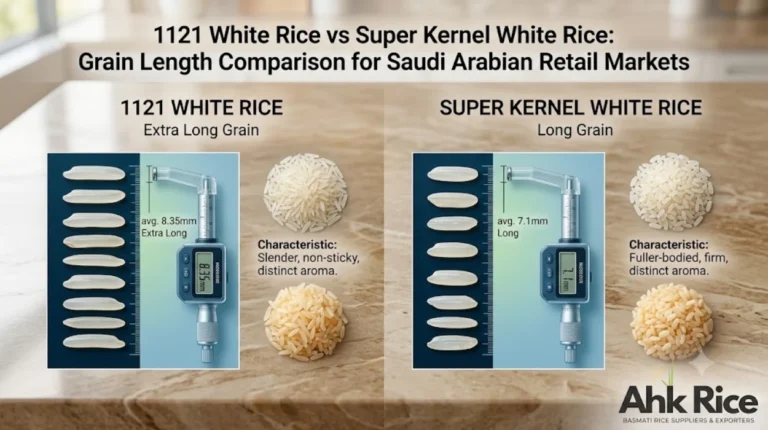
Pakistan 1121 Long Grain Rice delivers grain lengths above 8.30 mm, strong elongation, high volume expansion, and premium plate presentation required by Saudi restaurants, caterers, and distributors.
Why Pakistan 1121 Is Preferred for Kabsa
Pakistan 1121 Basmati rice produces long, separate grains after cooking. Saudi Kabsa requires rice that absorbs stock while maintaining grain integrity. Pakistan 1121 achieves this balance better than many medium-grain alternatives.
Pakistan 1121 rice creates visual appeal on large communal platters. Restaurant operators benefit because premium grain appearance supports premium menu pricing. Catering companies benefit because elongated grains maintain attractive presentation during extended service periods.
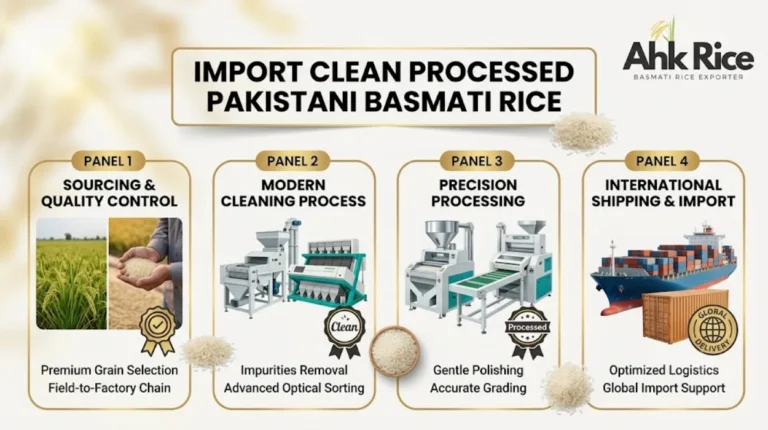
AHK Rice processes Pakistan 1121 rice through nine export-focused stages:
- Clean the paddy.
- De-husk the grain.
- Dry the rice.
- Parboil selected grades.
- Polish the kernels.
- Grade by length.
- Sort through color sorters.
- Inspect quality parameters.
- Pack and dispatch shipments.
These steps help AHK Rice maintain consistency across container loads and repeat orders.
Pakistan 1121 Specifications for Saudi Buyers
Typical Export Specifications
| Specification | Value |
|---|---|
| Grain Length | 8.30–8.50 mm |
| Moisture | Max 13% |
| Broken Grains | 1–5% |
| Purity | 95–100% |
| Average Length After Cooking | 16–22 mm |
| Shelf Life | 18–24 months |
| Packaging | 5 kg to 50 kg |
Saudi wholesalers often request customized specifications. AHK Rice verifies requested grades before production begins.
Available Processing Grades
AHK Rice supplies seven processing grades:
- White Basmati Rice
- Steam Basmati Rice
- Golden Sella Basmati Rice
- Creamy Sella Basmati Rice
- Extra White Sella Rice
- Brown Basmati Rice
- Premium Aged Basmati Rice
Golden Sella remains the most requested specification for Saudi catering operations because of its storage stability and cooking consistency.
Saudi buyers evaluating processing methods can compare specifications in our detailed review of two leading Sella rice options used by Kabsa restaurants.
With the preferred rice specification established, the next question is the actual business outcome buyers can expect after importing Pakistan 1121 rice.
What Results Can Saudi Arabian Kabsa Businesses Expect?
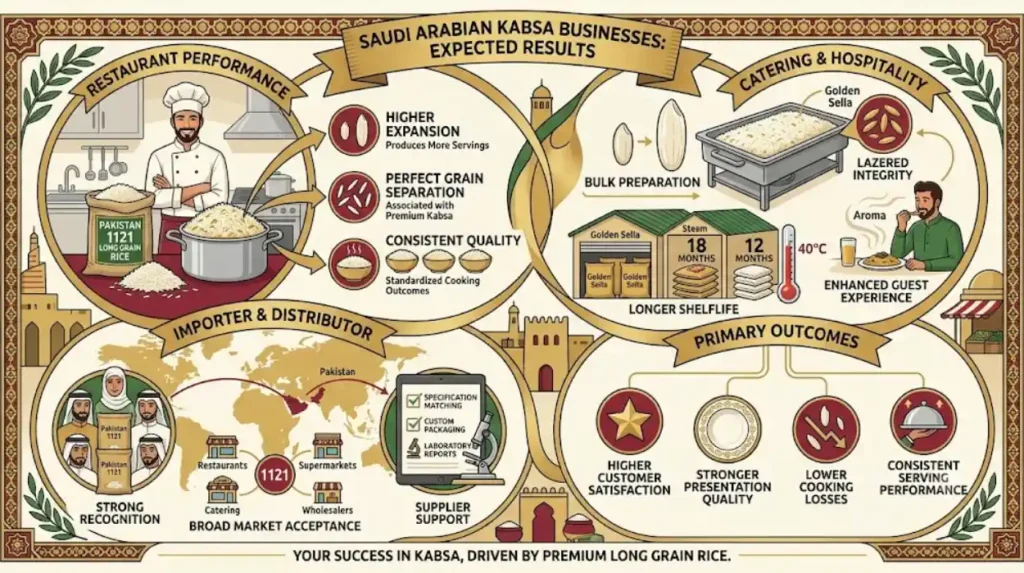
Higher customer satisfaction, stronger presentation quality, lower cooking losses, and consistent serving performance are the primary outcomes of importing Pakistan 1121 Long Grain Rice.
Restaurant Performance Benefits
Pakistan 1121 rice expands significantly during cooking. Restaurant operators benefit because lower raw rice consumption can produce more servings.
Pakistan 1121 rice maintains grain separation. Saudi diners often associate separate grains with premium Kabsa quality. Better presentation supports customer retention and repeat business.
AHK Rice supplies graded rice lots that help kitchens maintain standardized cooking outcomes. Consistency matters because multi-branch restaurant groups require predictable food costs.
Catering and Hospitality Benefits
Pakistan 1121 rice performs well during bulk preparation. Large-scale catering operations often prepare hundreds of servings simultaneously. Long grain integrity remains important throughout holding and serving periods.
Golden Sella grades last longer than Steam grades. In Gulf warehouse environments approaching 40°C, Golden Sella commonly maintains quality for up to 18 months, while Steam grades generally perform best within 12 months. Saudi catering companies managing inventory across multiple projects often choose Golden Sella specifications.
Premium aged grades provide enhanced aroma. High-end hospitality businesses use aged Basmati because fragrance contributes to guest experience.
Importer and Distributor Benefits
Importers benefit from strong consumer recognition. Pakistan 1121 Basmati remains one of the most recognized premium rice categories in Gulf markets.
Distributors benefit from broad market acceptance. Restaurants, supermarkets, catering companies, and wholesalers all purchase Pakistan 1121 specifications.
AHK Rice supports distributors through specification matching, customized packaging, and container-level quality verification. AHK Rice also provides laboratory reports before shipment.
These performance benefits explain why buyers select Pakistan 1121 rice, and naturally lead to the next question regarding pricing and procurement costs.
What Factors Affect the Cost of Pakistan 1121 Long Grain Rice?
Processing grade, crop quality, broken percentage, packaging type, freight rates, and shipment volume determine final import pricing.
Rice Grade and Processing Method
White Rice usually carries different pricing than Golden Sella Rice because processing requirements differ.
Golden Sella involves additional parboiling and drying stages. Extra processing creates higher production costs but improves storage performance.
Aged rice generally commands higher prices because storage periods increase inventory costs. Buyers seeking premium aroma often accept these additional costs.
Packaging Requirements
Retail packaging requires additional materials, printing, and handling. Customized branded bags typically cost more than standard export packaging.
AHK Rice offers:
- PP woven bags
- BOPP laminated bags
- Non-woven bags
- Retail packs
- Private label packaging
Packaging selection directly influences landed costs.
Freight and Shipping Costs
Ocean freight rates fluctuate throughout the year. Seasonal demand can increase transportation costs.
Saudi ports commonly served include:
- Jeddah Islamic Port
- King Abdulaziz Port Dammam
- Jazan Port
- Yanbu Commercial Port
Container utilization affects final landed cost calculations. Full container loads generally provide better cost efficiency than partial shipments.
Typical Shipping Times to Saudi Arabia
| Destination | Average Transit Time |
|---|---|
| Jeddah | 12–18 days |
| Dammam | 14–22 days |
| Riyadh via Dammam | 18–28 days |
| Jazan | 16–24 days |
| Yanbu | 14–20 days |
Transit times vary according to vessel schedules, customs procedures, and port congestion.
Market Conditions
Rice crop availability influences export pricing (source: Pakistan Bureau of Statistics, FY2024-25).
Currency exchange movements influence international trade pricing. Freight adjustments also affect import costs throughout the year.
AHK Rice provides updated quotations based on current crop availability, processing grade requirements, and destination port specifications.
Understanding cost drivers helps buyers evaluate offers accurately. The next step is understanding how the procurement and sampling process works.
How Can Saudi Arabian Buyers Get Started with AHK Rice?
Specification confirmation, sample approval, quality verification, production scheduling, and container shipment form the standard procurement process.
Step 1: Define Product Requirements
Specify the required grade before requesting pricing.
Identify:
- Grain length requirements
- Broken percentage
- Packaging size
- Label requirements
- Container quantity
- Destination port
AHK Rice reviews buyer specifications before issuing quotations.
Step 2: Request Samples
AHK Rice follows a structured sample approval process.
Sample Process
- Submit product requirements.
- Receive specification confirmation.
- Receive sample preparation details.
- Approve sample quality.
- Confirm commercial terms.
- Start production planning.
Sample Costs
| Sample Type | Typical Cost |
|---|---|
| Product Sample | Free |
| Courier Charges | USD 40–120 |
| Laboratory Testing | Optional, variable |
| Customized Sample Packs | Quoted separately |
Courier costs depend on destination city and package weight.
AHK Rice encourages sample approval before commercial production because approved samples reduce quality disputes after shipment.
Step 3: Verify Quality Documentation
AHK Rice provides documentation commonly requested by Saudi importers.
Required export documents may include:
- Commercial Invoice
- Packing List
- Certificate of Origin
- Phytosanitary Certificate
- Fumigation Certificate
- Health Certificate
- Bill of Lading
- Quality Inspection Report
Documentation requirements vary according to importer preferences and regulatory updates.
Step 4: Production and Inspection
AHK Rice inspects rice before loading. Quality verification occurs throughout production rather than after packaging alone.
AHK Rice tests moisture levels, grain length, broken percentage, and purity specifications. Verification reports help buyers confirm compliance before dispatch.
Step 5: Shipment and Delivery
AHK Rice loads containers according to approved specifications. Export teams coordinate documentation, customs clearance, and vessel booking.
AHK Rice provides shipment updates during transit. Buyers receive documentation copies before vessel arrival whenever possible.
Why Saudi Buyers Choose AHK Rice
AHK Rice focuses on export-grade Basmati rice specifications. AHK Rice supports both wholesale and private-label buyers. AHK Rice maintains quality verification procedures throughout production. AHK Rice provides flexible packaging options. AHK Rice supplies multiple processing grades suitable for Saudi foodservice markets. AHK Rice assists buyers through sampling, documentation, and logistics coordination. AHK Rice helps reduce procurement uncertainty through specification-based exports.
Pakistan 1121 Long Grain Rice continues to be one of the strongest choices for Saudi Arabian Kabsa businesses because it combines premium grain appearance, strong cooking performance, recognized market acceptance, and scalable supply capability. Contact AHK Rice today to discuss specifications, receive samples, and submit your requirements through the request a quote form.
Frequently Asked Questions
Is Pakistan 1121 Long Grain Rice suitable for authentic Saudi Kabsa?
Pakistan 1121 Long Grain Rice is one of the most preferred rice varieties for traditional Saudi Kabsa. Its extra-long grain, high elongation after cooking, and ability to absorb meat stock make it ideal for restaurants, caterers, and hospitality businesses serving authentic Kabsa dishes.
What is the average grain length of Pakistan 1121 Basmati Rice?
Pakistan 1121 Basmati Rice typically has a raw grain length of 8.30–8.50 mm. After cooking, the grain can elongate to more than twice its original length while remaining separate and fluffy, which is highly valued in Saudi foodservice operations.
How long does it take to ship Pakistan 1121 rice to Saudi Arabia?
Shipping times depend on the destination port and vessel schedule. Average transit times range from 12–18 days for Jeddah, 14–22 days for Dammam, and 16–24 days for Jazan. Customs clearance and seasonal port congestion may affect final delivery schedules.
Can I receive a sample before placing a bulk order?
Yes. AHK Rice provides product samples for quality evaluation before bulk production begins. Buyers usually pay only the courier charges, which generally range between USD 40 and USD 120 depending on the destination and package weight. This process helps ensure the approved sample matches the final shipment specification.
What packaging options are available for Saudi Arabian importers?
AHK Rice offers multiple packaging formats to meet wholesale and retail requirements. Options include 5 kg, 10 kg, 20 kg, 25 kg, 40 kg, and 50 kg bags, along with PP woven bags, BOPP laminated bags, non-woven bags, and private-label packaging solutions for distributors and supermarket brands.