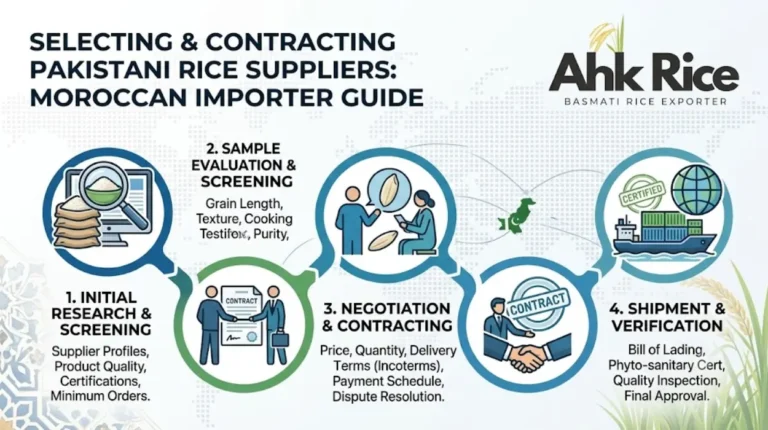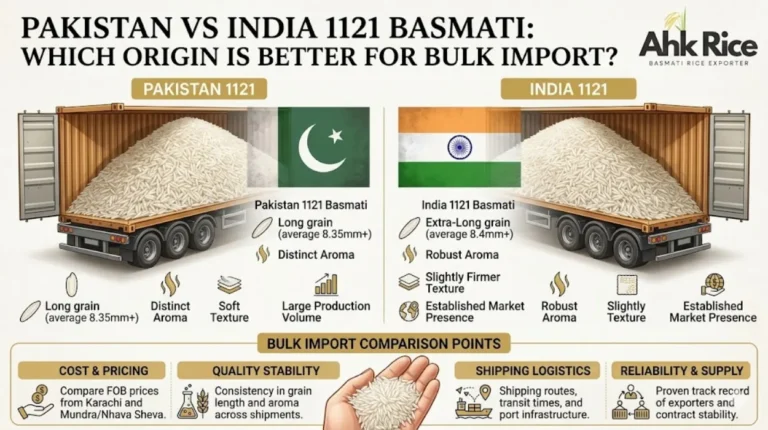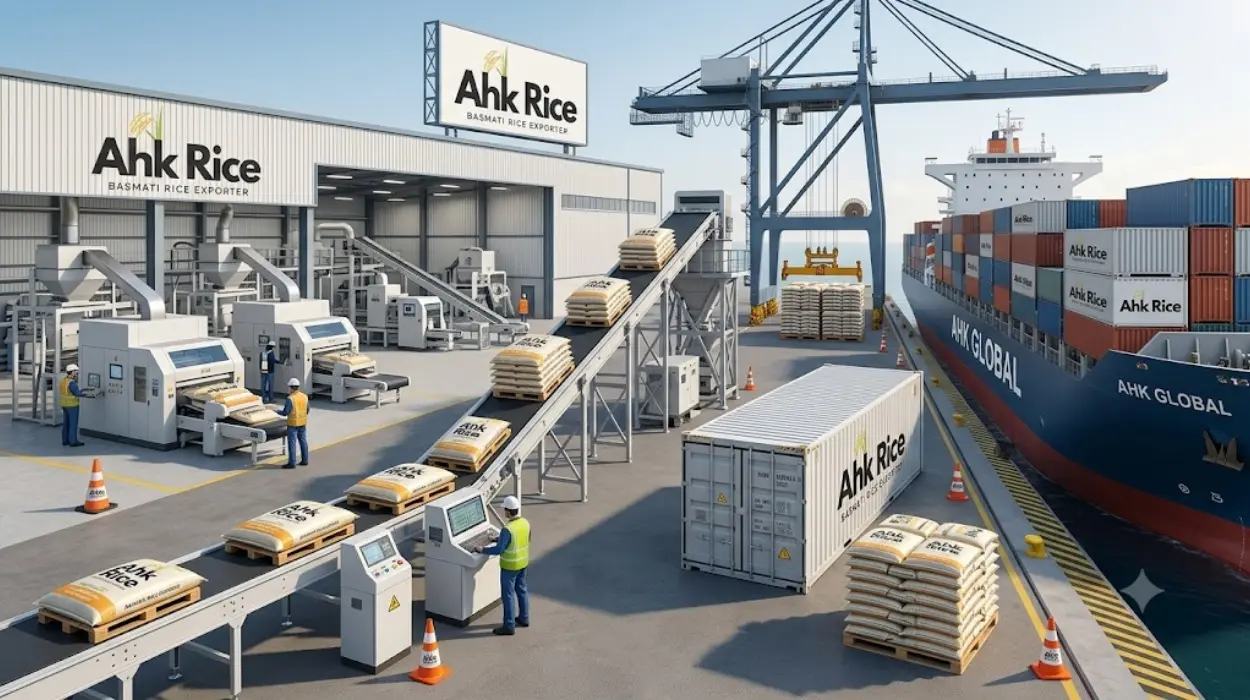
Factory Processing, Shipping Transit and Port Handling Time Breakdown
Factory processing, shipping transit, and port handling determine the final delivery timeline of every rice export order. Here is why: processing requires 3–10 days, port handling requires 2–7 days, and international transit requires 7–45 days depending on destination, rice grade, vessel schedule, and customs procedures.
International buyers often focus on rice quality and pricing. Delivery timing creates equal commercial impact. A delayed shipment affects inventory planning, retail promotions, food service contracts, and government tenders. Rice exporters must coordinate processing plants, inspection agencies, freight forwarders, shipping lines, and destination customs authorities to maintain predictable delivery schedules.
Buyers evaluating rice suppliers should understand how each stage influences delivery performance. Our guide about understanding Basmati rice varieties and export specifications explains product selection factors before logistics planning: complete guide to Basmati rice grades and export specifications.
AHK Rice provides export processing for 1121 Basmati, Super Kernel Basmati, and 1509 Basmati through integrated milling, grading, packaging, and logistics coordination. The first product shipment stage begins through our rice export and supply services, where production planning aligns with vessel schedules and destination requirements.
What stages create the total rice export timeline?
Factory processing generally requires 3–10 days, export documentation requires 1–3 days, port handling requires 2–7 days, and ocean transit requires 7–45 days depending on destination market and shipment specification.
Rice exports move through several operational stages before reaching destination ports.
Factory Processing Timeline
Rice processing converts harvested paddy into export-ready rice. Processing duration depends on grade specifications, packaging requirements, and inspection protocols.
The standard processing sequence includes:
- Clean the paddy
- De-husk the grain
- Dry the rice
- Polish the kernels
- Grade by length
- Sort by colour
- Inspect quality
- Test moisture
- Pack the product
1121 Steam Basmati generally requires fewer processing steps than Golden Sella. Golden Sella requires soaking, steaming, drying, and stabilization before milling.
Processing Time by Product Type
| Rice Grade | Factory Processing Time |
|---|---|
| 1121 Steam Basmati | 3–5 days |
| 1121 Golden Sella | 5–8 days |
| 1121 White Basmati | 4–6 days |
| Super Kernel White | 3–5 days |
| Super Kernel Sella | 5–8 days |
| 1509 Steam | 3–5 days |
Export Documentation Timeline
Documentation begins after quality verification.
Required export documents include:
- Commercial Invoice
- Packing List
- Certificate of Origin
- Phytosanitary Certificate
- Fumigation Certificate
- Bill of Lading
- Inspection Certificate
Most export documentation requires 1–3 working days.
With processing timelines established, the next consideration is how transportation and shipping options compare.
How do factory processing, shipping transit, and port handling methods compare?
Direct vessel routes reduce transit time by 20–40%, integrated processing reduces factory delays by 2–5 days, and efficient port handling reduces container dwell time by 3–7 days.
Different logistics strategies create different delivery outcomes.
Processing Strategy Comparison
| Attribute | Integrated Processing Facility | Multi-Vendor Processing |
|---|---|---|
| Production Control | High | Moderate |
| Lead Time | 3–8 Days | 7–15 Days |
| Quality Consistency | High | Variable |
| Documentation Speed | Fast | Moderate |
| Packaging Coordination | Centralized | Fragmented |
| Inspection Management | Single Point | Multiple Parties |
| Shipment Readiness | Predictable | Variable |
Integrated processing reduces coordination delays because milling, grading, packing, and dispatch planning occur within one workflow.
Shipping Route Comparison by Region
| Destination Region | Average Transit Time |
|---|---|
| UAE | 7–12 Days |
| Saudi Arabia | 10–15 Days |
| Oman | 8–14 Days |
| Qatar | 10–15 Days |
| East Africa | 15–22 Days |
| West Africa | 25–35 Days |
| United Kingdom | 25–35 Days |
| Europe | 25–40 Days |
| North America | 30–45 Days |
Port Handling Comparison
Karachi Port and Port Qasim manage most Pakistani rice exports.
Container movement involves:
- Receive containers
- Inspect cargo
- Verify documentation
- Clear customs
- Load vessel
- Dispatch shipment
Port handling typically requires 2–5 days during normal periods.
Peak export seasons may extend handling to 5–7 days.
With comparison factors understood, buyers must evaluate regional preferences and specifications.
Which rice grades and logistics methods work best for different markets?
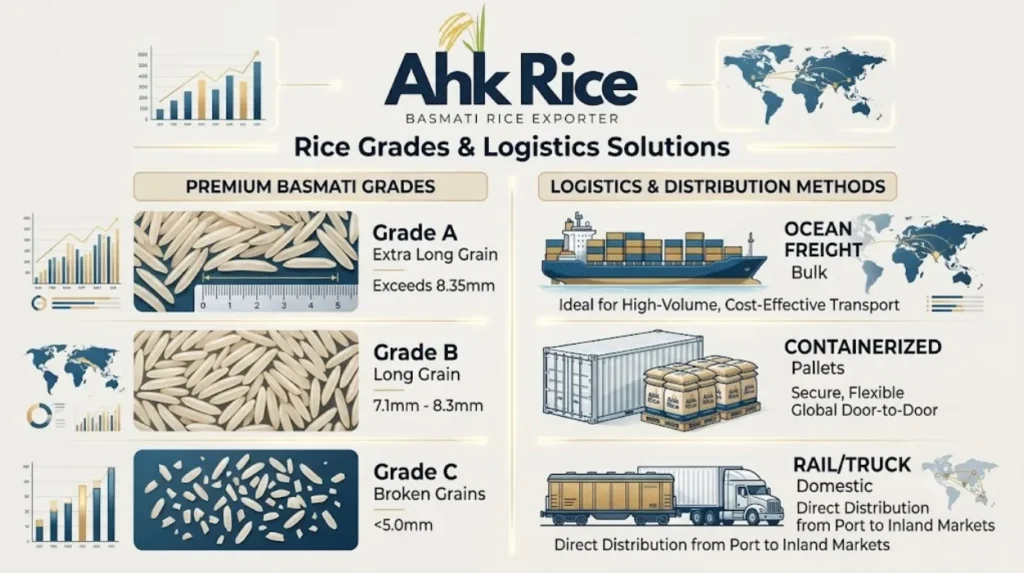
Gulf markets prioritize fast transit and premium grades, while African markets prioritize durability, competitive pricing, and longer storage capability.
Different regions prefer different specifications.
Gulf Market Preferences
Gulf countries import premium long-grain Basmati for retail and hospitality sectors.
Preferred grades include:
- 1121 Golden Sella
- 1121 Steam
- Super Kernel Basmati
Transit periods remain short because shipping routes cross the Arabian Sea.
Average transit:
- UAE: 7–12 days
- Oman: 8–14 days
- Saudi Arabia: 10–15 days
(source: REAP export data, December 2025)
African Market Preferences
African importers often prioritize durability and value.
Preferred grades include:
- 1121 Golden Sella
- 1509 Sella
- IRRI-based blends
Longer transit periods increase the importance of moisture control and packaging quality.
Average transit:
- East Africa: 15–22 days
- West Africa: 25–35 days
(source: REAP export data, December 2025)
Price Per MT Comparison
| Grade | Gulf Market Price/MT | African Market Price/MT |
|---|---|---|
| 1121 Steam | $950–1,150 | $900–1,050 |
| 1121 Golden Sella | $1,000–1,250 | $950–1,150 |
| Super Kernel | $900–1,100 | Limited Demand |
| 1509 Sella | Moderate Demand | $800–950 |
Prices vary according to crop season and freight conditions.
Understanding market preferences leads directly to evaluating storage and shelf-life implications.
What are the pros and cons of different shipping and processing approaches?
Fast processing improves delivery speed, while specialized processing improves storage stability and export durability.
Steam Rice Approach
Advantages:
- Faster production
- Lower processing costs
- Better aroma retention
- Shorter lead time
Disadvantages:
- Shorter storage life
- Higher sensitivity to humidity
1121 Steam performs well in Gulf retail markets where turnover occurs quickly.
Golden Sella Approach
Advantages:
- Longer shelf life
- Better container durability
- Lower breakage rates
- Strong export stability
Disadvantages:
- Longer processing cycle
- Higher production costs
Golden Sella performs well in African distribution networks where transportation continues beyond the destination port.
Shelf Life Comparison
| Rice Type | Shelf Life |
|---|---|
| Steam Rice | 12–18 Months |
| White Rice | 12–18 Months |
| Golden Sella | 18–24 Months |
Golden Sella lasts longer than Steam. In high-temperature Gulf warehouses, Golden Sella maintains quality for extended storage periods. In African inland distribution chains, Golden Sella withstands transportation stress more effectively.
With advantages and disadvantages defined, buyers can apply objective decision criteria.
What decision factors should buyers evaluate before selecting an export timeline?
Production lead time, destination market, inventory strategy, shelf life, and freight availability determine the optimal export solution.
Rice Export Decision Framework
| Decision Factor | Best Choice | Reason |
|---|---|---|
| Urgent Delivery | Steam Rice | Faster processing |
| Long Storage | Golden Sella | Longer shelf life |
| Premium Retail | 1121 Steam | Aroma and appearance |
| Catering Industry | 1121 Golden Sella | Durability |
| Budget Procurement | 1509 Sella | Lower cost |
Timeline Planning Framework
Buyers should align procurement schedules with vessel departures.
Recommended planning periods:
- Plan production 14 days before shipment.
- Confirm packaging 10 days before loading.
- Finalize documentation 5 days before loading.
- Verify vessel booking 7 days before loading.
- Confirm customs clearance before gate-in.
Early planning reduces demurrage costs and prevents inventory shortages.
This decision framework connects processing, logistics, and destination requirements into one predictable export strategy.
Factory processing, shipping transit, and port handling function as one connected export system. Processing generally requires 3–10 days, port handling requires 2–7 days, and ocean transit requires 7–45 days depending on destination. Integrated processing facilities improve predictability, direct vessel routes reduce delays, and appropriate grade selection improves storage performance during transport. Gulf markets prioritize premium grades and rapid delivery, while African markets prioritize durability and storage stability. Buyers who understand each stage can forecast inventory accurately and reduce supply chain risk.
Frequently Asked Questions
How long does rice factory processing take before export?
Rice factory processing generally requires 3–10 days. Steam rice requires shorter production cycles, while Golden Sella requires additional soaking, steaming, drying, and stabilization stages.
How many days does port handling require for rice exports?
Port handling typically requires 2–5 days under normal conditions. Peak export seasons may extend handling times to 7 days because container volumes increase.
Which rice grade is best for long-distance shipping?
1121 Golden Sella performs best for long-distance shipping because it offers greater durability, lower breakage rates, and a shelf life of 18–24 months.
Which market receives rice shipments fastest from Pakistan?
UAE receives shipments fastest. Average transit time ranges between 7 and 12 days depending on vessel schedules and customs processing.
What factors increase rice export delivery time?
Production complexity, vessel availability, customs inspections, port congestion, destination clearance procedures, and documentation delays can extend delivery timelines.