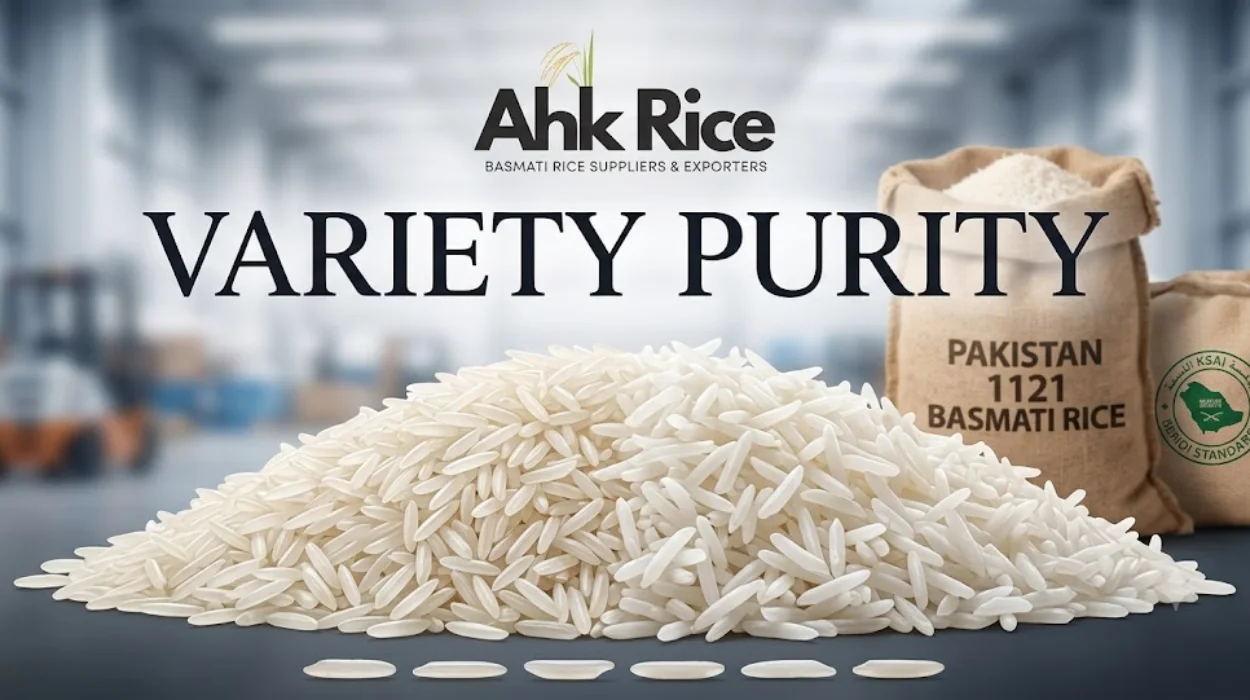
Why Is Variety Purity Important When Saudi Arabia Imports Pakistan 1121 Basmati Rice?
Saudi Arabia imports large volumes of Pakistan 1121 Basmati rice every year because of its extra-long grains, distinct aroma, and high elongation after cooking. Among all quality parameters, variety purity remains one of the most important requirements. Variety purity determines whether a shipment contains only authentic 1121 Basmati grains or includes other rice varieties. Importers, food processors, retailers, and restaurants evaluate purity because it directly influences cooking performance, product consistency, labelling accuracy, and consumer satisfaction.
Pakistan produces several premium Basmati varieties, including 1121, Super Kernel, 1509, and PK 386. Each variety has different physical characteristics and cooking behaviour. Saudi buyers purchase each variety for different commercial purposes. Understanding variety purity helps importers select the correct product while reducing quality disputes during international trade.
What Is Variety Purity in Pakistan 1121 Basmati Rice?
Variety purity means a rice shipment contains only authentic Pakistan 1121 Basmati grains without mixing other rice varieties such as 1509, Super Kernel, PK 386, or non-Basmati rice. Saudi Arabian buyers use purity standards to maintain consistent cooking quality, appearance, and commercial specifications throughout every imported shipment.
Variety purity measures the percentage of grains belonging to one specific rice variety. A shipment with 98% purity contains 98 kilograms of authentic 1121 Basmati in every 100 kilograms of rice.
Pakistan 1121 Basmati rice has several identifying characteristics:
- Extra-long grain structure
- Fine slender appearance
- Strong natural aroma
- High cooked grain elongation
- Uniform grain dimensions
- Soft cooked texture
Saudi Arabian importers request variety purity because restaurants, supermarkets, catering companies, and food manufacturers depend on predictable cooking performance.
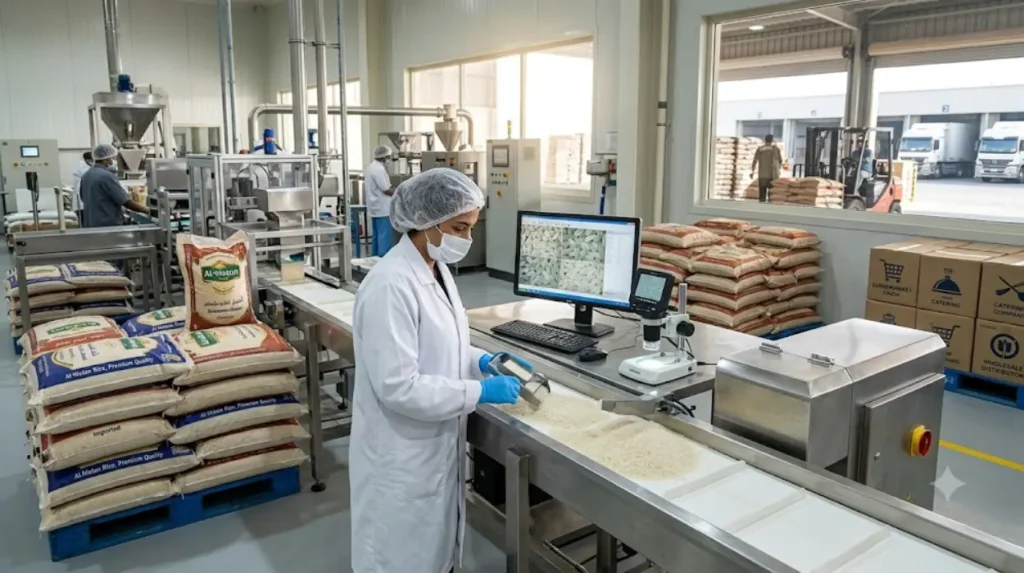
Rice inspection laboratories examine physical grain characteristics before export. Modern sorting equipment removes foreign grains and damaged kernels to improve variety consistency.
How Does Variety Purity Work During Rice Production and Export?
Variety purity begins at certified seed selection and continues through cultivation, harvesting, milling, sorting, grading, laboratory inspection, packaging, and export documentation. Every production stage protects the original characteristics of Pakistan 1121 Basmati rice before international shipment reaches Saudi Arabia.
Maintaining purity starts before planting.
Farmers use certified 1121 Basmati seed instead of mixed seed stock. Pure seed produces uniform crops with similar grain characteristics.
During cultivation, fields remain separated from other rice varieties. Separate harvesting prevents accidental mixing between neighboring crops.
After harvesting, paddy enters dedicated storage areas. Storage facilities identify every batch according to its variety.
The processing sequence follows these stages:
- Paddy cleaning
- Dehusking
- Paddy separation
- Whitening
- Polishing
- Length grading
- Color sorting
- Metal detection
- Laboratory inspection
- Packaging
Optical color sorters identify grains with different colors or shapes. Length graders separate shorter grains from authentic extra-long 1121 grains.
Laboratory technicians verify physical specifications before packaging.
Every processing stage protects the identity of the rice variety.
What Components Determine Variety Purity?
Several measurable characteristics define authentic Pakistan 1121 Basmati rice, including grain length, grain width, aroma, cooked elongation, chalkiness, moisture content, broken percentage, foreign matter, and varietal identification through laboratory quality inspection before export.
Importers evaluate more than appearance.
Each shipment includes measurable quality parameters.
Grain Length
Pakistan 1121 Basmati is famous for its exceptionally long grains. Uniform grain length indicates proper varietal selection.
Grain Shape
Authentic 1121 grains remain slender rather than thick or bold.
Aroma
Natural fragrance develops through the genetics of the Basmati variety and proper post-harvest handling.
Cooked Elongation
1121 Basmati often doubles in length after cooking while maintaining grain separation.
Moisture
Export moisture generally remains within internationally accepted specifications to preserve storage stability and grain quality.
Broken Rice Percentage
Lower broken percentages improve visual quality and cooking consistency.
Foreign Matter
Inspection removes stones, straw fragments, dust, husks, and other contaminants.
Variety Identification
Laboratories compare grain characteristics with official varietal standards before export approval.
Together, these components determine whether a shipment qualifies as authentic Pakistan 1121 Basmati rice.
What Benefits Does High Variety Purity Provide for Saudi Arabian Importers?
High variety purity delivers uniform cooking performance, stable product quality, consistent packaging standards, accurate labeling, predictable inventory management, stronger consumer confidence, fewer commercial disputes, and easier compliance with Saudi Arabian food import specifications throughout the supply chain.
Saudi Arabia imports rice for several commercial sectors.
Examples include:
- Retail supermarkets
- Wholesale distributors
- Hotels
- Restaurants
- Catering companies
- Food manufacturers
Each sector benefits from consistent rice quality.
Uniform grains absorb water at similar rates.
Cooking times remain stable across production batches.
Restaurants prepare large quantities with fewer texture variations.
Retail brands maintain consistent product appearance inside every package.
Food manufacturers standardize recipes more efficiently.
Wholesale distributors experience fewer customer complaints regarding grain size or cooking performance.
Consumers also receive consistent quality every time they purchase the same product.
Where Is Pakistan 1121 Basmati Rice Grown?
Pakistan 1121 Basmati rice grows mainly in Punjab’s fertile agricultural belt, where fertile alluvial soils, irrigation systems, seasonal rainfall, and favorable temperatures create ideal conditions for producing extra-long aromatic grains with internationally recognized quality characteristics.
Punjab produces most of Pakistan’s premium Basmati rice.
Major cultivation regions include:
- Gujranwala
- Hafizabad
- Sheikhupura
- Nankana Sahib
- Sialkot
- Narowal
- Mandi Bahauddin
These districts provide fertile soil rich in nutrients deposited by river systems.
Farmers transplant seedlings during the summer growing season.
The crop matures over several months before harvesting.
Climate plays an important role.
Warm days encourage plant growth.
Cooler nights help develop aroma and grain quality.
Reliable irrigation supports uniform crop development across the production cycle.
These natural conditions distinguish Pakistan Basmati from many other aromatic rice varieties.
Which Grades of Pakistan 1121 Basmati Rice Are Available?
Pakistan exports several commercial grades of 1121 Basmati rice based on processing methods, grain quality, and buyer requirements. Each grade serves different market segments while maintaining the essential characteristics of authentic 1121 Basmati rice.
Several grades are available in international trade.
1121 White Rice
Fully milled rice with a bright white appearance.
Commonly supplied to retail markets.
1121 Steam Rice
Steam treatment strengthens grains before milling.
This grade performs well during commercial cooking.
1121 Sella Rice
Parboiled rice with improved grain strength and reduced breakage.
Suitable for large-scale catering operations.
1121 Golden Sella Rice
Golden color develops during parboiling.
Popular for traditional rice dishes.
Each grade has different processing characteristics.
The underlying rice variety remains 1121 Basmati.
Processing changes the grain appearance and cooking behavior without changing the original variety.
Readers interested in how importers compare different Basmati varieties can continue with the companion guide on:
Understanding purity standards between major export varieties.
Which Markets Import Pakistan 1121 Basmati Rice?
Pakistan 1121 Basmati rice reaches numerous international markets where consumers value long grains, aroma, and cooking quality. Import demand varies according to local food traditions, retail preferences, hospitality industries, and population requirements.
Saudi Arabia ranks among the largest import destinations.
The rice supports:
- Family consumption
- Hospitality businesses
- Religious gatherings
- Catering services
- Food distribution networks
Other important importing markets include:
- United Arab Emirates
- Qatar
- Kuwait
- Oman
- Bahrain
- Iraq
- United Kingdom
- Canada
- Australia
- United States
- Germany
Each market applies its own import regulations and quality inspection procedures.
Many buyers specify grain length, broken percentage, moisture content, packaging requirements, and variety purity within purchase contracts.
Which Certifications Support Variety Purity and Export Quality?
Export certifications verify food safety, traceability, quality management, phytosanitary compliance, and processing controls. These certifications strengthen confidence that Pakistan 1121 Basmati rice meets international trade requirements before entering Saudi Arabian markets.
Certification verifies production systems rather than creating grain quality.
Common export certifications include:
ISO 22000
Confirms food safety management throughout processing.
HACCP
Identifies and controls food safety hazards.
Phytosanitary Certificate
Confirms the shipment satisfies plant health requirements.
Certificate of Origin
Identifies Pakistan as the country where the rice was produced.
Fumigation Certificate
Documents approved pest control treatment when required by importing regulations.
Laboratory Quality Reports
Provide measurable data for moisture, broken percentage, foreign matter, and other quality parameters.
Together these documents support international rice trade through standardized inspection procedures.
What Common Misconceptions Exist About Variety Purity?
Several misconceptions confuse rice buyers because variety purity differs from grain length, processing method, color, aroma intensity, and export grade. Understanding these differences helps importers evaluate rice specifications more accurately before purchasing.
One misconception assumes longer grains always indicate higher purity.
Grain length alone cannot confirm variety identity.
Another misconception assumes white rice, steam rice, and Sella rice represent different rice varieties.
They represent different processing methods applied to the same variety.
Some buyers believe aroma alone confirms authenticity.
Aroma supports identification but does not replace laboratory inspection.
Another misunderstanding suggests visual inspection identifies every mixed grain.
Modern laboratory evaluation provides more reliable identification than visual examination alone.
Some people also confuse premium grade with pure variety.
Premium grading evaluates several quality factors.
Variety purity measures only whether the shipment contains authentic grains belonging to one rice variety.
Understanding these distinctions helps buyers interpret export specifications correctly and compare suppliers using objective quality standards.
Variety purity forms the foundation of Pakistan 1121 Basmati rice quality for Saudi Arabian imports. It begins with certified seed selection, continues through controlled cultivation and dedicated processing, and finishes with laboratory inspection before export. Authentic 1121 Basmati maintains consistent grain characteristics, cooking performance, and commercial value because every production stage protects the identity of the variety. Saudi Arabian importers evaluate purity alongside moisture, grain length, broken percentage, and food safety certifications to ensure reliable quality across retail, hospitality, catering, and food manufacturing sectors. Understanding these quality standards helps buyers distinguish genuine 1121 Basmati from other rice varieties and make informed purchasing decisions.
Frequently Asked Questions
Why do Saudi Arabian importers check variety purity in Pakistan 1121 Basmati rice?
Saudi Arabian importers check variety purity to ensure every shipment contains authentic 1121 Basmati rice with consistent grain length, aroma, cooking performance, and quality that matches commercial specifications.
How is variety purity maintained during rice processing?
Variety purity is maintained through certified seed selection, separate harvesting, dedicated storage, cleaning, milling, grading, optical color sorting, laboratory inspection, and controlled packaging.
What makes Pakistan 1121 Basmati rice different from other rice varieties?
Pakistan 1121 Basmati rice has extra-long slender grains, a natural aroma, excellent cooked grain elongation, and a soft texture that distinguish it from varieties such as 1509 and Super Kernel.
Which grades of Pakistan 1121 Basmati rice are available for export?
The main export grades include 1121 White Rice, 1121 Steam Rice, 1121 Sella Rice, and 1121 Golden Sella Rice. Each grade differs by processing method while remaining the same rice variety.
Which regions in Pakistan produce authentic 1121 Basmati rice?
Authentic 1121 Basmati rice is primarily grown in Punjab, including Gujranwala, Hafizabad, Sheikhupura, Nankana Sahib, Narowal, Sialkot, and Mandi Bahauddin.
Which quality factors are evaluated besides variety purity?
Exporters and importers evaluate grain length, broken percentage, moisture content, foreign matter, aroma, chalkiness, cooked elongation, and overall grain uniformity.
What certifications support Pakistan 1121 Basmati rice exports?
Common certifications include ISO 22000, HACCP, Phytosanitary Certificate, Certificate of Origin, Fumigation Certificate, and laboratory quality reports.
Does processing change the rice variety?
No. Processing methods such as White, Steam, Sella, and Golden Sella change the grain’s appearance and cooking characteristics but do not change the original 1121 Basmati variety.
Which countries import Pakistan 1121 Basmati rice?
Major importing markets include Saudi Arabia, the UAE, Qatar, Kuwait, Oman, Bahrain, Iraq, the United Kingdom, Canada, Australia, the United States, and Germany.
Why is variety purity important for restaurants and food businesses?
High variety purity provides consistent cooking time, grain elongation, texture, and appearance, helping restaurants, hotels, caterers, and food manufacturers maintain uniform meal quality.