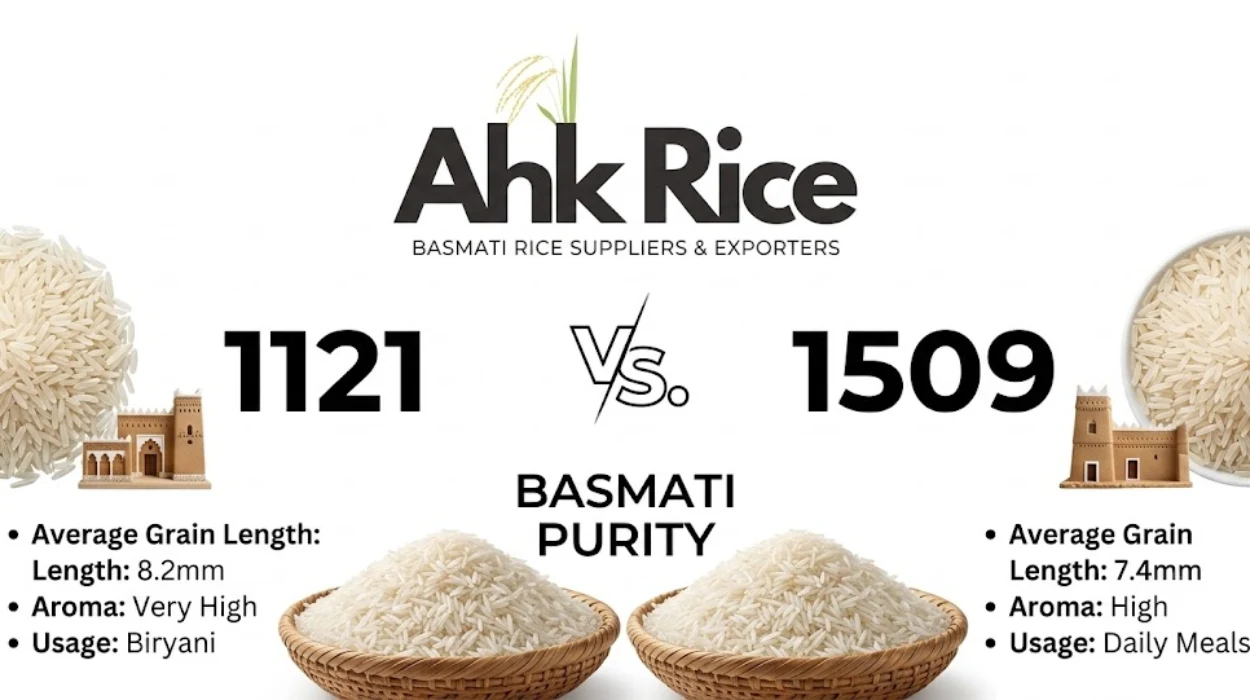
1121 vs 1509 Basmati Rice: Understanding Variety Purity Requirements in Saudi Arabia
Saudi Arabian buyers seeking premium long-grain rice generally prefer 1121 Basmati when maximum grain purity and premium positioning are required, while 1509 Basmati provides a balanced solution for buyers prioritizing faster crop availability, competitive pricing, and consistent cooking performance. Understanding variety purity standards allows importers to select the right product for their target market instead of relying solely on price.
Saudi Arabia remains one of the largest destinations for Pakistani Basmati rice exports in 2026. Importers, wholesalers, food-service distributors, and retail brands increasingly verify variety purity before confirming bulk contracts. Purity affects grain appearance, cooking consistency, consumer satisfaction, customs documentation, and long-term brand reputation.
Before comparing these two varieties, it is helpful to understand how Saudi buyers evaluate variety purity during import inspections, as explained in our guide on:
Why Is Variety Purity Important When Saudi Arabia Imports Pakistan 1121 Basmati Rice? That foundation makes it easier to understand why 1121 and 1509 serve different commercial purposes.
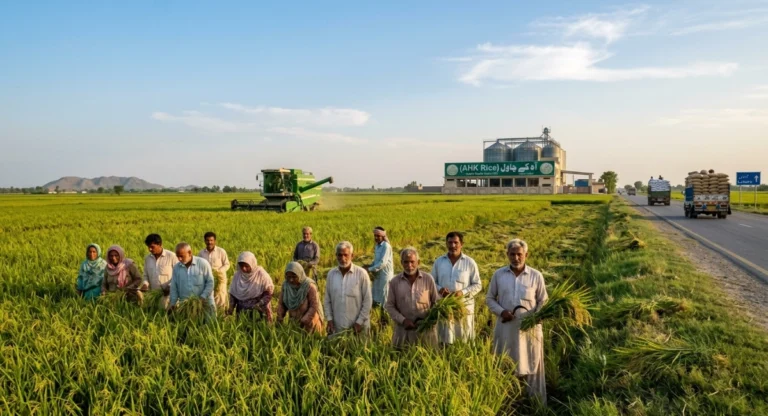
AHK Rice processes and exports both varieties from Punjab using controlled cleaning, grading, optical sorting, and packaging systems designed to maintain varietal identity throughout production.
What is the difference between 1121 and 1509 Basmati rice in terms of variety purity?
1121 Basmati generally requires stricter variety purity because it targets premium retail and hospitality markets, while 1509 Basmati allows buyers to balance high purity with competitive pricing. Both varieties can achieve export-grade purity when processed using certified segregation, optical sorting, and documented quality-control procedures.
Variety purity refers to the percentage of grains in a shipment that belong to the declared rice variety. A shipment labeled as 1121 should contain almost entirely authentic 1121 grains. The same principle applies to 1509.
Purity differs from broken percentage, chalkiness, moisture content, or damaged kernels. A shipment may have excellent milling quality but still fail variety verification if grains from another variety are mixed.
Saudi Arabian importers increasingly request documented purity because retail consumers recognize differences in:
- Grain length
- Grain shape
- Aroma
- Elongation after cooking
- Texture
- Plate presentation
Maintaining varietal integrity begins at procurement. Exporters separate paddy by variety, mill each batch independently, perform multiple cleaning stages, use optical color sorters, and verify samples before packaging.
1121 vs 1509 Variety Specification Comparison
| Attribute | 1121 Basmati | 1509 Basmati |
|---|---|---|
| Average raw grain length | 8.3–8.5 mm | 8.1–8.3 mm |
| Typical variety purity | 92–98% (buyer specification) | 90–98% (buyer specification) |
| Grain elongation after cooking | Up to 2.3× | Around 2.0× |
| Aroma | Strong traditional Basmati | Mild to moderate |
| Preferred Saudi segment | Premium retail, hotels | Retail, wholesale, food service |
| Harvest availability | Standard seasonal cycle | Earlier harvest |
| Price level | Higher | More economical |
These specifications explain why different Saudi buyers request different purity thresholds according to their customer segment.
Why do Saudi Arabian buyers compare 1121 and 1509 before importing?
Saudi importers compare these varieties because purity directly affects customer expectations, packaging claims, cooking consistency, retail positioning, and overall import profitability. Selecting the wrong variety can increase customer complaints even when the shipment meets general export quality specifications.
Saudi Arabia imports rice for several distribution channels.
Each channel values different characteristics.
Luxury supermarkets often emphasize extra-long grains and premium appearance.
Hotels prefer attractive cooked presentation.
Restaurant chains prioritize consistency.
Wholesale distributors seek competitive pricing without sacrificing quality.
As a result, importers evaluate multiple specifications together instead of focusing only on purity.
Saudi Arabia Market Preferences
| Market Segment | Preferred Variety | Main Buying Priority |
|---|---|---|
| Premium supermarkets | 1121 | Maximum grain length and premium purity |
| Luxury hotels | 1121 | Superior elongation and presentation |
| Catering companies | 1509 | Cost efficiency and reliable cooking |
| Wholesale distributors | 1509 | Balanced quality and price |
| Private-label retail | 1121 or 1509 | Based on target price segment |
Different buyers therefore establish different procurement standards while remaining compliant with Saudi food import requirements.
What are the available solutions for maintaining high variety purity?
Exporters maintain high variety purity through complete supply-chain segregation, advanced milling technology, optical sorting, laboratory verification, and traceable documentation. Combining these processes provides significantly better purity than relying on manual inspection alone.
Several methods contribute to purity preservation.
The first solution is field-level segregation. Farmers harvest each variety separately to reduce mixing before transportation.
The second solution is dedicated storage. Separate silos or warehouses prevent cross-contamination between varieties.
The third solution is controlled milling. Equipment is cleaned between production runs to remove residual grains from previous batches.
The fourth solution is optical sorting. High-resolution cameras identify grains with different colors, sizes, or shapes and automatically remove them.
The fifth solution is laboratory verification. Representative samples are inspected before shipment to confirm buyer specifications.
The sixth solution is traceability documentation. Production records demonstrate the identity of each batch from procurement through container loading.
When combined, these methods significantly improve consistency throughout export operations.
How do different purity control approaches compare?
Integrated quality-control systems consistently outperform isolated inspection methods because they prevent mixing throughout production instead of attempting to remove contamination only during the final processing stage. Prevention is more effective than correction in commercial rice exports.
The following comparison illustrates the differences.
| Purity Control Method | Accuracy | Investment | Suitable Volume | Main Benefit |
|---|---|---|---|---|
| Manual inspection | Low | Low | Small | Basic screening |
| Mechanical cleaning | Moderate | Moderate | Medium | Removes impurities |
| Optical sorting | High | High | Large | Identifies off-type grains |
| Laboratory verification | Very High | Moderate | All | Confirms specifications |
| Full traceability system | Highest | High | Large exporters | Maintains consistency |
Modern exporters typically combine all these approaches rather than depending on one process alone.
This layered quality-control model produces more predictable export results.
Which method works best for different Saudi import cases?
The best purity strategy depends on the buyer’s target market rather than the rice variety alone. Premium retail brands usually require maximum documented purity, while wholesale and food-service buyers prioritize the balance between purity, pricing, and supply continuity.
Different purchasing objectives require different approaches.
Premium supermarket brands typically specify higher purity because packaging emphasizes premium quality.
Hotels value visual appearance after cooking.
Private-label brands often define purity according to their pricing strategy.
Food-service operators prioritize consistent cooking performance across large volumes.
Importers serving multiple market segments frequently purchase both 1121 and 1509 to optimize inventory.
Decision Framework
| Buyer Situation | Recommended Variety | Recommended Purity Level | Main Objective | Best Outcome |
|---|---|---|---|---|
| Premium retail brand | 1121 | Highest available specification | Brand differentiation | Premium shelf positioning |
| Luxury hospitality | 1121 | High | Attractive presentation | Better customer experience |
| National wholesaler | 1509 | High | Cost control | Competitive pricing |
| Catering distributor | 1509 | Standard premium export grade | Reliable cooking | Stable operations |
| Mixed customer portfolio | Both varieties | Buyer-specific | Market flexibility | Balanced inventory |
This framework helps buyers match procurement decisions with commercial objectives instead of purchasing a single variety for every application.
What are the advantages and limitations of 1121 and 1509 Basmati rice?
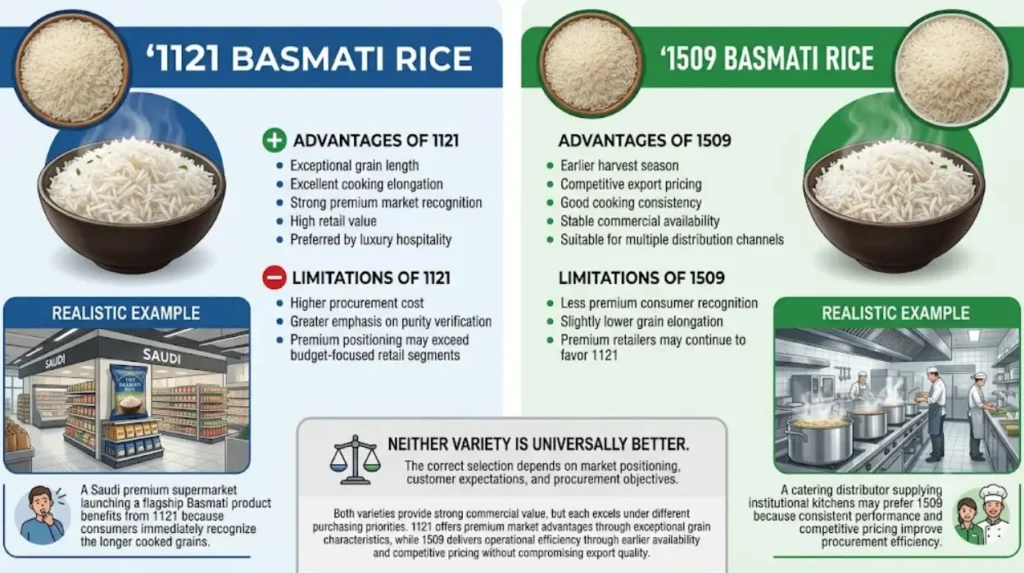
Both varieties provide strong commercial value, but each excels under different purchasing priorities. 1121 offers premium market advantages through exceptional grain characteristics, while 1509 delivers operational efficiency through earlier availability and competitive pricing without compromising export quality.
Advantages of 1121
- Exceptional grain length.
- Excellent cooking elongation.
- Strong premium market recognition.
- High retail value.
- Preferred by luxury hospitality.
Example:
A Saudi premium supermarket launching a flagship Basmati product benefits from 1121 because consumers immediately recognize the longer cooked grains.
Limitations of 1121
- Higher procurement cost.
- Greater emphasis on purity verification.
- Premium positioning may exceed budget-focused retail segments.
Advantages of 1509
- Earlier harvest season.
- Competitive export pricing.
- Good cooking consistency.
- Stable commercial availability.
- Suitable for multiple distribution channels.
Example:
A catering distributor supplying institutional kitchens may prefer 1509 because consistent performance and competitive pricing improve procurement efficiency.
Limitations of 1509
- Less premium consumer recognition.
- Slightly lower grain elongation.
- Premium retailers may continue to favor 1121.
Neither variety is universally better.
The correct selection depends on market positioning, customer expectations, and procurement objectives.
Which decision factors should Saudi importers evaluate before selecting a variety?
Successful purchasing decisions combine purity specifications with market positioning, documentation, production capability, logistics, pricing, packaging, and supplier consistency. Evaluating these factors together reduces commercial risk while improving long-term customer satisfaction.
Importers should evaluate:
- Verified variety identity.
- Optical sorting capability.
- Cleaning and grading process.
- Laboratory inspection reports.
- Packaging options.
- Export documentation.
- Container loading procedures.
- Annual production capacity.
- Supply consistency.
- Historical shipment performance.
Price should never be evaluated independently.
Lower prices may not provide the best commercial value if inconsistent purity affects consumer confidence or increases product returns.
2026 Price Comparison (Indicative FOB Pakistan)
| Variety | Typical Price Range (USD/MT) | Typical Shelf Life |
|---|---|---|
| 1121 Basmati | $980–1,220 | Up to 24 months under recommended storage |
| 1509 Basmati | $850–1,050 | Up to 24 months under recommended storage |
Prices vary according to grade, processing method (White, Steam, Sella), packaging requirements, order volume, seasonal demand, and freight conditions.
How should importers choose between 1121 and 1509 for Saudi Arabia?
Importers should begin with their target customer rather than the rice specification. Premium consumer brands generally benefit from 1121, whereas value-oriented retail, wholesale, and food-service businesses often achieve stronger commercial performance with 1509. Both varieties deliver reliable export quality when supported by documented purity management.
A successful procurement strategy aligns product specifications with customer expectations.
Understanding variety purity allows buyers to compare suppliers using measurable quality indicators rather than marketing claims alone.
Exporters that maintain controlled sourcing, dedicated processing, advanced optical sorting, laboratory verification, and traceable documentation provide greater consistency across repeated shipments.
For Saudi Arabian buyers, selecting the correct variety is therefore a strategic purchasing decision that balances market positioning, operational efficiency, pricing, and consumer satisfaction. For deeper insight explore:
Buy Pakistan 1121 Basmati Rice with High Variety Purity for Saudi Arabian Markets
Frequently Asked Questions
How is variety purity measured in Pakistani Basmati rice exports?
Variety purity is measured through laboratory sampling, grain morphology analysis, and quality inspections that verify the percentage of grains belonging to the declared Basmati variety before shipment.
Why do Saudi Arabian importers prefer high variety purity?
Saudi importers prefer high variety purity because it ensures consistent cooking performance, uniform grain appearance, accurate product labeling, and stronger consumer confidence in premium rice brands.
Is 1121 Basmati rice always purer than 1509 Basmati rice?
No. Variety purity depends on the exporter’s sourcing, segregation, milling, and quality control processes. Both 1121 and 1509 can achieve high export-grade purity when processed correctly.
Which Basmati variety is better for premium Saudi retail brands?
1121 Basmati is generally preferred for premium retail brands because of its extra-long grains, superior elongation after cooking, and stronger premium market recognition.
Why do some Saudi buyers choose 1509 Basmati instead of 1121?
Many buyers choose 1509 Basmati because it offers competitive pricing, earlier seasonal availability, reliable cooking performance, and good value for wholesale and food-service markets.
What purity percentage do Saudi buyers usually request?
Most Saudi buyers request variety purity based on their product positioning, with premium retail brands typically requiring around 95–98% purity, while standard commercial contracts may accept slightly lower specifications.
Does variety purity affect rice pricing?
Yes. Higher variety purity usually requires stricter segregation, advanced optical sorting, and additional quality inspections, which can increase the export price compared to lower-purity commercial grades.
How can importers verify variety purity before shipment?
Importers can request laboratory test reports, pre-shipment inspection certificates, representative product samples, and detailed quality specifications before confirming bulk orders.
Does variety purity influence shelf life?
No. Shelf life is primarily affected by moisture content, storage conditions, and packaging quality rather than variety purity. Properly stored Basmati rice typically has a shelf life of up to 24 months.
What should buyers compare besides variety purity?
Buyers should also compare grain length, broken percentage, moisture content, foreign matter, processing method, packaging options, certifications, production capacity, pricing, and shipment documentation before selecting a supplier.