How Does Pakistan 1509 Steam Compare With 1121 Steam Rice in Indonesia?
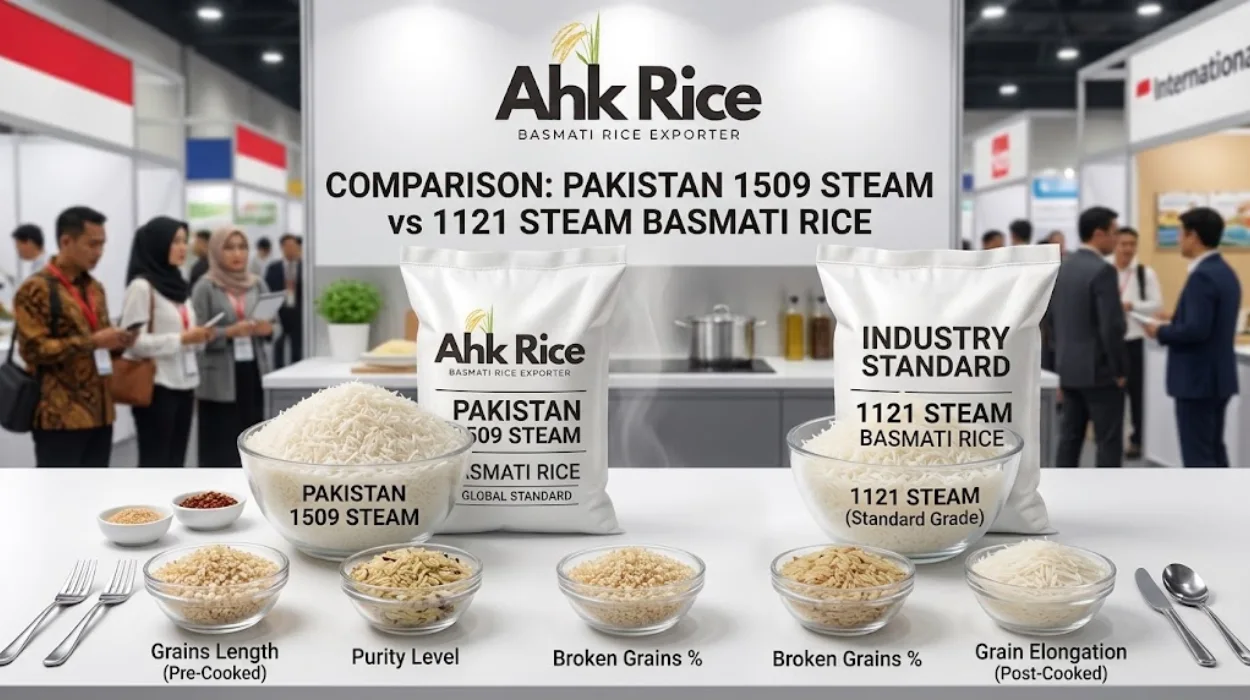
Pakistan 1509 Steam is the stronger value choice for Indonesian bulk foodservice, while 1121 Steam is stronger for premium presentation and higher-value retail. Here is why: 1509 combines long grain, strong cooking performance, and lower purchase cost, while 1121 delivers greater premium positioning and visual elongation.
Indonesia imports specialty rice for defined commercial uses rather than treating imported Basmati as a direct substitute for domestic rice. Indonesian market guidance identifies 1509 Steam and 1121 Steam as important Pakistani options because buyers assess grain appearance, pricing, cooking performance, aroma, and container economics. (source: AHK Rice Indonesian market guide)
For buyers still establishing how Pakistani Basmati varieties differ, the educational guide on Pakistani rice grades and Indonesian market requirements provides the wider grading context before comparing these two steam-processed varieties.
Pakistan 1509 and 1121 are Basmati rice varieties cultivated in Pakistan and processed through milling, steaming, drying, polishing, grading, and sorting. Steam processing partially gelatinizes starch and strengthens the grain before final milling. This improves separation during cooking without creating the deeper colour associated with Golden Sella.
For Indonesian importers, the commercial question is not simply which variety is better. The correct question is which specification produces the required cooked appearance, foodservice yield, retail positioning, storage performance, and landed cost.
What are the available solutions for Indonesian rice buyers?
Indonesian buyers have two principal steam-rice solutions: 1509 Steam for value-led volume purchasing and 1121 Steam for premium grain presentation. Both deliver long grains, aromatic characteristics, and reliable commercial cooking performance.
1509 Steam is a long-grain Basmati variety positioned between economy-focused rice and premium Basmati. Its commercial advantage comes from combining a long, slender grain with a comparatively lower procurement cost. A Pakistan trade marketplace currently lists 1509 Steam at about $1,390 per metric ton. (source: Pakistan Trade Portal)
1121 Steam occupies the higher premium position. Its grain length commonly reaches around 8.30–8.40 mm before cooking, with cooked grains exceeding 22 mm in some export specifications. An indicative Pakistan export quotation currently places 1121 Steam at $1,160–$1,200 per MT FOB Karachi, although supplier specifications and quotations vary by contract. (source: Pakistanrice.com, July 2026)
AHK Rice supplies both varieties through its Pakistan Basmati processing operation, alongside Super Kernel and other Basmati grades. Its export process covers processing, grading, colour sorting, custom packaging, documentation, and container loading.
How does steam processing affect both varieties?
Steam processing strengthens the rice kernel before milling. The process uses controlled steam exposure, followed by drying and milling. The resulting grain generally holds together better during cooking than untreated raw rice.
The key difference remains the underlying variety. Processing creates the steam characteristic, while variety determines much of the grain architecture, aroma profile, and commercial positioning.
How do 1509 Steam and 1121 Steam compare technically?
1121 Steam generally provides the stronger premium grain appearance, while 1509 Steam provides a more economical specification for high-volume cooking. Their differences are concentrated in grain profile, price positioning, yield economics, and target customer.
| Attribute | Pakistan 1509 Steam | Pakistan 1121 Steam |
|---|---|---|
| Variety | 1509 Basmati | 1121 Basmati |
| Typical grain length | About 8.30–8.40 mm | About 8.30–8.40 mm |
| Processing | Controlled steam processing | Controlled steam processing |
| Broken target | Around 1–2% | Around 0–2% |
| Moisture target | About 12–13% | About 12–13% |
| Cooked profile | Long, fluffy, separated | Extra-long, fluffy, separated |
| Commercial position | Value-focused premium Basmati | Premium Basmati |
Published specifications show that 1509 Steam can reach approximately 8.40 mm, with moisture around 12–12.5% and broken grain around 1%. Other published 1121 Steam specifications show approximately 8.30–8.40 mm grain length, moisture around 12–13%, and broken levels up to 2%.
Specification ranges differ among mills. Therefore, Indonesian buyers should compare the actual pre-shipment specification sheet rather than selecting a variety name alone.
Which specification matters most?
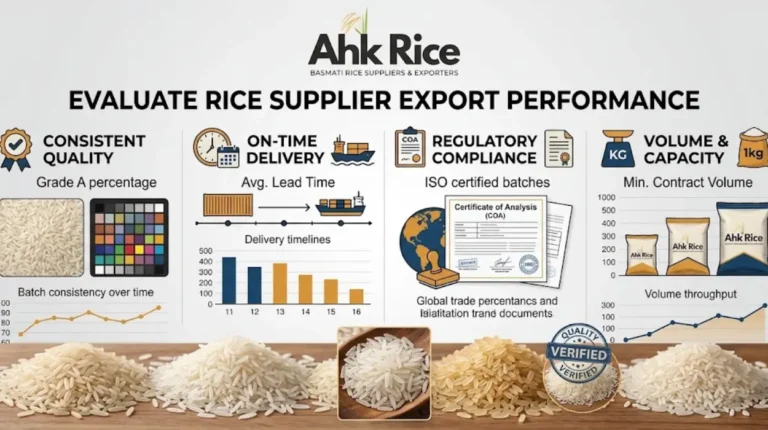
Grain length matters most for visual positioning. Broken percentage matters most for cooked presentation and commercial yield. Moisture matters for storage stability and shipment condition. Purity and foreign matter determine basic quality control.
A professional comparison therefore uses a complete specification sheet. Comparing only the variety name creates an incomplete procurement decision.
Which method works best for different Indonesian market regions?
Java-focused premium channels favour the presentation advantage of 1121 Steam, while volume-oriented foodservice and wholesale channels can benefit more from 1509 Steam’s cost efficiency. Regional demand should guide grade selection.
Greater Jakarta and Java contain major commercial, hospitality, retail, and foodservice demand centres. Premium imported Basmati can serve restaurants, hotels, specialist retailers, and South Asian food channels. For these applications, 1121 Steam provides stronger premium positioning because long separated grains create visible plate appeal.
Sumatra, Kalimantan, and other distribution markets can place greater emphasis on procurement efficiency and wholesale economics. 1509 Steam becomes attractive for distributors supplying catering operations, restaurants, and institutional kitchens that require consistent cooking at controlled cost.
These regional distinctions should not be treated as fixed regulatory classifications. They represent practical procurement segmentation. The actual buyer specification, target customer, packaging format, and delivered cost remain decisive.
Which grade suits premium foodservice?
1121 Steam suits premium foodservice where the cooked grain must create a strong visual impression. Biryani, pulao, banquet rice, hotel buffets, and specialty restaurant dishes benefit from extra-long separated grains.
1509 Steam suits high-volume kitchens where the buyer values portion yield and procurement economics. Catering companies can use the variety for biryani, pulao, fried rice, and everyday rice menus.
Which grade suits wholesale distribution?
1509 Steam provides a useful wholesale proposition because its price position can support competitive retail and foodservice margins. 1121 Steam supports higher-value positioning where customers accept a premium for grain appearance and established Basmati quality.
AHK Rice’s Indonesian market information identifies both 1509 and 1121 among Pakistani Basmati products relevant to Indonesian wholesalers, alongside Super Kernel.
How do price and shelf life compare?
1509 Steam normally provides the lower procurement position, while both steam varieties can support roughly two years of shelf life under suitable storage; exact commercial terms depend on specification and packaging.
A Pakistan Trade Portal listing currently shows 1509 Steam at approximately $1,390/MT and 1121 Steam at approximately $1,510/MT from the same marketplace listing. That indicates an illustrative difference of about $120/MT, or roughly 8%, before freight, insurance, duties, port costs, and other landed-cost components. (source: Pakistan Trade Portal)
FOB pricing varies substantially by supplier, crop year, broken percentage, purity, packaging, inspection terms, and order volume. Another current Pakistan quotation places 1121 Steam at $1,160–$1,200/MT FOB Karachi. (source: Pakistanrice.com)
Shelf life is less differentiated than price. Published commercial specifications commonly state 24 months for both 1509 Steam and 1121 Steam under suitable storage conditions.
For Indonesia, storage conditions still matter. Warehouses should remain dry, clean, ventilated, and protected from direct sunlight. Moisture control must be verified before loading because moisture influences storage stability and grain quality.
What does the price difference mean at container scale?
A $120/MT difference becomes $3,000 on a 25 MT shipment before freight and destination charges. A larger order magnifies the difference, making 1509 Steam attractive for price-sensitive contracts.
1121 Steam can justify its higher cost when the buyer can recover the premium through retail positioning, restaurant pricing, banquet presentation, or higher-value foodservice menus.
The correct calculation is therefore landed cost per usable kilogram, not simply FOB price per metric ton.
What are the pros and cons of each variety?
1509 Steam offers stronger cost efficiency and high-volume practicality, while 1121 Steam offers stronger premium presentation and market positioning; neither variety is universally superior.
What are the advantages of 1509 Steam?
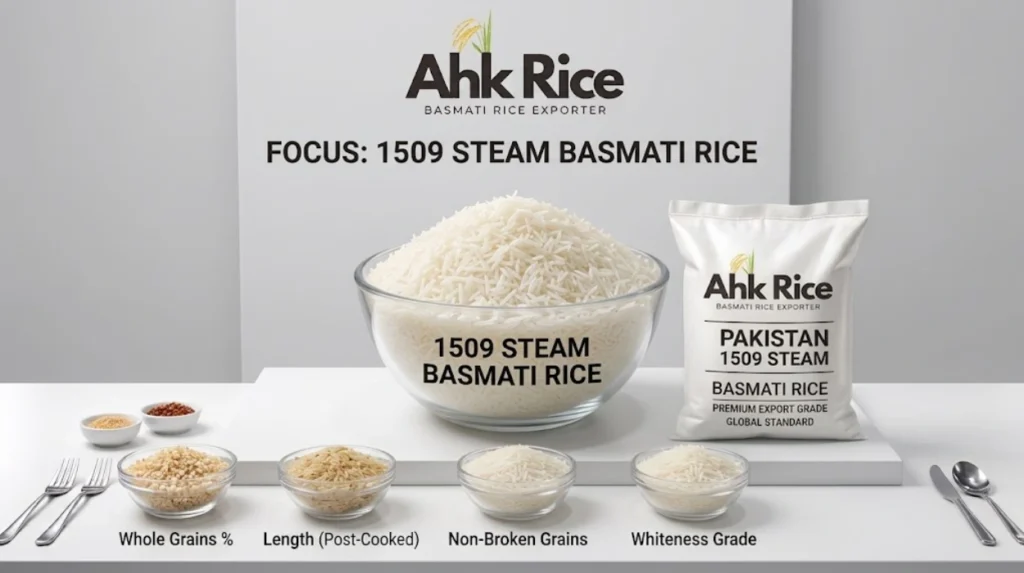
1509 Steam combines long-grain appearance with competitive procurement economics. It suits buyers who need premium-looking rice without paying the highest Basmati premium.
Its strong commercial application is foodservice. Large kitchens purchase rice by volume, so a lower acquisition cost can directly improve menu margins.
Its steam treatment also strengthens the grain. Published specifications commonly report low broken percentages, controlled moisture, and non-sticky cooked texture.
The main limitation is premium positioning. Buyers selling highly differentiated Basmati products may prefer the stronger visual association of 1121.
What are the advantages of 1121 Steam?
1121 Steam provides a premium long-grain profile and strong cooked presentation. Published specifications commonly place its raw grain length around 8.30–8.40 mm, with cooked length exceeding 22 mm.
Its premium positioning supports hotels, restaurants, specialist retailers, and foodservice operators that need a distinctive plate appearance.
The principal disadvantage is procurement cost. A higher purchase price requires a stronger retail or foodservice margin to justify the specification.
What decision factors should Indonesian importers use?
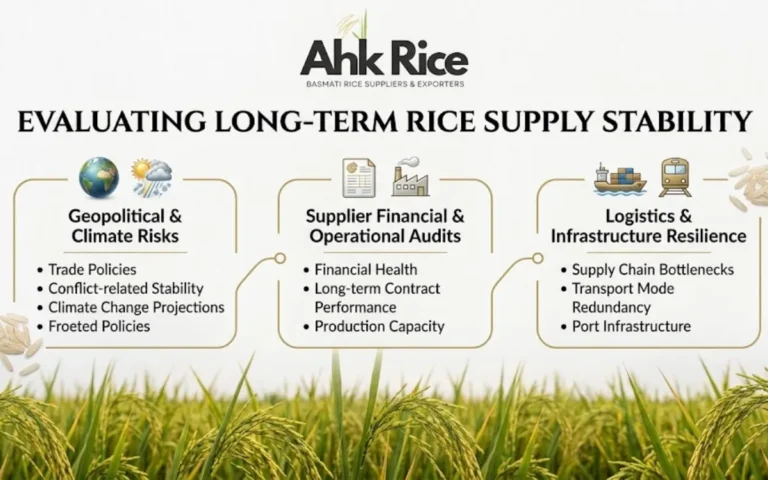
Indonesian buyers should rank landed cost, target channel, grain appearance, cooking performance, storage requirements, packaging, and supplier consistency before selecting 1509 Steam or 1121 Steam.
| Decision factor | Choose 1509 Steam when… | Choose 1121 Steam when… |
|---|---|---|
| Purchase cost | Budget control is primary | Premium pricing is acceptable |
| Foodservice volume | Daily cooking volume is high | Presentation carries higher value |
| Retail positioning | Value-premium positioning is required | Premium Basmati positioning is required |
| Cooked appearance | Long, separated grains are sufficient | Maximum visual elongation is preferred |
| Margin strategy | Lower input cost protects margin | Higher selling price absorbs input premium |
Indonesian importers should also verify the import classification and applicable trade requirements before contracting. Indonesia and Pakistan operate a preferential trade framework, with Indonesian regulations providing procedures for preferential tariff treatment for qualifying Pakistani imports.
Indonesia also distinguishes specialty rice from general consumer rice. The Indonesian National Food Agency stated that Basmati falls within the specialty-rice category rather than ordinary consumer rice. (source: Badan Pangan Nasional)
A buyer should therefore verify current import permissions, applicable tariff treatment, origin documentation, phytosanitary requirements, food safety documents, packaging rules, and destination-port procedures before shipment.
Which variety is the better solution for Indonesia?
1509 Steam is the better default for Indonesian bulk foodservice and wholesale procurement, while 1121 Steam is better for premium restaurants, hotels, and retail channels where grain presentation supports higher pricing.
The strongest 1509 use case is a distributor supplying multiple foodservice customers. The buyer controls procurement cost while still offering long, aromatic, non-sticky Basmati rice.
The strongest 1121 use case is a premium restaurant or retail brand. The buyer accepts a higher input price because the cooked grain appearance strengthens product differentiation.
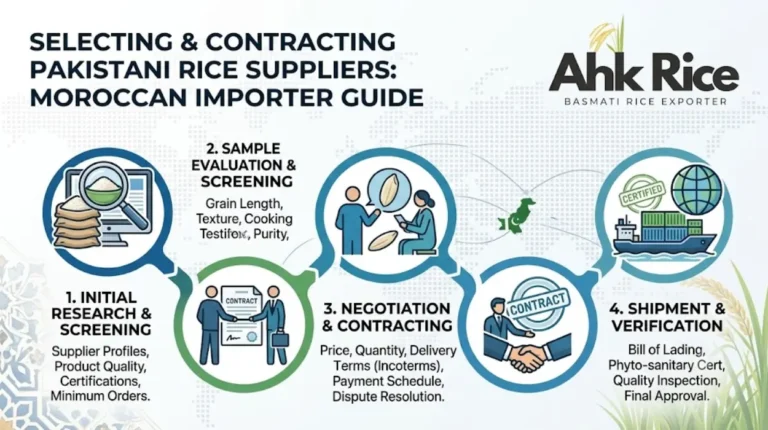
Both varieties require the same disciplined procurement process. Buyers should approve a physical sample, confirm the laboratory specification, verify broken percentage and moisture, approve packaging, and establish the shipment terms before issuing the purchase order.
AHK Rice provides Pakistan-origin Basmati processing, grading, colour sorting, custom packaging, and export documentation for international buyers. Its Indonesia export operation includes 1121, Super Kernel, and 1509 Basmati options.
The comparison therefore leads to a practical conclusion. Select 1509 Steam for cost-controlled volume, and select 1121 Steam for premium presentation. Match the grade to the channel instead of treating one variety as universally better.
FAQs
Is 1509 Steam cheaper than 1121 Steam in Indonesia?
1509 Steam generally occupies the lower procurement position. A current Pakistan Trade Portal listing shows approximately $1,390/MT for 1509 Steam versus $1,510/MT for 1121 Steam. Actual CIF Indonesia pricing changes with freight, duties, packaging, and contract terms.
Which is better for Indonesian restaurants?
1509 Steam is better for high-volume restaurants focused on food cost. 1121 Steam is better for premium restaurants where long cooked grains and plate presentation justify a higher purchase price.
Which has longer grains, 1509 or 1121?
Both varieties can meet extra-long grain specifications. Published commercial specifications commonly show 1509 around 8.30–8.40 mm and 1121 around 8.30–8.40 mm before cooking. Actual grain length depends on grade and mill specification.
How long does Steam Basmati rice last?
Commercial specifications commonly state approximately 24 months when rice is correctly packaged and stored. Storage conditions, moisture, packaging, crop year, and supplier specification affect practical shelf stability.
Does AHK Rice supply 1509 and 1121 to Indonesia?
Yes. AHK Rice identifies 1121, Super Kernel, and 1509 among its Pakistani Basmati varieties supplied to Indonesia and provides export processing, packaging, and documentation support.
What should an Indonesian importer check before buying?
Check grain length, broken percentage, moisture, purity, foreign matter, crop year, processing type, packaging, sample performance, export documentation, shipment terms, and final landed cost. These factors provide a more reliable comparison than variety name alone.