Why Do Foodservice Buyers Prefer Lower Broken Basmati Rice?
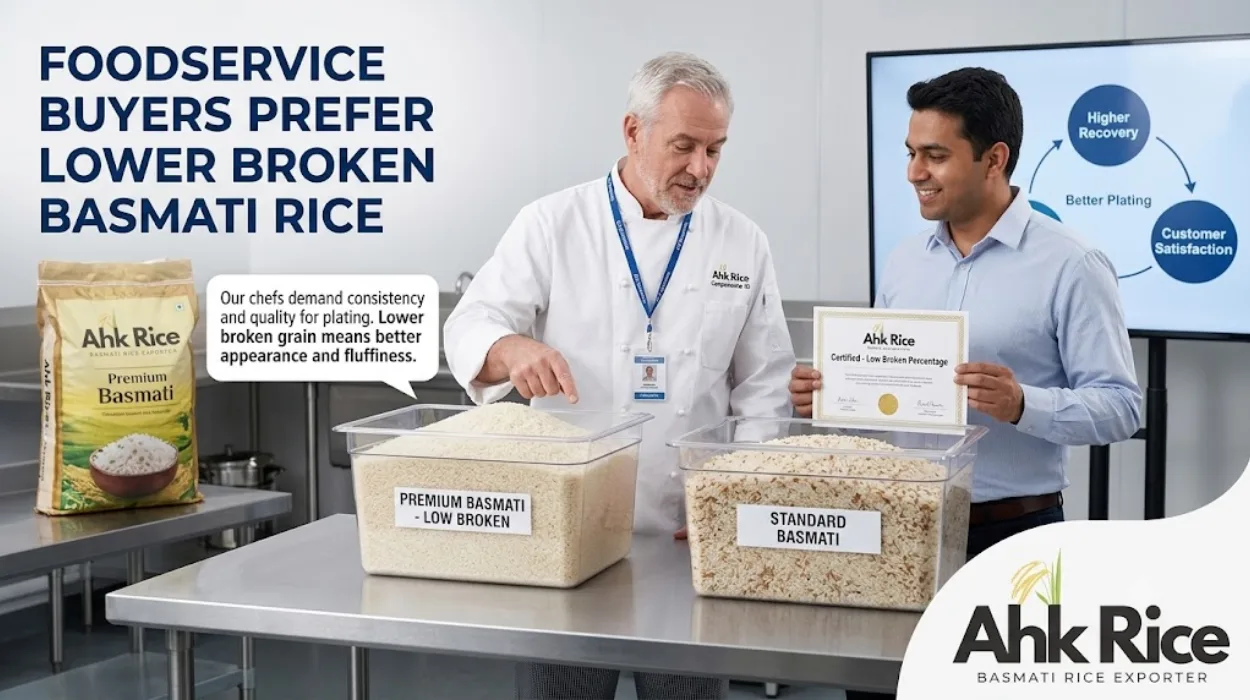
Foodservice buyers prefer lower broken Basmati rice grades because they deliver better plate presentation, higher cooking consistency, improved grain separation, and lower serving waste. Here is why: intact grains maintain the traditional Basmati appearance that restaurants, hotels, caterers, and institutional kitchens require for premium rice dishes.
Basmati rice remains one of the most traded aromatic rice categories in the world. Pakistan and India produce most global Basmati supplies, while Gulf countries, Europe, Africa, North America, and Central Asia import significant volumes (source: REAP export data, December 2025). Buyers evaluate Basmati rice using several specifications. Grain length, aroma, moisture, purity, milling quality, and broken percentage rank among the most important criteria.
Broken percentage directly affects visual quality and cooking performance. Foodservice operators purchase thousands of kilograms annually. Consistent grain appearance helps maintain product standards across every serving. Understanding lower broken grades explains why professional kitchens prioritize them despite higher prices.
What Are Lower Broken Basmati Rice Grades?
Lower broken Basmati grades contain fewer fractured grains, usually between 0% and 5% broken rice, creating a more uniform appearance and cooking result than higher broken grades.
Broken rice refers to grains fractured during harvesting, milling, handling, or transportation. These grains retain the same nutritional composition as whole grains. The difference appears in size and appearance.
Rice mills grade Basmati according to the percentage of broken kernels. International buyers use these specifications during procurement and quality inspections.
Common Basmati Rice Broken Grades
| Grade | Broken Percentage |
|---|---|
| Premium Export Grade | 0–1% |
| Extra Fine Grade | 2–3% |
| Standard Premium Grade | 4–5% |
| Commercial Grade | 6–10% |
| Economy Grade | 11–15% |
| Catering Grade | 16–25% |
| Industrial Grade | Above 25% |
Lower broken grades contain more intact grains after milling. Longer grains create the premium visual characteristics associated with authentic Basmati rice.
With lower broken grades defined, the next question is how these grades are produced during processing.
How Are Lower Broken Basmati Rice Grades Produced?
Careful harvesting, controlled drying, precise milling, and advanced sorting systems reduce grain breakage and create lower broken rice grades.
Basmati cultivation begins in Punjab’s fertile rice-growing regions. Farmers cultivate varieties such as 1121 Basmati, Super Kernel Basmati, and 1509 Basmati. Harvesting occurs when grain moisture reaches suitable levels for processing.
Rice mills follow a structured processing sequence:
- Clean the harvested paddy.
- Dry the paddy to target moisture.
- Dehusk the grain.
- Separate husk material.
- Polish the rice.
- Grade by length.
- Sort by broken percentage.
- Inspect quality parameters.
- Package approved lots.
Modern optical sorters identify broken kernels using cameras and sensors. Mechanical graders separate grains according to length and shape. Multiple grading stages increase purity levels.
Lower breakage requires moisture control. Rice mills maintain moisture between specified levels because excessive dryness increases kernel fractures during milling.
Processing determines grade quality. Grade quality then influences how rice performs in commercial kitchens.
Which Components Make Lower Broken Grades Valuable for Foodservice Buyers?
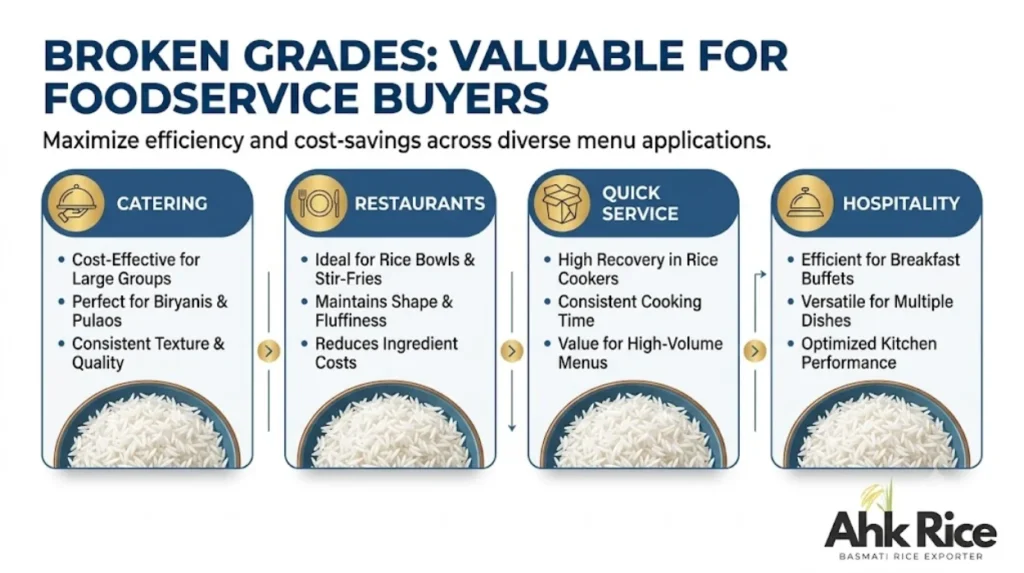
Uniform grain length, consistent cooking behavior, attractive presentation, and reduced waste create the primary value of lower broken Basmati grades.
Foodservice operations focus on repeatable results. Restaurants serve hundreds of identical portions daily. Rice consistency supports operational efficiency.
Uniform Grain Length
Lower broken grades contain a higher percentage of whole kernels. Whole kernels elongate during cooking and create the long-grain appearance expected from Basmati rice.
A premium biryani requires visible grain separation. A hotel buffet requires attractive presentation. A catering tray requires visual consistency.
Consistent Water Absorption
Broken grains absorb water faster than whole grains. High broken percentages create uneven cooking because different grain sizes hydrate at different rates.
Lower broken grades reduce variation. Reduced variation improves texture consistency across large batches.
Reduced Plate Waste
Whole grains remain intact during cooking and serving. Intact grains create cleaner presentation and maintain texture longer.
Foodservice buyers evaluate total serving performance rather than raw material cost alone.
These functional components explain why buyers continue selecting lower broken grades. The next step is understanding their operational benefits.
What Benefits Do Lower Broken Basmati Rice Grades Provide?
Better presentation, improved customer perception, predictable cooking results, and stronger menu consistency make lower broken grades attractive for professional kitchens.
Presentation influences customer satisfaction. Long, separate grains support premium dishes such as biryani, pulao, mandi, kabsa, and Persian rice preparations.
Better Visual Appeal
Lower broken grades create cleaner plating. Restaurants serving premium rice dishes require visible grain definition.
A Gulf restaurant serving kabsa expects long grains. A British restaurant serving biryani expects grain separation. A Canadian catering company expects consistent appearance across events.
Improved Cooking Consistency
Lower broken grades cook more uniformly. Uniform cooking reduces operational adjustments during preparation.
Commercial kitchens depend on standardized recipes. Standardized recipes depend on predictable raw materials.
Better Holding Performance
Cooked rice often remains in warming cabinets before service. Lower broken grades maintain structure longer during holding periods.
Premium grades retain separation. Higher broken grades become compact faster during extended holding.
Stronger Brand Perception
Foodservice businesses build reputation through consistency. Rice quality contributes directly to customer experience.
Guests notice grain appearance. Guests notice texture consistency. Guests associate both factors with food quality.
These benefits explain purchasing decisions. Understanding real-world applications provides additional context.
Where Are Lower Broken Basmati Rice Grades Commonly Used?
Hotels, restaurants, caterers, institutional kitchens, airlines, and premium food manufacturers frequently use lower broken Basmati grades.
Different sectors prioritize rice quality for different reasons.
Hotels and Restaurants
Hotels emphasize presentation. Premium dining establishments require visually appealing rice service.
Luxury buffets often specify 0–5% broken Basmati grades for consistency.
Catering Companies
Catering businesses prepare large volumes. Lower broken grades improve batch consistency and reduce appearance variations.
Wedding caterers, corporate caterers, and event caterers frequently select premium grades.
Airline Catering
Airline kitchens demand standardization. Consistent rice performance supports large-scale production systems.
Retail Food Manufacturing
Ready-meal manufacturers use lower broken grades for frozen biryani products and packaged rice meals.
Export Markets
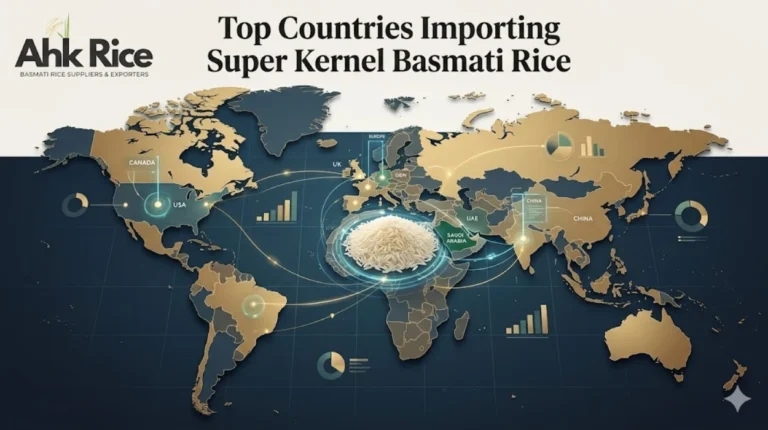
Gulf Cooperation Council countries import significant quantities of premium Basmati rice (source: Pakistan Bureau of Statistics, FY2024-25).
Saudi Arabia favors long-grain premium specifications. UAE foodservice buyers emphasize presentation quality. United Kingdom importers focus on restaurant-grade consistency.
Use cases demonstrate demand patterns. Demand patterns also create misconceptions about broken rice quality.
What Misconceptions Exist About Lower Broken Basmati Rice Grades?
The most common misconception is that broken rice indicates poor quality, although broken kernels retain the same nutritional composition as whole grains.
Broken rice and poor-quality rice are not identical products. Nutritional content remains largely unchanged.
Misconception 1: Broken Rice Is Inferior Rice
Broken rice originates from the same harvested crop. Processing fractures kernels during handling or milling.
The difference involves appearance rather than nutritional value.
Misconception 2: Higher Broken Rice Does Not Cook Well
Higher broken grades cook effectively for specific applications.
Rice porridge, processed foods, rice flour, and industrial food production often use higher broken grades.
Misconception 3: Premium Grades Always Deliver Better Value
Value depends on application.
A luxury restaurant benefits from premium grades. A food processor manufacturing rice snacks benefits from higher broken grades.
Misconception 4: All Buyers Need 0% Broken Rice
Many buyers select 2–5% broken grades because they balance quality and cost.
Commercial procurement focuses on performance requirements rather than absolute specifications.
Understanding these misconceptions helps buyers evaluate rice according to application needs rather than assumptions.
Why Does Broken Percentage Influence Foodservice Purchasing Decisions?
Broken percentage directly influences presentation, cooking consistency, serving quality, and customer perception, making it a major purchasing factor for foodservice operations.
Foodservice buyers evaluate rice differently from retail consumers. Professional kitchens measure performance across thousands of servings.
Lower broken grades support visual quality. Lower broken grades support operational consistency. Lower broken grades support menu standards.
Premium Basmati dishes rely on grain separation and appearance. Lower broken grades deliver those characteristics more reliably. That relationship explains why restaurants, hotels, caterers, and institutional buyers continue selecting lower broken specifications despite higher procurement costs.
Broken percentage directly influences presentation quality, cooking consistency, shelf life performance, and market value. Low broken grades create cleaner plates, stronger grain separation, and better customer perception. Higher broken grades reduce costs but compromise visual appeal and consistency. Buyers should match broken specifications to their operational objectives, customer expectations, and market positioning.
For buyers evaluating premium sourcing options, a natural next step is : “Supply UK Restaurants with Premium Low Broken Pakistani Basmati Rice.”
Frequently Asked Questions
Does lower broken Basmati rice cook differently?
Yes. Lower broken grades absorb water more evenly and create more consistent texture throughout the batch.
What broken percentage is considered premium Basmati rice?
Most premium export specifications range between 0% and 5% broken grains.
Is broken Basmati rice less nutritious?
No. Broken and whole Basmati rice contain nearly identical nutritional content.
Which industries use lower broken Basmati grades most often?
Hotels, restaurants, caterers, airline kitchens, and premium food manufacturers use lower broken grades frequently.
Why do restaurants prefer lower broken rice?
Restaurants prefer lower broken rice because it provides better presentation, grain separation, and consistency across servings.
Which countries import premium lower broken Basmati rice?
Saudi Arabia, UAE, United Kingdom, Canada, Qatar, Kuwait, Oman, and several European markets import significant volumes of premium Basmati rice.