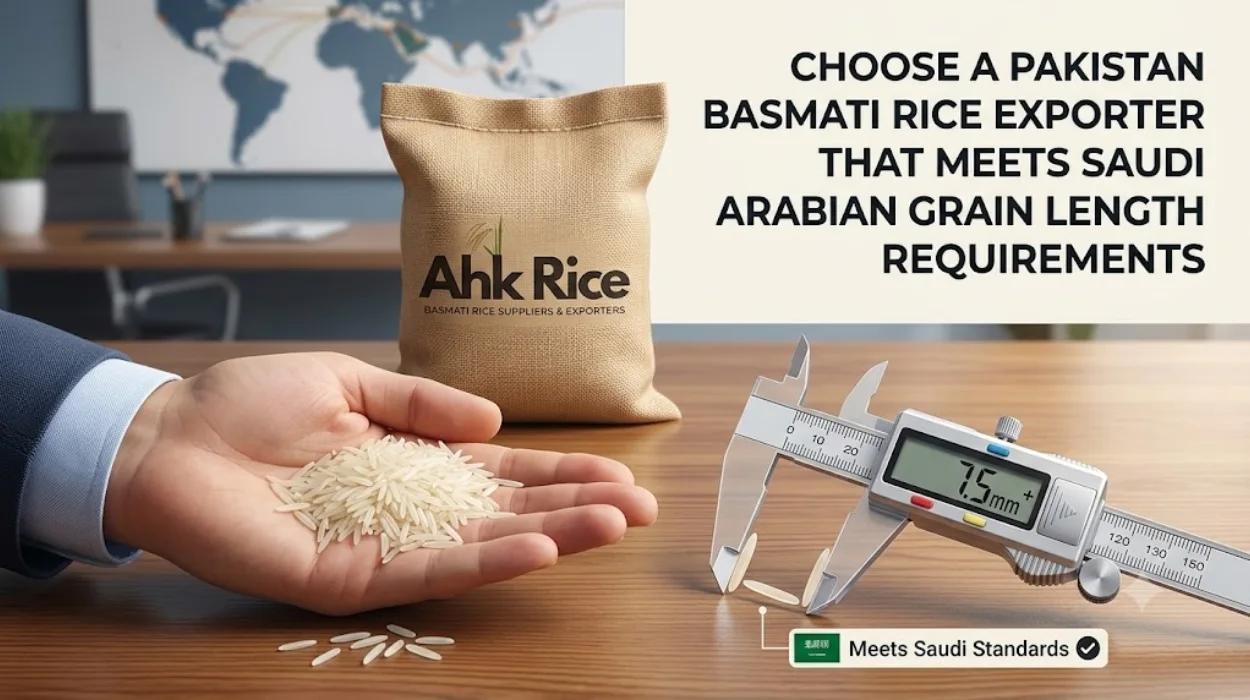
Choose a Pakistan Basmati Rice Exporter That Meets Saudi Arabian Grain Length Requirements
Saudi Arabian rice importers do not buy on price alone. Grain length, consistency, cooking performance, breakage percentage, and shipment reliability directly affect retail sales and customer satisfaction. Before selecting a supplier, many buyers first learn how Saudi buyers assess grain specifications through resources such as our guide on grain-length evaluation.
For importers, distributors, wholesalers, and private-label brands, choosing the right exporter means finding a partner that can consistently supply rice that matches Saudi market expectations. This is where AHK Rice provides a structured export solution backed by processing controls, quality inspections, export documentation, and market-specific grain selection.
Saudi Arabia remains one of the most important destinations for Pakistani Basmati rice in 2026. Buyers increasingly demand verified grain length specifications, uniform appearance, and dependable delivery schedules. Exporters that cannot maintain consistency across multiple shipments often create costly problems for importers.
The challenge is simple. Saudi consumers expect premium long-grain rice. Importers therefore need an exporter capable of delivering the same quality profile shipment after shipment. AHK Rice focuses on this requirement by supplying export-grade Pakistani Basmati varieties that align with Saudi Arabian commercial standards.
What is the best solution for meeting Saudi Arabian grain length requirements?
The most effective solution is selecting an exporter that controls sourcing, milling, grading, quality inspection, packaging, documentation, and shipment execution while supplying grain lengths that match Saudi buyer preferences across retail, wholesale, foodservice, and private-label distribution channels without specification deviations.
The best exporter is not necessarily the cheapest exporter.
A low-cost shipment that fails grain length specifications can create significantly larger costs after arrival. Importers may face customer complaints, reduced shelf appeal, slower inventory turnover, and contract disputes.
Saudi buyers typically evaluate several factors before placing repeat orders:
- Average grain length
- Grain uniformity
- Broken grain percentage
- Moisture level
- Cooking elongation
- Color consistency
- Aroma retention
- Packaging quality
- Shipment reliability
AHK Rice addresses these requirements through controlled procurement and processing systems designed for export markets.
In Saudi Arabia, the most commonly requested Pakistani Basmati varieties include:
- 1121 Basmati Rice
- 1121 Steam Rice
- 1121 Sella Rice
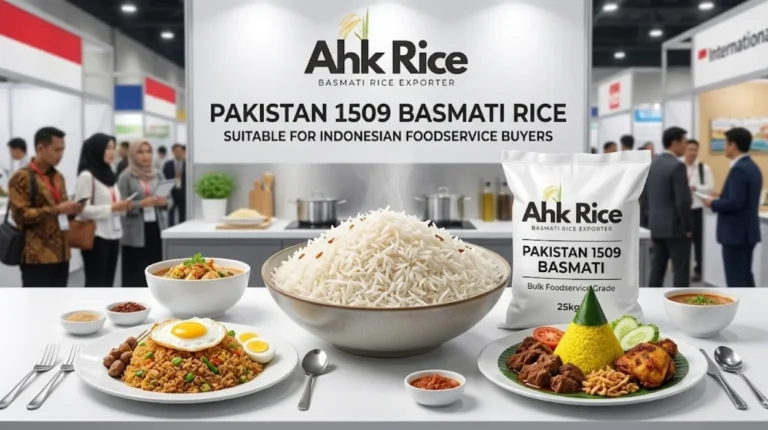
- 1509 Basmati Rice
- Super Kernel Basmati Rice
Each variety serves different commercial objectives. Some buyers prioritize maximum grain length. Others focus on pricing efficiency or faster cooking characteristics.
Importers comparing these varieties can review a detailed comparison through our analysis of grain-length preferences among Saudi buyers.
AHK Rice works with buyers to identify the most suitable grade according to market positioning, customer demographics, retail objectives, and price targets.
For example, a premium supermarket chain may prioritize extra-long 1121 Basmati because shelf appearance strongly influences consumer purchasing decisions. A foodservice distributor may prefer another grade that balances grain length and procurement cost while maintaining acceptable cooking performance.
Instead of offering a single product recommendation, AHK Rice evaluates buyer requirements and proposes the most commercially appropriate solution.
What results can Saudi Arabian importers expect from the right Pakistan Basmati rice exporter?
Importers can expect higher customer satisfaction, stronger brand perception, repeat purchase rates, reduced quality disputes, consistent inventory planning, better retail presentation, improved cooking performance, and dependable long-term supply relationships when exporter specifications consistently match market expectations and contract requirements.
The outcome of selecting the right exporter extends beyond rice quality.
Reliable grain specifications support business growth.
When grain length remains consistent across shipments, retailers experience fewer complaints and maintain stronger customer confidence. This becomes especially important for private-label brands competing against established regional rice brands.
AHK Rice supplies export-grade Basmati rice with quality parameters verified before shipment. This reduces the risk of specification mismatches after cargo arrival.
Consistency also improves operational planning.
Importers can forecast inventory requirements more accurately when suppliers maintain stable product characteristics. Purchasing teams spend less time resolving quality issues and more time expanding distribution networks.
In Saudi Arabia, many buyers evaluate exporters according to repeat-shipment performance rather than a single successful transaction. Long-term supplier reliability often becomes a stronger competitive advantage than minor pricing differences.
AHK Rice supports this objective through shipment planning, production scheduling, and pre-dispatch quality verification.
Buyers also benefit from clear logistics timelines.
Typical transit durations from Pakistan to Saudi Arabia in 2026 are approximately:
| Destination Market | Typical Shipping Time |
|---|---|
| Jeddah | 10–15 days |
| Dammam | 12–18 days |
| Riyadh (via seaport and inland transport) | 15–22 days |
| Mecca Distribution Networks | 12–20 days |
| Medina Distribution Networks | 12–20 days |
Transit periods may vary depending on vessel schedules, customs procedures, seasonal demand, and container availability.
AHK Rice provides shipment planning support so buyers can schedule inventory replenishment more effectively.
For distributors handling large retail contracts, avoiding stock shortages can be as valuable as securing competitive pricing.

What affects pricing when importing Pakistan Basmati rice for Saudi Arabia?
Pricing depends on rice variety, grain length specification, crop quality, processing method, packaging requirements, order volume, freight conditions, certification needs, seasonal availability, currency fluctuations, and destination logistics, making supplier evaluation more important than comparing unit prices alone.
Rice pricing involves several interconnected variables.
Many buyers initially focus on the price per metric ton. However, experienced importers evaluate total commercial value.
The most significant pricing factors include:
Rice Variety
1121 Basmati generally commands premium pricing because of its exceptional grain length and strong international demand.
Super Kernel and 1509 varieties may provide alternative pricing structures depending on market conditions.
Processing Type
Different processing methods affect cost.
Examples include:
- Steam Rice
- White Rice
- Golden Sella Rice
- Creamy Sella Rice
Each category requires specific processing procedures that influence production expenses.
Packaging Requirements
Custom retail packaging often increases production costs compared with standard bulk packaging.
Saudi importers frequently request:
- 1 kg bags
- 5 kg bags
- 10 kg bags
- 20 kg bags
- 40 kg bags
- 50 kg bags
Private-label branding, custom artwork, and multilingual packaging specifications may also affect final pricing.
Order Volume
Larger orders generally create greater efficiency across procurement, production, and logistics.
Container utilization can significantly influence landed cost calculations.
Freight Conditions
Ocean freight remains a major component of total import cost.
Container availability, fuel prices, shipping demand, and regional trade conditions continue to influence freight rates throughout 2026.
AHK Rice assists buyers in evaluating these factors before finalizing procurement decisions.
The goal is not merely obtaining a shipment.
The goal is securing a product that performs successfully in the Saudi market.
How does the sample process work before placing a commercial order?
A structured sample process allows importers to verify grain length, appearance, cooking quality, aroma, and overall suitability before committing to larger contracts, reducing procurement risk while ensuring the selected rice matches commercial objectives and customer expectations.
Professional buyers rarely proceed directly to container orders.
Sampling remains an essential part of supplier evaluation.
AHK Rice follows a straightforward process designed to support purchasing decisions.
Step 1: Requirement Assessment
The buyer shares:
- Target market
- Preferred variety
- Packaging needs
- Quantity expectations
- Grain specifications
This information allows AHK Rice to recommend appropriate options.
Step 2: Sample Selection
Relevant rice grades are selected based on buyer requirements.
Multiple grades can be provided for comparison when needed.
Step 3: Sample Preparation
Samples are prepared and checked before dispatch.
Quality parameters are reviewed to ensure representative product presentation.
Step 4: Sample Shipment
Courier delivery is arranged to the buyer’s location.
Typical sample costs in 2026 generally include:
| Item | Typical Cost Range |
| Product Sample | Often complimentary or nominal |
| Courier Charges | Approximately USD 40–120 depending on destination and weight |
| Special Packaging Requests | Variable |
Actual costs depend on shipment size, destination, and courier service requirements.
Step 5: Evaluation
The importer reviews:
- Grain length
- Appearance
- Aroma
- Cooking performance
- Elongation
- Customer suitability
Step 6: Commercial Proposal
Following approval, AHK Rice prepares commercial documentation and shipment planning.
This process helps buyers make informed purchasing decisions while reducing risk.
How can Saudi Arabian buyers get started with AHK Rice?
The fastest approach is defining product specifications, reviewing samples, confirming packaging requirements, evaluating logistics timelines, approving commercial terms, and establishing a shipment schedule that supports long-term supply objectives while maintaining grain quality consistency and operational reliability.
Successful procurement begins with clear specifications.
Buyers should first identify:
- Preferred variety
- Target customer segment
- Packaging format
- Annual volume requirements
- Delivery expectations
Once requirements are established, AHK Rice can recommend the most suitable export-grade solution.
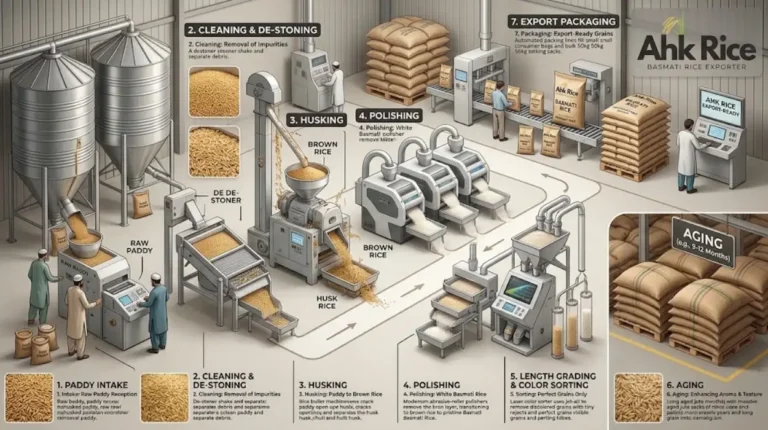
The company supports importers throughout sourcing, milling, grading, packaging, documentation, and shipment coordination. This integrated approach helps reduce complexity while improving supply-chain efficiency.
For Saudi Arabian importers seeking a Pakistan Basmati rice exporter that consistently meets grain length requirements, AHK Rice offers a structured process built around quality verification, shipment reliability, and long-term commercial partnerships. Contact AHK Rice today to discuss specifications, request samples, and begin your procurement process through /request-a-quote/.
Frequently Asked Questions
What grain length does Saudi Arabia require for Pakistan Basmati rice imports?
Saudi Arabian buyers commonly prefer extra-long Basmati rice varieties, especially 1121 Basmati, because of their long grain appearance after cooking. However, the required grain length depends on the buyer’s market segment, quality expectations, and product positioning.
Which Pakistan Basmati rice variety is best for Saudi Arabian buyers?
The best variety depends on the importer’s requirements. 1121 Basmati is popular for premium retail markets because of its exceptional grain length. 1509 Basmati and Super Kernel Basmati can also be suitable options based on pricing, cooking performance, and customer preferences.
How long does shipping from Pakistan to Saudi Arabia take?
Shipping time depends on the destination port and logistics conditions. Shipments from Pakistan to Jeddah usually take around 10–15 days, while deliveries to Dammam and inland locations such as Riyadh may take approximately 12–22 days depending on transport arrangements and customs clearance.
What factors affect Pakistan Basmati rice export prices?
Export prices depend on rice variety, grain length, processing method, packaging requirements, order quantity, freight costs, certifications, and market conditions. Buyers should evaluate overall value and consistency instead of selecting suppliers only based on the lowest price.
How can Saudi Arabian importers test rice quality before placing an order?
Importers can request samples before confirming commercial shipments. The sample evaluation process usually includes checking grain length, appearance, aroma, cooking quality, elongation, and suitability for the target customer market.