Why Does Rice Purity Matter When Importing Premium Basmati Varieties?
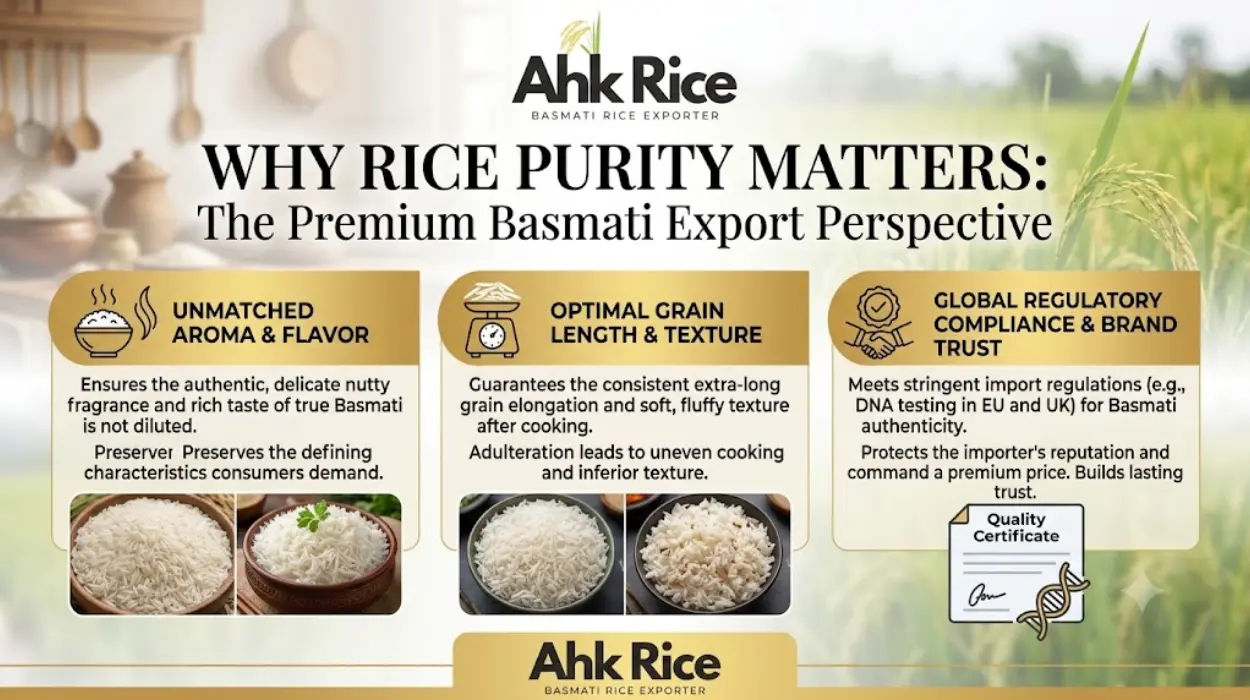
Rice purity matters because it determines authenticity, cooking performance, buyer satisfaction, and import compliance. Here is why: pure Basmati contains the declared variety only, delivers consistent grain length, aroma, and cooking results, and reduces quality disputes during international trade.
Premium Basmati rice commands higher prices because buyers expect uniform quality. Rice purity directly affects grain appearance, elongation ratio, aroma intensity, and consumer acceptance. Importers purchasing premium varieties such as 1121 Basmati, Super Kernel Basmati, and 1509 Basmati require verified purity to protect brand reputation and maintain consistent product specifications across every shipment.
Global Basmati demand continues to grow across the Middle East, Europe, North America, and Africa because consumers associate Basmati with long grains, distinctive fragrance, and premium dining experiences (source: REAP export data, December 2025). Understanding rice purity helps importers evaluate suppliers and select the correct specifications before placing export orders.
What Is Rice Purity in Premium Basmati Rice?
Pure Basmati contains 95–100% of the declared variety, maintains varietal characteristics, and excludes unauthorized grain mixing.
Rice purity refers to the percentage of grains belonging to a specific rice variety within a shipment. A purity level of 98% means that 98 kilograms out of every 100 kilograms belong to the declared variety.
Premium Basmati varieties possess unique characteristics. These characteristics include grain length, aroma compounds, cooking elongation, texture, and colour. Purity ensures these characteristics remain consistent throughout the shipment.
Rice purity differs from cleanliness. Cleanliness measures foreign matter, stones, and dust. Purity measures whether the rice genuinely belongs to the declared variety.
Importers often evaluate purity because mixed rice reduces product value. Mixed grains create inconsistent cooking behaviour and weaken the premium positioning of Basmati products.
Examples of purity-related defects include mixed varieties, broken substitutions, and non-Basmati grain inclusion.
With the definition of rice purity established, the next question is how purity affects the actual importing process.
How Does Rice Purity Affect International Rice Imports?
Higher purity improves compliance, consistency, customer satisfaction, and commercial value across international markets.
Importers purchase rice according to specifications. Purity forms one of the most important specification categories alongside grain length, moisture content, and broken percentage.
Retail brands require consistent cooking performance. Pure Basmati produces uniform elongation during cooking. Mixed rice creates uneven grain expansion and inconsistent texture.
Food service distributors require predictable results. Restaurants serving Basmati dishes expect identical performance across multiple shipments. High purity supports that consistency.
Government authorities inspect imported food products. Quality disputes increase when laboratory results differ from contractual specifications.
European buyers often require strict product traceability and quality verification. Gulf importers prioritize consistency and appearance for retail and hospitality sectors. African distributors focus on value while maintaining acceptable purity standards.
Rice purity influences every stage of procurement. Understanding verification methods becomes the next logical step.
How Is Rice Purity Verified Before Export?
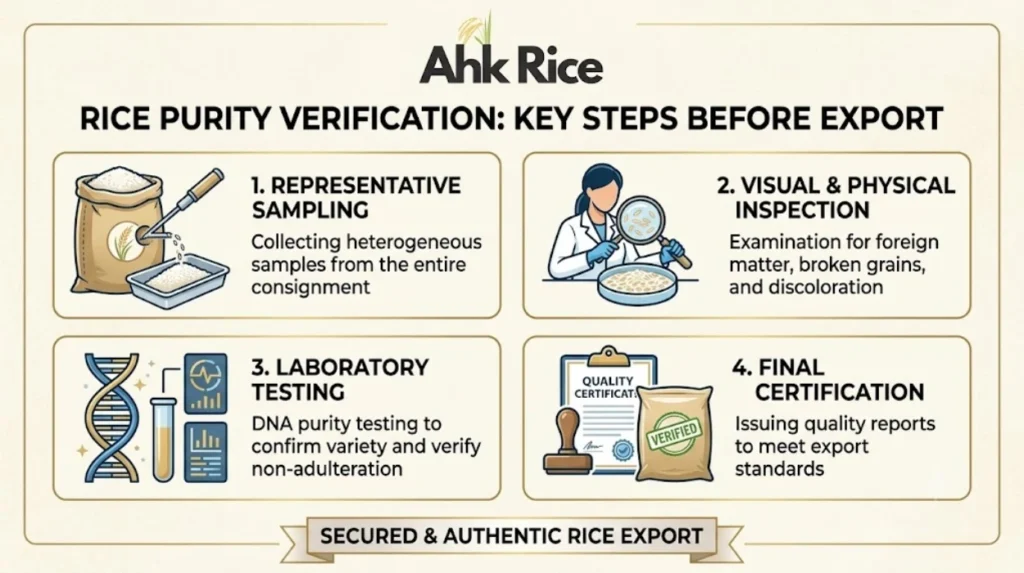
Laboratory testing, physical inspection, DNA analysis, and certification procedures verify rice purity before shipment.
Exporters inspect rice through multiple quality control stages before dispatching containers.
Physical Inspection Methods
Physical inspection evaluates grain characteristics visually and mechanically.
Inspectors examine:
- Grain length
- Grain shape
- Grain colour
- Grain uniformity
- Variety consistency
Experienced quality teams identify mixed varieties by comparing physical characteristics against approved specifications.
Laboratory Testing Methods
Laboratories test rice samples using scientific procedures.
Common laboratory evaluations include:
- Purity analysis
- Moisture testing
- Broken percentage testing
- Chalkiness evaluation
- Foreign matter inspection
DNA Verification
DNA testing provides advanced varietal authentication.
DNA analysis identifies genetic markers associated with genuine Basmati varieties. Importers use DNA verification for premium markets requiring maximum traceability.
Readers interested in detailed export verification procedures can learn more through our article explaining how exporters validate rice quality before international shipment: How Basmati rice quality checks confirm authenticity before export.
With verification methods explained, the next question concerns the specific components influencing purity.
What Components Determine Basmati Rice Purity?
Variety integrity, grain uniformity, contamination control, and processing accuracy determine overall purity levels.
Several factors influence the purity of premium Basmati rice.
Variety Integrity
Variety integrity means maintaining a single rice variety throughout cultivation, harvesting, storage, and milling.
Farmers cultivate specific varieties separately to prevent varietal mixing.
Processing Accuracy
Processing facilities separate rice according to established specifications.
Key processing stages include:
- Clean the paddy
- De-husk the grain
- Dry the rice
- Polish the kernels
- Grade by size
- Sort by colour
- Remove foreign material
- Inspect the batches
- Pack the rice
Each stage protects varietal consistency and final product quality.
Storage Management
Storage conditions influence rice quality preservation.
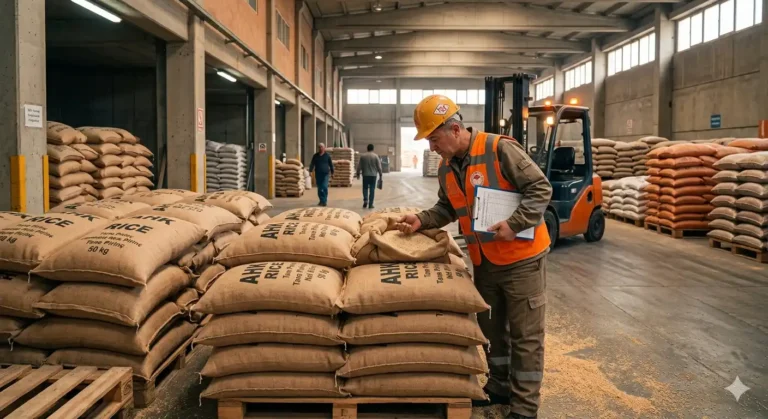
Separate storage systems prevent cross-contamination between different varieties. Dedicated silos and labelled inventory systems maintain traceability.
With purity components identified, the next section explains where premium Basmati originates.
Where Are Premium Basmati Varieties Grown?
Punjab regions of Pakistan and northern India produce the world’s most recognized Basmati rice varieties.
Basmati grows within specific geographical regions featuring suitable soil, climate, and irrigation conditions.
Pakistan cultivates premium Basmati primarily in Punjab. Major cultivation areas include Gujranwala, Hafizabad, Sheikhupura, Narowal, and Sialkot.
Farmers cultivate Basmati during the Kharif season. Irrigation systems supply controlled water throughout crop development.
Harvesting occurs after full grain maturity. Mature grains develop superior aroma and cooking characteristics.
Major Premium Basmati Varieties
1121 Basmati Rice
8.30–8.50 mm average grain length before cooking.
1121 Basmati delivers exceptional elongation and strong export demand.
Super Kernel Basmati Rice
7.20–7.60 mm average grain length before cooking.
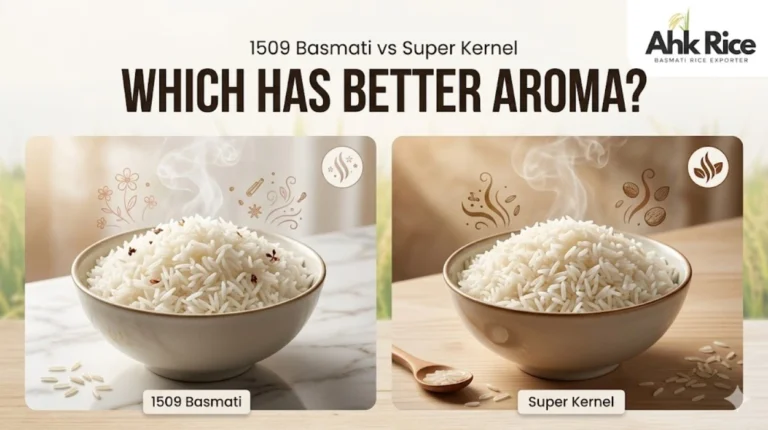
Super Kernel Basmati combines traditional aroma with premium presentation.
1509 Basmati Rice
8.00–8.30 mm average grain length before cooking.
1509 Basmati offers high productivity and competitive export pricing.
With cultivation origins established, the next question focuses on importer benefits.
What Benefits Does High Rice Purity Provide Importers?
Higher purity increases product consistency, strengthens brand reputation, and reduces commercial risk.
Retailers depend on customer trust. Pure Basmati supports repeat purchases because consumers receive consistent quality.
Distributors benefit from fewer complaints. Uniform grain characteristics simplify inventory management and quality assurance procedures.
Importers reduce dispute risks through accurate specifications. Clear purity standards improve supplier accountability.
Premium brands achieve stronger market positioning. Consumers recognize quality differences through aroma, appearance, and cooking performance.
High purity also improves packaging claims accuracy. Product labels remain aligned with actual shipment contents.
With importer benefits explained, understanding common market applications becomes important.
Where Is Premium Basmati Rice Commonly Used?
Retail, hospitality, food manufacturing, and international distribution sectors use premium Basmati rice extensively.
Retail supermarkets sell packaged Basmati products to household consumers.
Hotels and restaurants use premium Basmati for biryani, pilaf, mandi, kabsa, and speciality rice dishes.
Food manufacturers utilize Basmati in ready meals and frozen food products.
International distributors supply wholesalers, retailers, and institutional buyers.
Major importing markets include:
- Saudi Arabia
- United Arab Emirates
- Iraq
- Oman
- Qatar
- United Kingdom
- Germany
- Canada
- United States
- South Africa
Pakistan remains among the world’s leading Basmati exporters (source: Pakistan Bureau of Statistics, FY2024-25).
With applications covered, addressing misconceptions helps buyers make better sourcing decisions.
What Common Misconceptions Exist About Rice Purity?
Purity is not the same as cleanliness, grain length, aroma strength, or premium packaging.
Many buyers assume long grains guarantee purity. Grain length alone cannot confirm varietal authenticity.
Many buyers assume attractive packaging indicates superior quality. Packaging influences presentation but does not verify purity.
Many buyers assume aroma guarantees genuine Basmati. Aroma contributes to authenticity assessment but requires additional verification.
Many buyers focus exclusively on price. Low pricing often reflects lower specifications, mixed varieties, or inconsistent grading.
Many buyers overlook documentation. Certification and laboratory reports provide objective verification beyond visual inspection.
Rice purity works together with quality testing, certification, and processing controls to create a reliable export product.
What Certifications Support Rice Purity Verification?
ISO, HACCP, phytosanitary, laboratory, and quality inspection documents support purity verification.
Importers review certifications to confirm quality management systems and regulatory compliance.
Common export documents include:
- Phytosanitary Certificate
- Certificate of Origin
- Quality Inspection Report
- Laboratory Analysis Report
- Fumigation Certificate
- Packing List
- Commercial Invoice
Quality certifications strengthen buyer confidence by demonstrating documented inspection procedures.
Certified systems improve traceability from cultivation through export dispatch.
Rice purity remains one of the most important quality indicators in premium Basmati trade because it protects authenticity, supports compliance, and ensures consistent consumer experiences across international markets.
Frequently Asked Questions
What is considered good purity in Basmati rice?
Purity levels above 95% are generally considered strong for premium Basmati exports. Higher percentages deliver better consistency and authenticity.
Does rice purity affect cooking performance?
Yes. High-purity Basmati cooks more uniformly, produces consistent elongation, and delivers predictable texture.
Can visual inspection alone verify rice purity?
No. Visual inspection helps identify obvious mixing, but laboratory testing and DNA analysis provide more accurate verification.
Which Basmati variety is most commonly exported?
1121 Basmati is among the most widely exported premium varieties because of its exceptional grain length and cooking elongation.
Why do importers request laboratory reports?
Laboratory reports verify purity, moisture, broken percentage, and other specifications before shipment dispatch.
Does rice purity impact retail brand reputation?
Yes. Consistent purity helps brands maintain customer trust, reduce complaints, and improve repeat purchases.