How Purity Levels Affect the Market Value of Pakistan 1121 Rice in Saudi Arabia
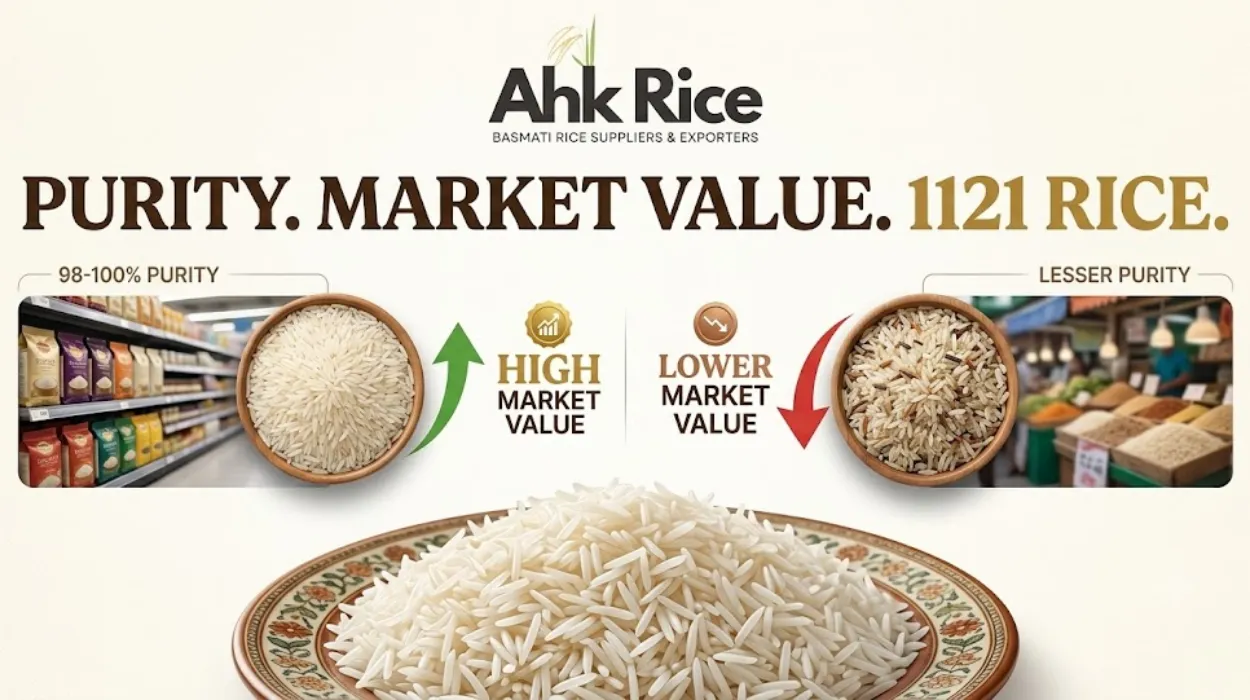
Higher purity consistently delivers stronger market value for Pakistan 1121 Basmati Rice in Saudi Arabia because it improves appearance, reduces waste, increases consumer confidence, and meets the quality expectations of wholesalers, retailers, hospitality businesses, and premium food distributors across the Kingdom.
Saudi Arabia remains one of the largest importers of Pakistani Basmati rice in 2026. Buyers increasingly evaluate rice beyond grain length and aroma. Purity percentage has become one of the most important quality specifications because it directly affects grading, pricing, customer satisfaction, and profitability. If you want to understand why purity has become such an important specification before comparing suppliers, read our guide explaining how grain cleanliness influences premium Basmati quality in the Saudi market:
Why grain cleanliness has become a major purchasing factor for Saudi buyers.
Among Pakistani exporters, AHK Rice’s Pakistan 1121 Basmati Rice export service represents one example of suppliers that provide end-to-end processing, grading, custom packaging, and export documentation. Understanding how purity standards influence commercial value helps importers compare suppliers objectively rather than focusing only on price per metric ton.
Pakistan 1121 Basmati Rice is an extra-long grain aromatic rice variety recognised worldwide for its exceptional grain length, low breakage, excellent cooking performance, and premium presentation. Purity refers to the percentage of correctly graded whole grains after removing broken grains, foreign matter, damaged kernels, immature grains, stones, dust, and other contaminants during processing.
A difference between 95% and 99.5% purity may appear small on paper, but it significantly changes commercial value throughout the supply chain. Higher purity reduces sorting costs, improves packaging appearance, increases shelf appeal, and lowers customer complaints.
What does purity level mean in Pakistan 1121 rice?
Purity level measures how much of the shipment consists of correctly graded Pakistan 1121 whole grains after removing foreign materials, broken kernels, damaged grains, immature seeds, dust, and other impurities. Higher purity creates better consistency, stronger buyer confidence, and greater commercial value throughout the Saudi supply chain.
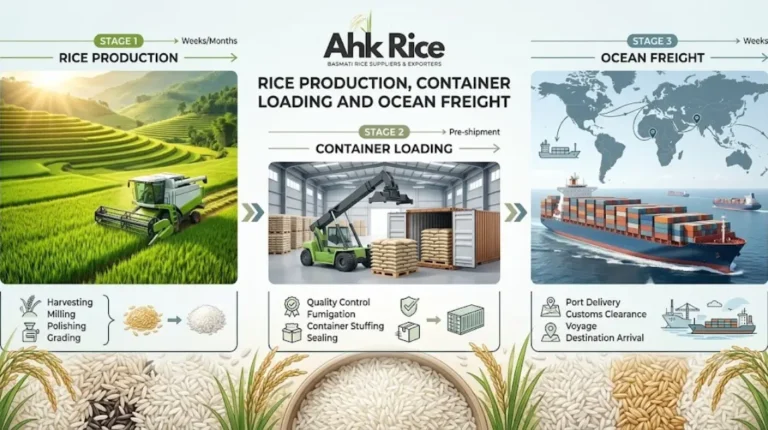
Rice purity is determined during cleaning, grading, optical sorting, polishing, and final inspection. Modern export facilities use colour sorters, gravity separators, metal detectors, and multiple screening stages to achieve export-grade purity.
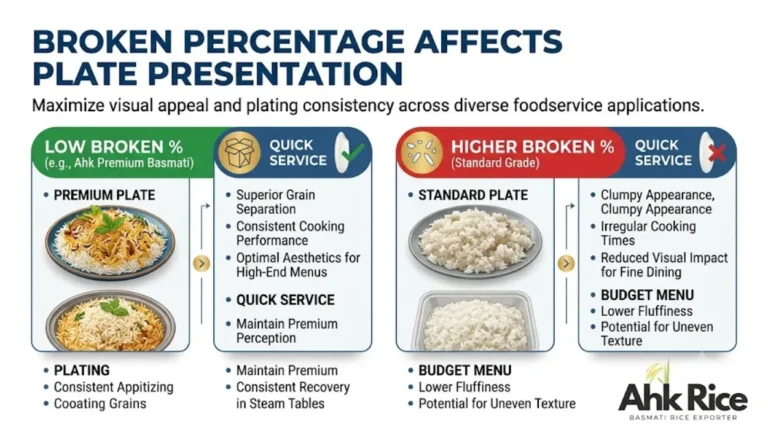
Importers should distinguish purity from broken percentage. These specifications are related but not identical. A shipment may contain a low broken percentage while still including foreign matter or discoloured grains that reduce overall purity.
Saudi importers generally evaluate purity alongside:
- Grain length
- Broken percentage
- Moisture content
- Chalkiness
- Foreign matter
- Crop year
- Aroma consistency
- Cooking elongation
Together these specifications determine whether a shipment fits premium retail shelves or value-oriented wholesale distribution.
Why does higher purity increase market value?
Higher purity increases market value because buyers receive more saleable rice, lower handling costs, stronger visual quality, improved cooking consistency, fewer customer complaints, and higher consumer confidence across retail, hospitality, and foodservice channels throughout Saudi Arabia.
Every impurity removed before export saves labour after arrival.
For wholesalers, cleaner shipments reduce warehouse handling.
For retailers, cleaner rice creates more attractive packaging.
For restaurants, consistent grain quality improves cooking results.
For distributors, fewer quality complaints reduce operational costs.
These commercial advantages explain why premium purity levels command higher prices than standard export grades.
Consumers also associate cleaner rice with premium quality. Transparent packaging makes impurities immediately visible. Even a small amount of foreign material can negatively influence purchasing decisions.
How do purity specifications compare?
Purity specifications differ in visual appearance, processing quality, acceptable foreign matter, commercial application, pricing potential, and buyer expectations. Premium export programmes focus on consistency rather than only achieving minimum compliance with importing regulations.
Pakistan 1121 Rice Purity Comparison
| Specification | Standard Export | Premium Export | High-Purity Premium |
|---|---|---|---|
| Purity | 95–97% | 98–99% | 99–99.5% |
| Broken Grains | Higher tolerance | Low | Very low |
| Foreign Matter | Acceptable minimum | Minimal | Nearly eliminated |
| Optical Sorting | Standard | Advanced | Multi-stage |
| Retail Appearance | Good | Excellent | Premium |
| Foodservice Suitability | Good | Excellent | Excellent |
| Market Position | Value | Premium | Premium Plus |
Importers purchasing for supermarkets usually prioritise appearance because consumers inspect rice before purchasing.
Foodservice buyers focus more on cooking consistency, but purity still affects operational efficiency.
How do different market regions in Saudi Arabia prefer different grades?
Different Saudi regions purchase different rice grades because consumer demographics, retail positioning, hospitality demand, and purchasing power vary across the Kingdom. Premium metropolitan markets consistently favour higher-purity Pakistan 1121 rice over economy grades.
Central Region (Riyadh and surrounding markets)
The central region shows strong demand for:
- 99–99.5% purity
- Premium retail packaging
- Low broken percentage
- Uniform grain size
- Premium hospitality quality
Large supermarket chains and hospitality distributors dominate purchasing decisions in this region.
Western Region (Jeddah, Makkah, Madinah)
The western region serves:
- Hotels
- Catering companies
- Restaurants
- Pilgrimage food suppliers
- Wholesale distributors
Demand includes both premium and commercial grades depending on the customer segment.
Premium retailers generally request:
- 99%+ purity
- Excellent grain appearance
- Consistent cooking performance
Wholesale food distributors often balance purity with pricing to meet different customer budgets.
How does purity affect export pricing?
Purity directly influences export pricing because higher-quality processing requires additional cleaning, optical sorting, labour, quality inspections, and lower defect tolerance while creating greater commercial value for importers and retailers.
Approximate 2026 export price ranges vary according to:
- Crop quality
- Processing level
- Packaging
- Shipment size
- Freight conditions
- International demand
Typical 2026 Price Comparison
| Export Grade | Approximate Price per MT |
|---|---|
| 95–97% Purity | $980–$1,060 |
| 98–99% Purity | $1,070–$1,160 |
| 99–99.5% Purity | $1,170–$1,280 |
These ranges reflect common commercial differences rather than fixed market prices. Actual quotations depend on contract volume, packaging requirements, destination port, and seasonal availability.
Higher purity generally produces better long-term profitability because buyers experience lower operational losses after import.
What are the available solutions for achieving higher purity?
Exporters improve purity through advanced cleaning technologies, multi-stage grading, optical colour sorting, quality inspections, laboratory testing, moisture control, and strict processing standards that reduce contamination before shipment reaches international buyers.
Several processing strategies improve export quality.
Conventional Cleaning
This method removes large impurities.
Suitable for commercial-grade exports.
Lower processing cost.
Lower achievable purity.
Multi-Stage Mechanical Cleaning
Multiple cleaning systems remove increasingly smaller contaminants.
Produces more consistent quality.
Suitable for larger export programmes.
Optical Colour Sorting
High-resolution cameras identify:
- Discoloured grains
- Damaged kernels
- Chalky grains
- Foreign seeds
- Defective rice
This technology significantly improves overall purity.
Integrated Quality Management
Premium exporters combine:
- Laboratory testing
- Moisture monitoring
- Batch traceability
- Quality documentation
- Final inspection
This approach delivers the highest consistency across multiple shipments.
Which method works best for different cases?
The best method depends on customer requirements, sales channel, budget, packaging strategy, and quality expectations. Premium retail programmes require maximum purity, while commercial wholesale operations may prioritise cost efficiency over appearance.
Solution Comparison
| Buyer Type | Recommended Purity |
|---|---|
| Premium Retail Chains | 99–99.5% |
| Luxury Hotels | 99%+ |
| Restaurants | 98–99% |
| Foodservice Distributors | 98–99% |
| Budget Wholesale | 95–97% |
Choosing the correct specification prevents unnecessary spending while meeting customer expectations.
What are the advantages and disadvantages of higher purity?
Higher purity improves product quality, customer satisfaction, operational efficiency, and market positioning, while requiring greater investment in processing technology, inspection systems, and quality management throughout production and export operations.
Advantages
Higher visual quality increases shelf appeal.
Consumers associate cleaner rice with premium quality.
Lower sorting requirements reduce importer labour costs.
Cooking consistency improves.
Customer complaints decrease.
Brand reputation becomes stronger.
Retailers experience fewer returns.
Exporters can access premium market segments.
Disadvantages
Processing costs increase.
Advanced equipment requires investment.
Quality inspections become more intensive.
Production speed may decrease because additional sorting stages are necessary.
Premium specifications require stricter supplier management.
For example, a supermarket chain importing premium private-label rice benefits significantly from higher purity because product presentation influences consumer purchasing behaviour.
By contrast, a bulk distributor serving institutional catering may accept slightly lower purity if pricing remains competitive.
How long does higher-purity Pakistan 1121 rice remain suitable for sale?
Higher-purity Pakistan 1121 rice maintains quality for extended periods because fewer contaminants reduce quality deterioration when proper storage conditions are maintained throughout transportation, warehousing, and retail distribution.
Shelf Life Comparison
| Storage Condition | Expected Shelf Life |
|---|---|
| High-Purity Export Grade | 24–30 months |
| Standard Export Grade | 18–24 months |
Storage recommendations include:
- Dry environment
- Stable temperature
- Low humidity
- Proper ventilation
- Pest control
- Strong packaging integrity
Actual shelf life depends on packaging materials and warehouse conditions after import.
Which decision factors should importers evaluate?
Importers should evaluate total commercial value rather than purchasing price alone because purity influences profitability, operational efficiency, customer satisfaction, repeat orders, and long-term competitiveness within Saudi Arabia’s evolving premium rice market. Buyers ready to compare export specifications and sourcing requirements can explore our detailed guide on:
Importing premium Pakistan 1121 Basmati Rice into Saudi Arabia.
Decision Framework
| Decision Factor | Premium Retail | Foodservice | Wholesale |
|---|---|---|---|
| Visual Appearance | Critical | High | Medium |
| Purity Level | Critical | High | Medium |
| Price Sensitivity | Medium | High | Very High |
| Cooking Consistency | High | Critical | High |
| Brand Positioning | Critical | Medium | Low |
Importers should compare suppliers using complete technical specifications rather than marketing claims.
Important questions include:
- Is purity laboratory verified?
- What optical sorting technology is used?
- How many grading stages are completed?
- What broken percentage is guaranteed?
- Are inspection reports available?
- Is batch traceability documented?
- Does packaging protect grain quality during export?
These questions produce more reliable purchasing decisions than comparing price alone.
How should buyers choose the right purity specification?
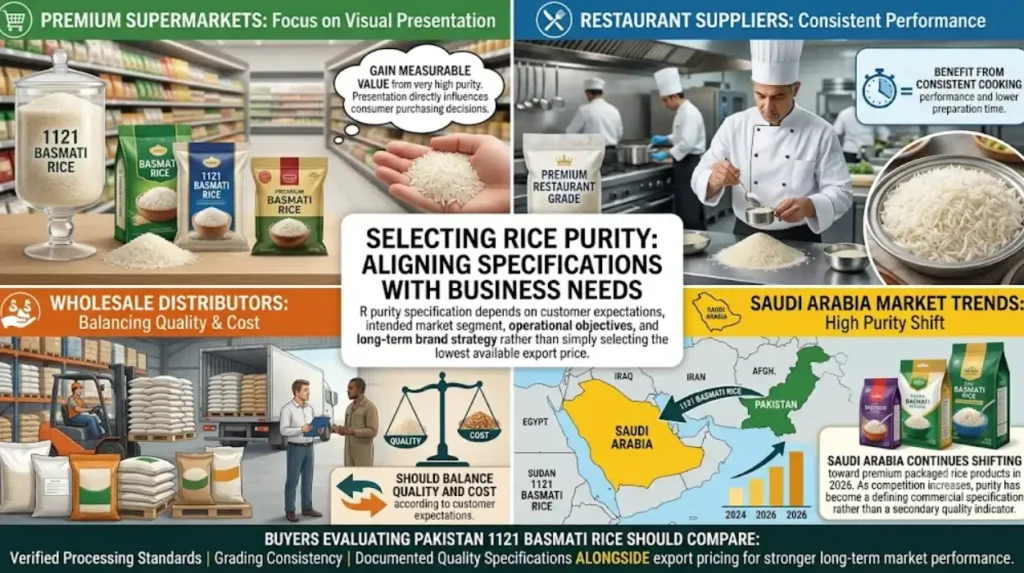
The right purity specification depends on customer expectations, intended market segment, operational objectives, and long-term brand strategy rather than simply selecting the lowest available export price.
Premium supermarkets gain measurable value from very high purity because presentation directly influences consumer purchasing decisions.
Restaurant suppliers benefit from consistent cooking performance and lower preparation time.
Wholesale distributors should balance quality and cost according to customer expectations.
Saudi Arabia continues shifting toward premium packaged rice products in 2026. As competition increases, purity has become a defining commercial specification rather than a secondary quality indicator. Buyers evaluating Pakistan 1121 Basmati Rice should therefore compare verified processing standards, grading consistency, and documented quality specifications alongside export pricing to achieve stronger long-term market performance.
Frequently Asked Questions
What purity level is considered premium for Pakistan 1121 Rice in Saudi Arabia?
Premium Pakistan 1121 Rice typically has a purity level of 99% to 99.5%, with very low broken grains, minimal foreign matter, and uniform grain size. This grade is preferred by supermarkets, hotels, and premium food distributors in Saudi Arabia.
How does higher purity affect the price of Pakistan 1121 Rice?
Higher purity increases the export price because it requires advanced cleaning, optical sorting, and stricter quality control. Buyers also benefit from lower waste, improved appearance, and better cooking consistency, making the higher cost worthwhile.
Why do Saudi importers pay more for high-purity Pakistan 1121 Rice?
Saudi importers value high-purity rice because it enhances retail presentation, reduces sorting and handling costs, improves customer satisfaction, and meets the quality expectations of premium retail and hospitality sectors.
Does rice purity affect shelf life?
Yes. High-purity Pakistan 1121 Rice generally has a longer shelf life because fewer impurities reduce the risk of quality deterioration. When stored correctly, premium-grade rice can maintain its quality for 24–30 months.
Which buyers benefit most from high-purity Pakistan 1121 Rice?
Premium retailers, supermarkets, hotels, restaurants, catering companies, and foodservice distributors benefit the most from high-purity Pakistan 1121 Rice because it offers consistent quality, attractive appearance, and reliable cooking performance.