Why Do Indonesian Buyers Consider Pakistan 1121 Creamy Sella Basmati Rice?
Pakistan 1121 Creamy Sella Basmati attracts Indonesian buyers through extra-long grain, parboiled strength, clean separation, and controlled specifications. Here is why: the grade combines Punjab cultivation with processing controls that support consistent cooking and export handling. Indonesian trade records also show active buyer interest in 1121 Basmati rice.
What Is Pakistan 1121 Creamy Sella Basmati Rice?
1121 Creamy Sella is a parboiled 1121 Basmati grade from Pakistan, commonly produced with 8.0–8.3 mm head-rice length, controlled moisture, low broken percentage, and separate cooked grains. The product belongs to the 1121 Basmati family and differs from white rice through parboiling before milling.
1121 refers to a recognized extra-long-grain Basmati type cultivated in Pakistan. Punjab provides the main growing environment for Pakistani Basmati production. The crop develops long, slender kernels with a distinctive aroma.
Creamy Sella describes the processing style. The paddy receives controlled soaking, steaming, drying, dehusking, polishing, and grading. The process produces a pale cream appearance rather than the deeper amber appearance associated with Golden Sella.
Commercial specifications vary by supplier and contract. Published Pakistani specifications show 1121 Creamy Sella with 8.0–8.2 mm head-rice length, 13.0% moisture, 2.0% broken grains, and 0.1% foreign matter in one documented specification.
The Indonesian market also contains active interest in 1121 and Sella products. Buyer listings include requirements for 1121 Sella, Sella 1121 Basmati, and other Basmati varieties. Common transaction terms include FOB and CIF.
With the product defined, the next question is how the grain moves from Punjab cultivation to an export-ready specification.
How Is 1121 Creamy Sella Basmati Processed?
The process follows 9 core stages: paddy selection, cleaning, soaking, steaming, drying, dehusking, polishing, sorting, and grading. Each stage controls a specific physical or quality characteristic before the rice reaches export packaging.
How does paddy selection begin?
Select mature 1121 paddy with suitable grain development and acceptable field quality. Paddy selection establishes the raw material for milling. Uniform paddy supports more consistent grain length, cooking behavior, and finished appearance.
How does parboiling change the grain?
Soak the paddy, steam it under controlled conditions, and dry it before milling. Parboiling changes the physical structure of the grain and strengthens the kernel. Sella rice therefore handles cooking with less breakage than many untreated grains.
How does milling create Creamy Sella?
De-husk the dried paddy, polish the brown rice, and remove unwanted surface material. Milling produces the edible kernel. Controlled polishing creates the characteristic clean, pale appearance associated with Creamy Sella.
How does sorting establish export quality?
Sort the milled rice by length, colour, damaged kernels, foreign matter, and other contractual specifications. Colour sorting removes contrasting grains and visible defects. Length grading separates head rice from broken grains.
What does the completed process achieve?
The finished grain combines long kernels, controlled appearance, lower breakage, and separate cooked texture. These characteristics explain why Sella processing serves commercial kitchens and foodservice applications that require repeatable cooking results.
The processing sequence establishes the physical properties, while the grade structure determines which specification fits each Indonesian purchasing requirement.
What Are the Main Grades of Pakistani 1121 Basmati?
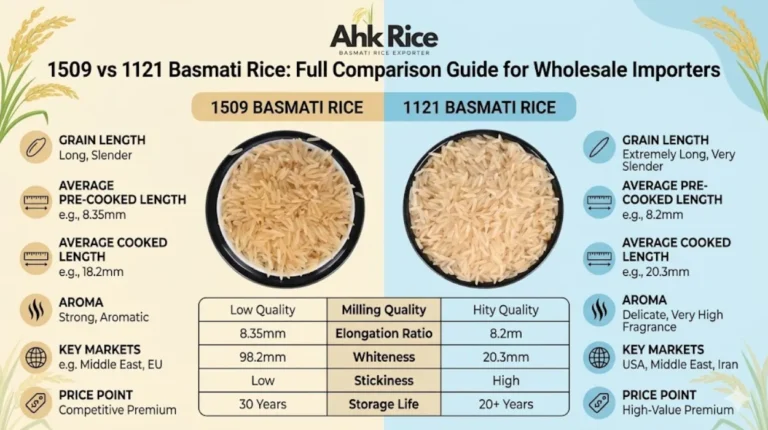
The principal 1121 processing grades are 1121 White, 1121 Steam, 1121 Creamy Sella, 1121 Golden Sella, and 1121 Brown. These grades share the 1121 variety but differ in processing, colour, texture, and cooking characteristics.
What is 1121 White Basmati?
1121 White is conventionally milled Basmati with a clean white appearance and long slender kernels. The grain does not receive Sella parboiling. Buyers select it for applications where conventional white Basmati characteristics are preferred.
What is 1121 Steam Basmati?
1121 Steam receives steam-based processing and retains a lighter appearance than Golden Sella. The processing improves kernel strength and supports separate cooked grains. Foodservice buyers use it for rice dishes requiring long, non-sticky grains.
What is 1121 Creamy Sella?
1121 Creamy Sella uses controlled parboiling and produces a pale cream appearance with long, firm kernels. Published specifications show an average head-rice length around 8.0–8.2 mm and moisture around 13.0% for one commercial specification.
What is 1121 Golden Sella?
1121 Golden Sella receives stronger parboiling and develops a deeper golden colour than Creamy Sella. The grain remains firm and separate after cooking. Golden Sella therefore serves markets where golden appearance forms part of the product specification.
What is 1121 Brown Basmati?
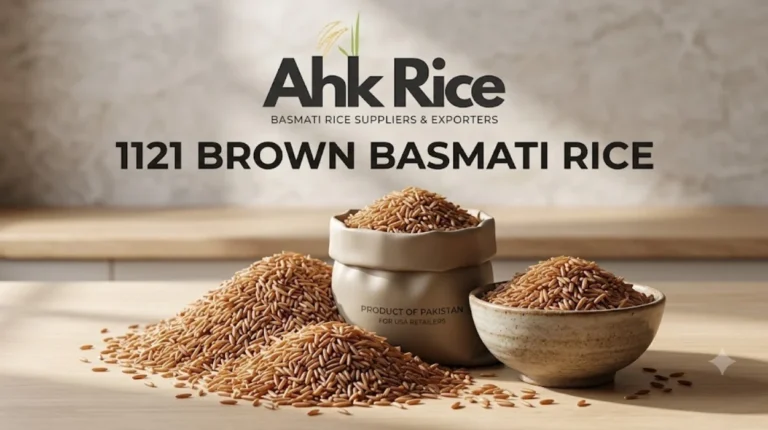
1121 Brown retains more of the bran layer and has a darker natural appearance than polished 1121 grades. The product serves buyers seeking less-refined rice characteristics and a different nutritional profile.
The grade comparison shows why Creamy Sella occupies a specific position between conventional white rice and darker Sella grades.
Why Do Indonesian Buyers Consider Creamy Sella?
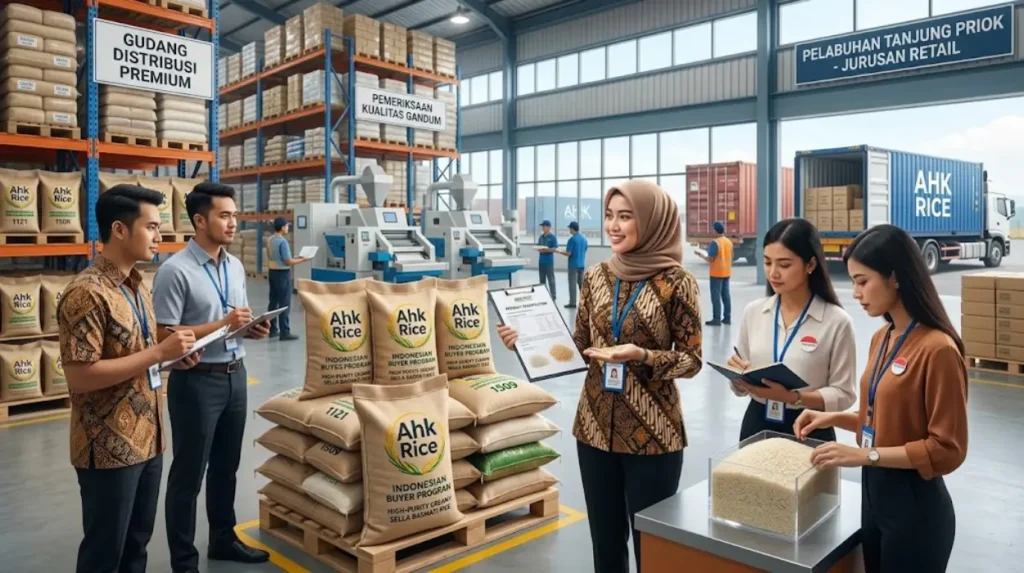
Indonesian buyers consider Creamy Sella for its long grain, firm cooking structure, separate texture, pale appearance, and suitability for commercial foodservice applications. These characteristics provide measurable product attributes rather than relying only on origin-based positioning.
Which cooking properties matter?
Grain separation remains a key property because Sella processing supports firm, non-sticky cooked rice. Commercial kitchens can use separated grains in biryani, rice platters, catering meals, and prepared food applications.
Which physical specifications matter?
Grain length, broken percentage, moisture, foreign matter, damaged kernels, and colour consistency define the commercial specification. One published Creamy Sella specification lists 2.0% broken grains, 0.1% foreign matter, 3.0% chalky grains, and 1.5% damaged or yellow kernels.
Which documentation matters?
Indonesian import transactions require product documentation that supports origin, plant-health compliance, quality verification, and applicable import controls. Buyer listings commonly reference certificates of origin and phytosanitary certificates for 1121 Basmati sourcing.
Which halal requirements apply?
Indonesia’s halal framework requires careful review of imported food, packaging, storage, and supply-chain compliance. BPJPH states that imported products covered by mandatory halal rules must meet certification requirements. Its current 2026 guidance also identifies food and beverage products within the October 2026 mandatory phase.
Natural rice itself has specific treatment under Indonesian halal guidance. BPJPH states that natural products such as rice are excluded from product halal certification, while direct-contact packaging, transportation, and storage must still satisfy halal requirements.
Indonesian sourcing therefore evaluates both rice specifications and the documentation surrounding import compliance.
Where Is Pakistan 1121 Creamy Sella Used?
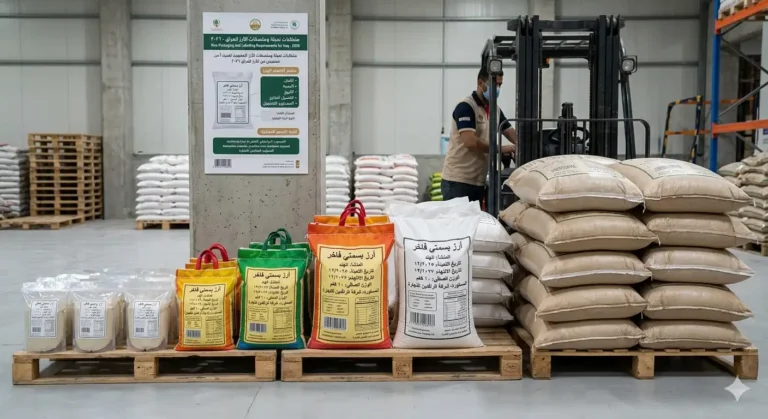
1121 Creamy Sella serves importers, distributors, wholesalers, hospitality businesses, caterers, restaurants, and prepared-food operators requiring long, separate cooked rice. The grade fits applications where visual presentation and consistent cooking influence purchasing decisions.
Which foodservice applications use it?
Use Creamy Sella for biryani, pilaf-style dishes, catering rice, restaurant meals, and large-batch food preparation. The firm parboiled kernel supports handling during cooking and serving.
Which commercial buyers source it?
Distributors source the grade for resale, while foodservice operators source it for direct kitchen use. Indonesian buyer listings show interest from commercial purchasing channels and include Sella 1121 requirements.
Which Indonesian markets import it?
Indonesian demand includes buyers across major commercial centres, with documented buyer activity involving 1121 and Basmati rice. Recent trade datasets identify thousands of Indonesian buyers across broader 1121, Basmati, and rice-related shipment records.
The application profile explains the demand, while buyer requirements determine the exact specification ordered for each shipment.
What Common Problems Do Buyers Encounter With 1121 Creamy Sella?
The main problems involve inconsistent specifications, excessive broken grains, unclear processing descriptions, moisture variation, documentation gaps, and confusion between Creamy Sella and Golden Sella. Each problem requires a defined specification before contracting.
Is Creamy Sella the same as Golden Sella?
No. Creamy Sella has a lighter cream appearance, while Golden Sella has a deeper golden appearance created through different parboiling intensity. Both belong to the Sella category but represent different commercial grades.
Does every 1121 shipment have identical specifications?
No. Buyers should define grain length, broken percentage, moisture, foreign matter, damaged kernels, milling degree, and packaging before purchase. Published specifications demonstrate that individual commercial specifications contain measurable limits.
Does long grain alone prove quality?
No. Grain length is only one specification among moisture, broken grains, purity, colour, damaged kernels, foreign matter, and milling quality. A complete specification sheet provides a stronger basis for comparing suppliers.
Does parboiling eliminate quality control?
No. Parboiling strengthens the kernel but does not replace cleaning, drying, milling, sorting, inspection, and storage controls. Each stage affects the finished rice.
What should Indonesian buyers verify?
Verify the variety, processing grade, grain length, moisture, broken percentage, foreign matter, crop details, packaging, certificates, and agreed inspection procedure. Contract specifications should match the laboratory or pre-shipment inspection results.
These checks reduce specification disputes and create a clear basis for comparing Pakistani 1121 Creamy Sella with other imported rice.
Which Certifications and Export Documents Apply to Indonesian Imports?
Common export documentation includes a certificate of origin, phytosanitary certificate, commercial invoice, packing list, transport documents, and applicable quality or halal documentation. Exact requirements depend on Indonesian import rules, product classification, importer status, and shipment arrangement.
What is a phytosanitary certificate?
A phytosanitary certificate verifies plant-health compliance for regulated agricultural products. It supports the importing country’s plant-quarantine controls and accompanies the shipment according to applicable procedures.
What is a certificate of origin?
A certificate of origin identifies Pakistan as the declared country of origin. Indonesian buyers use origin documentation for customs and commercial verification.
What is halal documentation?
Halal documentation addresses applicable Indonesian halal requirements for imported products and related supply-chain processes. BPJPH has issued 2026 regulations concerning conformity of foreign halal products entering Indonesia.
What should importers verify before shipment?
Verify Indonesian import permissions, customs classification, quarantine requirements, halal obligations, packaging rules, and buyer-specific quality documents before dispatch. Indonesian trade authorities publish import requirements for agricultural commodities, including rice categories.
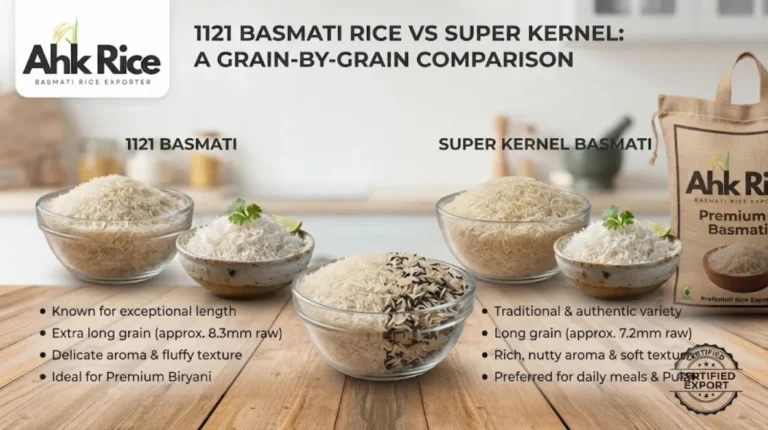
For AHK Rice, the relevant commercial context includes Pakistan-origin Basmati varieties such as 1121, Super Kernel, and 1509 Basmati rice supported by end-to-end processing, custom packaging, and export handling. The exact shipment specification should always follow the buyer’s contract.
The complete product picture now connects cultivation, processing, grades, applications, buyer requirements, and documentation into one sourcing framework.
Frequently Asked Questions
Why do Indonesian buyers consider Pakistan 1121 Creamy Sella?
Indonesian buyers consider it for its long slender grain, parboiled strength, separate cooked texture, pale cream appearance, and defined export specifications.
What is 1121 Creamy Sella?
1121 Creamy Sella is a parboiled Pakistani Basmati grade produced from 1121 paddy and processed through soaking, steaming, drying, milling, polishing, sorting, and grading.
What is the typical grain length?
Published commercial specifications show 8.0–8.2 mm head-rice length, although the contracted specification can differ by supplier and buyer requirements.
Is Creamy Sella the same as Golden Sella?
No. Creamy Sella has a lighter cream appearance, while Golden Sella has a deeper golden appearance resulting from different parboiling treatment.
Which documents are relevant for Indonesia?
Common documents include a certificate of origin, phytosanitary certificate, commercial invoice, packing list, transport documents, and applicable quality or halal documentation.
Is halal certification relevant to rice imports?
Indonesian halal rules require careful assessment of imported food and supply-chain processes. BPJPH guidance specifically addresses packaging, storage, transportation, and imported products.