How Do Retailers Assess Purity Standards in Imported Rice?
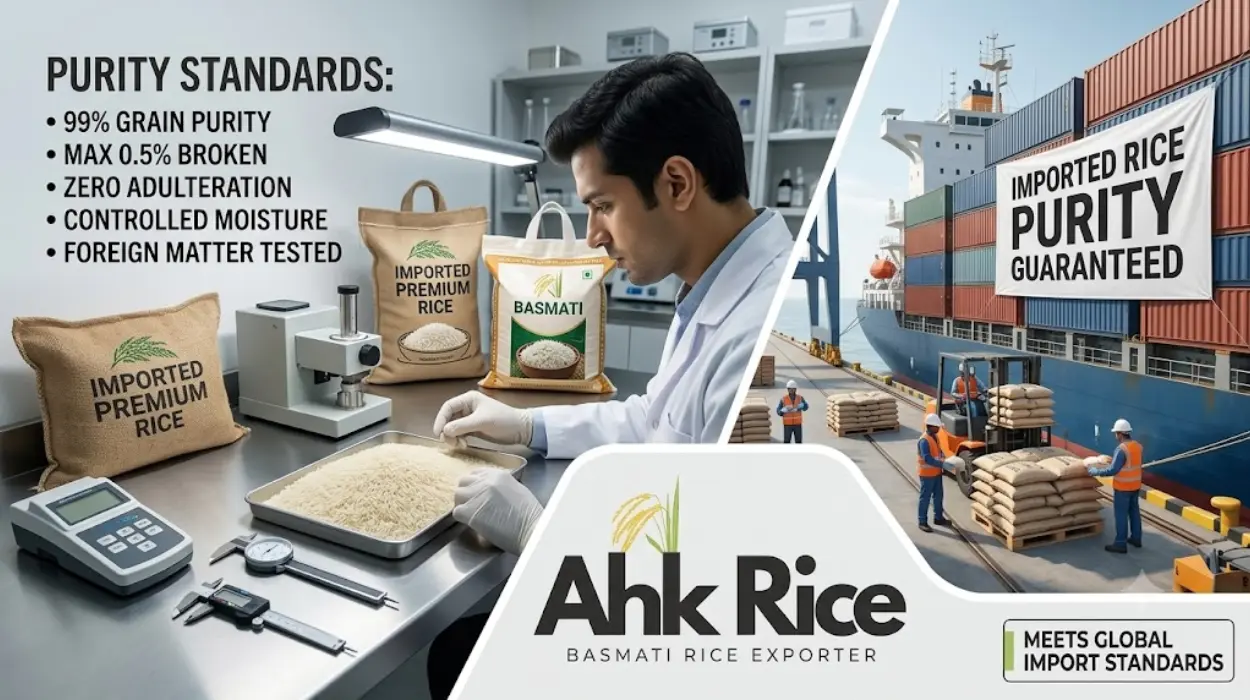
Retailers assess imported rice purity through laboratory testing, physical inspection, traceability verification, and supplier audits. Here is why: purity directly affects consumer trust, shelf stability, cooking consistency, and regulatory compliance. Retail buyers reject shipments that exceed limits for broken grains, foreign matter, chalkiness, damaged kernels, or mixed varieties because these defects reduce product quality and retail value.
Retail rice sourcing starts with measurable specifications rather than appearance alone. Buyers compare grain length, varietal authenticity, moisture content, purity percentage, contamination levels, and certification status before approving suppliers. Retailers also evaluate supplier consistency across multiple shipments because a single compliant container does not guarantee long-term supply reliability.
Importers seeking a deeper understanding of grain quality evaluation can first explore our guide on understanding Basmati rice purity and grading standards. That educational resource explains how purity percentages influence export specifications and consumer acceptance across international markets.
The first premium Pakistani Basmati category many retailers evaluate is Pakistani Basmati rice export specifications, where purity, grain length, and processing controls determine market suitability. AHK Rice exports 1121, Super Kernel, and 1509 Basmati varieties through controlled milling, grading, sorting, packaging, and export procedures.
What Purity Standards Do Retailers Check Before Buying Imported Rice?
Retailers primarily verify purity levels above 92–98%, moisture below 14%, foreign matter below 0.5%, broken grain percentages, varietal consistency, and contamination absence. These measurable standards determine retail acceptance, consumer satisfaction, shelf stability, and compliance with food safety regulations in importing markets.
Rice purity refers to the percentage of grains belonging to the declared variety without contamination from other varieties, foreign materials, damaged kernels, stones, husk particles, or immature grains.
Retailers inspect samples before procurement. Quality teams test grain dimensions, colour consistency, aroma characteristics, and milling quality. These evaluations confirm that the supplied rice matches the product specification.
Laboratories test imported rice for pesticide residues, heavy metals, microbial contamination, and moisture levels. These tests help retailers comply with food safety regulations.
European retailers often prioritize varietal authenticity and food safety certifications. Gulf retailers frequently focus on grain appearance, elongation ratio, and cooking performance.
Purity Specification Comparison Table
| Attribute | Premium Retail Grade | Standard Retail Grade |
|---|---|---|
| Purity Level | 98–99% | 92–97% |
| Moisture Content | 12–13.5% | 13–14% |
| Broken Grains | 1–3% | 5–10% |
| Foreign Matter | Below 0.2% | Below 0.5% |
| Damaged Grains | Below 1% | Below 3% |
| Chalky Kernels | Below 2% | Below 5% |
| Variety Mixing | Below 1% | Below 3% |
Retail standards establish the baseline for supplier selection. The next consideration is how retailers evaluate different assessment methods.
What Are the Available Solutions for Assessing Rice Purity?
Laboratory analysis, visual inspection, supplier audits, certification verification, and digital traceability systems represent the five primary solutions retailers use to assess imported rice purity standards before purchase decisions.
Laboratory Testing
Laboratory testing delivers the highest accuracy. Independent laboratories inspect grain composition and identify contaminants.
Laboratory analysis verifies pesticide residue levels. Laboratory analysis confirms moisture content. Laboratory analysis validates varietal purity percentages.
Visual Inspection
Visual inspection remains common during sample evaluation. Buyers inspect grain appearance, colour consistency, and physical defects.
Visual inspection works best for preliminary screening. Visual inspection cannot identify chemical contamination.
Supplier Audits
Supplier audits evaluate production facilities and quality systems.
Inspect processing lines.
Verify sorting equipment.
Test quality procedures.
Review traceability records.
Supplier audits reduce sourcing risks and improve consistency across future shipments.
Certification Verification
Certification programs provide independent quality validation.
Common certifications include:
- ISO 22000
- HACCP
- BRCGS
- Halal Certification
- Phytosanitary Certification
Certification verification improves confidence in supplier quality management systems.
Digital Traceability
Digital traceability systems track rice from cultivation through export.
Traceability records identify production locations. Traceability records document processing stages. Traceability records support recall management.
These assessment methods differ significantly in cost and effectiveness. The next section compares them directly.
How Do Different Purity Assessment Approaches Compare?
Laboratory testing provides the highest accuracy, supplier audits provide the strongest long-term control, and visual inspections provide the fastest screening. Combining methods produces the most reliable purity assessment system for retail procurement teams.
Comparison of Assessment Methods
| Method | Accuracy | Cost | Speed | Best Use |
|---|---|---|---|---|
| Laboratory Testing | Very High | High | Moderate | Final Approval |
| Visual Inspection | Moderate | Low | Fast | Initial Screening |
| Supplier Audit | High | Moderate | Slow | Supplier Selection |
| Certification Review | Moderate | Low | Fast | Compliance Verification |
| Traceability Systems | High | Moderate | Fast | Risk Management |
Laboratory testing identifies contamination that visual inspections cannot detect.
Supplier audits reveal operational weaknesses before shipment issues occur.
Traceability systems strengthen accountability throughout the supply chain.
Certification reviews provide documented compliance evidence.
Retailers achieve stronger quality outcomes by combining all five approaches rather than relying on one method.
Assessment methods influence regional purchasing preferences. Understanding market differences improves sourcing decisions.
Which Purity Standards Matter Most in Different Markets?
The UK market prioritizes certification, traceability, and varietal authenticity, while Gulf markets prioritize grain appearance, cooking performance, and premium purity percentages above 98%. Market requirements directly influence supplier selection and product specifications.
United Kingdom Retail Market
UK retailers prioritize food safety compliance.
Preferred grades include:
- 1121 Steam Basmati
- 1121 White Basmati
- Super Kernel Basmati
UK buyers frequently request:
- BRCGS compliance
- HACCP implementation
- Traceability documentation
- Residue testing reports
UK retail shelves emphasize consistent quality and regulatory compliance.
Gulf Cooperation Council Market
Gulf markets prioritize presentation and cooking performance.
Preferred grades include:
- 1121 Golden Sella
- 1121 Extra Long Grain
- Super Kernel Sella
Gulf buyers evaluate grain elongation after cooking.
Gulf buyers prefer bright colour and uniform grain appearance.
Price Per MT Comparison
| Market | Premium Grade Price Range |
|---|---|
| United Kingdom | £950–£1,350 per MT |
| GCC Markets | £1,050–£1,500 per MT |
Prices vary according to harvest quality, freight costs, purity percentage, and packaging requirements.
Shelf Life Comparison
| Product Type | Shelf Life |
|---|---|
| White Basmati | 12–18 Months |
| Steam Basmati | 18–24 Months |
| Golden Sella Basmati | 24 Months |
Golden Sella performs better in warm storage environments.
Steam rice balances shelf life and premium appearance.
Regional preferences help buyers narrow product options. The next step involves evaluating strengths and weaknesses.
What Are the Pros and Cons of Different Purity Verification Methods?
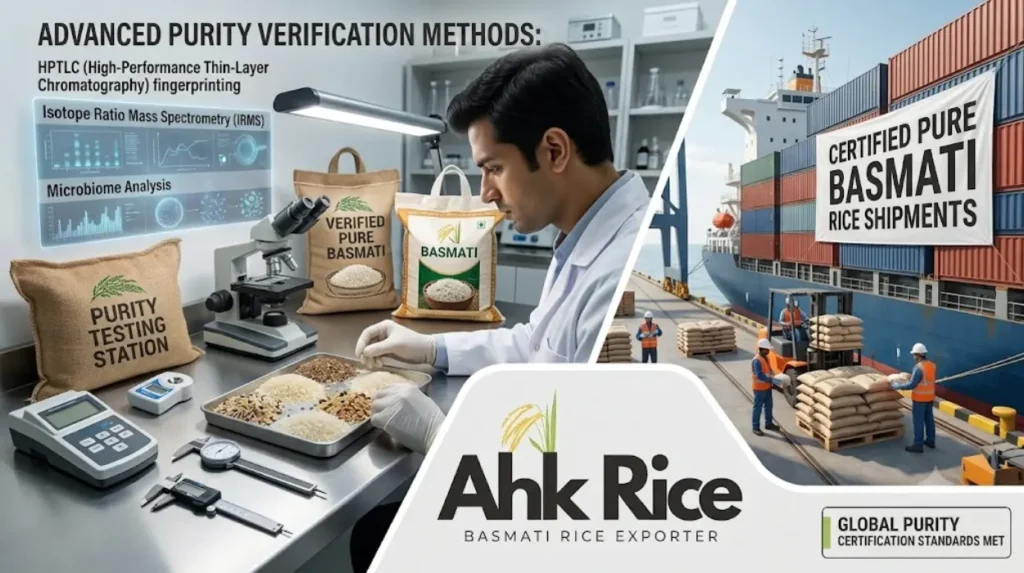
Laboratory testing delivers maximum confidence, audits improve supplier reliability, and visual inspections provide rapid evaluations. Each method offers distinct advantages and limitations depending on procurement objectives and risk tolerance.
Laboratory Testing
Pros
- High accuracy
- Detects contaminants
- Supports compliance
Cons
- Higher cost
- Longer turnaround
Visual Inspection
Pros
- Fast results
- Low cost
- Simple implementation
Cons
- Limited accuracy
- Cannot detect chemical residues
Supplier Audits
Pros
- Evaluates systems
- Reduces long-term risk
- Builds supplier accountability
Cons
- Requires travel
- Requires specialist expertise
Certification Verification
Pros
- Independent validation
- Easy comparison
Cons
- Does not guarantee shipment quality
Digital Traceability
Pros
- Supply chain visibility
- Recall readiness
Cons
- Technology investment required
Comparing strengths and weaknesses simplifies supplier evaluation. The final step involves selecting the correct approach.
Which Method Works Best for Different Retail Scenarios?
Laboratory testing works best for premium retail brands, supplier audits work best for long-term sourcing programs, and combined verification systems work best for multinational retail chains managing significant import volumes.
Decision Framework Table
| Scenario | Recommended Method | Reason |
|---|---|---|
| New Supplier Evaluation | Supplier Audit | Verify systems |
| Premium Private Label | Laboratory Testing | Ensure purity |
| Regulatory Compliance | Certification Review | Verify standards |
| Multi-Country Imports | Traceability System | Improve visibility |
| Long-Term Contracts | Combined Approach | Reduce risk |
Premium supermarket brands benefit from laboratory verification.
Private-label programs benefit from supplier audits.
Large importers benefit from integrated quality assurance systems.
Retailers achieve the best results through layered verification strategies rather than isolated inspections.
With the assessment framework established, sourcing decisions become easier and more predictable.
Retailers assess imported rice purity through measurable standards rather than subjective opinions. Laboratory testing, visual inspection, supplier audits, certification verification, and traceability systems form the foundation of modern quality assurance programs.
UK retailers typically prioritize certification and compliance. Gulf retailers often prioritize appearance and cooking performance. Premium Basmati suppliers must satisfy both requirements through consistent purity levels, documented traceability, and reliable quality control.
For buyers evaluating suppliers and procurement options, our detailed guide on Supply UK Retailers with High Purity Pakistani Basmati Rice provides decision-focused insights into supplier selection, specification management, packaging options, and export execution.
Frequently Asked Questions
How is rice purity measured?
Rice purity is measured by calculating the percentage of grains belonging to the declared variety while excluding foreign matter, broken grains, damaged kernels, and mixed varieties.
What purity percentage do retailers prefer?
Premium retailers generally prefer purity levels between 98% and 99% because these specifications improve consistency and consumer satisfaction.
Why do retailers test moisture content?
Moisture testing prevents spoilage, mould growth, and storage losses. Most importers require moisture below 14%.
Which certification is most important for imported rice?
ISO 22000, HACCP, and BRCGS are among the most requested certifications because they demonstrate food safety compliance.
Which Basmati grade is preferred in the UK?
1121 Steam Basmati and Super Kernel Basmati are commonly preferred because they balance appearance, cooking performance, and retail presentation.
Does higher purity increase rice prices?
Yes. Higher purity requires additional sorting, grading, and quality control processes, which increase production costs and export value.