Why Do Northern Ireland Importers Review Rice Quality Control Systems?
Northern Ireland importers review rice quality control systems to ensure food safety, grain consistency, regulatory compliance, and supply chain reliability. Here is why: quality control systems verify moisture levels, grain length, purity, contamination status, and certification compliance before rice enters the UK market.
Rice importers in Northern Ireland source products from several exporting countries, including Pakistan, India, Thailand, and Vietnam. Imported rice travels thousands of kilometers before reaching wholesalers, retailers, food service companies, and ethnic food distributors. Quality control systems protect the product during cultivation, processing, storage, loading, shipping, and delivery.
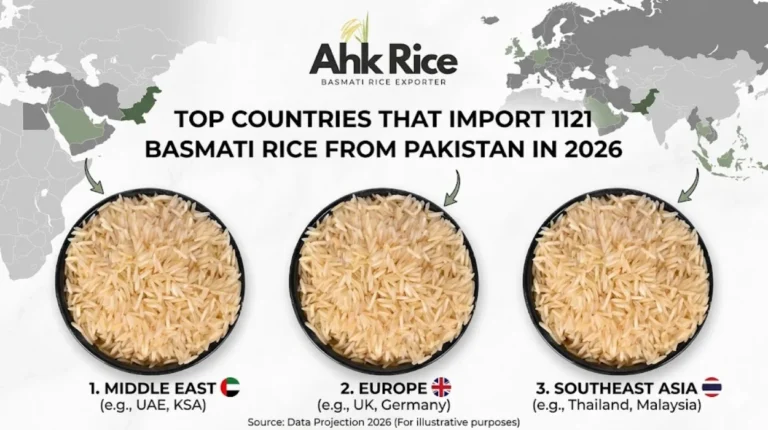
Basmati rice remains one of the most imported premium rice categories in the United Kingdom. Pakistan exports significant volumes of Basmati rice to European markets every year (source: REAP export data, December 2025). Northern Ireland buyers evaluate quality systems because product consistency directly affects customer satisfaction, regulatory approval, and commercial profitability.
What Is a Rice Quality Control System?
A complete quality control system includes cultivation monitoring, laboratory testing, grading procedures, contamination checks, certification verification, and shipment inspections.
Rice quality control systems are structured procedures used to inspect, test, certify, and verify rice throughout the supply chain. These systems begin at the farm level and continue until the final shipment reaches the importing country.
Rice quality control focuses on measurable characteristics. Examples include grain length, moisture percentage, purity level, broken grain ratio, chalkiness, foreign matter content, and pesticide residue status.
Importers review these systems because every shipment must meet predetermined specifications. A restaurant supplier requires consistent cooking performance. A supermarket chain requires consistent packaging quality. A food manufacturer requires uniform grain characteristics.
Quality control systems create traceability. Traceability records identify cultivation locations, processing dates, inspection results, laboratory reports, and shipping documents.
Understanding the purpose of quality control leads directly to understanding how the system functions throughout the rice supply chain.
How Do Rice Quality Control Systems Work?
Quality control works through inspection, testing, grading, certification, documentation, and shipment verification across every processing stage.
Rice quality control follows a sequence of activities from cultivation to export.
Farm-Level Inspection
Farm inspections verify seed variety, irrigation practices, harvesting methods, and field conditions. Inspectors collect samples before harvest and evaluate crop quality.
Basmati rice cultivation occurs primarily in Punjab regions of Pakistan and northern India. These regions produce long-grain aromatic rice varieties known for elongation and fragrance.
Processing-Level Verification
Rice mills inspect paddy before processing. Processing facilities then perform the following steps:
- Clean the paddy.
- De-husk the grain.
- Dry the rice.
- Polish the kernels.
- Grade by size.
- Sort by colour.
- Remove impurities.
- Test quality parameters.
- Pack the final product.
Each step removes quality risks and improves consistency.
Shipment-Level Inspection
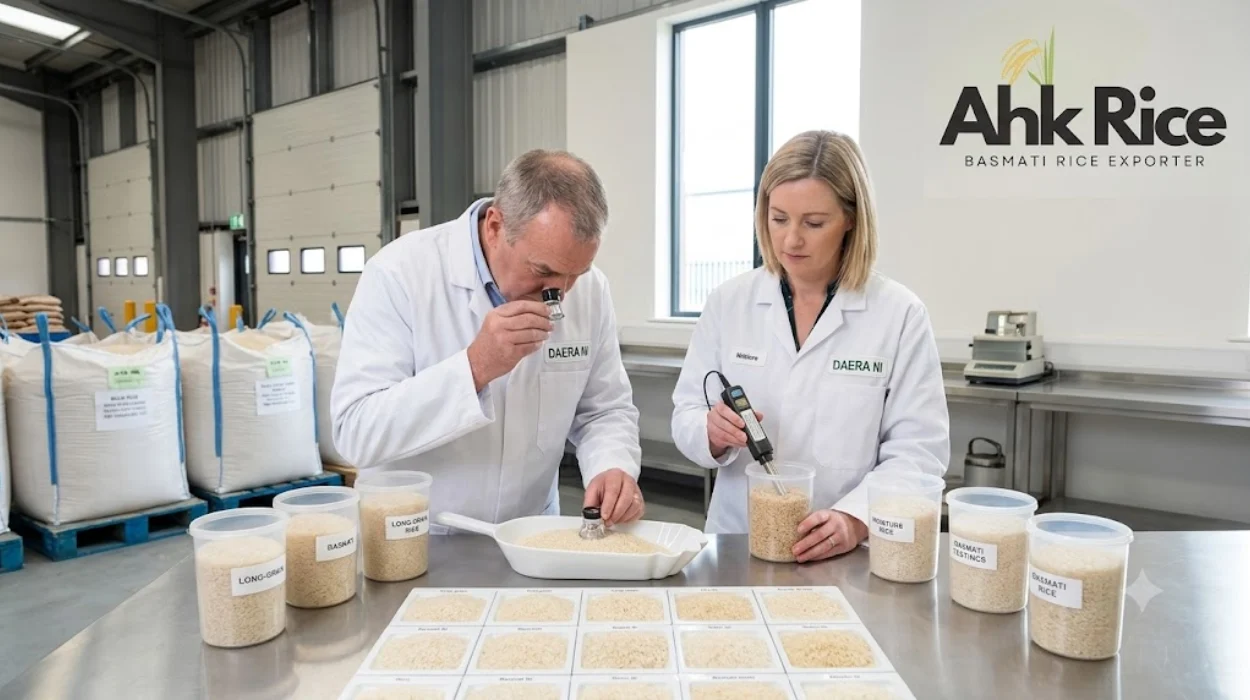
Export inspectors collect representative samples before loading containers. Laboratories test moisture levels, broken grain percentages, and contamination indicators.
Documentation accompanies every shipment. Importers review these records before accepting cargo.
With the operational process established, the next question concerns the specific components that importers evaluate.
What Components Do Northern Ireland Importers Examine?
Importers primarily review moisture control, grain grading, laboratory testing, certification systems, traceability records, and contamination prevention procedures.
Quality control systems contain several measurable components.
Moisture Control
Moisture content affects shelf life and storage stability. Export-grade Basmati commonly maintains moisture levels between 12% and 14%.
Higher moisture increases spoilage risks. Lower moisture reduces grain quality and cooking performance.
Grain Grading
Grading separates rice according to length, purity, and broken grain percentages.
Common Basmati grades include:
- 1121 Steam Basmati
- 1121 Sella Basmati
- 1121 Golden Sella Basmati
- Super Kernel Basmati
- 1509 Basmati
- PK 386 Rice
- IRRI-6 Rice
Each grade contains different specifications and target markets.
Laboratory Testing
Laboratories test:
- Pesticide residues
- Heavy metals
- Microbiological contamination
- Moisture content
- Grain dimensions
- Purity levels
Testing provides objective evidence of compliance.
Traceability Systems
Traceability records connect every batch to cultivation, processing, packaging, and shipment stages.
Importers use traceability systems to identify the source of any quality issue.
These components explain what buyers inspect. The next section explains why these controls create commercial advantages.
What Benefits Do Quality Control Systems Provide?
Quality control systems improve food safety, reduce commercial risk, increase consistency, strengthen compliance, and protect brand reputation.
Food safety represents the primary benefit. Quality controls identify contamination risks before products reach consumers.
Consistency represents another major benefit. Consistent rice delivers predictable cooking performance. Restaurants depend on uniform grain quality for menu preparation.
Regulatory compliance becomes easier through documented inspections and certifications. Importers demonstrate compliance during customs clearance and food safety audits.
Commercial risk decreases because inspection procedures identify problems before shipment dispatch. Early detection prevents costly product recalls.
Brand reputation improves because consistent quality creates customer confidence. Retail buyers prefer suppliers with verified quality systems.
These benefits explain why importers prioritize quality controls. The next question concerns practical applications in different market sectors.
Where Are Rice Quality Control Systems Most Important?
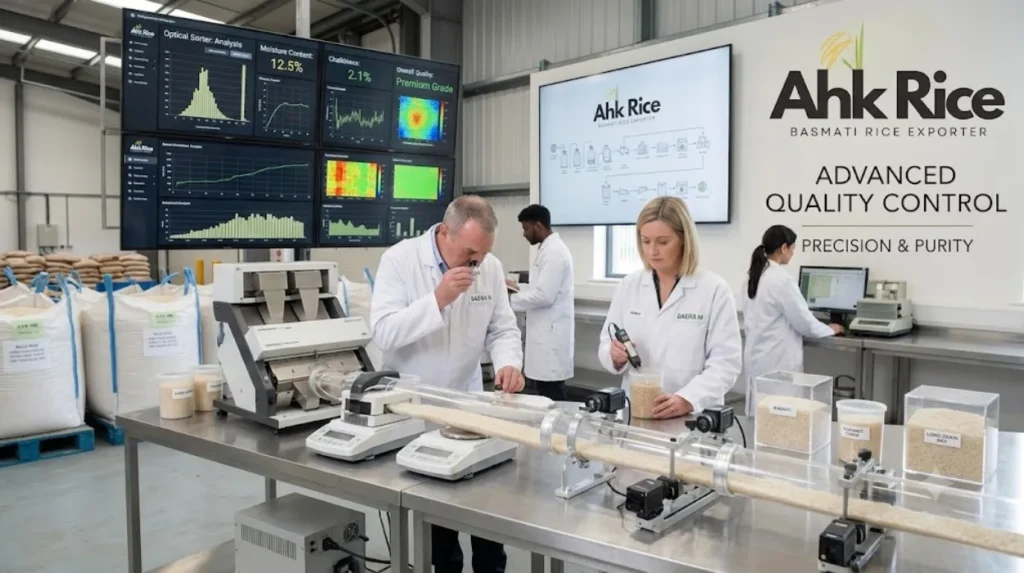
Quality control systems are critical for supermarkets, food service companies, wholesalers, distributors, and food manufacturing businesses.
Supermarket Retail Chains
Retail chains require consistent packaging, labeling, and grain quality. Customers expect identical product characteristics in every purchase.
Quality control systems maintain this consistency across multiple shipments.
Food Service Companies
Restaurants require predictable cooking results. Long-grain Basmati must maintain aroma, texture, and elongation after cooking.
Quality testing verifies these characteristics before export.
Food Manufacturers
Manufacturers use rice as an ingredient in packaged meals, frozen products, and ready-to-cook foods.
Standardized specifications ensure production efficiency.
Import and Distribution Companies
Distributors handle large volumes across multiple markets. Quality documentation simplifies customs clearance and customer verification.
These use cases demonstrate practical value. The next section addresses common misunderstandings about rice quality systems.
What Misconceptions Exist About Rice Quality Control?
Many buyers incorrectly assume visual inspection alone guarantees quality, certifications replace testing, or all Basmati grades perform identically.
Visual inspection identifies only surface characteristics. Internal quality parameters require laboratory testing.
Grain appearance does not reveal pesticide residue status. Grain colour does not reveal moisture levels. Grain length does not reveal microbiological safety.
Another misconception involves certifications.
Certification Does Not Replace Testing
Certifications verify system compliance. Laboratory testing verifies product compliance.
Both activities perform different functions.
For example, a facility holding ISO certification still conducts routine moisture testing and contamination analysis.
All Basmati Grades Are Not Identical
1121 Basmati differs from Super Kernel Basmati. 1509 Basmati differs from traditional aromatic varieties.
Differences include:
- Grain length
- Aroma intensity
- Cooking elongation
- Processing methods
- Market preferences
European retailers often prioritize premium appearance. Catering companies often prioritize cooking yield.
Quality Control Is Not Limited to Factories
Quality management begins at cultivation.
Farm inspections, harvesting controls, storage procedures, milling operations, and shipment inspections all contribute to final product quality.
With misconceptions clarified, the final question concerns certification standards used by exporters and importers.
Which Certifications Do Rice Importers Expect?
Importers commonly review ISO, HACCP, BRCGS, phytosanitary certification, fumigation records, and food safety compliance documents.
Certification systems provide documented evidence of process control.
Common certifications and documents include:
- ISO 22000
- HACCP
- BRCGS Food Safety
- Phytosanitary Certificate
- Certificate of Origin
- Fumigation Certificate
- Health Certificate
- Laboratory Analysis Reports
Each document supports a specific compliance requirement.
Northern Ireland importers review these certifications because imported food products must satisfy UK regulatory standards.
Certification review works alongside physical inspections and laboratory testing. Together, these systems create a complete quality assurance framework for imported rice.
Northern Ireland importers review rice quality control systems because quality verification protects food safety, regulatory compliance, commercial performance, and customer satisfaction. Effective systems inspect cultivation practices, test grain specifications, verify certifications, monitor processing operations, and document shipment quality. These controls ensure imported Basmati rice reaches the market with consistent standards, traceable records, and verified compliance.
For readers who want to understand how these systems specifically protect imported Basmati shipments, a detailed guide on quality assurance procedures provides the next step in the learning journey: How Do Quality Control Systems Protect Imported Basmati Rice Standards?
Frequently Asked Questions
Why do rice importers check quality control systems?
Importers check quality control systems to verify food safety, consistency, traceability, regulatory compliance, and shipment reliability before accepting imported rice.
What tests are performed on exported Basmati rice?
Exported Basmati rice undergoes moisture testing, purity analysis, broken grain evaluation, pesticide residue testing, heavy metal screening, and contamination checks.
Which Basmati rice varieties are commonly imported into the UK?
Common varieties include 1121 Steam Basmati, 1121 Sella Basmati, 1121 Golden Sella Basmati, Super Kernel Basmati, and 1509 Basmati rice.
What certifications support rice quality assurance?
Important certifications include ISO 22000, HACCP, BRCGS Food Safety, phytosanitary certificates, fumigation certificates, and laboratory analysis reports.
How does traceability improve rice quality management?
Traceability connects rice batches to cultivation, processing, inspection, packaging, and shipping records, allowing rapid identification and resolution of quality issues.