How Do Quality Control Systems Protect Imported Basmati Rice Standards?
Quality control systems are the most effective way to protect imported Basmati rice standards. Here is why: quality systems inspect raw paddy, test grain specifications, verify certifications, monitor processing, and validate export compliance before shipment. These controls reduce broken grains, contamination, moisture variation, and specification disputes during international trade.
Importers purchase rice based on measurable specifications rather than appearance alone. Quality control systems create consistency across every shipment. They verify grain length, moisture content, purity, aroma retention, milling quality, and food safety compliance. Without structured controls, importers face rejected containers, customer complaints, and financial losses.
Importers evaluating suppliers often compare processing standards before comparing price. Buyers seeking deeper knowledge about rice production and certification can explore the educational guide on Pakistani Basmati cultivation, processing methods, and export standards (insert TOFU article link here). Understanding production fundamentals makes it easier to evaluate quality assurance systems later in the procurement process.
AHK Rice, a trusted Pakistani Basmati exporter from Punjab, applies quality control throughout cultivation, milling, grading, packaging, and export operations. Its rice export and processing services support international buyers seeking specification consistency across multiple shipments.
What Are the Available Solutions for Protecting Imported Basmati Rice Standards?
Multi-stage inspection systems, laboratory testing, certification programs, digital traceability, and export compliance controls provide the strongest protection against quality variation, shipment rejection, and food safety risks in international Basmati rice trade.
Quality control begins before processing starts. Exporters inspect paddy quality immediately after procurement. This step prevents low-grade raw material from entering production.
Multi-Stage Inspection Systems
Multi-stage inspection follows rice through every processing stage.
9 processing control steps include:
- Clean the paddy.
- De-husk the grain.
- Separate immature kernels.
- Polish the rice.
- Grade by length.
- Sort by colour.
- Test moisture content.
- Verify specifications.
- Pack and seal shipments.
Each stage removes a specific risk. Length grading improves consistency. Colour sorting removes damaged kernels. Moisture testing protects shelf life.
Laboratory Testing
Laboratory testing measures objective quality standards.
Common tests include:
- Grain length analysis
- Moisture verification
- Broken percentage testing
- Purity testing
- Foreign matter detection
- Microbiological screening
- Residue analysis
Laboratory verification creates measurable specifications. Importers receive documented evidence rather than visual estimates.
Certification Systems
Certification systems validate compliance with international requirements.
Common certifications include:
- ISO 22000
- HACCP
- BRCGS
- Halal Certification
- Phytosanitary Certification
- Fumigation Certification
Certification provides third-party verification. This reduces procurement risk for importers.
Digital Traceability
Digital traceability connects finished rice to production records.
Traceability systems record:
- Farm origin
- Harvest period
- Processing date
- Batch number
- Packaging details
- Export documentation
Traceability simplifies investigations and recalls. Importers can verify product history quickly.
With available quality solutions established, the next question is how these approaches compare against one another.
How Do Different Quality Control Approaches Compare?

Laboratory testing provides the highest measurement accuracy, certification delivers compliance assurance, inspection systems prevent processing defects, and traceability improves accountability across the supply chain.
Different systems solve different risks.
Quality Control Method Comparison
Specification Comparison Table
| Attribute | Inspection System | Laboratory Testing | Certification Programs | Digital Traceability |
|---|---|---|---|---|
| Defect Detection | High | Very High | Medium | Low |
| Measurement Accuracy | Medium | Very High | High | Low |
| Compliance Verification | Medium | High | Very High | Medium |
| Cost Impact | Low | Medium | Medium | Medium |
| Import Risk Reduction | High | Very High | Very High | High |
| Shipment Consistency | High | Very High | High | Medium |
| Customer Confidence | High | Very High | Very High | High |
Laboratory testing identifies specification deviations before shipment. Certification confirms process compliance. Traceability strengthens transparency.
Importers combining all four approaches achieve the strongest risk reduction. Single-system reliance leaves quality gaps.
Manual Versus Automated Quality Systems
Manual inspection relies on trained personnel. Automated systems use cameras, sensors, and software.
Automated colour sorters remove defective kernels with greater precision. Manual inspection remains useful for visual verification and final checks.
Automated systems improve consistency across large export volumes. Manual systems provide human oversight for unusual defects.
With comparisons completed, the next step is identifying which solution works best for different buyer requirements.
Which Quality Control Method Works Best for Different Cases?
Laboratory testing works best for specification-sensitive buyers, certification systems suit regulated markets, traceability benefits premium retailers, and integrated quality programs deliver the strongest overall protection.
Buyer requirements vary by market and customer segment.
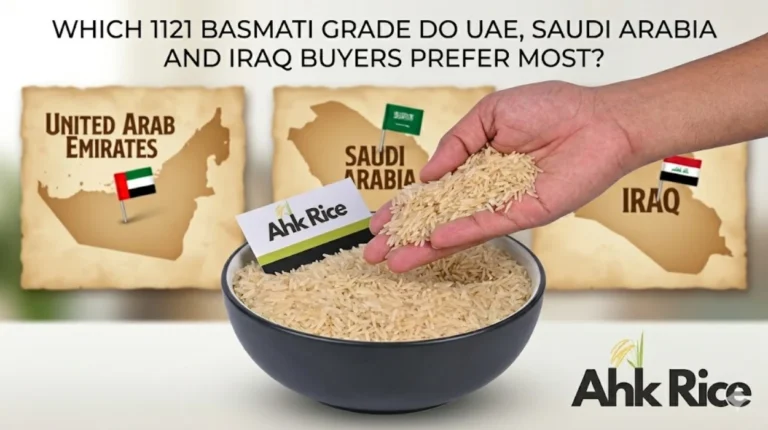
H3: Middle East Market Preferences
Middle Eastern markets prioritize appearance, grain length, and cooking performance.
Preferred grades include:
- 1121 Steam Basmati
- 1121 Golden Sella Basmati
- Super Kernel Basmati
Buyers focus heavily on grain uniformity and visual quality.
Golden Sella performs well in catering operations. Steam rice remains popular in retail channels.
H3: European Market Preferences
European buyers prioritize food safety and documentation.
Preferred grades include:
- Super Kernel Basmati
- 1121 Steam Basmati
- 1509 Steam Basmati
European importers frequently request additional testing and certification documentation.
Traceability requirements are stronger. Regulatory compliance receives greater scrutiny.
Price Per Metric Ton Comparison
| Rice Grade | Middle East Demand | Europe Demand | Typical Price Range (USD/MT) |
|---|---|---|---|
| 1121 Golden Sella | Very High | Medium | 1,050–1,250 |
| 1121 Steam | High | High | 1,000–1,200 |
| Super Kernel | High | Very High | 950–1,150 |
| 1509 Steam | Medium | High | 850–1,050 |
Prices vary based on crop year, packaging, destination, and freight conditions (source: REAP export data, 2025).
Shelf Life Comparison
| Rice Type | Typical Shelf Life |
|---|---|
| 1121 Golden Sella | 18–24 months |
| 1121 Steam | 12–18 months |
| Super Kernel Steam | 12–18 months |
| 1509 Steam | 12–18 months |
Golden Sella retains quality longer because parboiling strengthens kernel structure.
For high-temperature warehouses, Golden Sella performs better. For retail distribution cycles, Steam grades remain suitable.
With market-specific solutions identified, the next step is evaluating advantages and disadvantages.
What Are the Pros and Cons of Quality Control Systems?
Quality systems improve consistency, reduce disputes, strengthen compliance, and increase buyer confidence, while adding testing costs, documentation requirements, and operational complexity.
H3: Advantages
| Benefit | Example |
|---|---|
| Consistent Specifications | Uniform grain length across shipments |
| Lower Rejection Risk | Reduced container disputes |
| Better Compliance | Easier customs clearance |
| Stronger Brand Trust | Reliable importer relationships |
| Improved Shelf Life | Better moisture control |
Quality systems reduce hidden procurement costs. A slightly higher testing budget often prevents expensive shipment claims.
Limitations
| Limitation | Example |
|---|---|
| Additional Cost | Laboratory fees |
| More Documentation | Compliance paperwork |
| Longer Approval Cycles | Testing delays |
| Training Requirements | Skilled inspectors needed |
| Technology Investment | Equipment purchases |
Quality programs create operational costs. However, rejected containers cost substantially more than preventive testing.
Understanding benefits and limitations helps importers select appropriate controls, which leads directly into decision-making criteria.
What Decision Factors Should Importers Evaluate?
Supplier capability, testing procedures, certification coverage, traceability systems, and market requirements determine the effectiveness of any quality control program.
Importers should evaluate measurable criteria before selecting suppliers.
Decision Framework Table
| Decision Factor | Low Priority Buyer | Medium Priority Buyer | High Priority Buyer |
|---|---|---|---|
| Laboratory Testing | Basic | Recommended | Essential |
| Certifications | Basic | Important | Essential |
| Traceability | Optional | Recommended | Essential |
| Inspection Frequency | Monthly | Weekly | Every Batch |
| Documentation Depth | Standard | Enhanced | Comprehensive |
Key Questions for Suppliers
Ask suppliers:
- What tests are performed before shipment?
- What certifications are maintained?
- What traceability systems exist?
- What moisture limits apply?
- What grain length standards are guaranteed?
These questions reveal process maturity and export readiness.
Importers serving premium retail channels should prioritize traceability and laboratory verification. Importers supplying food service sectors often prioritize consistency and volume reliability.
With decision criteria established, importers can compare suppliers using objective quality standards rather than price alone.
Quality control systems protect imported Basmati rice standards by verifying specifications at every stage of the supply chain. Inspection systems identify defects. Laboratory testing confirms measurable quality. Certification programs verify compliance. Traceability systems strengthen transparency.
The strongest protection comes from combining all four methods. This integrated approach reduces shipment risk, improves consistency, protects brand reputation, and supports long-term importer success.
Frequently Asked Question
How often should Basmati rice be tested before export?
Every export batch should undergo moisture, purity, broken grain, and foreign matter testing before shipment. Batch-level testing provides the highest consistency.
Which certification is most important for Basmati rice importers?
ISO 22000 and HACCP are widely recognized. Many importers also require Halal certification and phytosanitary documentation.
Does quality control increase rice costs?
Quality control adds testing and compliance expenses. However, it reduces rejection risks, claims, and customer complaints.
Why is moisture testing important?
Moisture affects shelf life and grain stability. Proper moisture levels reduce spoilage and preserve cooking performance.
Which Basmati grade requires the strictest quality control?
1121 Basmati often requires the strictest controls because buyers expect exceptional grain length, appearance, and consistency.